Key takeaways
- Community pushback and municipal moratoria blocked or delayed 45 US data center projects valued at $68 billion in Q2 2026, following 75 stalled facilities ($130 billion) in Q1.
- Grassroots mobilization has expanded to more than 840 active opposition coalitions across 49 states, prompting 30 state legislatures to introduce or adopt strict resource and siting regulations.
- Local conflicts center on electrical grid capacity, residential utility rate hikes (up to 76% in Virginia), billions of gallons of cooling water, and emissions from behind-the-meter gas turbines.
- While global AI infrastructure investment is projected to reach $31.6 trillion through 2050 (with 93% allocated to cyclical IT hardware refreshes), geopolitical barriers and export restrictions could reduce that total by $6 trillion.
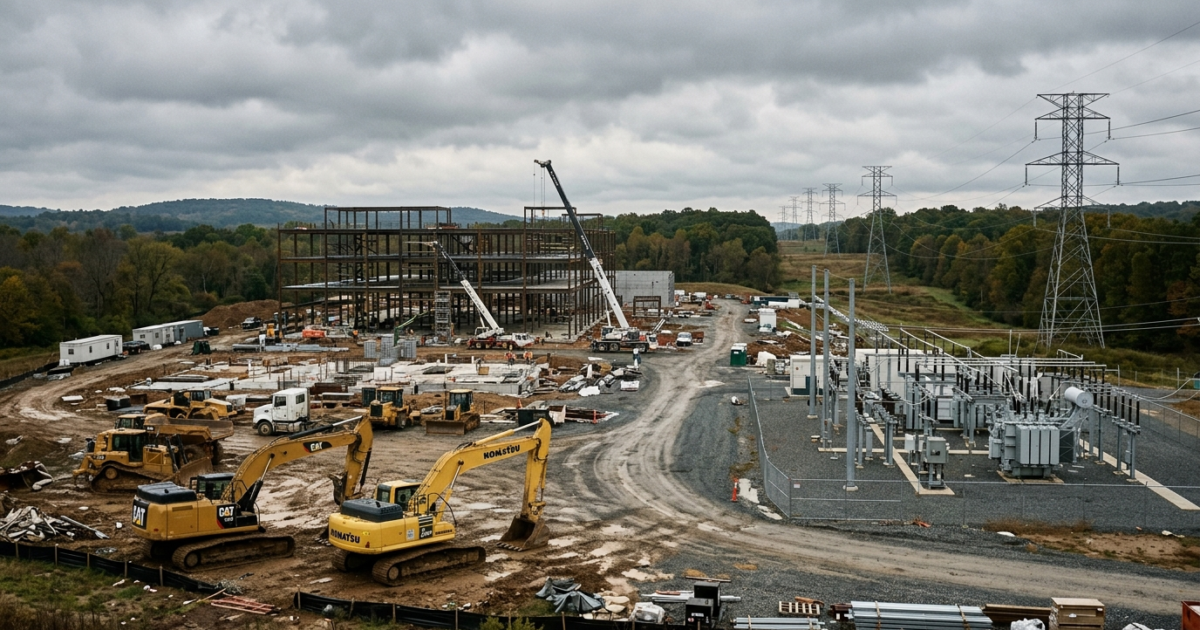
Local opposition and municipal regulatory hurdles blocked or delayed 45 data center projects representing $68 billion in capital investment across the United States during the second quarter of 2026. According to industry data compiled by research group Data Center Watch, grassroots resistance has surged across suburban and rural communities, targeting the rapid expansion of facilities designed to train and serve artificial intelligence workloads. The second-quarter disruption follows a first quarter in which 75 facilities valued at roughly $130 billion were stalled, indicating that civic pushback is no longer isolated to legacy hubs but has become a systemic constraint on hyperscale physical deployment.
Grassroots backlash and the $68 billion pipeline freeze
The scale of project delays highlights a growing disconnect between capital allocation and local permitting realities. While hyperscalers have deployed more than $1 trillion on compute infrastructure since 2023 and project $745 billion in capital expenditures in 2026 alone, physical deployment schedules are encountering severe friction. According to reporting by Tom’s Hardware and Communications Today, the 45 projects stalled between April and June 2026 accounted for more than half of all new large-scale facilities tracked across the United States.
Opposition is organized and nationwide. Researchers at Bisnow and Data Center Watch identified over 840 active grassroots resistance coalitions operating across 49 states, leaving Hawaii as the only state without an organized anti-data-center group. In July 2026, organizers coordinated 142 simultaneous protests spanning 42 states over a single weekend. As municipal leaders confront public concern over rezoning, cities push AI data center moratoriums as grid strain mounts, often barring new development applications before engineering reviews commence.
State governments are responding to this civic pressure. Thirty state legislatures have introduced or enacted formal statutes regulating facility siting, electrical interconnection thresholds, and industrial water consumption, turning routine zoning into contentious legislative debates.
Grid capacity, cooling water, and behind-the-meter generation
Local friction centers primarily on utility infrastructure strain and resource consumption. Grid analysts project that data centers could consume as much as 20% of total United States electrical output by 2035. In established markets like Northern Virginia, residential ratepayers experienced a 76% surge in electricity bills tied to localized grid reinforcement costs. That backlash prompted state regulators to mandate that hyperscalers directly fund dedicated transmission lines rather than socializing upgrade costs across the broader consumer base.
Cooling requirements present an equally contentious flashpoint. Industry projections estimate that AI facilities will consume up to 600 billion gallons of water annually by 2030 to dissipate accelerator heat loads. While executives downplay these volumes—OpenAI chief executive Sam Altman likened 38,000 queries to producing one almond, and Microsoft cited restaurant-level water parity for newer architectures—community skepticism remains high. Tensions peaked in May 2026 when an undisclosed facility consumed 29 million gallons over fifteen months, discovered only after municipal water pressure dropped.
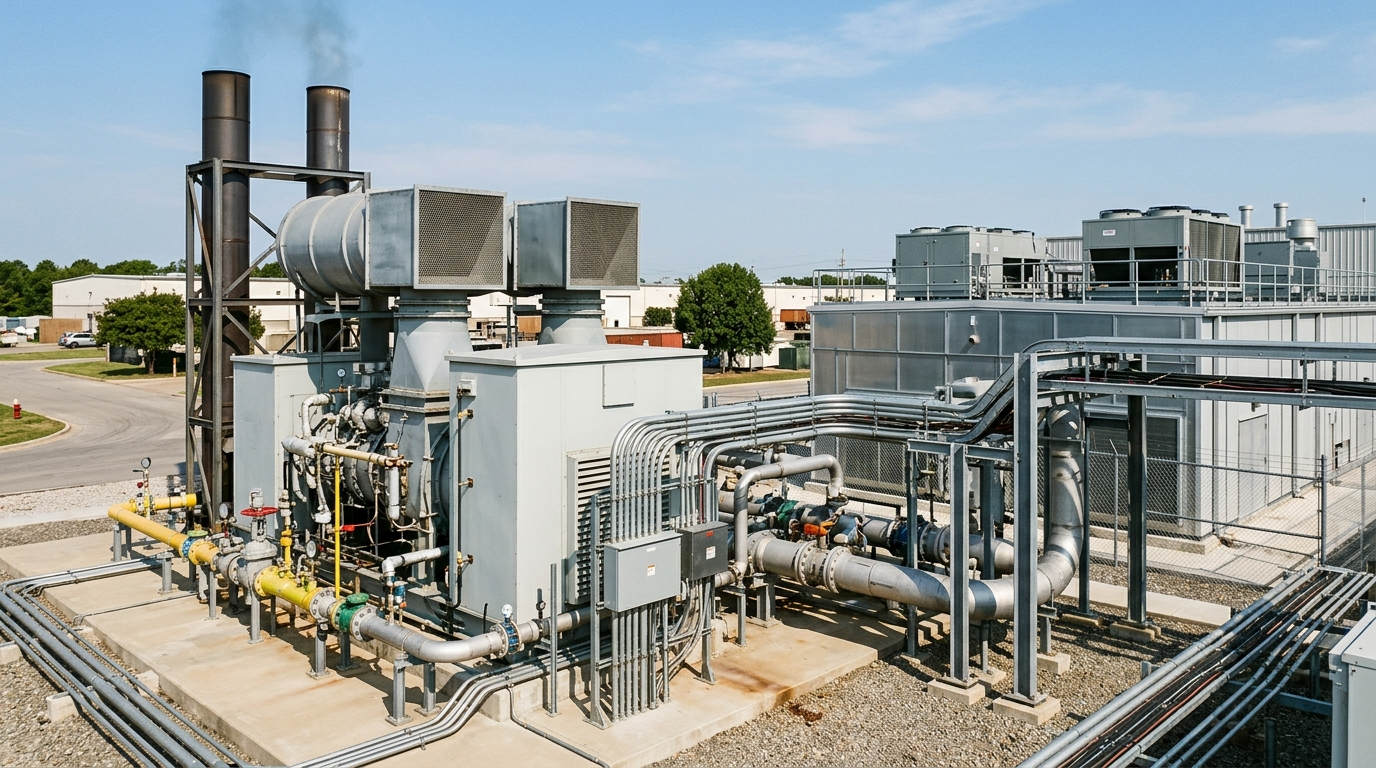
To bypass congested utility queues, operators increasingly turn to on-site, behind-the-meter generation, introducing fresh environmental controversies. Developers frequently deploy rapid-install natural gas turbines to energize campuses ahead of utility interconnects. Elon Musk’s Colossus 2 deployment in Mississippi drew scrutiny after installing 59 unpermitted gas turbines that emitted pollutants into neighboring communities. Meanwhile, Amazon secured authorization for a custom 35-turbine natural gas site permitted to release 33 million tons of greenhouse gases annually, establishing it as one of the largest single industrial carbon sources in the country.
| Project or Operator | Reported Scale or Investment | Resource / Energy Mechanism | Regulatory and Community Status |
|---|---|---|---|
| United States Q2 2026 Pipeline | 45 facilities ($68 billion) | Regional grid utility interconnections | Blocked or delayed by local moratoria and zoning pushback |
| Meta Hyperion (Louisiana) | 7 GW planned capacity | Utility contract with Entergy Louisiana | Utility projects $20 billion customer savings over 20 years |
| Colossus 2 (Mississippi) | Hyperscale compute cluster | 59 on-site natural gas turbines | Challenged over unpermitted air emissions in residential areas |
| Amazon Generation Site | 35 natural gas turbines | Behind-the-meter gas generation | Authorized for up to 33 million tons of annual GHG emissions |
Macro projections versus local realities
The mounting localized resistance contrasts with long-term macroeconomic forecasts for AI infrastructure. According to a study by PwC, cumulative global investment in AI data center infrastructure is projected to reach $31.6 trillion through 2050. Annual capital expenditures are modeled to surge from $800 billion in 2026 to $1.8 trillion by 2050, with the United States expected to capture $15.1 trillion of that aggregate.
Crucially, the financial structure of AI data centers diverges from traditional civil infrastructure. As reported by Real Assets, physical shells represent a minor fraction of long-term outlays. IT equipment—comprising servers, accelerators, and networking fabrics—is projected to account for 93% of cumulative capital spending through 2050 due to four-to-six-year hardware refresh cycles. This cyclical requirement means facilities demand sustained capital injections and operational stability, multiplying the financial risk of any site subjected to mid-lifecycle operational limits.
Macroeconomic models also acknowledge downside sensitivities. As highlighted by TahawulTech, geopolitical barriers and tightened semiconductor export controls could reduce global cumulative investment by approximately $6 trillion, bringing the 2050 ceiling down to $25.5 trillion. Domestically, political dynamics are growing volatile. While President Donald Trump criticized municipal opposition as economically backwards, public pushback has escalated to protests and threats against zoning officials, causing grassroots movements to expand into broad sociopolitical skepticism toward AI growth, as noted by EL PAÍS English.
What happens next
Infrastructure operators can no longer treat municipal permitting and community relations as administrative afterthoughts. To mitigate delays, cloud developers are exploring collaborative initiatives, such as the Flexible Data Center Alliance, to standardize modular architectures capable of adjusting compute loads during peak grid demand.
In the near term, infrastructure teams must prepare for three operational shifts:
- Extended interconnection lead times: Siting timelines will expand by twelve to eighteen months in contested jurisdictions as municipal boards demand comprehensive power and water impact assessments before granting site plan approvals.
- Mandatory utility cost-sharing: State utility commissions will increasingly require hyperscalers to execute advance tariff agreements and fund dedicated substation infrastructure rather than shifting capital costs to municipal ratepayers.
- Transition to closed-loop cooling and microgrids: Permitting success will correlate with water-free cooling deployments and firm clean microgrid partnerships, reducing reliance on unpermitted fossil fuel turbines that trigger environmental enforcement actions.
Sources
- Local opposition blocked 45 data center projects worth $68 billion in the second quarter of 2026 — data center investments reportedly still on track to hit $32 trillion by 2050 | Tom’s Hardware
- Global investment in AI infrastructure to hit US$31.6 trillion through 2050 | PwC
- AI buildout to drive $32trn in global data centre investment by 2050 | News | Real Assets
- U.S. Data Center Opposition Blocks $68B In Q2 Projects
- New data centres worth $68 billion disrupted in US, data show | Communications Today
- Data centre spending could hit $32 Trillion by 2050 | TahawulTech.com
- Resistance to AI gathers strength | Technology | EL PAÍS English