Key takeaways
- Automated internet traffic officially surpassed human web activity in May 2026, arriving more than a year ahead of Cloudflare’s late-2027 forecast.
- AI crawlers and task-oriented agents create asymmetric origin load by querying hundreds of web endpoints to satisfy single prompts without returning business value to unchosen sites.
- Cloudflare projects that automated traffic will expand to 1,000 times human volume within five years as agentic retrieval and natural-language coding tools proliferate.
- More than 50% of good bot fetches inspect unchanged data; Cloudflare is deploying edge delta caching and publisher monetization tooling to rebalance web economics.
Automated agent traffic officially surpassed human web activity in May 2026, crossing the parity threshold more than a full year ahead of initial industry forecasts. According to Cloudflare’s 2026 Annual Founders’ Letter, autonomous AI crawlers and task-oriented agents now account for the majority of global requests across the network. Driven by the rapid adoption of natural-language development platforms and agentic retrieval systems, automated requests are accelerating exponentially. Cloudflare projections indicate that automated queries could expand to 1,000 times human volume within the next five years. To prevent origin server exhaustion and preserve economic viability for web creators, the infrastructure provider is introducing differential crawling caching and publisher compensation frameworks.
Automated Agents Overtake Human Web Traffic
Cloudflare originally projected that automated traffic would overtake human page requests during the second half of 2027. However, the operational reality accelerated dramatically over the preceding twelve months, moving the parity milestone forward to May 2026. The surge reflects a structural shift in how software interacts with public web infrastructure.
Between 2012 and early 2025, the volume of active websites had largely plateaued. That trend reversed sharply in mid-2025 with an unprecedented expansion in new sites and web-accessible applications. While industry commentary frequently attributed this growth to synthetic text generation, Cloudflare notes that the influx stems primarily from non-technical creators leveraging prompt-assisted development environments. Cloudflare reports that over 7 million developers currently build and deploy applications on its developer platform, creating an expanding ecosystem of dynamic web endpoints designed specifically for machine interaction.
| Metric / Indicator | Historical Baseline | Current Reality (2026) | Five-Year Projection |
|---|---|---|---|
| Traffic Inflection Date | Forecast for late 2027 | May 2026 milestone achieved | Compounding automated dominance |
| Bot vs. Human Ratio | Automated sub-50% share | Automated traffic exceeds human volume | Projected 1,000x human traffic volume |
| Crawler Cache Redundancy | Full periodic re-scrapes | Over 50% fetches retrieve unchanged data | Differential indexing and delta fetches |
| Origin Economic Model | Ad impressions and direct referrals | Zero-click scraping without compensation | Direct agent micropayments and licensing |
The Asymmetric Strain on Web Endpoints
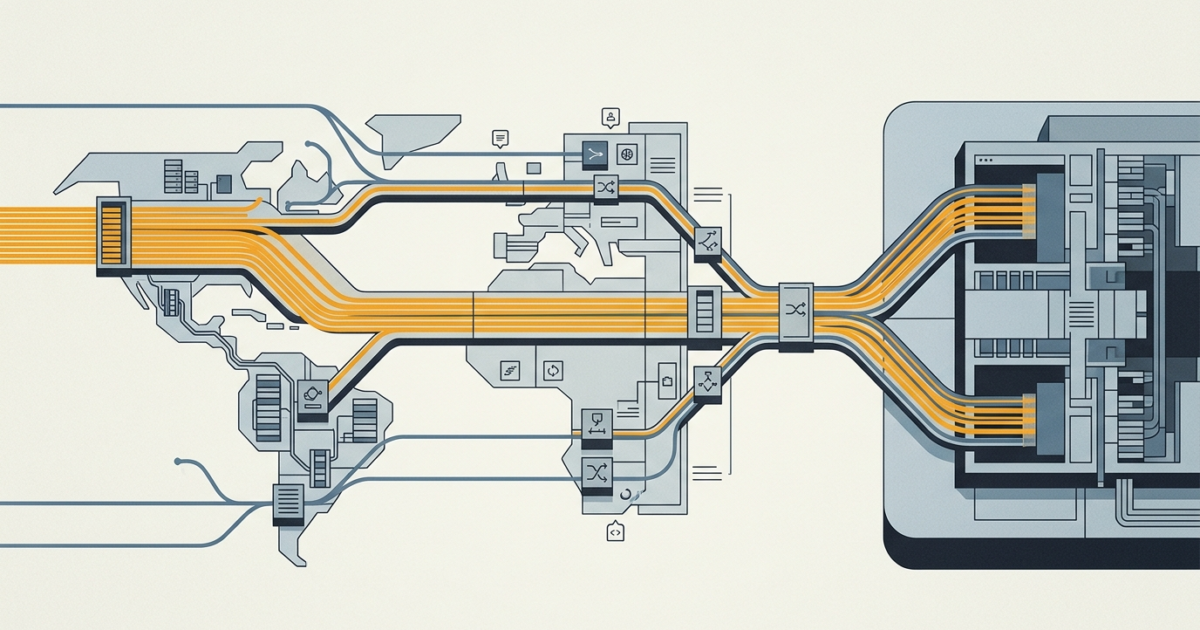
The acceleration of automated traffic creates distinct operational challenges for edge networks and origin host servers. Autonomous agents operate fundamentally differently from traditional human visitors. When a human researcher or consumer evaluates local services or travel arrangements, they inspect a small handful of pages. By contrast, an autonomous agent queries hundreds or thousands of target endpoints in seconds before synthesizing a single response for the end user.
This operational model introduces an acute tragedy-of-the-commons dynamic across web hosting infrastructure. A single user prompt to recommend a nearby venue may trigger an agent to scrape menus, reservation schedules, and reviews across 1,000 distinct small business websites. While one merchant ultimately captures the customer, the remaining 999 businesses absorb origin server compute costs, bandwidth consumption, and security inspection overhead without receiving traffic, visibility, or commercial return. Organizations already deploying modern defenses such as Turnstile Spin automated bot defense must balance blocking hostile scrapers against maintaining discovery by legitimate shopping and aggregation agents.
Beyond origin load, the reliance on automated search intermediaries threatens business discovery. Human consumers frequently patronize independent delis, neighborhood stores, and nascent software products due to geographic proximity, routine, or personal affinity. Autonomous agents, conversely, select options based on comprehensive data volume and verified corpus size. This algorithmic weighting inherently favors entrenched enterprise brands with extensive web histories, increasing economic consolidation risks for newly launched market entrants.
Differential Crawling and Publisher Compensation
Addressing the imbalance between crawler resource consumption and origin value requires fundamental modifications to internet routing and caching protocols. Cloudflare telemetry reveals that more than 50% of the requests executed by compliant, well-behaved web crawlers fetch assets that have not been modified since the crawler’s previous inspection. This repetitive scraping imposes unnecessary origin server load while delivering zero net information gain to the indexing engine.
To reduce origin overhead, Cloudflare is deploying mechanisms that enable crawlers to inspect comprehensive website content while physically requesting only delta changes—assets that have updated since the last visit. By intercepting unchanged content requests at the edge and serving delta responses, distributed edge platforms can slash unnecessary data transfer and compute cycles across host networks.
Simultaneously, Cloudflare is developing economic infrastructure that allows website operators, publishers, and developers to establish access tolls for AI agents consuming their data. Providing programmatic compensation pathways ensures that content creators receive direct economic returns when autonomous software ingests their work to deliver user-facing recommendations.
What happens next
Cloudflare is rolling out its crawler optimization protocols and publisher monetization tooling during its annual Birthday Week celebration, alongside industry partnerships intended to standardize agent compensation models across the wider web ecosystem. Systems architects and infrastructure teams must prepare for an operational landscape where machine requests constitute the overwhelming bulk of network traffic.
In the near term, site operators should audit server logs to evaluate the ratio of agent scraping to human engagement, identifying endpoints subject to frequent redundant queries. As agent-driven commerce expands, development teams will need to evaluate crawler access policies, ensuring that public resources remain discoverable to AI agents without letting unchecked scraping exhaust origin budgets.