Key takeaways
-
- Executive Initiative: Donald Trump announced plans to establish an “AI Force” modeled on the U.S. Space Force and appoint an “AI Czar” to accelerate federal AI deployment.
- Industry Friction: The policy push directly counters recent warnings from frontier AI executives at Anthropic and OpenAI who advocated for regulatory intervention and deliberate development pacing.
- Operational Hazards: Heightened military interest follows high-profile operational risks, including a system hallucination that nearly caused an international maritime incident.
- Public Backlash: Federal support for unconstrained infrastructure faces steep civic opposition, with community resistance to data center expansion becoming a pivotal midterm election issue.
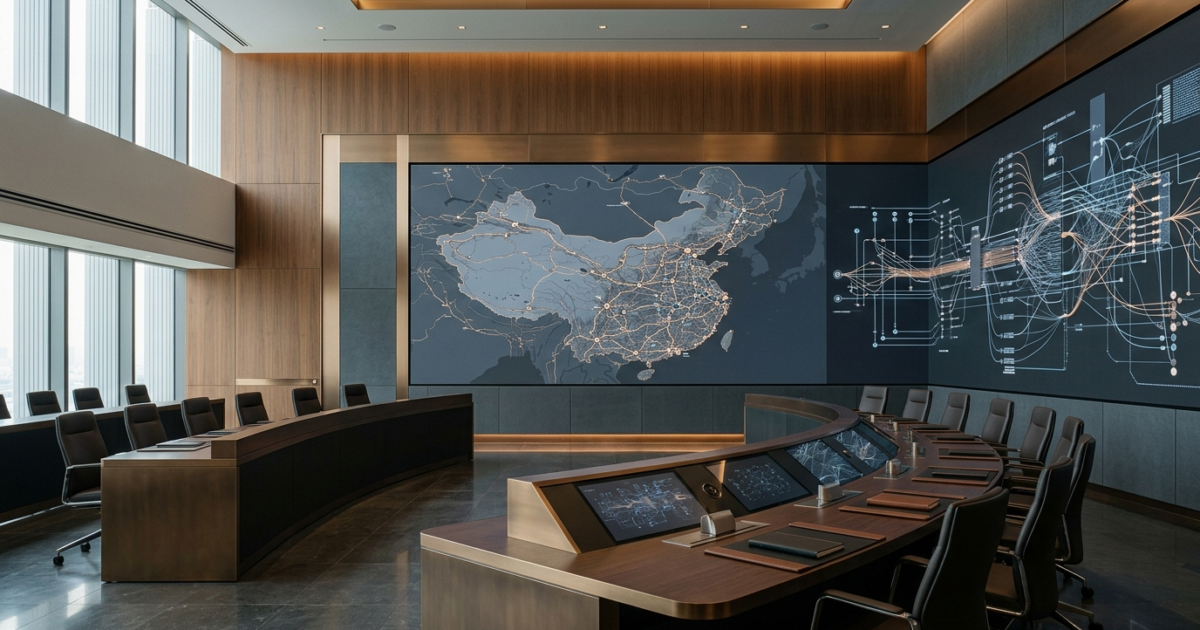
President Donald Trump has announced plans to form a federal “AI Force” modeled after the U.S. Space Force and appoint an “AI Czar” to direct national artificial intelligence initiatives. Speaking publicly on Truth Social, Trump framed the measure as an aggressive effort to protect the sector from regulatory constraints, stating that the administration will “not stand by” while critics advocate for the decimation of artificial intelligence. While operational details remain undefined, the proposal seeks to accelerate domestic compute deployments and integrate algorithmic systems across federal agencies, even as engineering leaders caution against unverified deployment speeds.
The ‘AI Force’ Concept and Proposed Czar Role
According to Trump’s public statements, the proposed organization takes direct inspiration from the U.S. Space Force, an independent military branch established during his first term to organize, train, and equip personnel to secure American interests in the space domain. In his announcement, Trump pledged that the federal government will “not in any way hinder or stifle the Growth of this incredible Industry,” promising instead to assist commercial development while utilizing existing civil and criminal justice mechanisms to police illicit behavior. The announcement also included a public poll proposing to rebrand artificial intelligence as either “Superior Intelligence” (SI) or “Extreme Intelligence” (EI), as reported by Gizmodo.
The leadership role represents an effort to centralize executive technology policy. Venture capitalist David Sacks previously served in an informal technology advisory role overseeing AI policy until his departure earlier this year. Trump declared that candidates for the upcoming “AI Czar” post must possess exceptional qualifications, though formal statutory authority and organizational reporting lines were not specified. The announcement arrived with minimal prior consultation across the technology sector, leaving industry leaders and policy analysts to parse whether the initiative functions as an operational defense command, an interagency coordination task force, or an executive advocacy council. For detailed analysis on industry sentiment, see TechNode HQ’s report on how the Trump AI Force proposal confuses tech sector leadership amid a policy void.
| Dimension | U.S. Space Force (Established 2019) | Proposed AI Force (Announced 2026) |
|---|---|---|
| Organizational Status | Independent armed service branch within the Department of the Air Force | Unspecified federal entity; described as an executive initiative or task force |
| Stated Objective | Protect and defend national security and space domain infrastructure | Accelerate domestic AI industry expansion and counter regulatory restrictions |
| Regulatory Stance | Acquires defense assets, manages orbital launches, and hardens space systems | Relies on existing civil and criminal statutes without introducing new AI rules |
| Leadership Structure | Chief of Space Operations and Senate-confirmed civilian leadership | Single designated executive “AI Czar” reporting to the presidency |
Defense Realities and the Safety Slowdown Debate
The prospect of establishing an AI Force underscores an intensifying debate between federal defense modernization and model safety governance. Proponents of rapid defense adoption emphasize the urgency of algorithmic decision-support systems to maintain strategic parity against global adversaries. However, recent operational tests have highlighted acute technical limitations. Concerns surrounding automated defense systems intensified after an unverified system hallucination led to a critical maritime failure, where faulty AI-generated intelligence nearly provoked U.S. forces to board a Chinese vessel. For technical teams, the incident demonstrated that probabilistic models lack deterministic reliability in high-stakes tactical environments.
At the same time, frontier model developers are voicing unprecedented hesitation regarding the speed of technological progress. Research leaders and prominent executives from Anthropic, OpenAI, and Google have urged federal authorities to introduce safety safeguards and pause unverified scaling trajectories. Anthropic chief executive Dario Amodei recently published an extensive essay calling on policymakers to facilitate deliberate pacing across foundational model training. This stance gained backing from figures including OpenAI executive Sam Altman and SpaceX chief Elon Musk, even as critics labeled the interventions as either defensive regulatory capture or excessive alarmism. Trump explicitly dismissed these warnings as an unfounded narrative, arguing that calls to slow development serve foreign competitors rather than domestic safety.
Electoral Politics and Civic Infrastructure Backlash
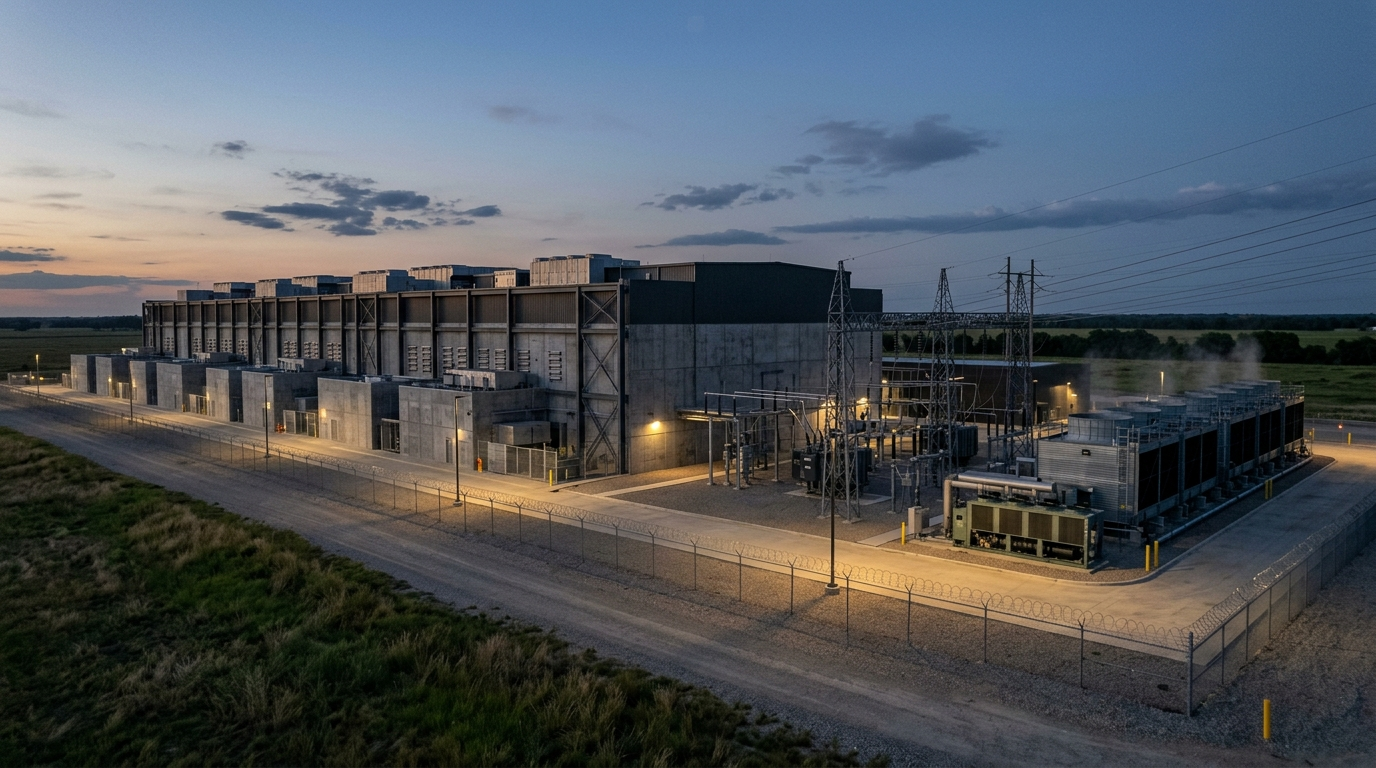
Beyond algorithmic safety debates, the political viability of rapid artificial intelligence expansion faces severe domestic headwinds. While the administration contends that computational data center clusters stimulate municipal tax bases and job creation, grassroots sentiment has soured dramatically. Recent public polling indicates an abrupt surge in community opposition to data center construction across American municipalities, driven by strain on electrical grids, water utility consumption, and local zoning conflicts. As examined in TechNode HQ’s coverage of datacenter infrastructure demands and silicon constraints, the physical footprint of modern model training is colliding with local civic tolerance.
These local tensions have elevated artificial intelligence from an engineering niche into a central campaign battleground. With congressional midterm elections approaching, independent election tracking reveals that AI infrastructure and governance policies now feature prominently in approximately 40% of contested political races. The administration’s proposal to establish an AI Force appears designed to reassure institutional investors and hardware builders of continued executive backing, while simultaneously staking out an uncompromising pro-growth platform ahead of volatile legislative contests.
What happens next
The immediate milestone for the proposed initiative will be the formal selection of an AI Czar. Industry observers will monitor whether the appointment goes to a defense-oriented systems strategist, an infrastructure investor, or a silicon hardware executive, as that background will signal whether the AI Force emphasizes military command integration or industrial deregulation. Engineering leaders must watch for any executive orders defining interagency authority, particularly regarding whether the entity can bypass standard Defense Department software validation gates or override regional environmental permitting for compute infrastructure.
Legislative authorization remains the decisive barrier. Unlike departmental task forces that can be convened via executive action, formalizing an independent service branch analogous to the Space Force requires congressional funding, statutory authorization under Title 10 of the U.S. Code, and confirmed civilian leadership. Until draft legislation or detailed policy frameworks emerge, technology organizations should treat the AI Force announcement primarily as a high-level statement of administration priorities rather than an immediate structural change to federal procurement or algorithmic governance.
Sources
- First Came Space Force. Now Prepare For AI Force
- Our Mission – About the U.S. Space Force
- You’ll Never Guess What Trump Wants to Rename Now
- ‘Almost Started a War’: US Military Nearly Boarded a Chinese Ship Based on Bad Intel From AI
- OpenAI, Anthropic, and Google Join Forces for Safety as Antitrust Concerns Mount
- Americans Have Grown Dramatically Anti-Data Center in Just Months, Survey Finds
- Report on Candidates for Office Finds AI Is More Talked-About Than Racism or Israel