Key takeaways
- AMD released comprehensive benchmark data comparing its upcoming 256-core EPYC “Venice” (Zen 6) processors against Nvidia Vera and Intel Xeon 6980P.
- The flagship EPYC 9996 claims 2.24x total integer throughput over Nvidia’s 88-core Vera and a 78% generational gain over the 192-core EPYC 9965.
- Per-core integer performance claims show a 20% advantage for a 96-core Venice model over Vera, but testing utilized a 600W power envelope instead of native 500W SKU limits.
- Benchmark comparisons rely on asymmetric compiler toolchains, pairing AMD’s GCC 16.1 builds against Nvidia’s published GCC 15.2 figures.
- Memory bandwidth in Stream benchmarks shows Venice leading Vera by 18% in total bandwidth and 8% on a per-core basis.
AMD has published detailed performance benchmarks from an extensive engineering white paper for its next-generation EPYC “Venice” server processors, taking direct aim at Nvidia’s Arm-based Vera CPU and Intel’s flagship Xeon 6980P. Led by the 256-core EPYC 9996, the Zen 6-based Venice architecture claims up to 2.24 times higher total throughput than Nvidia Vera in SPEC CPU 2026 integer workloads and an approximate 20 percent lead in per-core throughput on high-frequency 96-core configurations. However, a close technical examination reveals notable benchmark discrepancies, including disparate GNU Compiler Collection versions and asymmetric power budgets, that enterprise infrastructure buyers must evaluate before drawing final platform conclusions.
The disclosures, originally reported by Tom’s Hardware, build upon AMD’s preliminary Venice rollout from July. Rather than limiting claims to high-level marketing slides, AMD released granular subtest data across standard integer benchmarks, memory throughput tests, cloud runtimes, and synthetic agentic AI pipelines. While the raw scaling numbers indicate substantial compute density, the underlying test environments illustrate how vendor-supplied benchmark comparisons require rigorous methodology audits.
Architectural scope of Zen 6 Venice and the 256-core ceiling
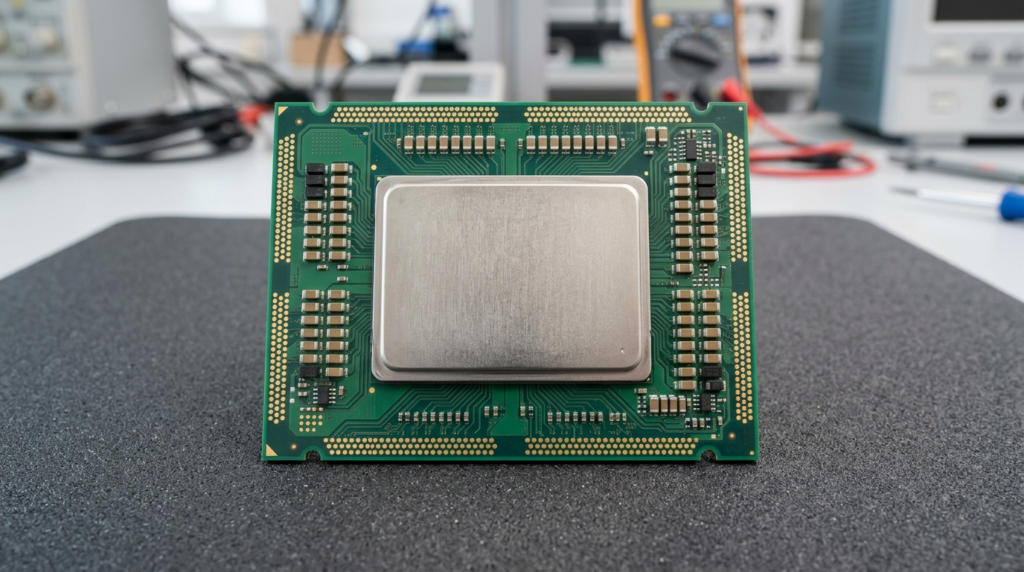
AMD’s EPYC Venice family represents the company’s transition to the Zen 6 microarchitecture, pushing socket-level core density beyond previous enterprise ceilings. The premier silicon variant detailed in the white paper, designated as the EPYC 9996 within the broader 9006 series, integrates 256 physical cores and 512 threads within a single monolithic platform envelope. Fabricated on advanced sub-3nm class foundry nodes, the processor incorporates 1024 MB of unified L3 cache across its compute chiplets, a 16-channel DDR5 memory subsystem supporting high-density Multiplexed Ranked DIMMs (MRDIMMs), and native support for PCIe Gen 6 interconnects.
This architectural profile directly challenges Nvidia’s Vera processor, an 88-core CPU built on custom Arm Neoverse-derived “Olympus” cores. Where Nvidia positions Vera as the high-throughput, tightly integrated host compute engine for its Vera Rubin rack-scale AI platforms, AMD is positioning Venice as a universal compute engine capable of consolidating hyperscale virtualization, high-performance computing (HPC), and distributed agent inference into standard enterprise rack form factors.
| Specification / Attribute | AMD EPYC 9996 (Venice) | Nvidia Vera | Intel Xeon 6980P (Granite Rapids-AP) | AMD EPYC 9965 (Turin-dense) |
|---|---|---|---|---|
| Architecture / ISA | Zen 6 (x86-64) | Olympus (Armv9) | Redwood Cove (x86-64) | Zen 5c (x86-64) |
| Cores / Threads | 256 / 512 | 88 / 88 | 128 / 256 | 192 / 384 |
| Memory Channels | 16-channel DDR5 / MRDIMM | LPDDR5X / Co-packaged | 12-channel DDR5 / MRDIMM | 12-channel DDR5 |
| PCIe Generation | PCIe Gen 6 | PCIe Gen 6 / NVLink | PCIe Gen 5 | PCIe Gen 5 |
| Thermal Design Power (TDP) | Up to 600W | Proprietary rack-budgeted | 500W | 500W |
The architectural expansion to 16 memory channels provides Venice with the aggregate memory bandwidth necessary to keep 256 cores fed without severe bus starvation. In comparison, Intel’s current flagship, the Xeon 6980P Granite Rapids-AP processor, tops out at 128 performance cores and 12 memory channels. AMD’s design choice emphasizes raw socket throughput and thread parallelism, seeking to prevent hyperscalers from offloading traditional infrastructure orchestration onto custom Arm silicon.
Dissecting the SPEC CPU 2026 throughput and per-core claims
The centerpiece of AMD’s comparative data involves the Standard Performance Evaluation Corporation’s SPEC CPU 2026 benchmark suite, specifically the integer rate (SPECrate 2026 intrate) metric. The integer rate test evaluates concurrent compute throughput by executing multiple application instances across available hardware threads. Standard operating procedure entails launching one benchmark copy per thread, allowing the 512 threads of the EPYC 9996 to leverage full hardware concurrency.
Under these conditions, AMD claims the 256-core EPYC 9996 achieves:
- 2.24x higher throughput than the 88-core Nvidia Vera system.
- 2.37x higher throughput than the 128-core Intel Xeon 6980P.
- 78% higher throughput gen-on-gen compared to AMD’s previous-generation 192-core EPYC 9965 (Turin-dense).
The generational delta against the EPYC 9965 is particularly notable from a silicon design perspective. While Venice increases the core count by 33.3 percent (from 192 to 256 cores), the reported integer throughput rises by nearly 78 percent. This indicates that AMD has extracted significant IPC (instructions per cycle) improvements and frequency headroom from the Zen 6 microarchitecture, rather than relying exclusively on core count expansion.
Beyond socket-level throughput, AMD highlighted single-thread and per-core efficiency by comparing a 96-core Venice SKU against Nvidia’s 88-core Vera. AMD asserted that its 96-core high-frequency part achieves roughly 20 percent higher per-core performance in the SPEC CPU 2026 Integer Rate test. However, evaluating this claim requires inspecting the specific hardware configuration and compilation parameters AMD utilized during testing.
Test conditions, compiler discrepancies, and power envelopes
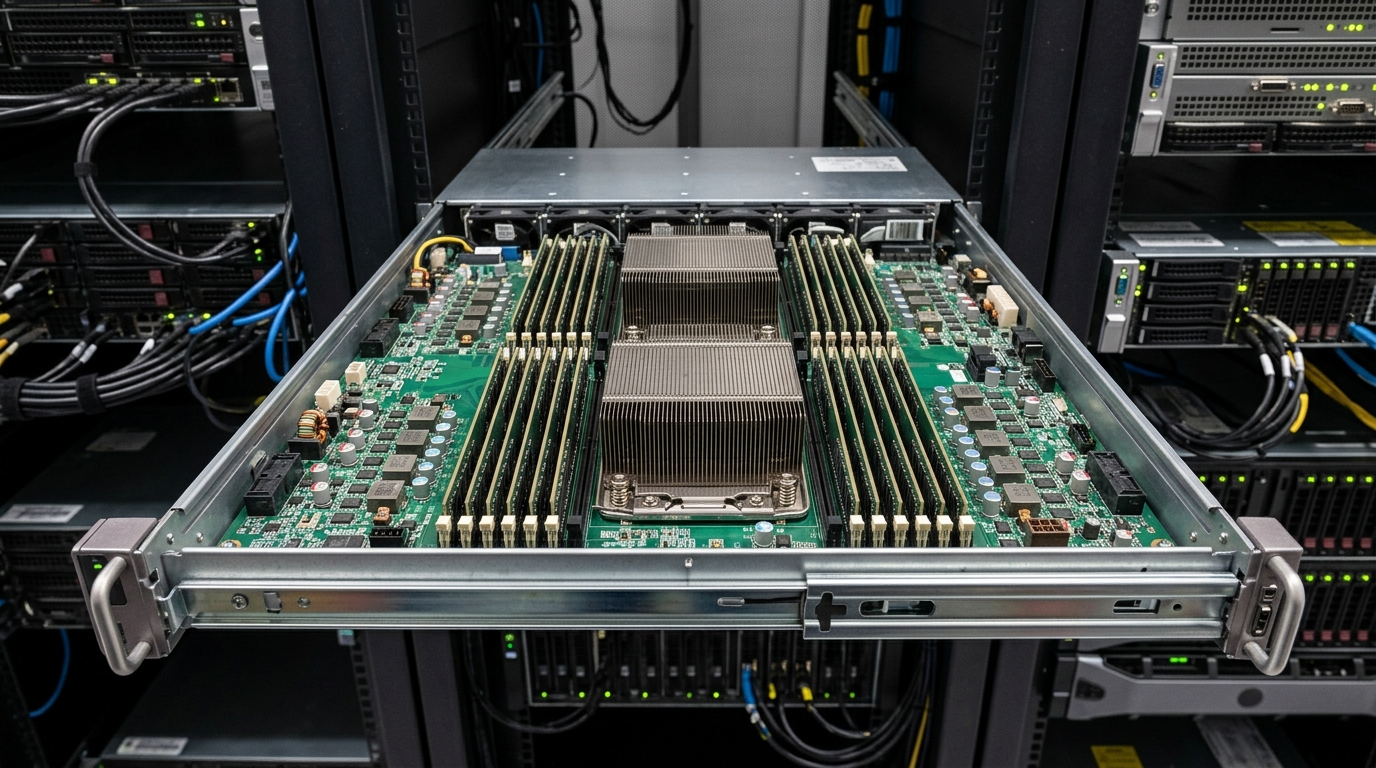
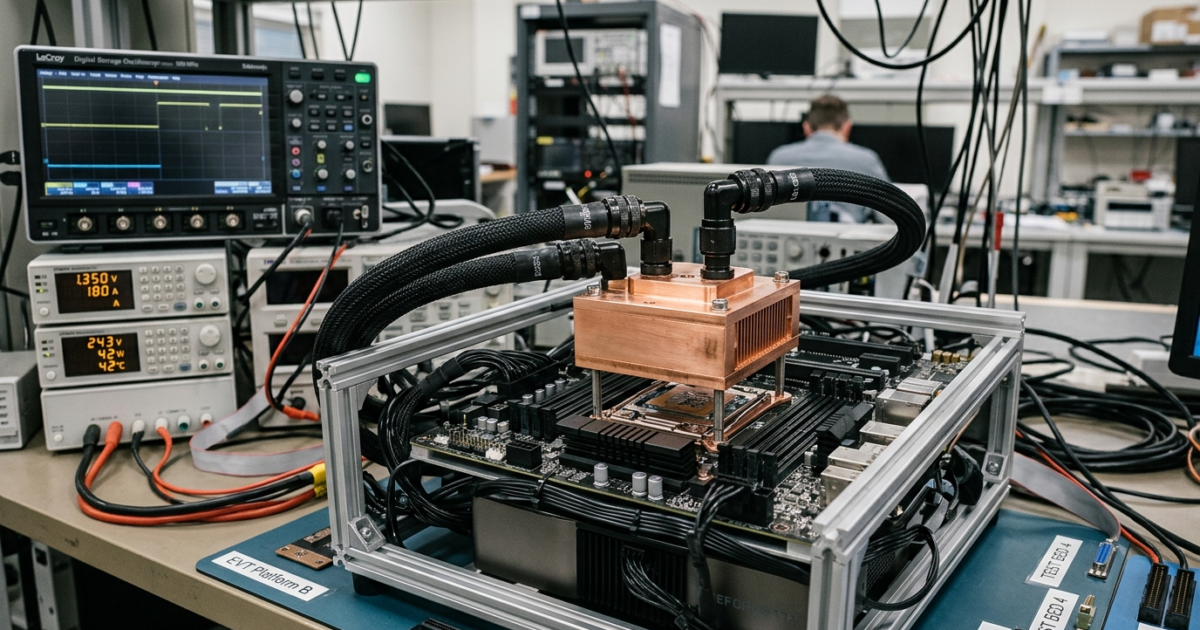
A granular review of AMD’s published white paper exposes several methodological caveats that complicate direct cross-architecture comparisons. Most significantly, AMD mixed benchmark datasets derived from different toolchain revisions and asymmetric power allocations.
In the per-core SPEC comparisons, AMD did not evaluate an off-the-shelf 96-core production processor. Instead, the test was conducted on a down-cored EPYC 9996 flagship, disabling 160 cores to isolate 96 active units. While down-coring is a common pre-release simulation technique, AMD allocated the test unit access to the full 600W platform power budget. By contrast, AMD’s native high-frequency 96-core production SKUs are rated at a 500W TDP envelope. Giving 96 cores access to 600W allows aggressive sustained all-core boost frequencies that may not reflect production behavior on standard 500W infrastructure.
The compiler selection introduces a second layer of divergence. For its Venice performance metrics, AMD utilized binaries compiled with the GNU Compiler Collection (GCC) version 16.1. The comparative Nvidia Vera numbers, however, were pulled directly from Nvidia’s published Vera white paper, which utilized GCC 15.2. Independent compiler analysis by Phoronix has shown that major GCC releases alter vectorization, loop unrolling, and link-time optimizations, generating measurable binary execution variances across identical architectures. Comparing GCC 16.1-optimized binaries against GCC 15.2 data introduces software-level skews that cloud the pure architectural hardware comparison.
| Benchmark Suite | AMD Venice Configuration | Comparative Baseline | Reported Advantage | Configuration Caveat |
|---|---|---|---|---|
| SPEC CPU 2026 intrate (Throughput) | EPYC 9996 (256 cores, 512 threads, GCC 15.2) | Nvidia Vera (88 cores) & Intel Xeon 6980P (128 cores) | 2.24x vs Vera; 2.37x vs Intel | Historical data collected July 2026; thread-to-copy mapping unstated in footnotes. |
| SPEC CPU 2026 intrate (Per-Core) | Down-cored 9996 (96 active cores, GCC 16.1) | Nvidia Vera (88 cores, GCC 15.2) | ~20% faster per-core | Venice tested at 600W budget vs 500W native SKU limit; cross-major GCC toolchain versions. |
| Stream (Memory Bandwidth) | Down-cored 9996 (96 active cores, 600W) | Phoronix third-party Vera test suite | +18% aggregate; +8% per-core | Third-party Vera dataset paired against vendor-internal down-cored prototype run. |
| Agentic AI Workloads | EPYC 9996 (256 cores) | Host CPU reference platform | Variable scaling | TPC-H and TPC-C datasets derived internally; not official audited metric submissions. |
In memory subsystem testing, AMD referenced controlled Stream benchmark data gathered by Phoronix. In that suite, Vera had outpaced legacy hardware due to its unified memory structure. AMD’s down-cored 96-core Venice setup at 600W countered with an 18 percent lead in aggregate memory throughput and an 8 percent lead in per-core memory bandwidth, highlighting the transmission bandwidth delivered by Venice’s 16-channel layout.
Enterprise cloud, HPC, and synthetic agentic workloads
Beyond synthetic integer pipelines, AMD’s white paper presented comparative metrics across core enterprise software stacks, including Java virtual machines, transactional relational databases, and cryptographic operations. In these environments, AMD conducted internal testing against AWS Graviton5 instances. The generational progression over Turin remained pronounced, solidifying AMD’s performance claims across standard containerized web and database services.
In high-performance computing (HPC) modeling, AMD demonstrated sustained performance leads over Intel’s Xeon 6980P Granite Rapids. Intel is preparing its next-generation data center platform, codenamed Diamond Rapids, for release next year. Until Diamond Rapids enters production channels, AMD’s density advantages in floating-point operations and thread distribution give Venice a substantial operational window in scientific and engineering simulation clusters.
AMD also introduced an “agentic AI workload performance” index designed to address the emerging requirements of autonomous AI systems. The suite aggregated workloads across NGINX reverse proxying, TPCx-AI, FAISS vector search, and a multi-persona agent replay framework. For database queries supporting agent retrieval, AMD noted that its TPC-H and TPC-C runs were derived from the standard benchmarks rather than audited compliance runs. The data demonstrates that while GPU accelerators handle matrix multiplications during LLM inference, the host CPU remains the primary bottleneck for context retrieval, vector database indexing, and API orchestration.
This workload divergence reflects a broader industry debate regarding data center design. As operators navigate extreme thermal constraints and multi-megawatt power limitations, alliances such as the flexible data center consortium are examining how to dynamically balance power between host CPUs and GPU accelerators. AMD’s positioning of Venice suggests that rather than minimizing the host CPU to an efficient Arm management chip, scaling host x86 compute provides tangible benefits for retrieval-augmented generation (RAG) and multi-agent systems.
Bottom line
AMD’s benchmark white paper demonstrates that the Zen 6 EPYC Venice architecture delivers formidable compute density, memory throughput, and generational scaling. A 78 percent integer throughput increase over the 192-core Turin processor confirms that Zen 6 is a substantial microarchitectural advance rather than a routine core-count refresh. For enterprise operators running dense virtualization, database clusters, and large-scale compilation farms, the 256-core EPYC 9996 offers unmatched x86 thread density per rack unit.
However, enterprise procurement teams should treat AMD’s head-to-head performance claims against Nvidia Vera with analytical restraint. Testing a down-cored 256-core processor under an unconstrained 600W thermal envelope does not replicate the operating conditions of shipping 500W 96-core parts. Furthermore, compiling benchmark binaries under GCC 16.1 while comparing them against GCC 15.2 data introduces software-level advantages that obscure true silicon-to-silicon parity.
Organizations standardizing on x86 infrastructure gain a clear performance ceiling expansion with Venice, avoiding the software recompilation and qualification cycles required when migrating to Arm platforms like Vera. Conversely, buyers evaluating rack-level power efficiency, AI accelerator coupling, and total cost of ownership should withhold deployment commitments until independent laboratories validate production stepping silicon under uniform compiler flags and standardized thermal boundaries.