Key takeaways
- Reactive Data Layer architectures position the local database as the absolute Single Source of Truth.
- Kotlin Flow streams replace pull-based MVP bottlenecks with an automated, unidirectional reactive data bus.
- RDLA eliminates traditional Clean Architecture boilerplate by decoupling public APIs from private implementation sourcing.
- Jetpack WorkManager ensures critical background synchronization succeeds despite network constraints and process termination.
- Optimistic local updates utilize asynchronous mutation queues to provide instant, offline-first UI responsiveness.
The Architectural Reality of the Reactive Data Layer
In the rapidly evolving landscape of modern mobile development, the Reactive Data Layer is no longer merely a luxury—it is an absolute necessity. As mobile applications scale to operate in highly unpredictable environments, the expectation for instant load times, seamless offline functionality, and real-time updates has fundamentally exposed the limitations of traditional software design patterns. Procedural, pull-based paradigms such as Model-View-Presenter (MVP) and unmodified CLEAN Architecture offer a solid foundation for the separation of concerns. However, when applied rigidly to the reactive demands of mobile platforms, they frequently introduce unnecessary bottlenecks and extensive boilerplate code. The Reactive Data Layer Architecture (RDLA) emerges as a definitive, mobile-optimized structural pattern specifically designed to bridge the chasm between reactive UI frameworks, such as Jetpack Compose, and the rigorous constraints of mobile storage, asynchronous threading, and intermittent connectivity.
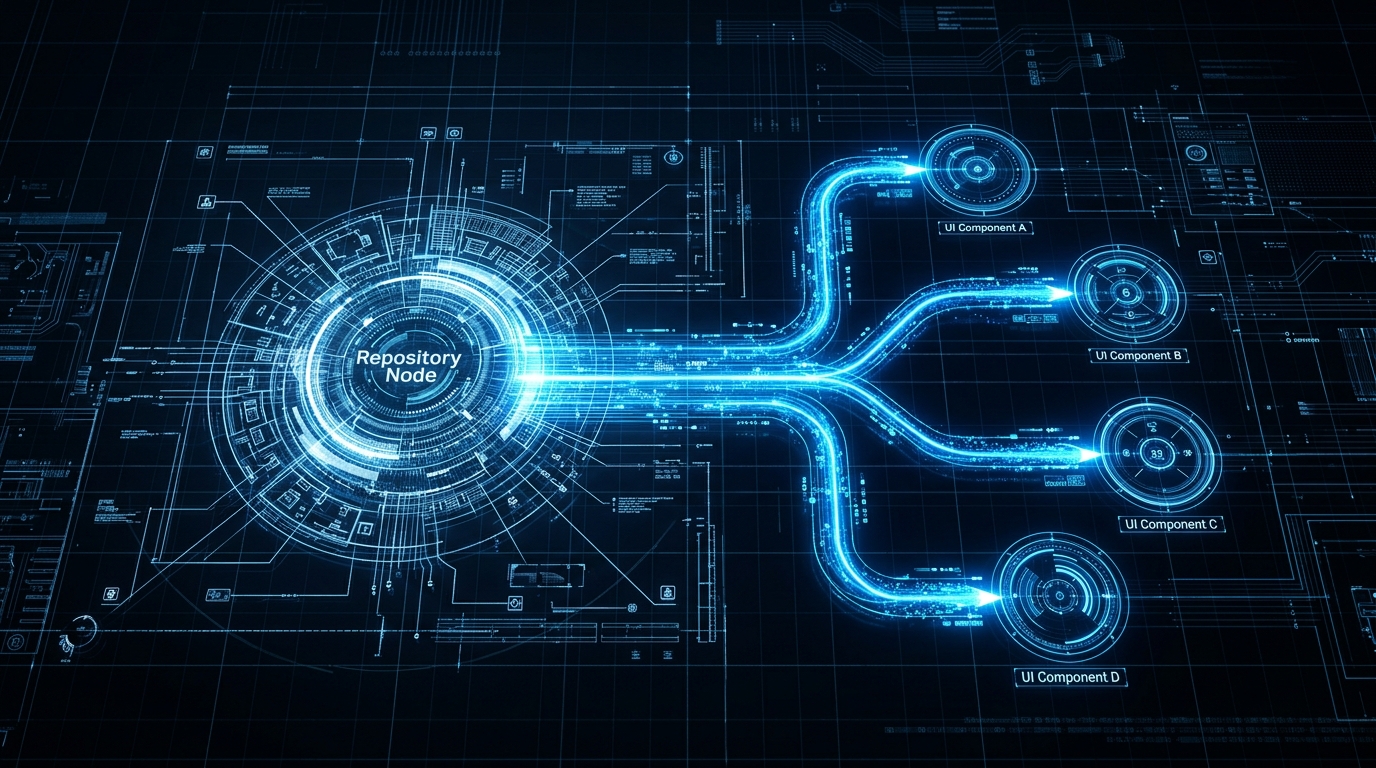
At its core, an offline-first application architecture fundamentally positions the local database as the absolute Single Source of Truth (SSOT). Unlike traditional REST API architectures built on stable network protocols and guaranteed packet delivery, mobile data sourcing must frequently interface with deeply nested, asynchronous callbacks executed across Binder threads and fragile hardware APIs like Bluetooth Low Energy (BLE). RDLA addresses these severe challenges by ensuring the UI layer never observes the network directly. Instead, in local-first, network-second architectures, the user interface subscribes exclusively to the local Room database. The network’s sole purpose is to populate this database. This paradigm decouples network call constraints from the UI entirely, empowering developers to transform chaotic, multithreaded asynchronous events into deterministic, synchronous data streams.
This architectural shift is a monumental advancement for Enterprise IT and engineering teams seeking to eliminate technical debt while maximizing agility. RDLA specifically eliminates the notorious “boilerplate tax” historically associated with Clean Architecture. In classic Clean implementations, developers are often forced to write trivial, pass-through Use Case classes for every simple database read operation. By enforcing a strict topological boundary between public API data definition and private implementation sourcing, RDLA bypasses this pass-through tax. The presentation layer can directly observe the repository’s reactive streams for simple CRUD operations, while complex, cross-domain business logic remains protected in dedicated use cases.
Market Impact & Deployment of Offline-First Systems
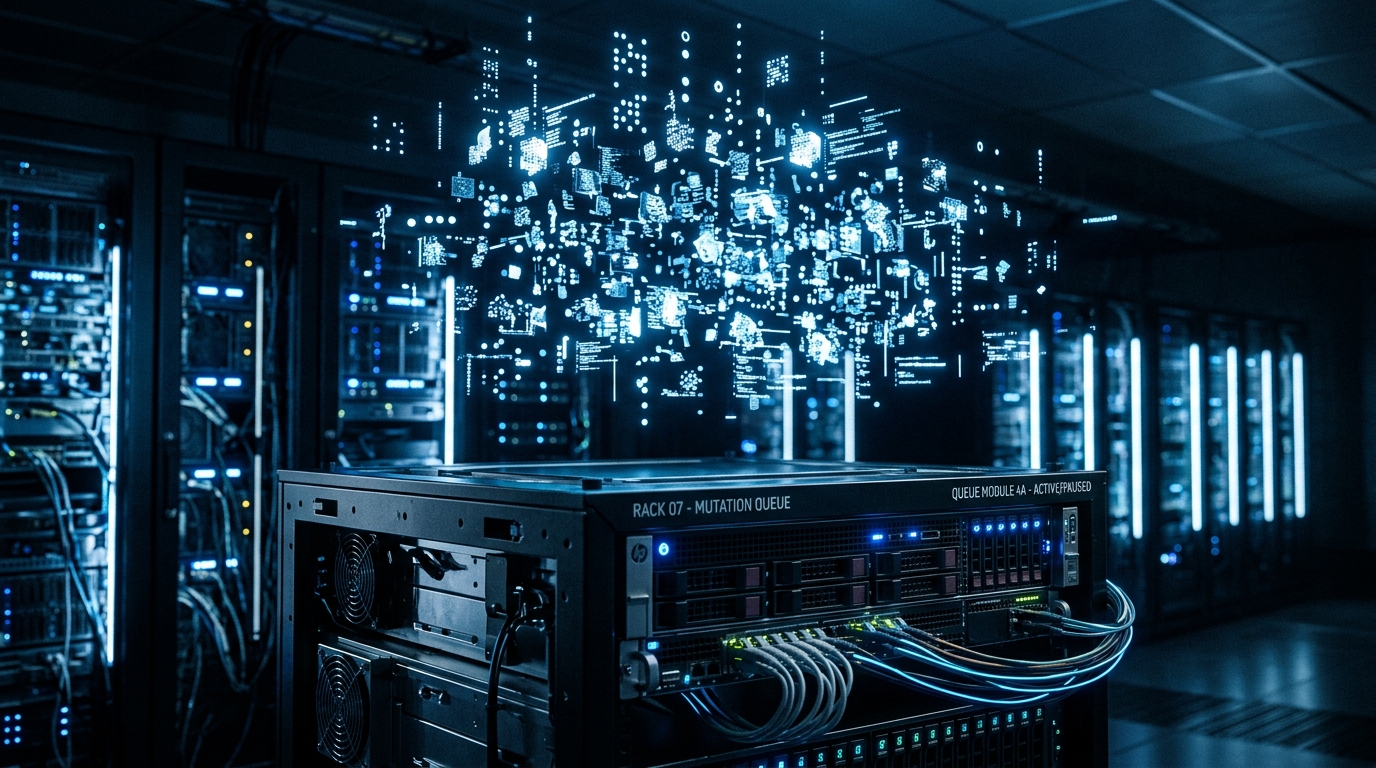
From the perspective of Total Cost of Ownership (TCO) and enterprise scalability, the implementation of RDLA offers profound and immediate business value. Traditional mobile architectures frequently degenerate into catastrophic state-synchronization bugs when handling highly volatile data sources, resulting in thousands of costly developer hours squandered on debugging race conditions and flaky connections. By utilizing cold Kotlin Flow streams, RDLA establishes a unidirectional, reactive data bus that directly replaces the pull-based MVP bottlenecks. The Room database, acting as the Single Source of Truth, automatically emits updates to observers whenever the database content changes by leveraging Kotlin Flow. Jetpack Compose, in turn, utilizes functions like collectAsStateWithLifecycle() to observe these data streams securely, completely automating UI state synchronization without the need for error-prone manual polling.
Furthermore, RDLA strategically leverages Android Jetpack WorkManager to govern cloud synchronization and heavy data lifting. For asynchronous mutations bridging the local database to the remote cloud infrastructure, simply launching coroutines within an application scope is vastly insufficient. Android’s aggressive power management features—such as Doze mode and arbitrary process-death mechanics—can ruthlessly terminate an application mid-flight. For highly regulated industries, data drops are categorically unacceptable. WorkManager delegates the sync request directly to the OS system service, guaranteeing that critical payloads execute with respect to strict systemic constraints (e.g., unmetered Wi-Fi requirements or battery thresholds). Write actions can be seamlessly stored in a dedicated ‘Outbox’ table to be synchronized later when network connectivity is reliably restored. This decoupling of network operations from the UI helps reduce battery and data usage by enabling the intelligent batching of sync operations, driving down operational costs and vastly improving the application’s energy efficiency.
Testing, quality assurance, and deployment velocity also witness dramatic improvements under the RDLA framework. RDLA intrinsically simplifies the Android testing lifecycle by isolating the Room database boundaries from Retrofit network configurations. By implementing an internal TestExtensions interface, QA engineers and developers can execute decoupled unit tests utilizing frameworks like Robolectric. This pattern empowers teams to validate robust offline fallback logic and complex data mapping accurately, without ever relying on fragile, simulated SQLite mocking. As a result, continuous integration and delivery pipelines become exponentially faster and more resilient, directly contributing to accelerated go-to-market strategies for major enterprise releases.
Red Team Audit & Conflict Resolution
While the Reactive Data Layer Architecture presents a highly optimized utopia for mobile data management, a rigorous technical audit reveals intrinsic complexities that marketing literature often glosses over. The promise of optimistic local updates and seamless background synchronization naturally invites the pervasive threat of data collision. When an application writes to an asynchronous mutation queue and delegates the upload to Jetpack WorkManager, the architecture inherently assumes that the remote server will eventually accept the local data. However, in heavily distributed systems or multi-device ecosystems, there is a constant risk of remote rejection—manifesting as HTTP 409 Conflict errors if a record was concurrently modified elsewhere, or 422 Unprocessable Entity errors if the data fails remote validation rules.
In a poorly implemented offline-first system, this results in a corrupted Single Source of Truth, where the local database diverges permanently from the cloud reality. RDLA dictates that the architecture must handle these rollbacks gracefully without destroying the user experience. When the remote API throws an HTTP exception, the worker must catch the failure and flag the local mutation entity in the Room database as FAILED, rather than initiating an infinite, battery-draining retry loop. The central repository—acting as the supreme coordinator between the local and remote data sources—monitors the health of the sync process. It emits this failure state as a transient event to the UI layer via SharedFlow, while simultaneously executing a database transaction to purge the rejected mutation from the queue. Because the UI layer is reactively collecting the merged flow, purging the pending mutation forces Room to trigger a new emission. The UI instantly and automatically reverts to the last known, server-confirmed state. This conflict resolution mechanism is brilliant in its reactivity but requires substantial upfront engineering effort to implement correctly. The “boilerplate tax” of Clean Architecture is arguably replaced by a “synchronization tax” in RDLA, demanding that developers meticulously architect their database schemas, Outbox tables, and rollback transactions.
Cross-Industry Impact: Beyond Mobile Apps
The philosophical underpinnings of the Reactive Data Layer Architecture are poised to disrupt multiple industries far beyond the confines of consumer mobile applications. In the realm of autonomous logistics and robotic fleet management, vehicles frequently operate in environments with zero cellular connectivity—from deep underground mining facilities to remote agricultural zones. Implementing an RDLA-style Single Source of Truth aboard the edge device ensures that autonomous drones and rovers can continue to process highly complex operational logic and log sensor data to their local mutation queues without stalling. Upon returning to a high-bandwidth coverage zone, the queued telemetry and mission data synchronize deterministically, ensuring zero data loss in mission-critical industrial deployments.
Similarly, the financial technology (FinTech) and Point of Sale (POS) industries are heavily adopting offline-first architectures to survive infrastructure fragility. A mobile POS system operating at a crowded festival or a rural marketplace cannot afford to drop a transaction due to network congestion. By embracing reactive data principles, the transaction is optimistically processed and recorded locally, updating the merchant’s dashboard instantly. The financial reconciliation occurs asynchronously via secure, encrypted background workers when connectivity stabilizes. This approach fundamentally shifts the burden of network reliability away from the immediate point of user interaction, safeguarding revenue streams and eliminating the customer frustration associated with timed-out payment gateways.
The Consumer Translation: Seamless User Experiences
For the worldwide public and the everyday smartphone user, the transition to a Reactive Data Layer is virtually invisible beneath the screen, yet profoundly transformative in their hands. The primary consumer benefit manifests as an application that never feels slow, unresponsive, or broken, regardless of cellular reception or transit dead zones. When a user modifies a profile, updates a critical log, or interacts with a heavily data-dependent interface while fully disconnected from the internet, the app does not freeze, crash, or infinitely display a frustrating loading spinner. Instead, optimistic updates immediately improve perceived performance by performing the write operations locally first. These modifications are written to an asynchronous mutation queue within the local database, guaranteeing that the UI reflects the change instantaneously while background mechanisms handle the complex synchronization physics silently.
This unwavering reliability is especially critical when the software interfaces with advanced consumer medical hardware and precise physiological monitors, such as dual-node sleep wearables or self-fitting digital hearing aids. These sophisticated devices depend heavily on Bluetooth Low Energy (BLE) APIs, which are notoriously prone to timing issues and the infamous GATT race conditions where underlying controllers process commands out of order. RDLA elegantly addresses these hardware friction points. By employing Kotlin Coroutines and suspendCancellableCoroutine bridges to serialize physical hardware operations, the architecture fundamentally transforms unpredictable external hardware events into highly deterministic, reliable data streams. The end result is a clinical-grade application experience that feels instantly responsive and infinitely reliable, building deep, long-term consumer trust in an increasingly volatile digital ecosystem.
To conceptualize the Reactive Data Layer for non-engineering stakeholders, consider it as a highly automated global logistics hub. In a traditional architecture, every individual retail store (the user interface) must frantically call the distant manufacturing factory (the remote network) every time a customer asks for a product. This results in delays, lost messages, and empty shelves if the road is blocked. RDLA shifts this paradigm completely: the factory now constantly and independently restocks a local, hyper-efficient warehouse (the local database). The retail stores are instructed to only ever look at the warehouse. This guarantees they always have exactly what the customer needs instantly, completely oblivious to whether the road to the factory is currently open, washed out, or under heavy traffic. The logistics are handled entirely in the background, ensuring the front-end experience remains perfectly pristine.
Frequently Asked Questions
Q1: What is Reactive Data Layer Architecture (RDLA)?
A1: RDLA is a mobile-optimized architectural pattern that bridges reactive UI frameworks like Jetpack Compose with storage constraints. It relies on a local database as the Single Source of Truth and uses unidirectional Kotlin Flow streams.
Q2: How does RDLA handle offline data synchronization?
A2: User modifications are written to an asynchronous local mutation queue, immediately updating the UI. Android’s Jetpack WorkManager then securely synchronizes this data with the remote server when connectivity is restored.
Q3: Why is RDLA preferred over traditional Clean Architecture for mobile?
A3: Clean Architecture often introduces significant boilerplate for simple database reads on mobile. RDLA eliminates this pass-through tax while maintaining strict separation between public API definitions and private data sources.
Q4: What happens if a background sync fails in RDLA?
A4: If the server rejects the data, WorkManager catches the HTTP exception and flags the local entity as failed. The repository emits this transient event, allowing the UI to instantly revert to the last server-confirmed state.
Q5: How does RDLA simplify Android testing?
A5: RDLA isolates Room database and Retrofit network configurations. By utilizing a TestExtensions interface and Robolectric, engineers can validate local fallback logic without fragile SQLite mocking.
TechNode HQ Verdict: Pros, Cons & Usability
- Pro (Engineering): Radically reduces Clean Architecture boilerplate by decoupling public APIs from private implementation sourcing.
- Pro (Consumer): Zero-latency UI updates regardless of network status, achieved through optimistic local updates and asynchronous mutation queues.
- Con: Increased initial setup complexity for configuring WorkManager, TestExtensions, and mutation merging logic.
- Con: Demands rigorous collision resolution logic when synchronizing local states with the cloud to prevent corrupted Single Source of Truth.
Enterprise Usability: CTOs and lead architects should mandate RDLA for any mobile application that interfaces with IoT devices, requires absolute offline reliability, or suffers from complex UI state synchronization bugs. The reduction in TCO and developer maintenance overhead makes the transition highly profitable.
Everyday Usability: Consumers should expect this level of reliability from all modern applications. If an app cannot gracefully handle intermittent connectivity without losing data, it is built on an obsolete architecture.