Key takeaways
- Netflix cloud gaming eliminates hardware barriers by turning smartphones into latency-tolerant universal controllers.
- Design by subtraction ensures cloud games remain highly playable even on unstable, fluctuating consumer internet connections.
- The service relies on edge computing architectures to stream Unity-engine games seamlessly to everyday smart TVs.
- Third-party Bluetooth controllers are explicitly unsupported, locking users into Netflix’s proprietary mobile-as-controller ecosystem.
- Nostalgic Wii comparisons highlight the strategic pivot toward intuitive, pick-up-and-play accessibility for mass-market audiences.
The Architectural Reality of Netflix Cloud Gaming
The streaming wars have crossed the Rubicon. No longer confined to pre-rendered video files pushed through Content Delivery Networks (CDNs), the battlefield has shifted toward interactive, real-time computational workloads. At the forefront of this shift is Netflix cloud gaming, a paradigm-altering initiative that entirely bypasses the traditional constraints of dedicated gaming hardware. By weaponizing the ubiquitous smartphone as a universal input device and treating the modern smart television as a sophisticated dumb terminal, Netflix is orchestrating an architectural reality that drastically reduces the barrier to entry for interactive entertainment. This is not merely a technical evolution; it is a masterclass in exploiting existing consumer ecosystems to deploy high-fidelity experiences without forcing the end-user to purchase expensive, proprietary silicon.
To fully understand the gravity of this pivot, one must examine the historical relationship between Netflix and legacy gaming consoles. The Nintendo Wii famously supported the Netflix app for video streaming, which initially launched in 2010. During those early days of streaming infrastructure, accessing Netflix on the Nintendo Wii required users to insert a physical ‘Instant Streaming Disc’ into the console’s optical drive. This antiquated hardware handshake was an interim solution, eventually replaced by a natively downloadable Netflix app from the Wii Shop Channel. However, as the technological demands of streaming evolved, legacy hardware was left behind. Netflix officially ended support for its app on the original Nintendo Wii on January 31, 2019. This discontinuation of Netflix on the Nintendo Wii was part of a wider, industry-wide shutdown of streaming services on that aging console, marking the end of an era where dedicated gaming boxes were the primary Trojan horse for streaming media in the living room.
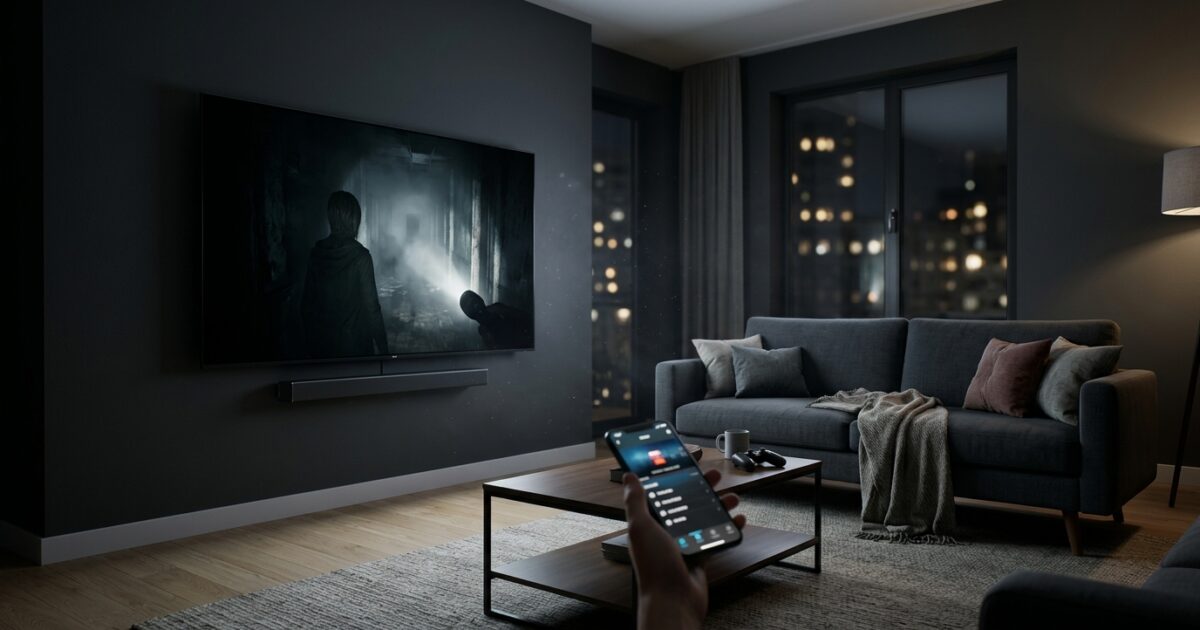
Today, the landscape has completely inverted. Netflix’s modern cloud gaming initiative does not run on the Nintendo Wii hardware, nor does it require any dedicated gaming console. Instead, Netflix’s cloud gaming service allows users to play games directly on TVs and in web browsers, relying on a cloud-native architecture that streams directly to displays. Netflix cloud gaming is designed specifically to be played using your smartphone or tablet as a controller. This eliminates the requirement for consumers to invest in expensive gamepads, effectively transforming every individual with a mobile phone and a Netflix subscription into a fully equipped gamer. The architectural brilliance lies in its simplicity: push the heavy computational rendering to the cloud, push the display output to the television, and leverage the sophisticated array of sensors already sitting in the user’s pocket to handle telemetry and input.
Market Impact & Deployment
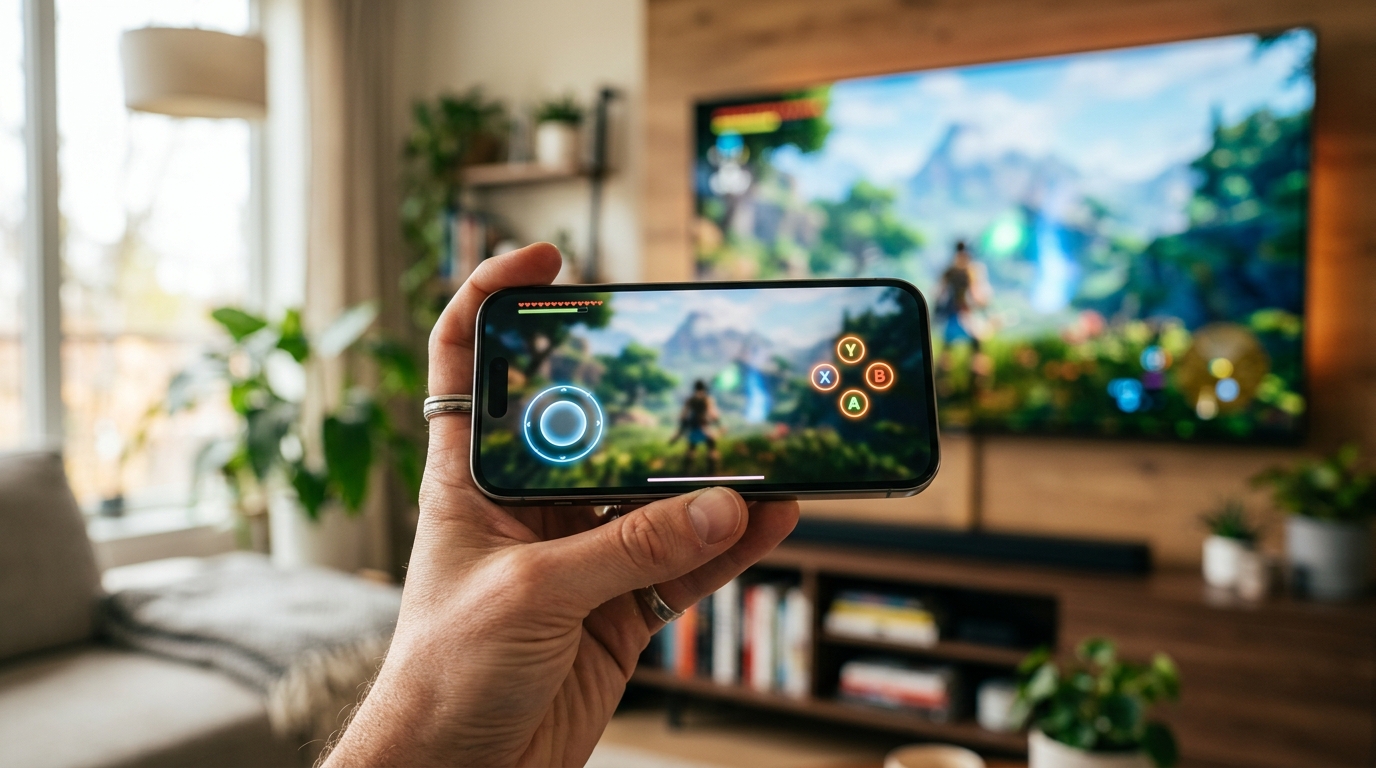
The deployment strategy for this vast interactive network is ingeniously streamlined to maximize the Total Addressable Market (TAM). By stripping away the requirement for dedicated peripherals, Netflix is tapping into a massive demographic of casual viewers who would never otherwise purchase gaming hardware. To play Netflix games on a TV, users must use the official Netflix Game Controller app or the controller interface integrated directly into the primary Netflix mobile app. Connecting the smartphone controller to Netflix games on TV involves scanning a dynamically generated QR code displayed on the television screen. This optical handshake establishes a secure, low-latency WebSocket connection between the mobile client and the rendering server, bypassing complex local network configurations or error-prone Bluetooth pairing protocols.
The user interface of this digital controller is aggressively minimalist. The Netflix Game Controller app turns the phone into a controller featuring a virtual thumbstick and a handful of oversized, highly responsive digital buttons. This intentional limitation prevents the user interface from becoming intimidating. Crucially, Netflix has explicitly stated that physical gamepads and other third-party Bluetooth controllers are not supported for its cloud gaming titles. While this may frustrate hardcore gaming enthusiasts who prefer tactile feedback, this closed ecosystem approach is a calculated business decision. Netflix games on TV are built specifically for the mobile-as-controller model to ensure they are accessible without requiring users to purchase third-party hardware. This standardization guarantees that developers only need to optimize for a single, uniform input paradigm, drastically reducing Quality Assurance (QA) overhead and fragmentation across different controller mappings.
From a business perspective, the Return on Investment (ROI) of this ubiquitous deployment model is staggering. For C-suite executives analyzing the economics of the Consumer Tech landscape, the elimination of endpoint hardware fundamentally alters the Customer Acquisition Cost (CAC). Traditional platforms like Xbox or PlayStation must subsidize expensive consoles to lock users into their ecosystems. Netflix, conversely, incurs zero hardware manufacturing, shipping, or warranty liabilities. The infrastructure scales dynamically in the cloud, allowing the enterprise to provision interactive instances on demand. By transforming the mobile phone into the ultimate remote control for interactive media, Netflix is effectively deploying an army of gaming peripherals to hundreds of millions of households globally overnight, without spending a single dollar on hardware production.
Latency Tolerance and Edge Computing
The technical Achilles heel of any remote rendering architecture is latency. Transmitting raw gyroscope data and touch inputs from a smartphone to a remote server, computing the game logic, rendering the resulting frame, and streaming that encoded video back to a television introduces an inevitable round-trip delay. A phone’s gyroscope data relayed to Netflix’s cloud servers will not give you anywhere near the kind of accuracy required for twitch-based, competitive multiplayer shooters. To circumvent this immutable law of physics, the engineering teams have embraced a philosophy of extreme latency tolerance.
As Sean Krankel, Netflix’s head of narrative games, elucidated during demonstrations of the upcoming title Unhinged, “Because it is being played on the cloud, we wanted something that is latency tolerant.” This means that gameplay mechanics are specifically designed to be forgiving. When players wave their phones in vague arcs to interact with the environment, the on-screen pointer heavily utilizes magnetic aim assist, snapping to various points of interest or interactable items. This “pixel hunting” mechanic ensures that even if a network packet drops or the connection experiences jitter, the player is not unfairly penalized. It is a brilliant software solution to a hardware limitation, masking the inherent latency of Networking & Cloud architectures through clever, user-friendly game design.
The reality of consumer internet infrastructure is highly variable. While enterprise cloud providers boast immense bandwidth, the “last mile” connection to a user’s living room is often fraught with unstable Wi-Fi signals and overcrowded channels. During a controlled test environment in a Manhattan hotel, a brief drop in Wi-Fi connectivity rendered the game temporarily uncontrollable, necessitating a hard restart. To combat these inevitable fluctuations, Netflix employs robust error-correction algorithms and leverages edge computing networks. By moving the rendering hardware physically closer to the end-user through distributed server nodes, they can minimize the physical distance data must travel, thereby keeping latency within the acceptable threshold for narrative-driven, point-and-click experiences.
Design by Subtraction
To further accommodate the realities of cloud streaming, developers are adopting a methodology known as “design by subtraction”—a term originally popularized by legendary Ico director Ueda Fumito. In the context of Netflix’s Unhinged, developed by Night School Studio (which Netflix acquired in 2021), this means ruthlessly cutting features that do not strictly serve the core narrative or that might be compromised by network lag. Sam Warner, the game director at Night School Studio, noted that early iterations of the game offered players free roaming movement and complex branching dialogue. However, playtesting revealed that non-traditional gamers would frequently get stuck on environmental geometry or become overwhelmed by the choices, resulting in an experience that was “slow and weird and boring.”
By pulling elements away rather than piling them on, the studio created a tightly defined, episodic horror experience that can be completed in roughly 40 minutes—the exact duration of a typical Stranger Things episode. The game features high-profile voice and acting talent, including Zoë Kravitz as the protagonist Ava, Sadie Sink as her friend Claire, and gaming veteran Troy Baker as a menacing serial killer. The game was built utilizing the robust Unity engine, though the graphical output is intentionally stylized to survive the heavy video compression required for cloud streaming. Developers frequently employ visual tricks like heavy film grain filters and atmospheric fog to intentionally mask the macro-blocking and graphical artifacts that inevitably occur when streaming interactive video over fluctuating residential networks.
The Wii Comparison Reimagined
The overarching strategy of prioritizing mass-market accessibility over hardcore graphical fidelity has led to widespread historical parallels. Industry figures and journalists have drawn nostalgic comparisons between the user experience of Netflix’s cloud gaming titles and the Nintendo Wii. These comparisons focus heavily on the accessibility and ‘pick-up-and-play’ nature of both Netflix cloud gaming and the original Nintendo Wii. Back in 2006, Nintendo upended the traditional gaming market by introducing a motion-controlled console that appealed to grandmothers, families, and demographics that had never previously touched a traditional gamepad. Netflix is attempting to execute the exact same playbook, albeit powered by remote servers rather than local Hardware & Silicon.
Netflix developers have occasionally compared the style of their mobile-based control schemes, such as motion-based interaction or ‘pointing’ with a phone, to the intuitive nature of the Wii Remote. Sean Krankel specifically drew parallels to the 2006 Wii first-person shooter Red Steel, noting how Unhinged utilizes the smartphone not just as a traditional controller, but as a diegetic object within the game world. Players receive simulated phone calls from characters directly to the device in their hands, and the phone’s physical flashlight button actually triggers in-game actions, bridging the gap between the physical and digital realms much like the Wii Remote’s built-in speaker did nearly two decades ago.
It is crucially important to note the technical distinction between these eras. You cannot use a Nintendo Wii controller with Netflix’s modern cloud gaming service. Using a legacy Wii Remote as a controller for PC or mobile phone emulation requires entirely separate third-party software and complex hardware workarounds, such as a Bluetooth adapter or a specialized Dolphin Bar, and is completely unrelated to Netflix’s ecosystem. Netflix’s approach is far more elegant for the modern era: by utilizing the supercomputers already resting in the hands of billions of consumers, they have effectively resurrected the spirit of the Wii for the cloud computing generation. The success of this initiative will ultimately depend not on teraflops or raw processing power, but on how seamlessly the platform can mask the complexities of the network from the end user, delivering frictionless entertainment straight to the living room.