Key takeaways
- TMD Chain Lock offers keyless Bluetooth proximity unlocking.
- Built with a hardened manganese alloy steel core and Kevlar.
- Features an integrated 100dB motion-sensitive alarm.
- ART-2 certified for strict European e-bike insurance policies.
- Retails between €229 and €289, significantly pricier than analog locks.
The paradigm of physical security in urban environments is undergoing a radical digital transformation, accelerated by the explosive growth of high-value micro-mobility assets. At the forefront of this shift is the TMD Chain Lock, a highly engineered $280 hardware device that ambitiously positions itself as a premium, keyless solution to what has historically been a $60 problem. For decades, cyclists have relied on heavy, cumbersome analog chains to protect their investments. However, as the global market pivots toward premium electric commuter and cargo bikes—frequently retailing between $3,000 and $10,000—the limitations of traditional keyways have become painfully apparent.
Developed by a vanguard technology firm with deep roots in securing automated teller machines (ATMs) for institutional banking, the TMD Chain Lock brings enterprise-grade, zero-trust cryptographic architecture to the consumer hardware sector. By bridging the gap between heavy-duty metallurgy and Bluetooth-enabled access management, this device fundamentally redefines how owners interact with their vehicles. It completely eliminates the systemic vulnerability of lost, stolen, or duplicated physical keys, replacing them with dynamic smartphone authentication. In this comprehensive editorial deep-dive, we dissect the architectural reality of the lock, auditing its hardened steel construction, analyzing its crucial insurance compliance, and evaluating the day-to-day usability bottlenecks that dictate its viability in both consumer ecosystems and commercial fleet deployments.
The Architectural Reality of the TMD Chain Lock

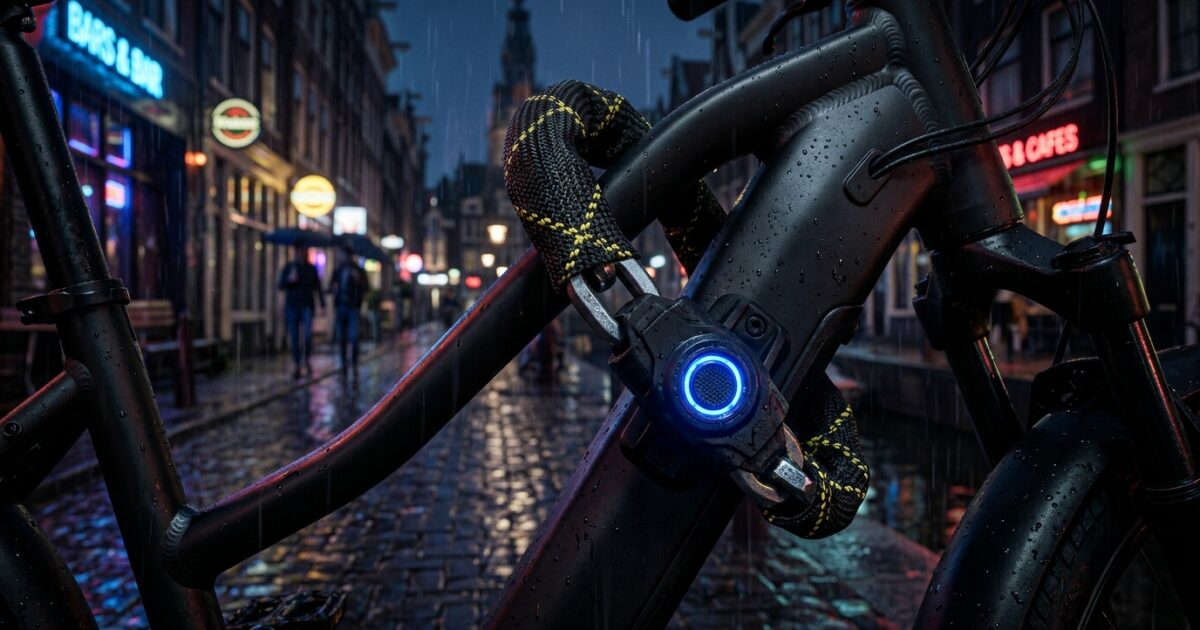
When deconstructing the architectural reality of the TMD Chain Lock, one must first understand that this device is a masterclass in hybrid engineering, seamlessly integrating formidable physical deterrence with sophisticated digital access protocols. The core of the lock’s mechanical defense is constructed from a hardened manganese alloy steel chain. Unlike standard carbon steel, which can be brittle or relatively easily severed by portable angle grinders, manganese steel undergoes significant work-hardening upon impact, aggressively resisting cutting and blunt-force attacks. To complement this internal strength without inflicting cosmetic damage to the delicate carbon fiber or anodized aluminum frames of modern bicycles, TMD engineers enveloped the heavy chain in a state-of-the-art protective sleeve. This sleeve is woven from a specialized blend of Dyneema and Kevlar fibers. Widely utilized in aerospace engineering, marine mooring lines, and ballistic body armor, these ultra-high-molecular-weight polyethylene materials deliver unparalleled abrasion and cut resistance while maintaining a remarkably lightweight and highly flexible profile. Users consistently praise this lightweight design on Trustpilot—where the lock boasts a stellar 4.6/5 rating—specifically noting how effortlessly it wraps around a seat post compared to traditional, unwieldy U-locks.
Beneath the Kevlar exterior lies the lock’s true technological differentiator: its digital access gateway. Abandoning the mechanical cylinder entirely—a perennial weak point vulnerable to lock-picking, bumping, and drill attacks—the lock relies exclusively on a motorized deadbolt controlled by a Bluetooth Low Energy (BLE) proximity sensor. As the authenticated user’s smartphone enters the radio frequency perimeter, the lock performs a secure cryptographic handshake in milliseconds. Once primed, a single tactile press of the lock’s unified external button commands the motorized actuator to release the shackle. This keyless telemetry is a direct descendant of TMD’s enterprise legacy in the banking sector, where they developed centralized access systems to authorize ATM servicing without the immense risk of circulating physical master keys. Furthermore, the lock’s chassis houses a sensitive gyroscopic motion detector. If the locked bike is aggressively jostled or tampered with, it instantly triggers a piercing 100dB acoustic alarm, acting as a potent active deterrent that automatically deactivates after 10 seconds of subsequent inactivity to mitigate false-alarm fatigue.
Market Impact & Deployment

Transitioning from consumer hardware to its broader market implications, the deployment of this keyless system forces both consumers and enterprise fleet operators to recalibrate their understanding of Total Cost of Ownership (TCO). In absolute terms, the price tags—€229 for the 70cm Mini, €249 for the 110cm Regular, and €289 for the 160cm Long version—are undeniably steep. This is especially apparent when analog ART-2 certified chains, like the ubiquitous ABUS 8900, are readily available for a fraction of the cost, typically hovering around $60. However, contextualizing this $280 expense against the backdrop of a premium e-bike ecosystem changes the financial calculus entirely. When securing a $10,000 electric cargo bike used daily for school runs or commercial grocery deliveries, a $280 lock represents a one-time insurance premium of less than 3% of the asset’s total value.
Crucially, the TMD lock’s intrinsic value is directly tied to its ART-2 certification. Evaluated and awarded by an independent Dutch testing authority, an ART-2 rating (conceptually similar to Sold Secure Silver or Gold in the UK, or VdS in Germany) is a strict mandatory requirement for validating comprehensive theft insurance policies on expensive bicycles in nations like the Netherlands. Should the unthinkable happen and the bike is stolen, the TMD ecosystem provides an unprecedented advantage for claims processing: the companion mobile application generates a verified cryptographic log file. This digital audit trail can be exported directly to insurance adjusters as indisputable proof that the bike was actively secured at the exact time of the theft, drastically reducing claims friction. Beyond individual insurance, this telemetry unlocks massive potential for B2B fleet management. The centralized app enables primary owners to execute digital access sharing, allowing them to instantly provision, monitor, and revoke digital keys to friends, family, or shift workers over the air. This capability eradicates the logistical nightmare of physical key handoffs, paving the way for decentralized micro-mobility rentals and hyper-efficient commercial delivery fleets.
The Consumer Translation
For the everyday cyclist, the translation of this high-end enterprise ATM security into a daily-use consumer product brings a fascinating mix of frictionless convenience and frustrating usability bottlenecks. On a day-to-day basis, the keyless experience is overwhelmingly positive. In rigorous field testing, the lock’s BLE sensor recognized the authorized smartphone and granted access seamlessly in approximately 19 out of 20 attempts. In instances where the handshake experienced micro-latency, it required no more than a single second of dwell time before the button’s LED ring flashed blue, confirming authorization. Furthermore, the device is over-engineered for the harsh realities of year-round urban commuting. Boasting an IP57 durability rating, the electronic housing is heavily sealed against extreme water ingress, freezing temperatures, and pervasive road dust.
However, a red-team audit of the system reveals several critical compromises. The primary vulnerability stems from the very proximity logic that makes the device so convenient. If a user parks their bicycle immediately outside their ground-floor apartment window or right next to the glass facade of a café where they are seated, the smartphone remains well within Bluetooth range. Consequently, the lock remains in a primed, authorized state, meaning any passerby could theoretically walk up, press the button, and ride away. Mitigating this requires the user to manually disable their phone’s Bluetooth radio—a cumbersome workaround that defeats the entire purpose of seamless proximity access. Additionally, the lock’s operational acoustics are deeply polarizing. Every successful unlock is accompanied by an aggressive 75dB confirmation tone. While intended as helpful feedback, this loud chirp draws unwanted attention to expensive e-bikes in public spaces, prompting the manufacturer to promise a future firmware update allowing users to mute these operational sounds.
Power management presents the final, and perhaps most significant, consumer hurdle. While official documentation claims a nine-month battery lifespan on a single charge, real-world deployment tells a radically different story. If the bike is stored indoors near the user’s living space, the constant background Bluetooth polling between the phone and the lock can drastically accelerate battery drain, reducing operational life to just six or seven weeks. Compounding this issue is the decision to utilize a proprietary, shallow magnetic pin connector for charging rather than an industry-standard USB-C port—a common criticism among users. While this design choice maximizes internal space and bolsters the IP57 weatherproofing, it means a lost proprietary cable renders the device unchargeable. In a worst-case scenario where the lock dies entirely, a brief two-minute charge from an iPhone’s USB-C port (provided you have the proprietary cable) is enough to revive the locking mechanism. Should the user’s smartphone die instead, the lock brilliantly features a manual override, allowing access via a customizable 4-digit emergency code entered through a sequence of color-coded button presses.
Frequently Asked Questions
Q1: Is the TMD Chain Lock worth the high $280 price tag?
A1: For a standard bicycle, it is likely overkill. However, for a high-value e-bike requiring ART-2 certification for insurance, the keyless convenience and built-in 100dB alarm easily justify the premium cost.
Q2: How long does the TMD Chain Lock battery actually last?
A2: The manufacturer claims up to 9 months on a single charge. However, if the lock is stored indoors near your smartphone, constant Bluetooth polling can reduce the lifespan to just 6-7 weeks.
Q3: What happens if my smartphone battery dies while the bike is locked?
A3: The lock features a clever manual override system, allowing you to input a customized 4-digit emergency code via sequential presses on the lock’s physical button.
Q4: Does the TMD Chain Lock use USB-C for charging?
A4: No, it utilizes a proprietary magnetic pin connector to maintain its IP57 weather resistance. This means you must carry the specific cable to charge it, which is a common point of criticism among users.
Q5: Is the TMD Chain Lock heavy to carry?
A5: Despite its robust security, users on Trustpilot frequently praise the lock’s incredibly lightweight design, making it much easier to wrap around a seat post compared to traditional heavy-duty chains.
TechNode HQ Verdict: Pros, Cons & Usability
- Pro (Engineering): Hardened manganese alloy steel core wrapped in lightweight Kevlar provides superior cut-resistance without scratching frames.
- Pro (Consumer): Keyless Bluetooth proximity access and over-the-air digital key sharing streamline daily commutes and family borrowing.
- Con: Lack of USB-C charging necessitates carrying a proprietary magnetic cable, severely limiting emergency charging options.
- Con: Parking too close to your location keeps the Bluetooth sensor primed, requiring users to manually disable their phone’s Bluetooth to prevent theft.
Enterprise Usability: For commercial fleet operators or micro-mobility rental startups, the digital access sharing and ART-2 insurance compliance make this an immediate buy, effectively eliminating the logistical overhead of managing physical keys.
Everyday Usability: For individual commuters, it is an exceptional luxury that justifies its cost only if protecting an e-bike valued over $3,000. If you are prone to losing keys and your insurance requires an ART-2 lock, this is the definitive upgrade.