🔑 Key Takeaways
- The Treasury AI Warning compares the current AI market to the dotcom bubble.
- Sam Altman proposes giving the US government a 5% stake in OpenAI.
- AI infrastructure TCO and energy demands are currently outpacing measurable productivity gains.
The Architectural Reality of the Treasury AI Warning

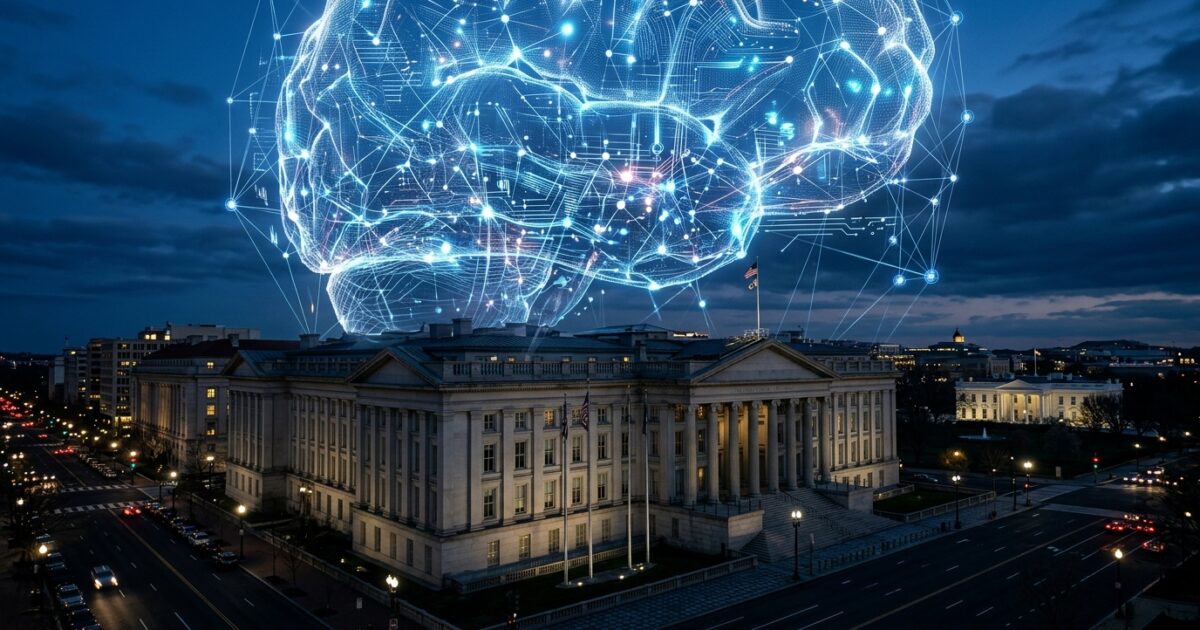
The tech industry is currently grappling with the profound implications of a leaked Treasury AI Warning. As the U.S. Department of the Treasury drafts internal reports comparing the current surge in artificial intelligence investments to the dotcom bubble of the early 2000s, the architectural reality of modern AI and machine learning systems is coming under intense scrutiny. The fundamental mechanics of training massive Large Language Models (LLMs) require an unprecedented scale of computational power, relying on vast GPU clusters and enormous energy consumption. Analysts are discovering that these complex systems are far more deeply integrated into the U.S. economy than the foundational internet companies were over two decades ago.
Behind the optimistic public messaging, the physical infrastructure supporting this boom is facing severe constraints. The Treasury report explicitly lists electricity shortages and supply chain disruptions as primary hazards for the industry. While hardware giants are posting record quarterly profits driven by the insatiable demand for hardware and silicon, underlying fears are mounting. If the foundational models fail to deliver the expected leaps in productivity to justify the billions poured into their creation, the resulting economic shockwaves could be catastrophic.
Market Impact & Deployment

From an enterprise IT perspective, the Total Cost of Ownership (TCO) for deploying frontier AI models is becoming a central point of contention in boardrooms globally. Companies are investing heavily in AI infrastructure, driven by the fear of missing out, yet many are struggling to translate these technical features into hard business value. The heavy reliance on private financing and concentrated market power within a few dominant tech entities exacerbates the fragility of the ecosystem.
In response to these growing regulatory and economic pressures, OpenAI CEO Sam Altman has floated a highly publicized proposal: granting the U.S. government a 5% equity stake in the company. At the company’s staggering $852 billion valuation, this stake would be worth approximately $42.6 billion, theoretically translating to roughly $320 per American household. Framed as a mechanism to distribute the wealth generated by artificial intelligence—conceptually similar to the Alaska Permanent Fund—this move is simultaneously viewed as a strategic political narrative designed to placate Washington and mitigate the risks highlighted in the Treasury’s market analysis.
The Consumer Translation
For the worldwide public, the intersection of technological advancement and macroeconomic policy represents a pivotal shift. On one hand, consumers are being promised a utopian future where AI not only automates mundane tasks but also pays a literal dividend, acting as a potential safety net against labor market disruptions. On the other hand, the stark realities of an inflated market bubble threaten everyday economic stability.
If the aggressive valuations stall—as evidenced by recent slumps in tech shares despite booming sales—the ripple effects will be felt far beyond Silicon Valley. The consumer reality is that the aggressive monetization of AI tools may lead to increased subscription costs and the rapid consolidation of digital services, transforming how individuals interact with the internet and their personal data.
Frequently Asked Questions
Q1: What is the Treasury AI Warning?
A1: A leaked internal report from the US Treasury compares the current AI market to the dotcom bubble, warning of economic risks due to unmet productivity targets and massive infrastructure costs.
Q2: What is Sam Altman’s 5% government stake proposal?
A2: OpenAI CEO Sam Altman proposed granting the US government a 5% equity stake—worth roughly $42.6 billion—to share the economic benefits of AI with the American public, similar to the Alaska Permanent Fund.
Q3: Why are experts concerned about an AI market bubble?
A3: Analysts point to massive capital expenditures on AI chips, heavily concentrated market power, and looming electricity shortages that may not be justified by current financial returns.
TechNode HQ Verdict: Pros, Cons & Usability
- Pro (Engineering): Unprecedented capital investment is accelerating the development of highly advanced, massively scalable computing architectures.
- Pro (Consumer): Proposals like the 5% government equity stake could introduce novel frameworks for universal basic income and wealth redistribution.
- Con: Massive infrastructure costs and electricity demands create an unsustainable Total Cost of Ownership for enterprise deployments.
- Con: Concentrated market power and reliance on speculative financing make the sector highly vulnerable to sudden regulatory or economic shocks.
Enterprise Usability: CTOs must rigorously audit their AI supply chains and evaluate whether the immediate productivity gains justify the soaring infrastructure costs, rather than buying into the hype.
Everyday Usability: While the prospect of an “AI dividend” is compelling, the public should remain skeptical and prepare for potential volatility in the tech-driven labor market.