Key takeaways
- Indoor environments can be up to 100 times more polluted than outdoor air.
- The US Clean Air Act does not regulate indoor air, leaving millions exposed.
- True HEPA air purifiers effectively capture PM2.5 but do not replace proper ventilation.
- Gas stoves and cleaning supplies are primary sources of toxic indoor VOCs.
- Source control and ventilation must precede the deployment of any air purification hardware.
When we consider the modern health landscape, Indoor Air Quality often takes a backseat to more visible threats. We filter our drinking water, obsessively scrutinize the ingredients in our food, and monitor our steps, yet we largely ignore the invisible medium we inhale 12 to 20 times per minute. The reality is stark: while outdoor pollution frequently dominates the headlines, modern humans spend approximately 90% of their time indoors. Astonishingly, indoor environments are routinely 2 to 5 times more polluted than outdoor air. In extreme cases, indoor pollutant concentrations can spike to 100 times higher than those found outside. We are engineering our own atmospheric crises inside the very spaces designed to protect us.
Consider the recent trajectory of climate change and natural disasters. In January 2025, the catastrophic Eaton Fire raged across Southern California, claiming 19 lives and destroying over 9,400 structures. Residents outside the immediate evacuation zones faced an invisible fallout. Ash rained from the sky, coating the world in gray. In highly insulated modern apartments, residents frantically taped window seams to block the encroaching smoke. But tightly sealed buildings are a double-edged sword: they keep the outside out, but they also trap the inside in. When the outdoor Air Quality Index (AQI) plummets to hazardous levels, natural ventilation becomes impossible. We are forced to seal ourselves in and rely entirely on consumer tech like localized air purifiers to sustain breathable air.
Indoor Air Quality and the Architectural Reality
To understand the severity of the problem, we must first look at the legal and regulatory framework—or rather, the lack thereof. The United States Clean Air Act of 1970 is widely celebrated as a landmark achievement of the environmental movement. According to the EPA’s 2025 Our Nation’s Air report, this sweeping legislation has successfully decreased the combined emissions of six benchmark outdoor pollutants (carbon monoxide, lead, nitrogen dioxide, ozone, particulate matter, and sulfur dioxide) by a massive 79% since its inception. However, this legislation possesses a critical blind spot: it applies almost exclusively to the outdoors. The US has no federal equivalent for indoor spaces. State-level Clean Indoor Air Acts exist, but they are incredibly narrow, focusing almost entirely on restricting smoking and vaping in public venues rather than establishing comprehensive, actionable air quality standards for residential and commercial buildings.
This regulatory void means that the air circulating inside our homes and offices is fundamentally unregulated. According to Dr. Joseph G. Allen, director of Harvard’s Healthy Buildings Program, while the Clean Air Act has saved hundreds of thousands of lives outdoors, our indoor air pollution has continued to silently worsen. Today, the World Health Organization (WHO) estimates that indoor air pollution is linked to a staggering 3.2 to 3.8 million premature deaths annually worldwide. Furthermore, more than 90% of airborne respiratory disease transmissions—including influenza and COVID-19—are estimated to occur via shared indoor air.
The sources of this pollution are deeply integrated into our daily lives. While outdoor air pollution (like vehicle exhaust and power plant emissions) routinely slithers inside through cracks and poorly sealed doors, the most severe threats are often generated internally. Volatile Organic Compounds (VOCs) off-gas continuously from everyday household items: cleaning supplies, shampoos, lotions, hairsprays, fresh paint, and modern synthetic furniture. Linsey Marr, a distinguished professor at Virginia Tech, notes that in urban environments, the largest source of VOCs used to be vehicle emissions. Today, vehicles have become drastically cleaner, shifting the primary source of VOCs to the chemicals and products we utilize inside our residences.
Beyond chemicals, combustion byproducts present a severe localized threat. Gas stoves, unvented kerosene heaters, and fireplaces release carbon monoxide and nitrogen dioxide directly into our living spaces. Cooking on a stovetop without proper ventilation generates massive amounts of fine particulate matter (PM2.5). Radon—a naturally occurring, invisible, and odorless radioactive gas that seeps through foundations—remains a leading cause of lung cancer in indoor environments. Because our modern buildings have been engineered to be highly airtight for energy efficiency, these pollutants have nowhere to go. They accumulate, compounding the danger with every breath.
Market Impact & Deployment
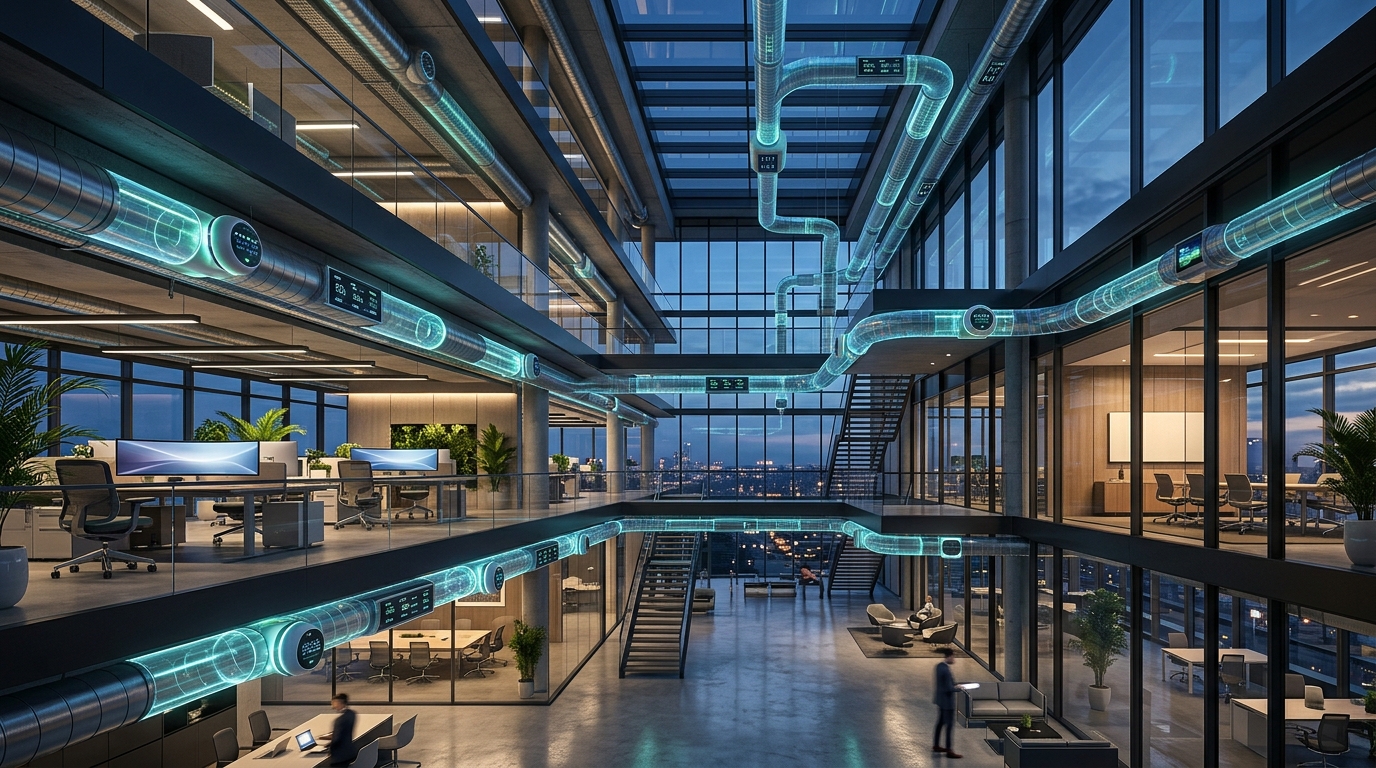
The Total Cost of Ownership (TCO) associated with poor air quality extends far beyond the price of a HEPA filter. For corporations and enterprise IT departments managing massive commercial real estate portfolios, the financial impact of compromised air is staggering. Poor air quality leads to increased sick days, accelerated transmission of airborne diseases, and significantly degraded cognitive function and employee productivity. The hardware required to combat this is becoming a foundational layer of modern smart infrastructure.
There is a widespread misconception that existing HVAC (Heating, Ventilation, and Air Conditioning) systems are sufficient to protect human health. In reality, most standard residential and commercial HVAC filters were designed with a single goal: to protect the mechanical heating and cooling coils from dust and debris, not to filter microscopic particles out of human lungs. Theresa Pistochini, co-director of engineering at the UC Davis Energy Efficiency Institute, explains that HVAC systems usually only circulate air when actively heating or cooling, meaning the air is not being constantly filtered. Furthermore, standard filters carry a low MERV (Minimum Efficiency Reporting Value) rating, typically MERV 8. To genuinely impact air quality, facilities must upgrade to at least MERV 13, which removes roughly 50% of particles sized from 0.30 to 1.0 microns.
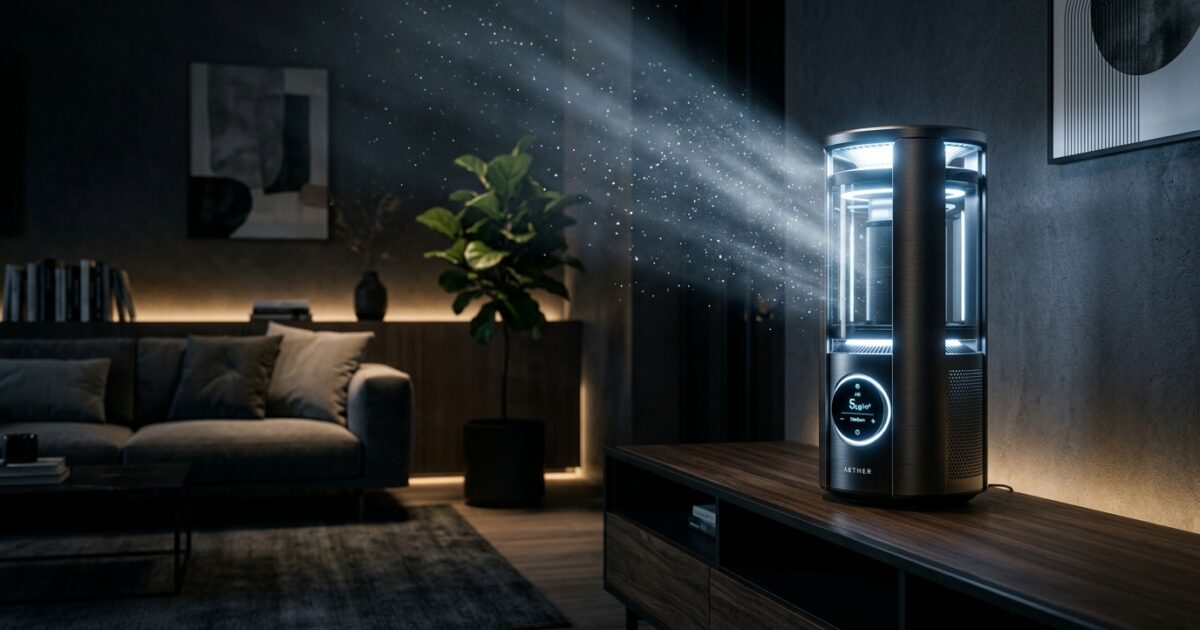
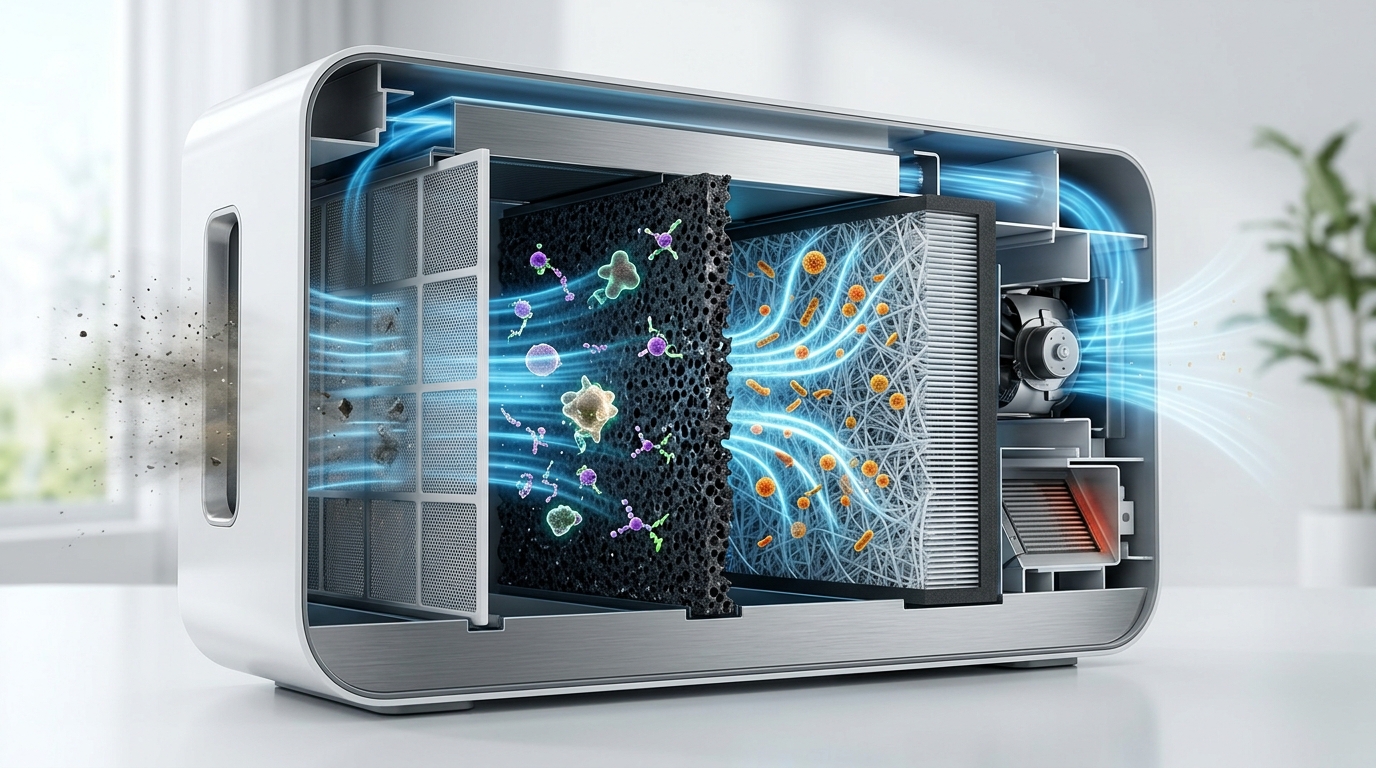
However, True HEPA (High-Efficiency Particulate Air) filters—which remove at least 99.97% of particles measuring 0.30 microns and larger—cannot be easily installed into traditional HVAC systems because their dense material creates too much airflow resistance, straining the mechanical blowers. This architectural limitation has spawned a booming market for localized, standalone air purifiers. CNET Labs’ 2025 testing evaluated the current market leaders, finding that models like the Shark HP232 excelled at removing fine particles on low fan settings, while the Coway Airmega 400S dominated high-speed particulate removal. The core metric driving this industry is the Clean Air Delivery Rate (CADR). Experts recommend a baseline of 300 CADR for every 500 square feet of space to ensure four to six complete air changes per hour.
The push for modernization is gaining legislative traction. In 2023, the Johns Hopkins Center for Health Security released a Model Clean Indoor Air Act, providing state governments with a legislative template to finally regulate indoor environments. Until these regulations become law, the burden of deployment falls on businesses and homeowners to invest in secondary mitigation technologies.
The Consumer Translation
For the average consumer, navigating the realities of airborne pollutants can feel overwhelming. The American Lung Association’s 2026 State of the Air report paints a grim picture: more than 152.3 million Americans currently live in locations with unhealthy air pollution levels. This crisis disproportionately impacts vulnerable populations. A person of color is more than twice as likely as a white person to reside in an area with a failing grade for all three primary pollution measures. Furthermore, climate change and the doubling of global wildfire activity over the past two decades are actively eroding the historical progress made by the Clean Air Act.
The physiological toll is severe. Srikanth Nadadur, a branch chief at the National Institute of Environmental Health Sciences, highlights that ultrafine particles are capable of penetrating deep into the lungs, where they can release absorbed VOCs directly into the fluid of the lungs. From there, these toxins can cross into the circulatory system, heavily impacting cardiovascular function, the reproductive system, and even the brain. For children, whose lungs are still actively developing, long-term exposure to wildfire smoke and localized PM2.5 can fundamentally alter respiratory development and lead to chronic diseases like asthma and bronchitis.
So, are air purifiers the ultimate answer? According to environmental experts like Glory Dolphin Hammes, CEO of IQAir North America, the answer is a definitive no. Air purifiers are a vital tool, but they are merely a secondary line of defense. The absolute first step in the hierarchy of healthy air is source control. Consumers must actively reduce the pollutants they introduce into their homes by switching to low-toxicity cleaners, avoiding aerosol sprays, and utilizing exhaust hoods while cooking. If a pollutant is never released, it never needs to be filtered.
The second crucial step is ventilation. When outdoor air quality permits, simply opening windows or running exhaust fans to dilute indoor contaminants is vastly superior to closed-loop filtration. It is only when source control is exhausted, or when outdoor air is hazardous (due to smog, fires, or proximity to highways), that air purifiers become essential. Consumers must also be wary of marketing fluff in the hardware and silicon space. Devices advertising “ozone generation,” “ionic purification,” or “UV light” often do more harm than good by actively emitting ozone—a severe lung irritant—back into the room. A standalone unit featuring a True HEPA filter and a dense activated carbon filter remains the safest, most effective standard.
Looking ahead, the future of this technology will involve predictive, AI-driven environmental control. Future systems will likely monitor external data sources—such as live wildfire tracking and localized smog forecasts—and proactively engage high-speed filtration before smoke ever enters the building. Until that integrated future arrives, consumers must take a proactive, multi-tiered approach: eliminate toxic sources, ventilate intelligently, and deploy high-CADR HEPA filtration where it matters most.
Frequently Asked Questions
Q1: Why doesn’t the Clean Air Act cover indoor environments?
A1: The Clean Air Act of 1970 was specifically designed to regulate outdoor emissions from industrial sources and vehicles. It does not extend jurisdiction into private residences or commercial interiors, leaving indoor air largely unregulated.
Q2: Are air purifiers enough to guarantee healthy indoor air?
A2: No. While air purifiers with HEPA and carbon filters effectively capture particulate matter and some odors, they are considered a secondary measure. Experts highly recommend source control and mechanical ventilation as the primary strategies.
Q3: What are the most dangerous indoor air pollutants?
A3: Fine particulate matter (PM2.5), Volatile Organic Compounds (VOCs), and radon are among the most hazardous. The WHO links indoor air pollution to over 3.2 million premature deaths annually worldwide.
Q4: What is the difference between an HVAC filter and an air purifier?
A4: HVAC filters (like MERV 8 or 13) are primarily designed to protect the system’s heating and cooling coils, not human lungs. Air purifiers use much denser True HEPA filters specifically engineered to trap microscopic particles that threaten human health.
Q5: Do air purifiers remove harmful gases like carbon monoxide?
A5: Standard air purifiers cannot capture carbon monoxide or radon. While activated carbon filters can absorb some VOCs and odors, dangerous gases require dedicated detectors, professional remediation, and proper ventilation.
TechNode HQ Verdict: Pros, Cons & Usability
- Pro (Engineering): True HEPA filters successfully capture 99.97% of PM2.5 and microscopic airborne pathogens, intercepting particulate matter before it enters the human circulatory system.
- Pro (Consumer): Portable, plug-and-play operation allows users to instantly establish clean air zones in high-traffic spaces like bedrooms and kitchens without requiring invasive HVAC retrofitting.
- Con: Standard air purifiers are completely ineffective against carbon dioxide buildup, deadly carbon monoxide, and naturally occurring radon gas.
- Con: Dense HEPA filters restrict airflow too severely to be deployed natively inside standard commercial HVAC ductwork, requiring the purchase of localized standalone units.
Enterprise Usability: For facility managers and CTOs, standalone air purifiers are a mandatory stopgap, but true ROI lies in upgrading building-wide HVAC systems to MERV 13 filtration while deploying interconnected, IoT-enabled air quality monitors (measuring CO2 and VOCs) to dynamically adjust ventilation based on real-time occupancy and outdoor AQI data.
Everyday Usability: Consumers should absolutely purchase a True HEPA air purifier for their bedroom and living room, particularly if they live near highways or in wildfire zones. However, buying a purifier is step three. Step one is throwing away high-VOC cleaning supplies, and step two is opening a window.