Key takeaways
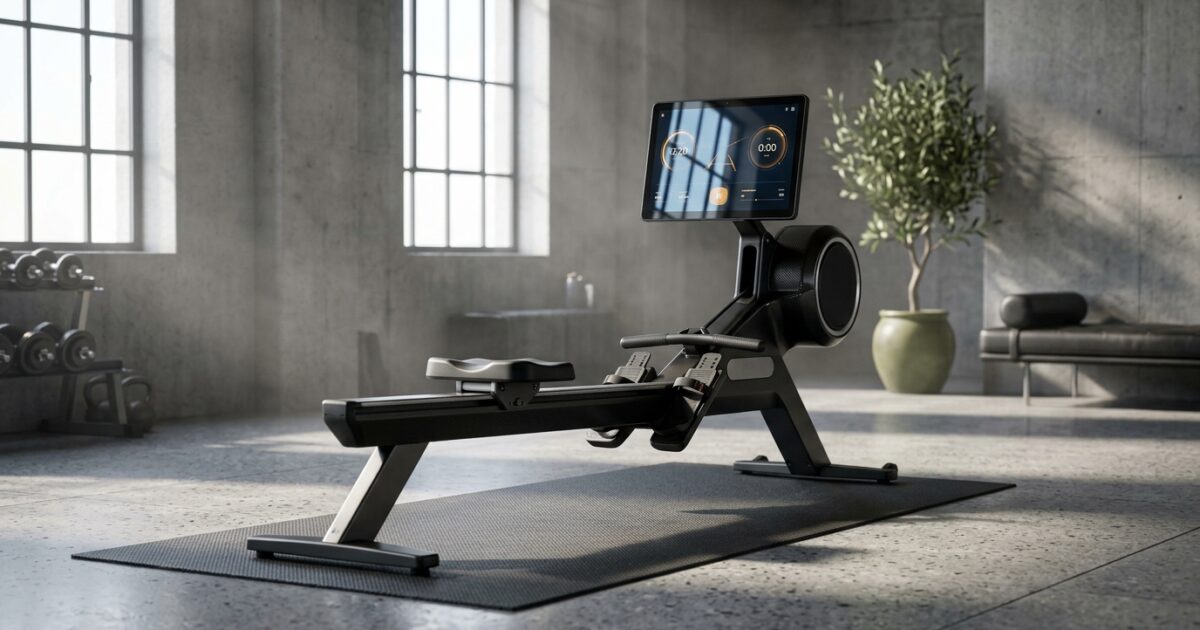
- The Hydrow rowing machine leverages electromagnetic resistance for precise, frictionless physical feedback and quiet operation.
- Prime Day 2026 deals highlight up to 25% off directly via Hydrow, bypassing broad Amazon listings.
- Peloton’s Cross-Training Row Plus utilizes computer-vision sensors for real-time form correction, unlike Hydrow’s email-based feedback.
- Both platforms operate as edge-computing nodes, requiring mandatory monthly subscriptions for telemetry and telepresence features.
- Corporate deployments of connected fitness hardware must account for software lock-in and ongoing subscription TCO.
The Architectural Reality of the Hydrow Rowing Machine
When analyzing the modern connected fitness landscape from an enterprise infrastructure perspective, the Hydrow rowing machine emerges as a fascinating case study in edge computing, telemetry synchronization, and applied material science. The fitness industry has aggressively pivoted from inert steel and rubber to highly sophisticated, sensor-laden network endpoints. This paradigm shift requires a rigorous technological audit to separate the marketing rhetoric from the underlying engineering realities. As we look at the hardware available during the Amazon Prime Day 2026 cycle (running from June 23 to June 26), it becomes evident that connected rowing platforms are complex distributed systems masquerading as home exercise equipment. They demand an evaluation framework typically reserved for enterprise IoT deployments.
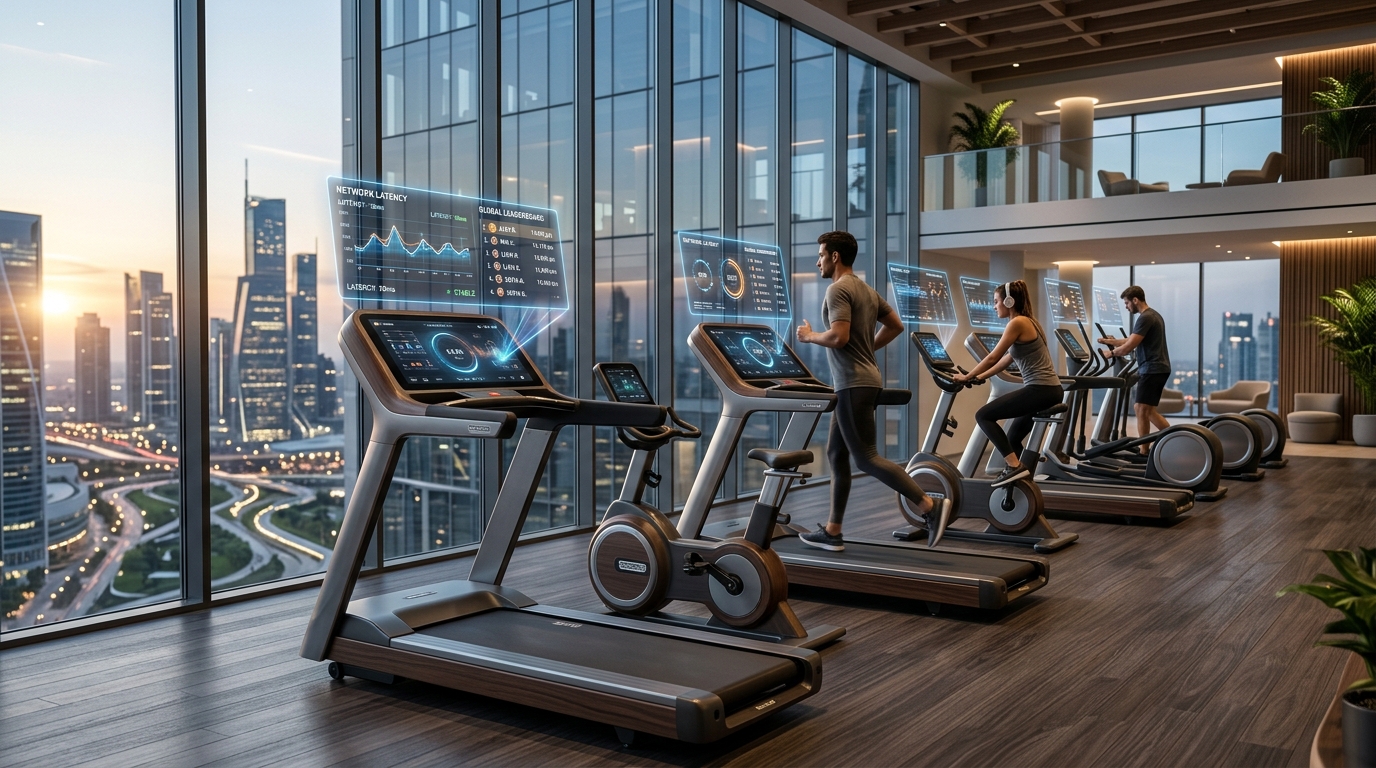
At the core of the Hydrow ecosystem—spanning from the mid-tier Hydrow Wave to the top-of-the-line Hydrow Arc—is a localized, low-latency compute module responsible for managing real-time physical resistance and rendering high-definition video streams. To truly understand this platform, one must view it as an intelligent edge node. It continuously processes biomechanical input data, adjusts electromagnetic braking forces locally, and simultaneously transmits performance telemetry to centralized cloud servers. This architecture mirrors the data flow of industrial telemetry sensors or remote robotics, requiring robust Networking & Cloud infrastructure to maintain the illusion of real-time, zero-latency competition on a global leaderboard.
The engineering marvel of this system is not merely the screen attached to the chassis, but the seamless integration of localized physical actuation with cloud-based state management. When a user pulls the handle, the internal controller must read the velocity, calculate the required resistance to simulate hydrodynamic drag, and apply the exact electromagnetic force—all within milliseconds. This continuous feedback loop ensures that the physical sensation remains perfectly synchronized with the visual output on the display. It is a masterclass in embedded systems engineering, disguised as a consumer wellness product.
Electromagnetic Resistance Mechanics
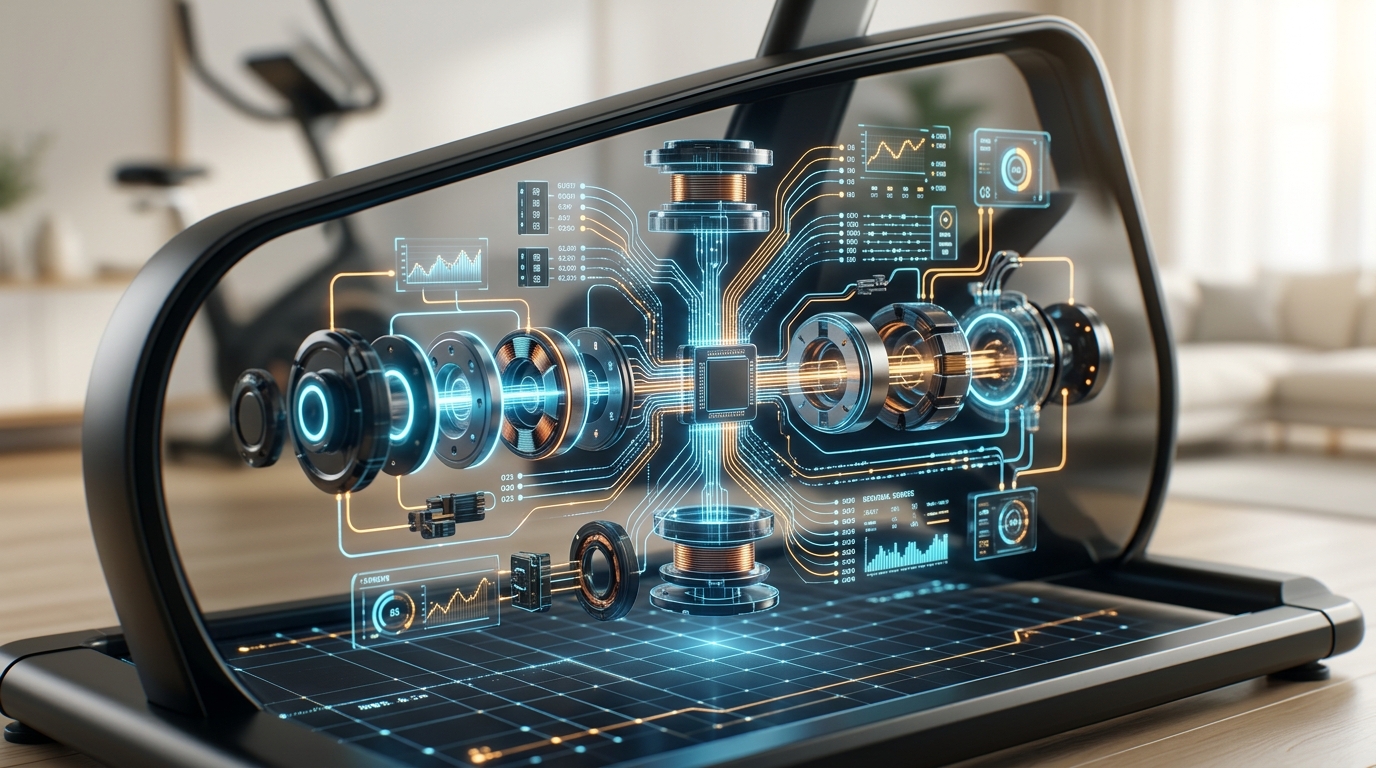
Traditional rowing machines have long relied on air displacement or water tanks to generate resistance. These mechanical solutions are robust but inherently limited by the physical properties of the medium—they are noisy, bulky, and offer a fixed resistance curve that cannot be dynamically altered mid-stroke by software. The Hydrow architecture discards mechanical fluid dynamics in favor of computer-controlled electromagnetic resistance. By passing a precise electrical current through coils surrounding a metallic flywheel, the system generates a magnetic field that resists the wheel’s rotation. This allows for frictionless, near-silent operation and infinite adjustability.
This approach fundamentally transforms the resistance mechanism from a static physical property into a dynamic software variable. The onboard processor can manipulate the current in real-time, simulating the subtle variations of drag experienced when rowing a boat across water. It can account for the simulated weight of the boat, the viscosity of the fluid, and the momentum of previous strokes. This highly granular control mechanism is what enables the machine’s immersive “on-the-water” feel, a feature that distinguishes it within the Hardware & Silicon market of connected devices.
Furthermore, because the resistance is software-defined, it can be updated via over-the-air (OTA) firmware patches. This means the physical feeling of the machine can be refined and optimized long after the hardware has been deployed to the consumer or corporate wellness center. The maintenance overhead is drastically reduced compared to chain-driven air rowers or water rowers susceptible to fluid leakage or biological growth, altering the total cost of ownership equation significantly.
Market Impact & Deployment
The market dynamics surrounding these premium fitness endpoints are complex, driven by recurring revenue models and strategic discounting. During high-profile retail events like Amazon Prime Day, the visibility of connected fitness spikes. Historical data indicates that Hydrow offers its most significant discounts during major shopping holidays, including Prime Day, Black Friday, and Cyber Monday. However, a rigorous audit of the June 2026 Prime Day landscape reveals a nuanced reality. While there are reports of up to 25% off Hydrow rowing machines—and discounts like 11% off the Wave (dropping to $1,781) and 23% off the Origin (dropping to $1,695) on Amazon—deal experts note that widespread, specific 25% off Prime Day deals for all models, including the premium Hydrow Arc, are rarely found directly on the Amazon platform. Instead, premium connected rowers are typically sold through their own websites or specialized retailers.
This omnichannel strategy allows manufacturers to maintain brand prestige while tightly controlling the customer acquisition pipeline. By driving traffic to their proprietary storefronts, companies like Hydrow can leverage direct consumer relationships to secure the mandatory monthly subscriptions that form the financial backbone of their business models. They also deploy targeted incentives, such as a 5% discount for military personnel and first responders, or exclusive coupon codes (often around $100 off) for users who sign up for marketing emails. This direct-to-consumer pivot is a critical evolution in how durable hardware is monetized in the 21st century.
Total Cost of Ownership Analysis
For Chief Technology Officers or facilities managers outdeploying corporate wellness solutions, the upfront capital expenditure of the hardware is merely the beginning. The Total Cost of Ownership (TCO) is dominated by the operating expenditure of the required subscriptions. Both the Peloton and Hydrow platforms operate on a strict hardware-as-a-service model; without the ongoing monthly fee, the massive touchscreens are rendered largely inert, and the machines lose their primary value proposition. This software lock-in necessitates careful financial modeling.
When comparing the Peloton Cross-Training Row Plus to the Hydrow lineup, the price disparity is stark. Peloton generally sits at a higher premium price point compared to Hydrow’s entry models, with the Peloton offering costing nearly twice as much as some Hydrow variants. However, Peloton justifies this premium through advanced hardware features. The Peloton Row features “Form Assist,” which utilizes sophisticated computer-vision sensors to provide real-time biomechanical feedback during the workout. In contrast, Hydrow relies on post-session email summaries to coach users on precision and endurance. The choice between real-time, edge-processed computer vision and asynchronous, cloud-processed email analytics represents a significant architectural divergence in how these companies approach user telemetry.
The Consumer Translation
To translate these highly technical shifts into everyday consumer impact, one must understand how this technology fundamentally alters the psychology of exercise. The integration of high-definition displays, live network telemetry, and immersive content creates a form of gamified telepresence. Users are no longer isolated in basements staring at segment LCD timers; they are digitally transported to real waterways worldwide. Hydrow’s classes are filmed on locations like Lake Lure in North Carolina, providing a rich, high-fidelity visual context that masks the physical exertion.
This telepresence is enhanced by the competitive gamification inherent in the platform. The real-time leaderboard acts as a constant, dynamic feedback loop. The system is continuously broadcasting the user’s velocity to the cloud and receiving the positional data of thousands of concurrent users. It is essentially a massively multiplayer online game (MMO) where the controller is a heavy piece of physical fitness equipment. The ability to see other rowers’ metrics and “pull extra hard” to overtake a competitor is a brilliant application of behavioral psychology, driving engagement and user retention far beyond the capabilities of disconnected hardware.
Gamification and Telepresence in Everyday Life
The ramifications of this architecture extend far beyond the home gym. The underlying technologies—low-latency video streaming synchronized with physical actuation and real-time multiplayer telemetry—are foundational to the future of the Consumer Tech sector. We are witnessing the normalization of hybrid digital-physical experiences. The same network principles that allow a user in London to race a user in Tokyo on a simulated river will eventually power remote robotic surgery, synchronized global manufacturing, and advanced tele-robotics.
Furthermore, for consumers unwilling to invest thousands of dollars into proprietary hardware, alternative access paths exist. Users who already own a different, mechanical rowing machine can access Peloton’s rowing classes via the Peloton App on a tablet or phone. While this decouples the immersive, synchronized electromagnetic resistance from the visual content, it democratizes access to the instructional media, demonstrating that the ultimate value lies in the software ecosystem rather than the physical metal and plastic.
Frequently Asked Questions
Q1: What are the main differences between Hydrow and Peloton rowing machines?
A1: The Hydrow offers a wider range of price points, from the entry-level Wave to the premium Arc, and focuses on immersive, outdoor-simulated “on-the-water” workouts. The Peloton Cross-Training Row Plus sits at a higher premium price point and features “Form Assist” driven by computer-vision sensors for real-time biomechanical feedback. Both require ongoing monthly subscriptions to access their content libraries.
Q2: Can I find the Hydrow 25% off deal directly on Amazon for Prime Day?
A2: As of June 26, 2026, widespread reports indicate that there is no specific 25% off Prime Day deal for all Hydrow rowing machines directly on Amazon. Deal experts strongly recommend checking Hydrow’s official website for direct sales, military discounts, and bundle offers.
Q3: How does Hydrow simulate the feeling of rowing on water?
A3: Hydrow utilizes an advanced, computer-controlled electromagnetic resistance mechanism that adjusts hundreds of times per second to mimic the drag and physical sensation of water. This hardware is paired with high-definition video classes filmed on real waterways worldwide.
Q4: Do these connected rowing machines require a subscription to operate?
A4: Yes. Both the Peloton and Hydrow platforms operate on a hardware-as-a-service model, requiring a monthly subscription to access their full libraries of content, live leaderboards, and detailed performance telemetry.
Q5: Are there alternative ways to access Peloton rowing content?
A5: Users who already own a different, non-connected rowing machine can access Peloton’s rowing classes via the Peloton App on a tablet or smartphone, bypassing the need for the premium hardware.
TechNode HQ Verdict: Pros, Cons & Usability
- Pro (Engineering): Software-defined electromagnetic resistance eliminates mechanical wear while enabling OTA physical parameter tuning.
- Pro (Consumer): Highly immersive telepresence and gamified leaderboards drastically improve user retention and workout motivation.
- Con: Widespread Amazon discounts are often exaggerated; the most aggressive pricing requires direct engagement with the manufacturer.
- Con: Mandatory monthly subscription lock-in significantly inflates the long-term Total Cost of Ownership.
Enterprise Usability: For corporate wellness directors and HR executives, deploying these endpoints requires treating them as IT assets. The TCO models must account for perpetual software licensing, and network infrastructure must support sustained, low-latency video streaming. They are excellent for employee engagement but represent a continuous OpEx burden.
Everyday Usability: For the general public, the purchase decision hinges on subscription tolerance. If the user thrives on competitive gamification and immersive outdoor video, the hardware justifies its premium. However, budget-conscious consumers should leverage the standalone app ecosystems with cheaper, disconnected mechanical rowers.