Key takeaways
- A24 is pivoting its highest-grossing Oscar winners to ad-supported free platforms.
- AVOD platforms utilize server-side ad insertion to monetize free viewership.
- Everything Everywhere All At Once grossed over $140M on a fraction of the cost.
- Kanopy leverages civic infrastructure to provide high-bandwidth streaming via library cards.
- The shift to free tier streaming reflects peak subscription fatigue among modern viewers.
The Architectural Reality of Free A24 Streaming
In the rapidly evolving landscape of digital media, the sudden availability of premium, Academy Award-winning cinema at zero direct cost to the user represents a massive paradigm shift. The rise of free A24 streaming is not simply a marketing gimmick or a temporary promotion; it is a structural recalculation of how cloud infrastructure, advertising technology, and film distribution coalesce. As of July 2026, a massive slate of A24’s most critically acclaimed productions—ranging from Everything Everywhere All At Once and Moonlight to Lady Bird, Civil War, and Ex Machina—have seamlessly migrated onto platforms like Kanopy, Plex, and Tubi. Understanding how this is technically and economically feasible requires a deep dive into the architecture of modern streaming.
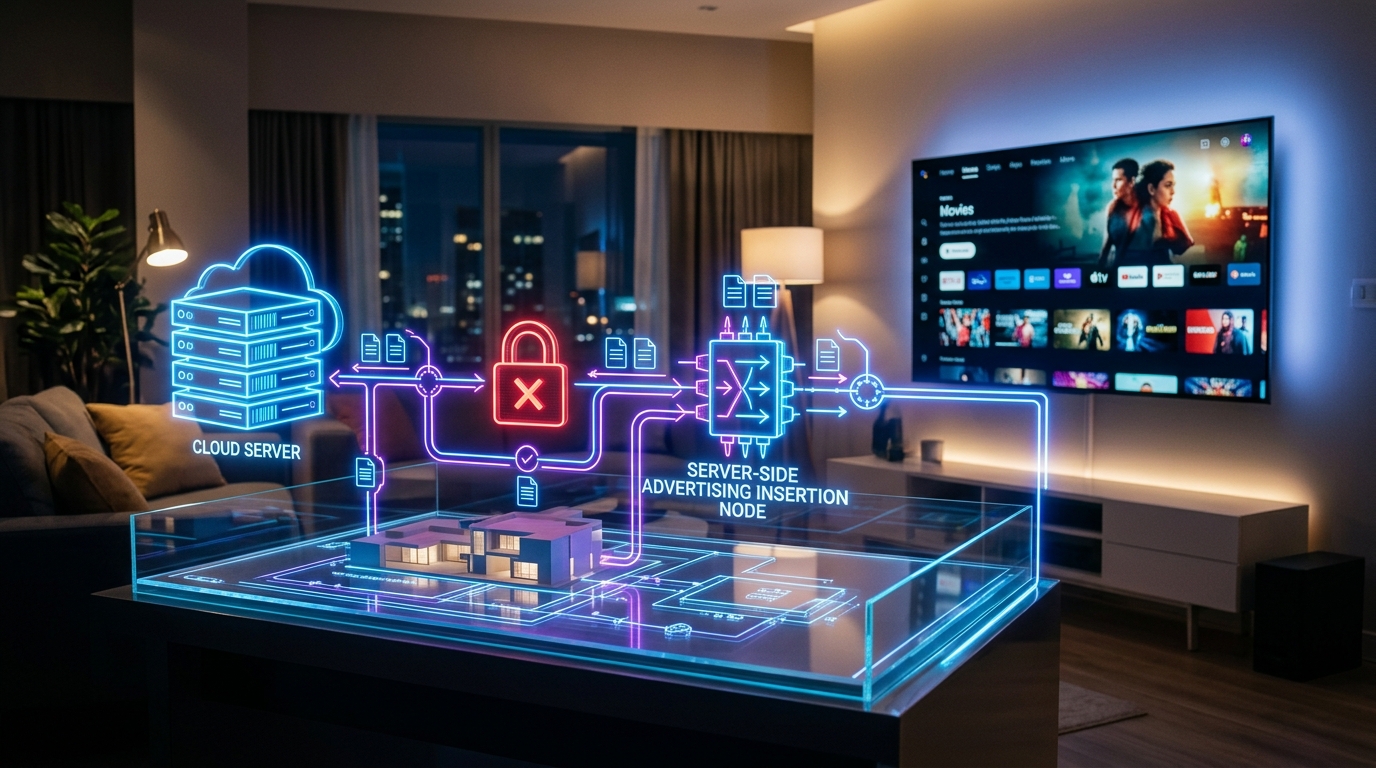
The traditional Subscription Video on Demand (SVOD) model, popularized by giants like Netflix and HBO Max, operates on a closed-garden infrastructure. Users pay a recurring monthly toll, and the platform delivers content devoid of interruptions. However, platforms like Tubi and Plex utilize an Ad-Supported Video on Demand (AVOD) architecture. This shift demands highly sophisticated cloud content delivery networks (CDNs) optimized for Server-Side Ad Insertion (SSAI). Unlike older models where ads were fetched by the client’s browser or smart TV application (often resulting in buffering, varying video quality, or easy ad-blocking), SSAI stitches the advertisement directly into the video stream at the server level. When you watch a scene from Red Rocket or Zola on Tubi, the edge servers dynamically weave highly targeted, programmatic video ads into the HLS (HTTP Live Streaming) manifest file. To the end user’s media player, the ad and the movie are indistinguishable parts of the same continuous video feed, making ad-blockers effectively useless and ensuring high viewability metrics for advertisers.
Kanopy presents a completely different, yet equally fascinating, architectural model. Operating on a B2B2C (Business-to-Business-to-Consumer) framework, Kanopy eliminates the programmatic advertising layer entirely. Instead, it relies on API-driven authentication tied directly to civic databases. By validating a user’s local library card or university credentials, the platform unlocks its encrypted streaming library. The bandwidth and licensing costs are absorbed on a pay-per-view basis by the institutional budget, acting as a massive, distributed subsidy for high-culture digital access. This hybrid deployment of institutional funding and cloud video hosting makes Kanopy one of the most unique case studies in digital media architecture.
Market Impact & Deployment

For enterprise stakeholders and media executives, the deployment of prestige catalogs into the AVOD space is a masterclass in maximizing Total Cost of Ownership (TCO) and extending asset ROI. Consider the financial blueprint of A24’s crown jewel, Everything Everywhere All At Once. The film was produced on a highly efficient budget estimated between $14 million and $25 million. Through brilliant marketing and word-of-mouth, it generated a staggering global box office revenue exceeding $140 million. In traditional Hollywood accounting, the revenue tail would slowly trail off after physical media sales and a lucrative, exclusive SVOD window on a platform like HBO Max.
By migrating the catalog to platforms like Plex and Tubi, A24 initiates a secondary phase of infinite monetization. Rather than fighting for exclusive licensing checks, the studio embraces a volume-driven revenue share model based on ad impressions. Because A24’s films possess immense re-watch value and attract highly engaged demographics, the programmatic advertising rates (CPM) for these specific streams are uniquely lucrative. Advertisers are willing to pay premium rates to place their brands adjacent to a Best Picture winner compared to generic reality television.
From an enterprise infrastructure perspective, the platforms hosting this content are executing brilliant customer acquisition strategies. Tubi (owned by Fox) and Plex are weaponizing A24’s cultural cachet to drive app downloads and active user metrics. The Cost of Customer Acquisition (CAC) plummets when a platform can advertise the free availability of Civil War (Alex Garland’s chilling dystopian thriller from 2024) or Moonlight. Once the user is onboarded into the ecosystem, the recommendation algorithms work aggressively to keep them consuming cheaper, long-tail content, thereby maximizing the lifetime value (LTV) of a user who originally arrived just to watch a single A24 hit.
The Consumer Translation
How does this highly technical shift in licensing and server-side ad stitching impact the worldwide public? Quite simply, it acts as a release valve for “subscription fatigue.” The average digital consumer in 2026 is overwhelmed by the fragmentation of the streaming market. With every major network attempting to wall off their content behind $15/month paywalls, users are increasingly churning out of services or pirating media. The resurgence of FAST (Free Ad-Supported Streaming Television) channels and AVOD platforms is a direct market correction to this fatigue.
For the viewer, the transaction has fundamentally shifted. You are no longer trading your credit card for access; you are trading your behavioral data and attention span. The sophisticated consumer media consumption hardware in our living rooms—from Roku sticks to Apple TVs—functions as a two-way street. While Plex streams Lady Bird in crisp 4K resolution, it is simultaneously communicating with data brokers to deliver hyper-targeted advertising based on your geographic location, viewing habits, and household demographic data.
However, many consumers view this as a fair trade. The ability to legally and effortlessly stream a masterpiece like Ex Machina—a film deeply concerned with the ethical implications of artificial intelligence and data manipulation—on a platform entirely funded by algorithmic data profiling is an irony not lost on tech-savvy viewers. For Kanopy users, the translation is even more profound: a digital extension of the public commons, bringing the intellectual enrichment of the local library directly into the living room without the friction of a transaction.
Frequently Asked Questions
Q1: Are A24 movies actually free to watch on these platforms?
A1: Yes, platforms like Tubi and Plex are entirely free, supported by intermittent programmatic advertising. Kanopy is free for the user, but the streaming costs are subsidized by the user’s affiliated public library or university.
Q2: What is the technical difference between Plex and Tubi?
A2: While both utilize AVOD models, Tubi is a centralized cloud platform owned by Fox. Plex originated as a decentralized personal media server and has integrated cloud-based FAST channels and on-demand movies into its existing local-first interface.
Q3: How does A24 make money if the movies are free?
A3: A24 licenses these films to AVOD platforms for a flat fee or revenue-share agreement based on ad impressions, effectively generating a long-tail ROI long after theatrical and SVOD exclusivity windows expire.
TechNode HQ Verdict: Pros, Cons & Usability
- Pro (Engineering): Server-Side Ad Insertion (SSAI) guarantees seamless playback by thwarting ad-blockers and eliminating client-side buffering issues during commercial breaks.
- Pro (Consumer): Bypasses widespread subscription fatigue by providing top-tier, Academy Award-winning cinema for zero direct monetary cost.
- Con: AVOD platforms require significant data harvesting and programmatic behavioral tracking to justify the lack of a paywall.
- Con: For Kanopy, the scaling of streaming popularity puts immense financial strain on municipal library budgets which must pay for every digital lease.
Enterprise Usability: For CTOs and platform architects, the A24 integration on AVOD platforms proves that high-quality, recognizable IP is the most efficient loss-leader for user acquisition. Investing in robust SSAI edge-computing architecture is mandatory to effectively monetize this incoming traffic without degrading the premium feel of the cinematic content.
Everyday Usability: For the average consumer, leveraging platforms like Tubi, Plex, and Kanopy is an absolute necessity in 2026. By utilizing library credentials for Kanopy to avoid ads, or accepting the brief interruptions on Tubi, users can access thousands of dollars worth of premium entertainment and reclaim control over their monthly streaming budgets.