Key takeaways
- Texas Democrats won key statewide offices campaigning against unconstrained data center growth, placing hyperscaler multi-gigawatt pipelines in jeopardy.
- Voters in 10 states rejected data center initiatives in 40 of 41 local ballot contests during the 2026 midterms.
- Six US cities enacted outright bans while 12 regional jurisdictions imposed strict megawatt capacity limits on utility grid draw.
- Divided federal governance shifts primary energy and infrastructure battles to state public utility commissions and municipal zoning boards.
The nationwide AI data center buildout faces an abrupt regulatory and political reckoning following the 2026 US midterm elections. Texas, previously the fastest-growing data center market in the United States and the operational anchor for hyperscaler artificial intelligence expansions, has experienced a decisive political shift after candidates campaigned directly against unconstrained infrastructure growth. Coupled with local ballot measures across 10 states where voters rejected data center initiatives in 40 out of 41 contests, the results threaten to stall multi-gigawatt development pipelines. With incoming state leadership pledging moratoriums and local municipalities enacting outright bans, infrastructure operators face immediate constraints on power allocation, site acquisition, and interconnect approvals.
Texas political shift threatens hyperscaler pipeline
For the past four years, Texas served as ground zero for large-scale digital infrastructure, driven by land availability, deregulated power dynamics, and rapid permitting within the Electric Reliability Council of Texas (ERCOT) footprint. That expansion now faces unprecedented headwinds. In the 2026 midterms, Democrat James Talarico secured a US Senate seat, Gina Hinojosa captured the governorship, and Democrats flipped control of the Texas House for the first time in 24 years. Critical to this electoral outcome was an organized campaign platform that positioned data center development as a direct threat to community water resources and grid stability.
The regulatory pause in Texas actually began prior to election day. On September 21, outgoing Governor Greg Abbott directed state regulators to halt new data center permits amid escalating transmission congestion and consumer rate concerns. As detailed in reporting on the Texas AI data center slowdown, Governor-elect Hinojosa campaigned on hardening this stance into a full statutory moratorium on new data center construction until grid operators can guarantee residential rate protection and verifiable thermal safeguards. The political realignment creates severe exposure for hyperscalers such as Meta, Microsoft, and Amazon, whose long-term capital expenditure models depend heavily on Texas campus expansions.
Meta leadership acknowledged the shifting landscape, stating publicly that building new data center campuses has become markedly more difficult. The friction highlights an intensifying disconnect between massive balance-sheet commitments to computing hardware—such as those tracked in recent analyses of enterprise AI monetization and GPU infrastructure—and the physical availability of energized real estate. When regional substations cannot issue interconnection agreements, enterprise capacity planning models quickly break down.
Local ballots impose outright bans and megawatt caps
The voter backlash against computing infrastructure was not confined to Texas. Across 41 local ballot measures in 10 states, voters rejected data center initiatives or approved strict municipal controls in 40 separate contests. The sole exception was Harwood, North Dakota, where voters approved an industrial zoning variance for an enterprise data facility. Elsewhere, community pushback centered almost entirely on surging electricity costs, substation noise pollution, and heavy water draw for liquid and evaporative cooling arrays.
In six US cities, voters enacted outright prohibitions against new data center construction. An additional 12 local jurisdictions established binding caps on the megawatt capacity that commercial facilities can draw from regional distribution networks. According to reporting on how voters rejected AI data center initiatives, these measures prevent utilities from transferring grid upgrade costs onto municipal ratepayers, effectively forcing hyperscalers to negotiate dedicated off-grid generation or walk away from shovel-ready land options.
| Jurisdiction / Ballot Scope | Regulatory Outcome | Direct Operational Impact |
|---|---|---|
| Texas Executive & Legislative Branch | Democratic sweep; Hinojosa elected governor | Campaign pledge for full construction moratorium; formalizes September 21 permit halt |
| Municipal Ballot Contests (10 States) | Rejected in 40 of 41 measures (Harwood, ND approved) | Community vetoes on zoning variances, tax abatements, and water access rights |
| Six US Municipalities | Outright data center construction bans | Immediate cessation of site development and cancellation of municipal land options |
| Twelve Regional Utility Districts | Megawatt draw caps enacted | Mandatory power thresholds preventing facilities from securing large substation feeds |
The widespread opposition reflects growing household frustration over monthly utility bills. Communities have increasingly linked regional rate hikes to the intensive power demands of high-density clusters. Even as suppliers report massive shipments of accelerators—as seen during quarterly surges in data center revenue—facilities cannot deploy hardware without secured high-voltage interconnects.
Grid constraints, utility rates, and the BAAJA permitting battle
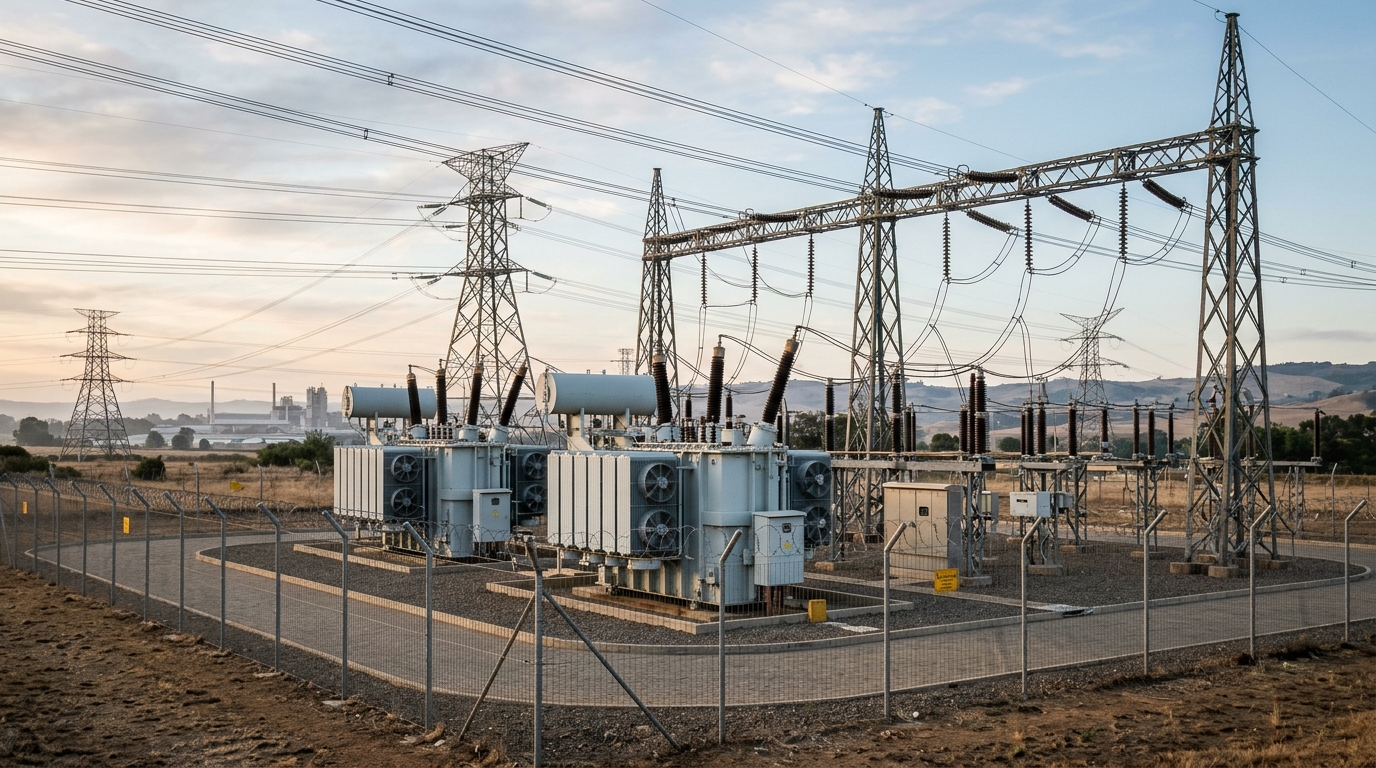
The municipal and state resistance arrives as federal policymakers attempt to address national energy transmission delays. On November 9, the US Senate is scheduled to vote on the Bipartisan American Affordability and Jobs Act (BAAJA). As outlined in assessments of federal energy permitting overhauls, the 417-page legislative proposal aims to streamline federal reviews, shorten environmental review timelines under the National Environmental Policy Act (NEPA), and accelerate the construction of interstate high-voltage transmission corridors.
Despite its bipartisan sponsorship, BAAJA faces significant hurdles. Several prominent environmental organizations oppose the bill, arguing that expedited reviews bypass crucial community impact assessments and lock in fossil-fueled generation to satisfy tech sector energy spikes. Furthermore, as detailed in analyses of post-midterm US energy policy, divided federal governance means major climate and power grid regulatory actions will concentrate at state and municipal levels rather than through comprehensive federal legislation.
Because retail electric rates and local land use remain under the authority of state public utility commissions and municipal boards, federal permitting reform cannot override local zoning bans or state-level moratoriums. As Texas Representative Greg Casar told Wired, the revolt against data centers represents one of the defining issues of the 2026 election, serving as an early tremor of a broader political debate surrounding artificial intelligence infrastructure.
What happens next
Infrastructure planners and enterprise engineering leaders must recalibrate deployment roadmaps to account for extended permitting cycles and localized political resistance. Key near-term milestones to track include:
- November 9 Senate Vote on BAAJA: The outcome of the 417-page permitting reform bill will determine whether interstate transmission developers gain streamlined rights-of-way, though state utility approvals will remain unaffected.
- Texas Legislative Session Convenes: In January 2027, the incoming Texas legislative majority and Governor-elect Hinojosa are expected to introduce formal legislation codifying the data center moratorium and reviewing industrial water rights.
- Pivot to Behind-the-Meter Power: Hyperscalers will increasingly pursue co-located nuclear, natural gas with carbon capture, and dedicated solar-plus-storage microgrids to bypass public utility distribution lines.
- Secondary Market Flight: Site selection teams will shift capital toward rural regions and municipal utility districts that actively seek tax revenue, though grid interconnection queues in those markets will face rapid saturation.
Sources
- The Download: Texas’s fragile AI boom and energy policy shifts | MIT Technology Review
- Texas was the new epicenter of the AI data center buildout. That might be kaput. | MIT Technology Review
- Voters rebuff data centers in every ballot measure except one during the 2026 midterms
- American Voters Overwhelmingly Reject AI Data Centers
- A new bill could change how the US builds energy infrastructure | MIT Technology Review
- What’s next for US energy policy after the midterm elections? | MIT Technology Review