Key takeaways
- Jay-Z’s 3-day Yankee Stadium residency scaled visually via a commanding 2,952-square-foot LED screen.
- Urban logistics mandated zero-downtime, strictly sequenced truck deliveries due to an absence of on-site staging storage.
- The fragile 3-acre baseball diamond was fortified by flat-bottomed polypropylene panels and a dual-purpose vinyl-mesh projection screen.
- Technical execution ruthlessly prioritized minimalism over ostentatious props, exposing the acoustic raw power of a 28-piece ensemble.
- Architecting temporary live event infrastructure in an active MLB stadium demands military-grade synchronization.
When one of hip-hop’s most iconic billionaires decides to mount a three-day musical residency in the middle of a Major League Baseball season, the operational challenges drastically transcend the realm of standard touring. Jay-Z’s 30th-anniversary celebration of his legendary 1996 debut Reasonable Doubt at Yankee Stadium was not merely a cultural touchstone—it was a grueling, high-stakes test of Live Event Infrastructure. Staged in the dense, highly regulated urban center of the Bronx, the production required military-grade precision to protect a sacred 3-acre sports field while rapidly deploying enormous hardware displays. By aggressively stripping away ostentatious props and relying on strict architectural minimalism, the event achieved a rare, potent convergence of raw human performance and sophisticated technological execution. The residency kicked off on Friday, July 10, 2026, and its sheer logistical complexity has immediately set a new benchmark for modern stadium-scale deployments.
The Architectural Reality of Live Event Infrastructure

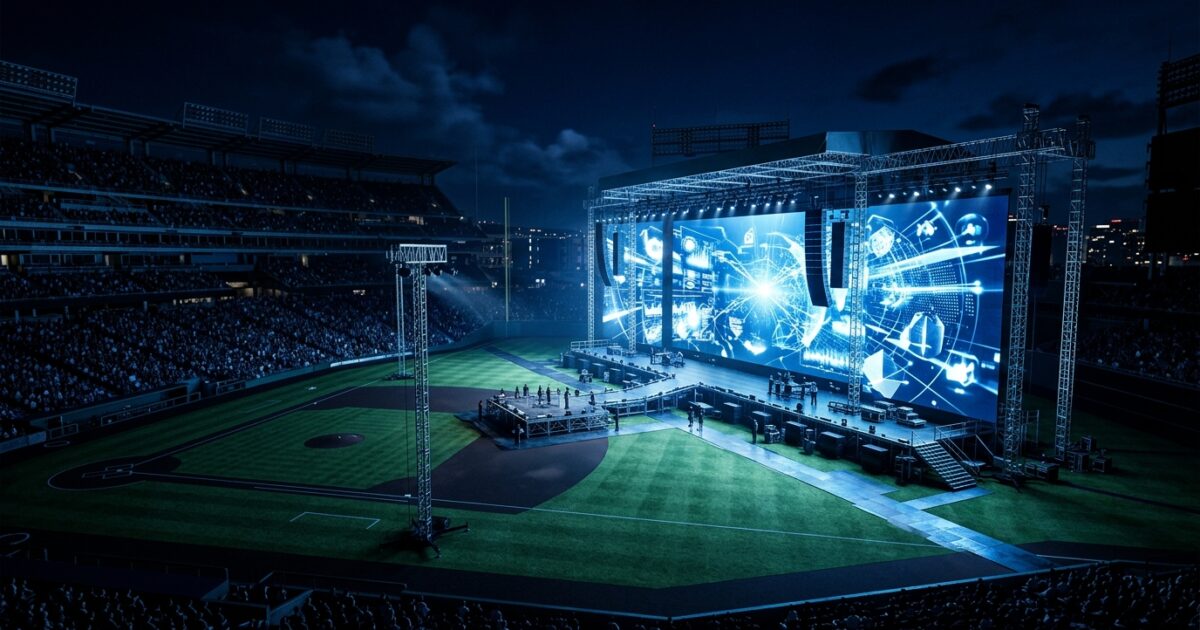
The technical demands of retrofitting an active, world-class baseball stadium into a state-of-the-art concert venue cannot be overstated. Between July 10 and July 12, 2026, Yankee Stadium was physically transformed into an acoustic and visual powerhouse. The opening night, explicitly billed as ‘JAY-Z 30’, featured a breathtaking 2,952-square-foot outfield-spanning LED screen that anchored the entire visual aesthetic of the show. This was definitively not a standard plug-and-play visual setup. The installation demanded intricate structural engineering to withstand dynamic wind loads, all while delivering seamless, ultra-high-definition visual feeds to a capacity crowd of over 45,000 attendees.
To fully grasp this engineering synthesis, we must analyze the underlying hardware mechanics and the extreme supply chain constraints. The stadium, embedded deep within city streets, inherently lacks the vast, sprawling staging lots typical of suburban arenas. Consequently, the production team, spearheaded by designer Willo Perron, executed a hyper-synchronized delivery system. Truck logistics operated on a zero-downtime, just-in-time delivery schedule: the exact moment one truck unloaded critical structural trusses, the next was pulling in with massive LED modules. It is the physical equivalent of optimal networking & cloud data packet orchestration—any latency in physical delivery would mean complete systemic failure across the assembly timeline.
Furthermore, the 3-acre outfield was meticulously protected by engineered, flat-bottomed polypropylene panels designed specifically to prevent any compaction or degradation of the delicate Kentucky bluegrass. More ingeniously, the baseball diamond itself was shielded by a vinyl-mesh cover that cleverly doubled as a secondary projection screen. This dual-use material engineering minimized the physical payload resting on the ground while vastly maximizing the digital and visual footprint of the production. Consider the high-level structural analogy here: Imagine reconfiguring a live, globally serving data center, hot-swapping all of its primary servers, without dropping a single active network transaction. That is what happened on this field. The stadium had to transition from professional baseball to a world-class concert venue and back to baseball—ready for the Los Angeles Dodgers series the following week—without a single visible trace of the intrusion. It was global logistics and continuous deployment applied directly to physical steel, turf, and LEDs.
Market Impact & Deployment
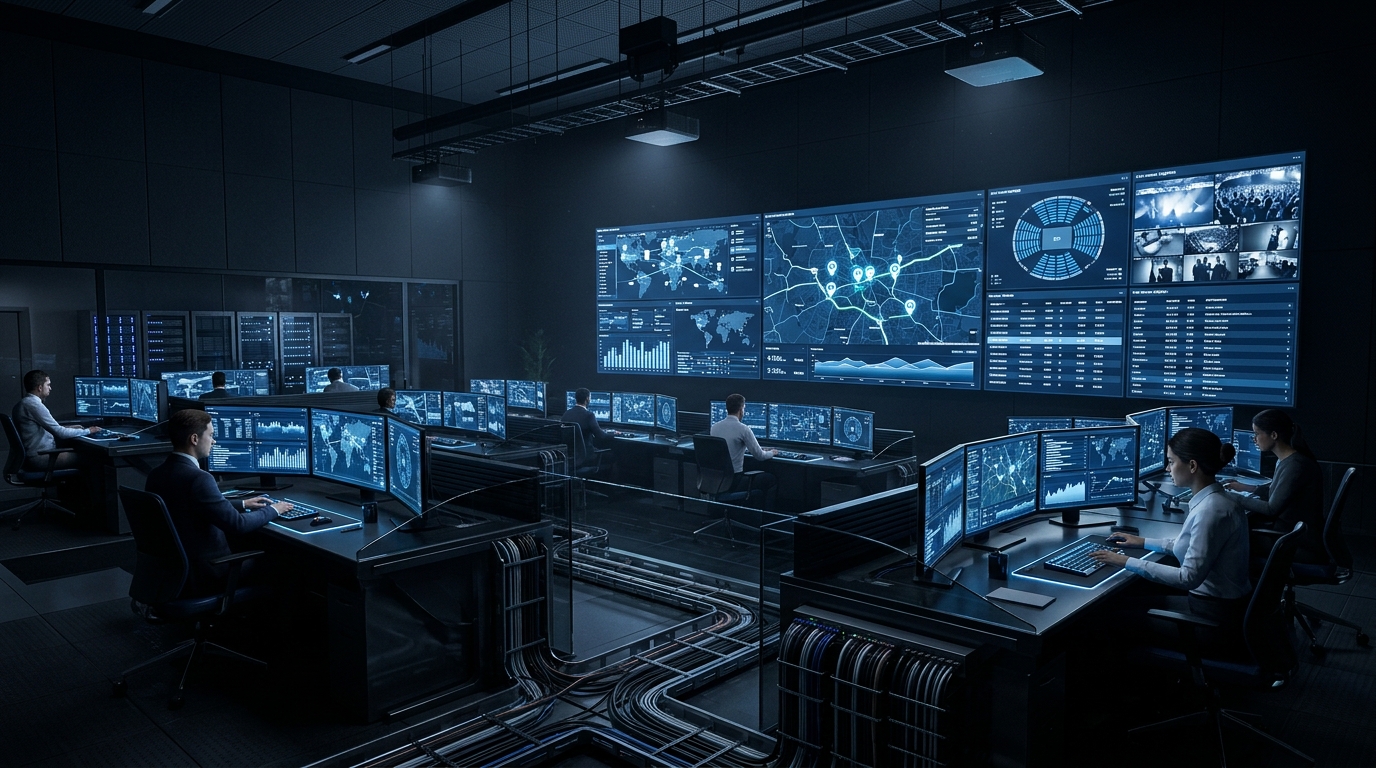
Deploying at this aggressive scale introduces profound business implications for enterprise IT and venue management. From an operational perspective, the Return on Investment (ROI) and Total Cost of Ownership (TCO) for temporary event deployments must be strictly scrutinized and managed. A production that mandates a live 10-person band coupled with an 18-piece live string section carries immense acoustic, spatial, and financial overhead. Every inch of stage footprint allocated to personnel required complex audio routing, vast cable management, and zero-latency in-ear monitor networking for 28 active, moving musicians.
The strategic decision to eschew traditional “ostentatious” props—such as the flying set pieces recently utilized in Beyoncé’s Cowboy Carter tour—in favor of bleacher-style on-stage seating for hardcore fans drastically optimized the stage payload. This brilliant design pivot ultimately lowered the physical footprint costs, reduced setup time, and paradoxically increased the premium, intimate value of the show. However, performing a critical audit on this deployment reveals the hidden friction points. While the public narrative heavily emphasizes a seamless integration of New York culture, the reality of running heavy equipment over delicate turf involves intense financial risk. The strict operational mandate to ensure that absolutely no heavy vehicles drove on the diamond—and the staggering insurance liabilities tied to protecting the Yankees’ multi-million-dollar playing surface—represented a massive hidden cost bottleneck.
The subsequent performances, including the July 11 show branded ‘JAY-Z 25’ to mark the 25th anniversary of The Blueprint, and the concluding July 12 ‘Extra Innings’ show, demonstrated how scalable this underlying infrastructure had to be. Swapping expansive setlists and visual assets overnight across a 2,952-square-foot digital canvas requires immensely robust media servers, redundant high-voltage power systems, and fail-safe digital storage architectures. The operational deployment was flawless, allowing legendary guest stars—including Beyoncé performing “Can’t Knock the Hustle,” Nas, Alicia Keys, and Blue Ivy Carter—to seamlessly integrate into the highly rigid timeline without triggering a single technical fault.
The Consumer Translation
For the worldwide public and the 45,000 passionate fans inside the venue each night, this highly technical, billion-dollar orchestration was entirely invisible. What the audience experienced was pure, unadulterated cultural resonance. The minimalist stage design consciously allowed the artist and his live 28-piece ensemble to act as the primary, undisputed spectacle. In a digital age where live performances are increasingly augmented by artificial backing tracks, elaborate backing dancers, and excessive pyrotechnics, the acoustic purity of an 18-piece string section echoing across Yankee Stadium offered a striking contrast. It translated directly to authenticity.
This approach highlights a broader paradigm shift balancing enterprise constraints with consumer reality. Modern audiences are deeply hungering for authentic, in-person experiences (IRL events) in an increasingly AI-driven and isolated landscape. By purposefully pushing the technological infrastructure into the background—using the vinyl-mesh diamond cover merely to project archival footage and live camera feeds—the technology served to amplify raw human connection rather than overshadow it. The audience’s social media feeds weren’t saturated with mechanical stage gimmicks; they were filled with organic, spontaneous moments of Jay-Z interacting with his daughter or sharing a stripped-down stage with his closest mentors and peers.
This technical execution also features a notable cross-industry impact. The precision logistics modeled at Yankee Stadium disrupt and inform vastly different sectors. For instance, disaster relief organizations utilize identical just-in-time staging strategies when rapidly deploying field hospitals in dense urban environments without adequate parking or staging areas. Similarly, pop-up retail conglomerates and mobile enterprise computing clusters can learn vital lessons from the integration of multi-purpose materials—like the vinyl-mesh projection screen—to radically maximize utility while maintaining a minimal physical footprint.
Frequently Asked Questions
Q1: How did the production protect the Yankee Stadium field during the Jay-Z concert?
A1: The 3-acre outfield grass was heavily guarded by flat-bottomed polypropylene panels, while the baseball diamond was shielded by a vinyl-mesh cover that efficiently doubled as a massive projection screen.
Q2: What was the primary visual technology used for the residency?
A2: The deployment hinged on an immense 2,952-square-foot outfield-spanning LED screen, acting as the primary visual backbone for the artist’s otherwise minimalist stage architecture.
Q3: How were logistics managed given the lack of staging space at Yankee Stadium?
A3: Because the stadium lacks massive parking for equipment storage, truck deliveries were meticulously timed so that each part of the stage arrived precisely as the previous delivery truck departed, executing continuous, zero-latency assembly.
Q4: What were the exact dates of Jay-Z’s Yankee Stadium residency?
A4: The ambitious three-night residency kicked off on July 10, 2026, continued with the “JAY-Z 25” show on July 11, and wrapped up with an “Extra Innings” performance on July 12.
Q5: Did Jay-Z use backing tracks for these monumental stadium performances?
A5: No, the rapper was accompanied entirely by live instrumentation, bringing out a 10-person band alongside a sweeping 18-piece string section to drive an authentic acoustic experience.
TechNode HQ Verdict: Pros, Cons & Usability
- Pro (Engineering): The brilliant use of dual-purpose vinyl-mesh covers optimized staging payloads by flawlessly blending physical field protection with massive digital projection capabilities.
- Pro (Consumer): A stripped-down, minimalist aesthetic highlighted the live 28-piece ensemble, delivering unprecedented acoustic authenticity and intimate cultural resonance.
- Con: The strict operational mandate to keep heavy machinery off the stadium diamond necessitated dangerously narrow operational margins for load-in and load-out workflows.
- Con: Just-in-time delivery logistics in a densely populated urban environment like the Bronx introduced high, persistent risks of systemic delivery delays.
Enterprise Usability: CTOs and venue operations directors should closely study this event. The deployment emphatically proves that high-stakes, temporary infrastructure can be safely deployed in fragile, high-value environments by relying on mathematically precise sequential logistics and highly specialized protective materials.
Everyday Usability: For the consumer, this event represents the absolute pinnacle of modern entertainment. The technology perfectly served the human element, ensuring that fans received a once-in-a-lifetime authentic experience free from distracting gimmicks.