Key takeaways
- DeepSeek V4-Pro permanently locked its output pricing at an industry-low $0.87 per million tokens.
- Gemini 3.5 Flash counters with native multimodal capabilities and a 1-million-token context window.
- DeepSeek’s 1.6T parameter MoE architecture uses just 49B active parameters for extreme cost efficiency.
- Cached input tokens for V4-Pro cost $0.003625 per million, virtually eliminating context injection costs.
- Multi-provider routing strategies are now mandatory for enterprise ROI and optimal cloud infrastructure scaling.
The API Price War is no longer a looming threat for artificial intelligence infrastructure providers—it has officially boiled over into an existential battle for developer mindshare and enterprise computing workloads. As of June 2026, the foundational model landscape has been violently and irreversibly reshaped by two massive industry announcements that completely redefine the economics of generative AI. First, DeepSeek has standardized the pricing for its DeepSeek-V4-Pro model, making previous promotional discounts permanent. Second, Google has aggressively entered the fray with the general availability of Gemini 3.5 Flash, a blazing-fast, natively multimodal powerhouse that boasts a massive 1-million-token context window. For enterprise architects, CTOs, and independent developers alike, the calculus of deploying generative AI has been fundamentally rewritten.
This is not merely a minor or cyclical price adjustment; it represents a tectonic shift in the Total Cost of Ownership (TCO) for deploying intelligence at scale. By successfully dropping reasoning model output costs well below the critical $1-per-million threshold, top-tier AI is now economically viable for high-volume, low-margin applications that were previously restricted to smaller, heavily quantized, or open-source alternatives. In this comprehensive editorial deep-dive, we will explore the underlying silicon mechanics that make this possible, analyze the true business return on investment, uncover the hidden bottlenecks in global deployment, and explain why developers must urgently adapt their API routing strategies to survive the current market dynamics.
The API Price War: Architectural Reality

To truly comprehend how these staggering price cuts are economically sustainable for the providers, we must look beneath the hood at the underlying engineering and hardware mechanics driving modern inference. DeepSeek-V4-Pro represents an absolute masterclass in sparse activation and resource optimization. At its core, the model utilizes a sophisticated Mixture-of-Experts (MoE) architecture featuring an incredible 1.6 trillion total parameters. However, the secret to its extreme efficiency lies in its runtime behavior: during any given inference pass, it utilizes only 49 billion active parameters. This aggressive sparsity allows DeepSeek to dramatically reduce the VRAM footprint, memory bandwidth bottleneck, and compute cycles required per token. By routing tokens only to the highly specialized sub-networks (or “experts”) that are absolutely necessary for a specific query, DeepSeek achieves raw reasoning performance that rivals the most expensive frontier models, but at a tiny fraction of the computational overhead.
DeepSeek’s rigorous optimization also extends brilliantly to its caching layer. For context-heavy applications, the cached input token price has plummeted to an astonishing $0.003625 per 1 million tokens. This practically eliminates the financial penalty of repeatedly sending massive context payloads to the API. It effectively makes system prompts, massive Retrieval-Augmented Generation (RAG) document injections, and long-running, iterative loops virtually free. When combined with its 1-million-token context window, DeepSeek-V4-Pro is specifically designed for advanced reasoning, complex coding tasks, and long-horizon agentic workflows. Furthermore, the model features a highly capable “Thinking mode” which is enabled by default. Reasoning tokens generated during this phase are billed transparently at the standard output rate of $0.87 per 1 million tokens, ensuring there are no hidden premium surcharges for complex cognitive tasks.
On the opposite side of the battlefield, Google’s Gemini 3.5 Flash takes a distinctly different architectural approach designed to capture a completely different market segment. Positioned as an ultra-high-volume workhorse, Gemini integrates multimodal processing natively into the foundational model. Instead of relying on separate, disjointed vision, audio, or video encoders wrapped in a complex pipeline, Gemini 3.5 Flash processes text, images, and video through a unified neural architecture. This lack of intermediate translation drastically reduces latency, making it reportedly 4x faster than older frontier models and significantly outperforming its predecessor, Gemini 3.1 Pro, on various coding and reasoning benchmarks. While its base pricing commands a premium over DeepSeek for pure text workloads, Gemini 3.5 Flash completely dominates the landscape when intricate visual or auditory data processing is required.
For organizations scaling their infrastructure, leveraging the right model for the right task is no longer optional; it is paramount. A hybrid, dynamic deployment model—intelligently routing text-heavy reasoning tasks to DeepSeek while redirecting complex multimodal tasks to Gemini—is rapidly becoming the gold standard in Enterprise IT.
Total Cost of Ownership and Enterprise ROI
When translating these highly technical specifications into hard business value, the Return on Investment (ROI) becomes an equation that is impossible for C-level executives to ignore. Consider the operational realities of previous generations: building an automated, user-facing customer support agent that generated thousands of conversational tokens per request was a fast track to API bankruptcy. Generating one billion output tokens on a premium model like GPT-4o would typically cost an enterprise around $10,000. With DeepSeek-V4-Pro’s permanently reduced output price of $0.87 per million tokens, that exact same volume of intelligence now costs just $870. This staggering 91% cost reduction means businesses can serve ten times the number of users on the same monthly compute budget, entirely shifting AI from an experimental R&D expense to a core, profitable operational utility.
The impact of DeepSeek’s $0.003625 cached input token pricing cannot be overstated. In traditional AI workflows, engineers spent countless hours painstakingly optimizing prompts, trimming context, and building complex vector databases just to avoid paying massive input fees for repeated data. Today, developers can dump massive, multi-megabyte codebases or entire corporate wikis into the 1-million-token context window, cache it, and essentially pay nothing for the prompt overhead on subsequent queries. This fundamentally alters developer behavior, prioritizing raw intelligence and context depth over frugal prompt engineering.
To streamline its offerings and force the market forward, DeepSeek has officially transitioned to a simplified two-model lineup consisting solely of DeepSeek-V4-Flash and DeepSeek-V4-Pro. In tandem, the company announced that older iterations, including deepseek-chat and deepseek-reasoner, are scheduled to be fully deprecated on July 24, 2026. While forced migrations are historically painful for enterprise teams, the overwhelming financial incentives of the V4-Pro pricing structure make this an incredibly profitable, urgent upgrade for any technology department.
Market Impact and Deployment Bottlenecks
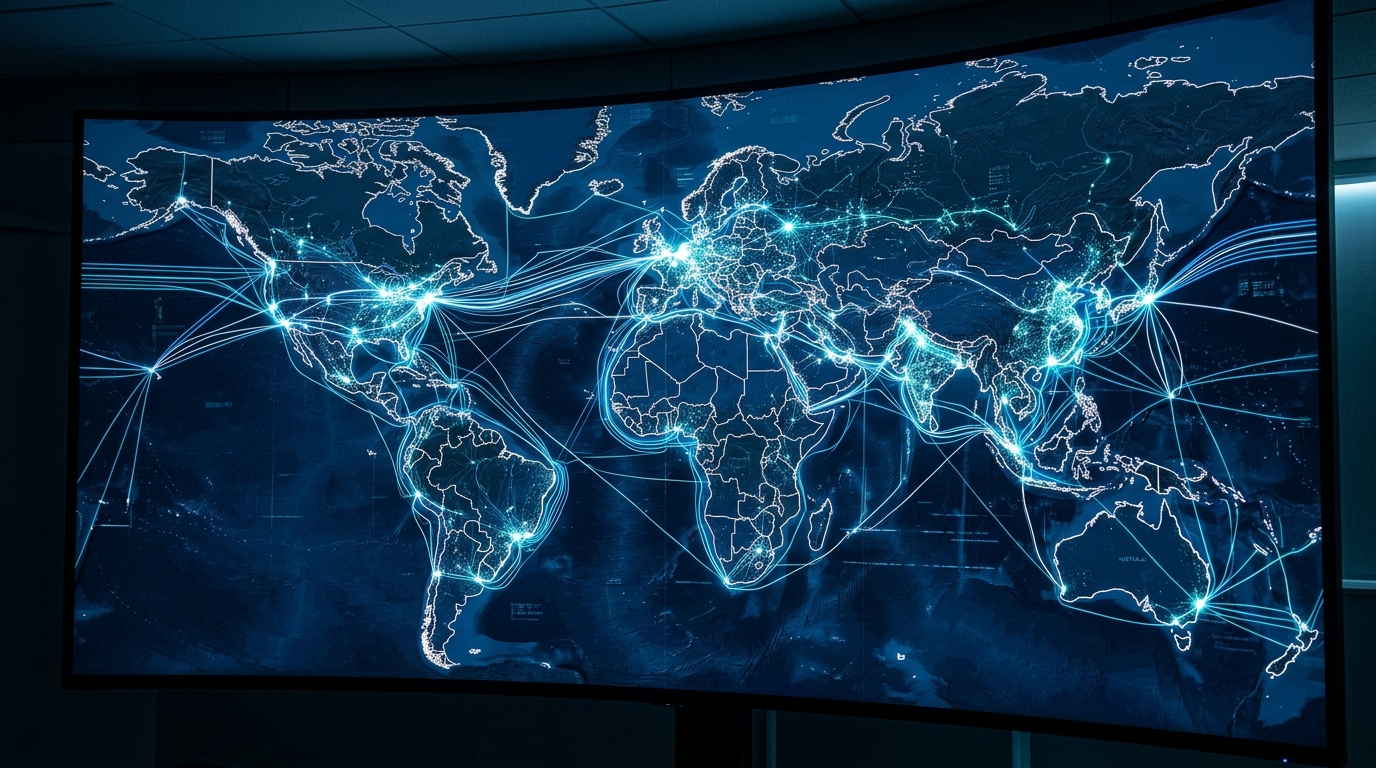
Despite the incredible cost savings, deploying these models in a production environment is not without its severe hurdles. During our comprehensive red team audit of the current ecosystem, we identified significant access, scaling, and compliance bottlenecks that are often obscured by marketing hype. The official DeepSeek API, while incredibly cheap, strictly enforces a concurrency limit of 500 requests for the V4-Pro model. For a global, consumer-facing application with tens of thousands of Daily Active Users (DAUs), 500 concurrent connections can be exhausted in a matter of milliseconds during peak traffic spikes, leading to immediate rate-limiting and application downtime. Furthermore, registering for the official API frequently requires region-specific phone numbers (often Chinese), and international credit cards are routinely rejected by their billing portals.
To circumvent these debilitating limitations, Western developers are increasingly forced to turn to Networking & Cloud infrastructure providers, API aggregators, and proxy services like AiCredits or OpenRouter. These intermediary platforms provide seamless, OpenAI-compatible endpoints with global CDN routing, scalable concurrency limits, and international payment support, albeit occasionally introducing a minor latency or cost premium.
Meanwhile, Gemini 3.5 Flash introduces its own distinct set of regional pricing complexities that complicate global deployments. While the baseline pricing is highly competitive—$1.50 per 1 million input tokens and $9.00 per 1 million output tokens, with cached input at $0.15—these rates apply primarily to global tiers. In non-global regions, the pricing structure bumps up to approximately $1.65 per million input tokens and $9.90 per million output tokens. Furthermore, Gemini’s pricing represents a significant increase compared to its much cheaper predecessor, Gemini 3 Flash, reflecting its new positioning by Google as a model offering near-Pro level coding and reasoning performance. Navigating these regional pricing variations, strict data sovereignty laws, and ensuring GDPR or HIPAA compliance requires a meticulous, well-architected cloud strategy.
Cross-Industry Disruption
The plummeting cost of high-tier artificial intelligence is reverberating far beyond the immediate software development sector, fundamentally disrupting vastly different traditional industries. In the Legal Tech sector, the prohibitive cost of analyzing dense, text-heavy documents has long hindered AI adoption. However, the ability to ingest hundreds of massive legal case files using DeepSeek’s sub-penny cached input rates means that automated paralegal agents can now instantly cross-reference decades of complex jurisprudence without breaking a boutique firm’s IT budget.
In the Media, Broadcasting, and Entertainment industries, Gemini 3.5 Flash is revolutionizing post-production workflows. Its massive 1-million-token context window combined with native, untranslated video processing allows studios to upload hours of raw, unedited 4K footage directly into the model. The AI can instantly generate highly accurate, timestamped editing logs, identify key cinematic moments, and flag continuity errors in a fraction of the time it would take a human assistant editor.
Even Healthcare IT is experiencing a massive paradigm shift. By leveraging the immense context windows of both DeepSeek and Gemini, secure medical platforms can securely ingest and synthesize a patient’s entire lifelong medical history. Instead of doctors spending hours reviewing fragmented charts, the AI can instantly provide a holistic, chronological summary of symptoms and treatments, fundamentally improving diagnostic speed and patient outcomes.
The Consumer Translation: A Ubiquitous Future
For the worldwide public, this highly technical shift in backend API pricing translates to one singular, profound outcome: the era of invisible, ubiquitous intelligence. Consumers will rapidly notice that the digital services they interact with daily are becoming exponentially smarter. Customer service chatbots will no longer forget the context of a conversation from five minutes prior; they will have perfect, infinite memory of a customer’s entire account history. Digital personal assistants will process complex, multi-step spoken instructions instantly, entirely eliminating the frustrating “thinking” delays of the past.
The financial barrier to building capable, world-changing AI software is no longer capital; it is simply human imagination. This democratization means that solo independent developers and small startups can now deploy massive, persistent agentic swarms that previously required the deep pockets of Silicon Valley venture capital.
To provide a high-level executive abstraction: think of modern API routing and model selection like global logistics and supply chain management. DeepSeek V4-Pro is your ultra-efficient, massive-capacity freight rail network. It reliably handles the vast majority of your heavy, dense, text-based cargo at absolute rock-bottom prices, forming the backbone of your operations. Conversely, Gemini 3.5 Flash is your specialized, premium air-freight service. It commands a notably higher premium, but it is utterly unmatched when you need complex, multi-format packages—like high-definition video and intricate audio—processed and delivered to the destination instantly. Mastering the integration of both networks is the definitive key to supply chain efficiency in the modern AI & Machine Learning era.
Frequently Asked Questions
Q1: What is the current official API pricing for DeepSeek V4-Pro?
A1: As of June 2026, DeepSeek V4-Pro costs $0.435 per million input tokens and $0.87 per million output tokens, with cached input tokens priced at a remarkably low $0.003625 per million.
Q2: How does Gemini 3.5 Flash compare in pricing and capabilities?
A2: Gemini 3.5 Flash costs $1.50 per million input and $9.00 per million output tokens, offering native multimodal processing (text, vision, audio, video) and 4x faster generation speeds than previous models.
Q3: What are the primary scaling bottlenecks for deploying DeepSeek V4-Pro?
A3: The official DeepSeek V4-Pro API currently enforces a strict concurrency limit of 500 requests, and registration often requires region-specific phone numbers, prompting many developers to use API proxies.
Q4: When will older DeepSeek models be officially deprecated?
A4: DeepSeek is transitioning strictly to a two-model lineup (V4-Flash and V4-Pro) and will fully deprecate legacy models like deepseek-chat and deepseek-reasoner on July 24, 2026.
Q5: Does DeepSeek V4-Pro support reasoning or “Thinking” modes?
A5: Yes, DeepSeek V4-Pro features a Thinking mode that is enabled by default, where reasoning tokens generated during computation are billed transparently at the standard output rate.
TechNode HQ Verdict: Pros, Cons & Usability
- Pro (Engineering): DeepSeek-V4-Pro’s highly optimized 1.6T parameter MoE architecture provides GPT-4o level reasoning at a staggering $0.87 per million output tokens, drastically lowering TCO for text-heavy applications.
- Pro (Consumer): Gemini 3.5 Flash enables lightning-fast, seamless multimodal user experiences, allowing the general public to interact flawlessly with video, audio, and text in real-time.
- Con: The strict 500 concurrent request limit on the official DeepSeek V4-Pro API presents a massive scaling bottleneck for large enterprise deployments serving thousands of daily active users.
- Con: Severe regional pricing variations and access restrictions—such as geo-blocks, phone number verifications, and limited payment gateways—force companies to rely on third-party API proxies, which complicates corporate compliance.
Enterprise Usability: Chief Technology Officers must architect and adopt a dynamic, multi-provider routing strategy immediately. Teams should integrate DeepSeek-V4-Pro as the default, high-volume engine for standard text generation and reasoning loops to aggressively slash cloud costs, while deliberately falling back to Gemini 3.5 Flash strictly for multimodal processing and edge-case tasks requiring extreme low-latency execution.
Everyday Usability: For independent developers, hobbyists, and lean startups, the economic barriers to entry have never been lower. You can now build, test, and deploy highly complex, persistent AI agents that can serve thousands of global users for mere dollars a month, shifting the focus from budget constraints to product innovation.