
Key takeaways
- Solstice Crypt demonstrates pure zero-dependency Vanilla JavaScript efficiency.
- Replaces recursive raycasting with deterministic iterative BFS queues.
- Google Gemini was utilized strictly as a resilient production engineer.
- The June Solstice Game Jam featured a $1,000 total prize pool.
- Bitwise operations ensure mathematically perfect additive color synthesis.
The Architectural Reality of Vanilla JavaScript Engineering
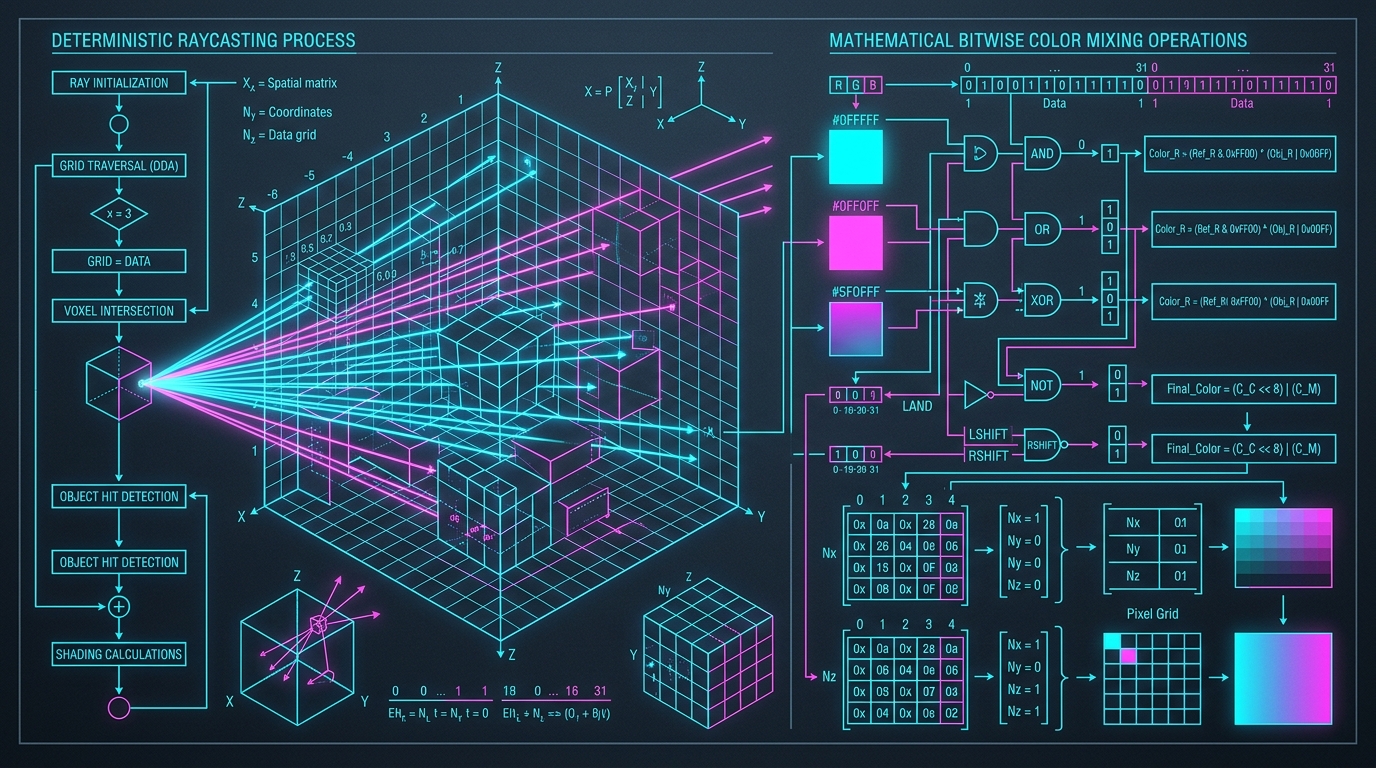
In the modern landscape of swollen web frameworks, Vanilla JavaScript Engineering represents a powerful return to first principles. The recent release of Solstice Crypt – Decrypt the Light—a real-time optical decryption puzzle created by Kanyingidickson.dev—demonstrates what is possible when developers strip away heavy dependencies like React, Vue, or Angular. Built entirely in vanilla HTML5, CSS3, and JavaScript ES Modules, this project was a standout submission for the DEV Community’s June Solstice Game Jam, which ran from June 3 to June 21, 2026. The technical foundations of this project serve as an aggressive counter-narrative to modern front-end bloat, showing that a complex state-machine can run instantaneously in any modern browser without downloading megabytes of third-party libraries.
Instead of relying on recursive functions that risk infinite reflection loops—a common pitfall in grid-based pathfinding games—the game utilizes a deterministic raycasting engine powered by an iterative Breadth-First Search (BFS) queue. This approach ensures a mathematically perfect simulation where the state of every light beam is tracked explicitly using coordinates and direction vectors. When developers look toward advancements in hardware logic and execution, they seek idempotence and reliability. Solstice Crypt mirrors this paradigm by using pure 3-bit flags for color synthesis (Red = 001, Green = 010, Blue = 100). By combining these values via a simple bitwise OR operation (e.g., Red | Blue = Magenta, or 101), the color mixing logic is order-independent and completely immune to the race conditions that typically plague complex visual state management.
Further demonstrating a hardcore engineering mindset, the game’s “Solstice Drift” mechanic introduces deliberate instability. Certain nodes on the grid automatically rotate over a fixed timer. Players are forced to route beams through these drifting nodes to trigger an “Optical Lock,” structurally freezing the path. This creates a relentless gameplay tension but also requires the game engine to recalculate every active beam path on every single tile rotation. Because the logic is driven by raw, low-level bitwise operations rather than heavy object-oriented abstractions, these real-time recalculations consume virtually no CPU overhead.
The commitment to a zero-dependency stack extends to the game’s audio engineering. Rather than loading large MP3 or WAV files, the developer utilized the Web Audio API for procedural sound synthesis. A tile rotation generates a short square-wave click sweeping from 800Hz to 100Hz in 50 milliseconds; the drift warning triggers a sawtooth sweep; and ambient music is generated via procedural pad chords. This absolute minimalism guarantees that the entire application can be downloaded and rendered in milliseconds, establishing a standard for performance that massive software ecosystems frequently fail to meet.
Market Impact & Deployment
While a web-based puzzle game might seem removed from serious corporate infrastructure, the deployment lessons here are significant. By employing a pure, zero-dependency architecture, the Total Cost of Ownership (TCO) for similar corporate applications plummets. Load times drop to milliseconds, bandwidth costs scale efficiently, and technical debt from unmaintained third-party packages is entirely eliminated. This methodology resonates strongly within Enterprise IT sectors that demand ultra-reliable, auditable, and lightweight internal tooling. It proves that sophisticated visual tooling and complex logic pipelines do not mandate heavy vendor lock-in or fragile dependency trees.
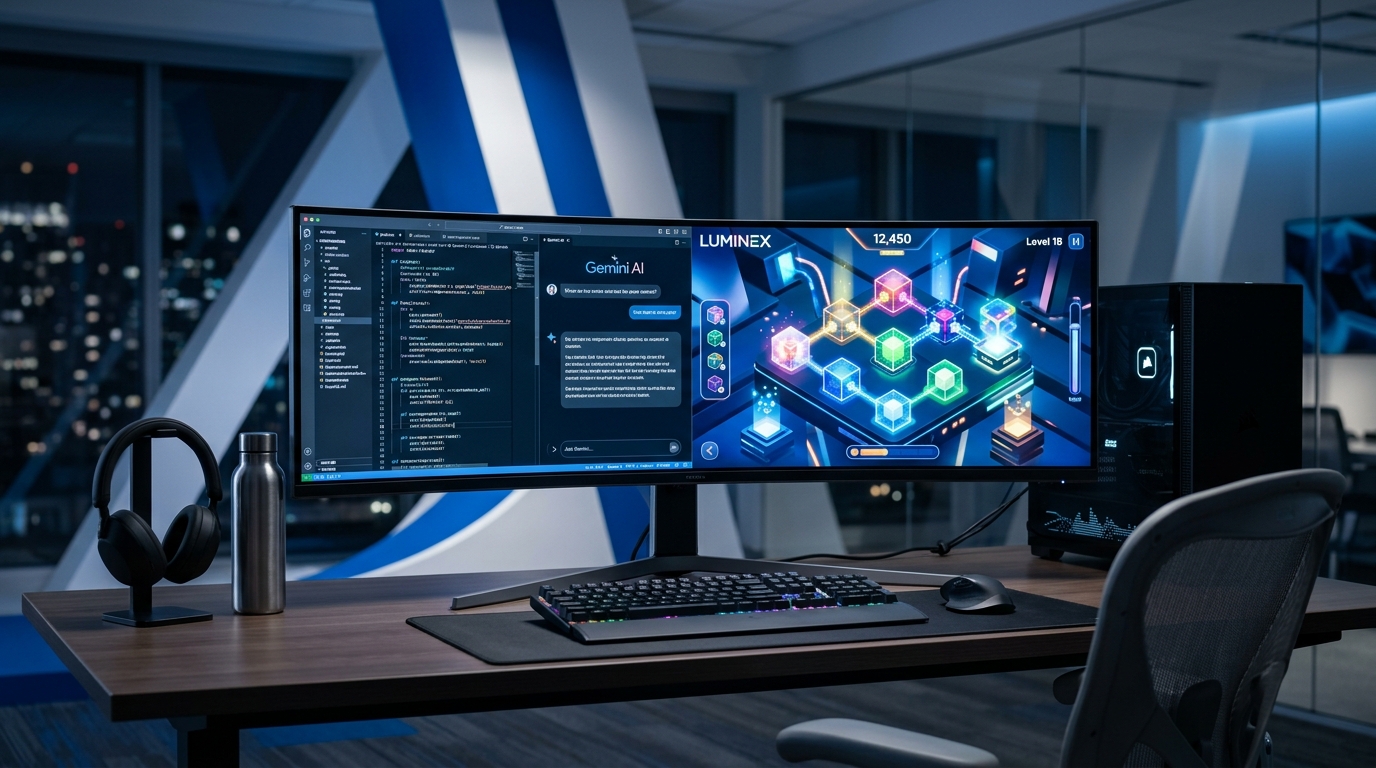
Furthermore, the development of Solstice Crypt highlights a paradigm shift in how artificial intelligence accelerates production. Rather than using AI as a simplistic code generator that outputs bloated boilerplate, the developer leveraged Google Gemini as a strict “Game Jam Execution Director.” This usage pattern mirrors advanced Agentic AI capabilities where AI functions as a technical auditor and system architect. Gemini stress-tested game concepts, built automated test runners in Node.js to mathematically verify that every puzzle configuration was solvable, fixed critical rendering bugs, and actively pruned feature creep. By utilizing AI as a ruthless production engineer, the developer guaranteed that the project remained stable enough to compete in a jam packed with ambitious submissions.
The competitive landscape of the June Solstice Game Jam illustrates the high caliber of these submissions. Hosted on the DEV Community platform, the event challenged developers to create games inspired by the summer solstice, light and darkness, the passage of time, Pride month, Juneteenth, and the history of Alan Turing. The jam offered a generous $1,000 total prize pool, distributing $200 USD each to the top five winners alongside exclusive DEV badges and DEV++ memberships. Solstice Crypt competed against a wide array of fascinating light-manipulation and atmospheric mechanics. For instance, competitors submitted games like Solstice Cipher, another optical decryption challenge; SOLSTICE — The Longest Day, an atmospheric platformer utilizing a fading ember for health and navigation; SOLSTICE (3D Survival), a Stonehenge-inspired defense game; and Shift Time, Reshape the World, a day-night cycle puzzle platformer. Standing out in this crowded field required flawless execution—something Solstice Crypt achieved by merging creative gameplay with uncompromising engineering stability.
The Consumer Translation
For the everyday web user, highly technical shifts like bitwise operations, Web Audio API synthesis, and iterative BFS queues translate into a completely frictionless experience. Without multi-megabyte engine downloads, long loading screens, or aggressive monetization wrappers, players can jump directly into a fluid, responsive 60 FPS environment directly from their browser. Solstice Crypt immerses players in an interface that acts as a physical Turing machine, where they decrypt eight progressively challenging sectors without breaking a sweat on mobile or desktop hardware limitations.
The game’s aesthetic execution effortlessly matches its technical prowess. Players rotate mirrors, tunnel light through Optic Portals, and isolate colors with Wavelength Filters inside a gorgeous glassmorphic terminal. The visual experience is enhanced by glowing CRT scanlines and laser beams that react instantaneously to user input. The inclusion of a Creative Lab level editor allows the consumer to step into the role of the designer, constructing custom puzzles with base64 cipher share codes that can be easily distributed across social networks.
By framing the narrative around Alan Turing and cryptographic logic, the game elevates standard puzzle mechanics into an educational experience. The user is not merely solving arbitrary grid layouts; they are operating a literal computation machine made of light, learning the foundations of boolean logic, color synthesis, and state management along the way. This synthesis of high-end computer science, competitive game jam stakes, and frictionless consumer accessibility makes Solstice Crypt a definitive benchmark for what independent developers can achieve on the modern web.
Frequently Asked Questions
Q1: What is Solstice Crypt – Decrypt the Light?
A1: It is a browser-based optical decryption puzzle game built by Kanyingidickson.dev. It was a standout submission for the DEV Community’s June Solstice Game Jam in 2026.
Q2: How does the game’s color mixing work?
A2: The game utilizes additive bitwise color composition where Red, Green, and Blue are represented as 3-bit flags. This mathematically sound bitwise OR operation ensures flawless color synthesis.
Q3: How was Google Gemini used in the game’s development?
A3: Rather than generating code, Gemini acted as a production engineer. It guided architecture design, enforced strict scope control, and built the automated test runner to ensure puzzle solvability.
Q4: What were the details of the June Solstice Game Jam?
A4: The jam ran from June 3 to June 21, 2026, featuring themes like Pride month and Alan Turing. It offered a $1,000 prize pool, with five top winners receiving $200 USD each.
TechNode HQ Verdict: Pros, Cons & Usability
- Pro (Engineering): Zero-dependency architecture with iterative raycasting ensures deterministic, crash-proof performance across devices.
- Pro (Consumer): Instant browser loading paired with procedurally generated audio creates a perfectly frictionless user experience.
- Con: The lack of structural frameworks means that standardizing or scaling the codebase requires bespoke, rigorous internal documentation.
- Con: Maintaining complex custom engines (like the bitwise color simulator) demands highly specialized, low-level developer knowledge that is harder to onboard.
Enterprise Usability: CTOs should view this as a potent case study in minimizing bloat. Vanilla JS can execute highly complex state logic efficiently without the overhead of heavy frameworks, cutting down long-term technical debt.
Everyday Usability: Consumers should absolutely dive in. It’s an accessible, instantly playable puzzle that requires no installation and runs flawlessly on standard browser hardware.