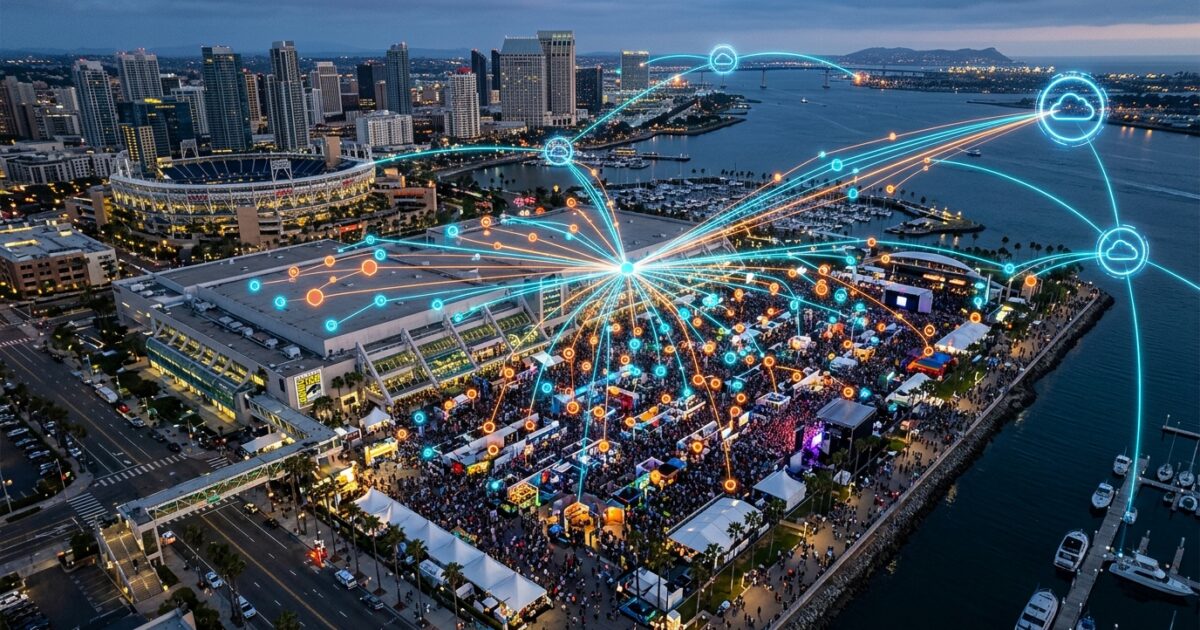
Key takeaways
- The SDCC 2026 Enterprise Impact reveals massive cloud dependencies for real-time interactive IP activations.
- Marvel’s Gaslamp Quarter takeover demonstrates aggressive physical marketing backed by scalable digital ecosystems.
- Merchandising portals require enterprise-grade bot mitigation, WAFs, and highly scalable CDN architectures.
- Streaming franchise expansions demand optimized edge computing for global synchronized video delivery.
- Toy manufacturing exclusives highlight shortened, highly agile just-in-time supply chains and automated fulfillment.
The SDCC 2026 Enterprise Impact extends far beyond the consumer spectacle of cosplay, comic books, and celebrity panels. From an enterprise technology perspective, San Diego Comic-Con (SDCC) represents one of the most intense, localized stress tests of intellectual property (IP) monetization, temporary supply chain logistics, and high-density network infrastructure on the planet. Running from Thursday, July 23, through Sunday, July 26, 2026—with the critical Preview Night launching on Wednesday, July 22—this event forces major media conglomerates and boutique manufacturers alike to deploy highly agile, cloud-backed operations. Analyzing the event through the lens of a Chief Information Officer or a VP of Infrastructure reveals a fascinating convergence of entertainment and enterprise-grade tech. Massive franchises are no longer just movies or comic books; they are highly complex digital ecosystems that require robust data orchestration, edge computing, and global scalability to yield a positive Total Cost of Ownership (TCO).
Every year, pop culture fans descend on Southern California in a battle of attrition. However, behind the crowded halls and permanently late shuttle buses lies a sophisticated layer of digital infrastructure. As io9 reporters on the ground noted, the crowds are significantly livelier than last year. The influx of hundreds of thousands of concurrent users into a concentrated geographic zone creates a unique challenge for local cell towers, convention center Wi-Fi networks, and the backend servers of every company hosting a live digital activation. In this deep dive, we examine how the mechanics of SDCC 2026 are paving the way for the future of interactive media infrastructure, supply chain resilience, and global content delivery.
The Architectural Reality: SDCC 2026 Enterprise Impact
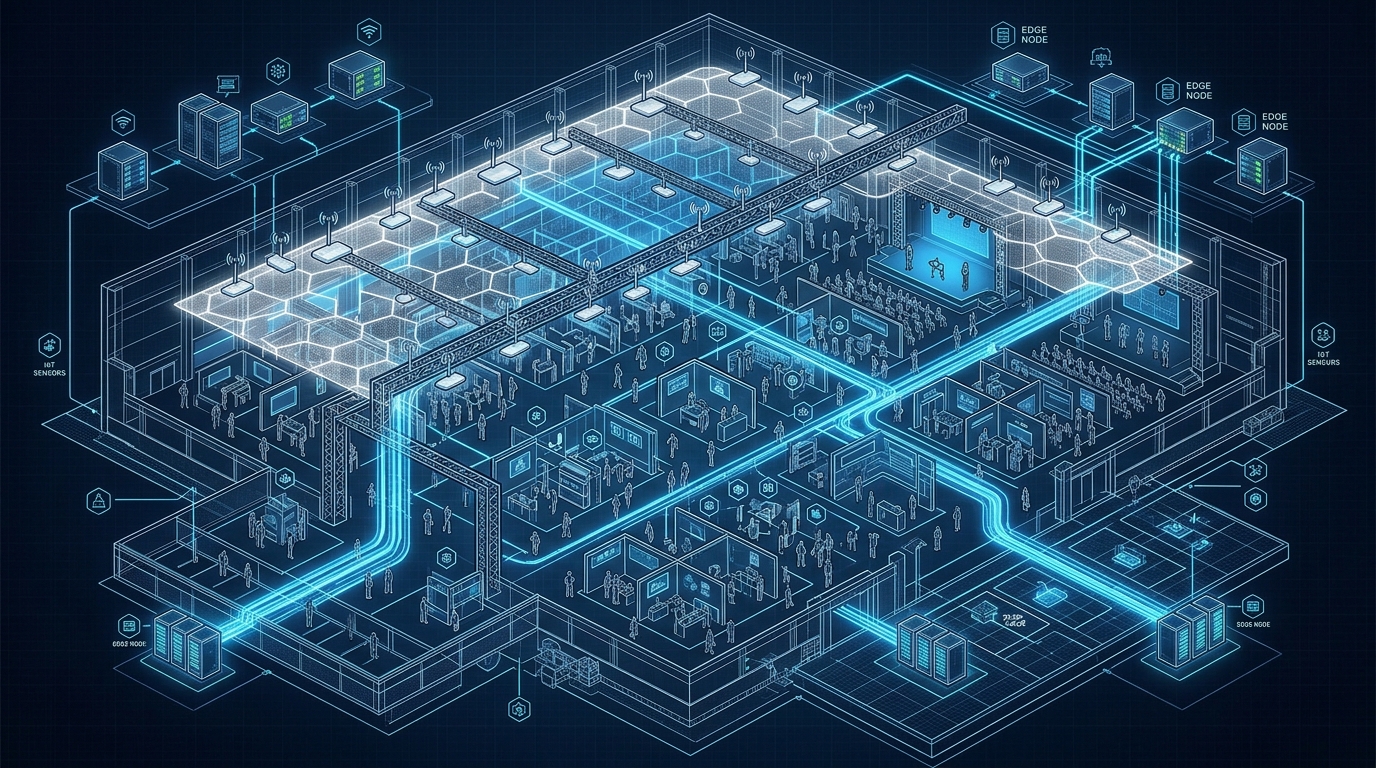
At the core of the convention’s success is a resilient approach to temporary infrastructure. Modern experiential marketing relies heavily on Networking & Cloud capabilities to bridge the physical-to-digital gap. A prime example is the Lanterns Training Headquarters deployed by DC and HBO. Described as an immersive experience where attendees test their mettle to become a Green Lantern, this activation is entirely booked for the weekend and boasts standby lines stretching over two blocks. From an engineering standpoint, this is not a static photo-op. These immersive activations utilize an array of local IoT sensors, Bluetooth Low Energy (BLE) beacons, and real-time edge computing to process user interactions without suffering from cloud latency. By processing telemetry data at the edge—directly on the convention floor—brands can harvest high-fidelity, first-party consumer engagement data while ensuring that interactive displays respond instantly to physical inputs.
Similarly, Laika’s Wildwood “The Forest Is Calling Portal Experience” demonstrates a highly orchestrated multi-sensory deployment. Located in front of the Hard Rock Hotel, the installation uses large-scale digital displays obscured by physical foliage that parts to reveal promotional imagery, complete with an aromatic component smelling of an Oregon forest. This activation, part of a broader national experiential campaign leading up to the film’s October 23 release, relies on precise environmental control systems synced with high-resolution digital playback. The backend requirement to manage, monitor, and remotely troubleshoot these dispersed experiential pods across a national rollout highlights the growing need for robust fleet management software in modern marketing. Entertainment companies are essentially operating distributed hardware fleets that require the same uptime guarantees and patch management protocols as enterprise IT assets.
This architectural reality shifts the focus from simple brand awareness to sophisticated data capture. For C-level executives, the ROI of a massive SDCC booth is no longer measured solely in foot traffic, but in the volume of digital impressions, app downloads, and targeted CRM entries acquired through these edge-deployed interactive nodes.
Market Impact & Deployment
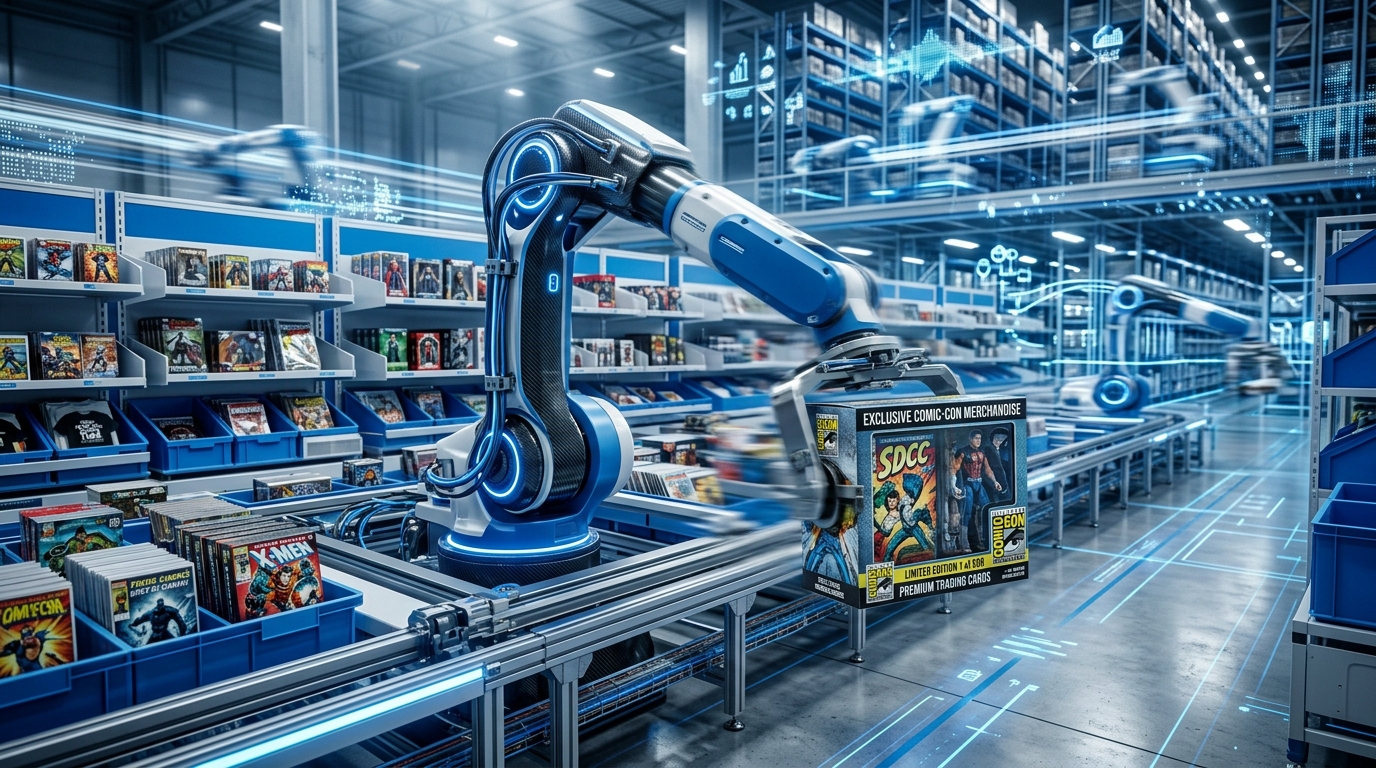
The logistics of limited-edition merchandising provide a textbook case study in Enterprise IT resilience and supply chain management. SDCC is synonymous with exclusive product drops, which present a dual challenge: manufacturing agility and digital sales stability. Notable releases this year include the first-to-market debut of the DC Multiverse Red Hood figure by McFarlane Toys, the exclusive Dungeon Crawler Carl figure line by Playmates Toys at UCC Distributing’s Booth #5613, and various high-demand items from Sideshow Collectibles, Hot Toys, and NECA. In the background, these releases represent a triumph of highly optimized, just-in-time manufacturing pipelines that can pivot rapidly based on trending IP.
However, the most significant technical hurdle occurs at the point of sale. Mattel Creations and other major vendors leverage systems like the SDCC Exclusive Portal to manage the crush of consumer demand. This portal allows attendees to apply for specific shopping time slots. From a systems architecture perspective, this is a sophisticated traffic-shaping mechanism. Rather than allowing an uncontrolled stampede of concurrent API calls that could bring down a payment gateway, the portal functions as an intelligent queuing system. It relies heavily on highly scalable CDNs (Content Delivery Networks) and aggressive Web Application Firewalls (WAFs) to filter out automated scalper bots and Distributed Denial of Service (DDoS) patterns. By enforcing time-based access tokens, retailers flatten the traffic curve, saving developer hours that would otherwise be spent fighting server fires and preserving the revenue pipeline.
Physical deployments are equally aggressive. Marvel’s Avengers: Doomsday takeover of the historic Gaslamp Quarter sign—a fixture since 1990—illustrates the brute force scale of IP marketing. Such physical takeovers require intricate project management, city permitting logistics, and rapid physical construction, acting as the real-world analog to spinning up a massive new server cluster to handle a sudden surge in compute demand.
The Consumer Translation
For the worldwide public, the dense technological infrastructure supporting SDCC 2026 translates directly into seamless, gamified, and hyper-connected entertainment experiences. The convergence of gaming and physical pop culture is evident in Insomniac Games’ showcase of Marvel’s Wolverine. The developer dropped a bloody new story trailer and revealed that the game will feature a suit inspired by Marvel Tokon: Fighting Souls, which players can unlock by entering a virtual Japanese arcade. This cross-pollination of IP—where an asset from one digital property unlocks value in a separate, triple-A gaming environment—requires standardized API integrations and cross-platform entitlement checks. It signals a future where consumer digital identities seamlessly carry inventory across fragmented media ecosystems, a Consumer Tech trend deeply intertwined with the concepts of the metaverse and unified user authentication.
On the show floor, consumer desire is continuously stoked by highly specialized, small-batch manufacturing runs. Fans are eager to acquire niche items like Transformers cassettes, pink glitter Godzilla figures, and ‘KPop Demon Hunters’ Hot Wheels. The rapid prototyping and 3D modeling pipelines utilized by toy manufacturers like Hasbro and Super7—who hosted an extensive Peanuts pop-up allowing fans to “adopt” a Snoopy plush complete with a digital-tracking-adjacent adoption certificate—demonstrate how advanced CAD software and flexible supply chains are delivering bespoke physical goods faster than ever before. Consumers reap the benefits of this agile manufacturing through hyper-targeted merchandise that perfectly aligns with their specific fandom niches.
Furthermore, digital audiences worldwide rely on continuous live blogs and breaking news updates from outlets like Gizmodo (io9) and dedicated live shows broadcast from IGN’s studio on Friday, July 24, and Saturday, July 25. Fans amplify this content on social media using the hashtag #SDCC2026. This synchronous global consumption is made possible by resilient streaming video architectures and robust content delivery networks capable of pushing high-definition video to millions of concurrent mobile devices with sub-second latency.
Streaming Infrastructure and Franchise Economics
A significant portion of the SDCC 2026 programming underscores the shifting economics of streaming platforms and their underlying infrastructure. On Thursday, Avatar: The Last Airbender and an Aliens 40th Anniversary panel anchored the schedule, followed closely by the announcement that Avatar: Seven Havens will premiere on October 9 on Paramount+. Friday kicked off with Prime Video’s massive Blade Runner 2099 and The Lord of the Rings: The Rings of Power combo panel, alongside showcases for Common Side Effects, The Vampire Lestat, and President Curtis. Saturday brought updates from Apple and Prime Video’s Carrie series, a new Star Trek film from Goldstein and Daly, and Zach Cregger’s Gladys, culminating in Marvel’s highly anticipated headline spot in Hall H at 5:30 p.m. PT.
Behind each of these streaming announcements is a massive investment in digital supply chains. Delivering an episode of The Rings of Power involves petabytes of raw visual effects data, processed across sprawling global render farms utilizing thousands of GPU clusters. The Total Cost of Ownership (TCO) for these franchises includes not just the actor salaries and set designs, but the massive cloud compute bills required for AI-assisted rotoscoping, fluid simulations, and eventual 4K video transcoding.
To ensure global accessibility, streaming giants deploy predictive caching at the network edge. When a trailer for a new Gundam anime (from the mind behind Ghost in the Shell: Stand Alone Complex) or a sneak peek at Brad Bird’s animated feature Ray Gunn drops, the content must be instantly available in Paris, Tokyo, and New York simultaneously. This necessitates a highly sophisticated data orchestration strategy, pushing transcoded media chunks to edge nodes closest to the end-users. The franchise economics depend entirely on the reliability of this infrastructure; a buffering trailer or a crashed app during a hype-cycle launch translates directly to lost subscription revenue and diminished IP valuation.
Frequently Asked Questions
Q1: When did SDCC 2026 officially begin and what were the key dates?
A1: San Diego Comic-Con 2026 runs from Thursday, July 23, through Sunday, July 26, 2026, with Preview Night held on Wednesday, July 22. It features major panels across film, TV, and gaming.
Q2: What is the significance of the SDCC Exclusive Portal for merchandising?
A2: The SDCC Exclusive Portal acts as a critical traffic-shaping bottleneck designed to mitigate automated bots and distribute shopping slots fairly for vendors like Mattel Creations.
Q3: How are companies leveraging immersive physical activations at SDCC 2026?
A3: Brands like HBO are deploying sensor-driven experiences such as the Lanterns Training Headquarters, which test user engagement through interactive, edge-computed digital environments.
Q4: What major gaming reveals required high-end rendering demonstrations at SDCC 2026?
A4: Insomniac Games showcased a new story trailer for Marvel’s Wolverine, demonstrating advanced real-time rendering capabilities and featuring a suit inspired by Marvel Tokon: Fighting Souls.
Q5: Which merchandise vendors dominated the exclusive drops at SDCC 2026?
A5: Key vendors included McFarlane Toys with the Red Hood figure, UCC Distributing with Dungeon Crawler Carl, NECA, and Sideshow Collectibles, all requiring highly agile supply chains.
TechNode HQ Verdict: Pros, Cons & Usability
- Pro (Engineering): The enforcement of traffic-shaping portals for merchandise sales drastically reduces server load and mitigates automated DDoS and scalping attacks, saving extensive developer troubleshooting hours.
- Pro (Consumer): Deep API integrations across digital ecosystems allow consumers to unlock cross-platform rewards, creating a seamless bridge between disparate gaming and media environments.
- Con: The reliance on highly complex, localized edge computing for interactive physical pop-ups creates a single point of failure; if the local network degrades under crowd pressure, the entire marketing activation goes offline.
- Con: The intense concentration of exclusive physical inventory requires highly localized, high-risk supply chain staging, increasing the logistical overhead and security costs for vendors.
Enterprise Usability: For Chief Technology Officers and VP-level infrastructure managers, the primary takeaway is the necessity of elastic scale. Marketing teams are pushing the boundaries of interactive, sensor-driven physical events. IT departments must provision modular edge computing solutions and employ aggressive CDN caching to support these highly burstable, media-heavy marketing campaigns without compromising core enterprise network security.
Everyday Usability: For the general public, the increasing digitization of convention logistics means a smoother experience, provided they opt into the required apps and digital portals. While it eliminates the chaos of physical stampedes for exclusive toys, it shifts the battleground to digital queuing, meaning a reliable high-speed connection is now the most critical tool for a convention attendee.