
Key takeaways
- Palo Alto Networks Unit 42 released OperTraitor, an open-source analysis engine using large language models to detect discrepancies between an operator’s documented requirements and granted RBAC permissions.
- More than 5% of audited Kubernetes operators request excessive permissions, including cluster-wide secret retrieval and implicit pathways to cluster administrator privileges.
- Investigation into IBM Turbonomic’s Prometurbo agent identified CVE-2026-6389 (CVSS 8.8), where cluster-scoped secret reading allowed potential cross-namespace credential theft before vendor remediation.
- Default registries such as OperatorHub and the Operator Lifecycle Manager harbor abandoned, overly permissive operator versions, creating an unmonitored software supply chain risk.
- The architectural shift toward agentic AI operators transforms static RBAC misconfigurations into active threat vectors capable of autonomous data retrieval and unexpected cluster modifications.
Managing Kubernetes operator RBAC requires balancing automation against the principle of least privilege, as overprivileged service accounts create critical security vulnerabilities across cloud clusters. Threat research from Palo Alto Networks Unit 42 reveals that more than 5% of audited Kubernetes operators request excessive permissions, including cluster-wide secret reading and administrative access paths. By granting broad ClusterRoles with wildcard verbs to simplify deployment, platform teams unintentionally turn routine controllers into high-value escalation paths. As enterprise environments incorporate autonomous AI agents into cluster control loops, unmanaged RBAC misconfigurations transform from passive operational defects into active exploitation vectors. Securing these non-human identities requires continuous permission auditing, downscoping cluster roles to namespaces, and enforcing strict validation across operator registries.
RBAC Privilege Creep in Kubernetes Operators
Kubernetes operators serve as automated site reliability engineers, extending cluster capabilities by packaging domain-specific operational knowledge into software. Architecturally, an operator combines a Custom Resource Definition (CRD), which establishes a custom API endpoint within the Kubernetes API server, with a custom controller running a continuous reconciliation loop. This loop observes the current state of cluster resources and issues mutations until the environment matches the declared desired state.
To execute state reconciliation, the operator’s controller relies on an assigned Kubernetes ServiceAccount. The blast radius of any compromised operator is directly bounded by the Role-Based Access Control (RBAC) bindings associated with that ServiceAccount. If an attacker breaches the underlying container image through a dependency flaw, poisons the registry, or gains execution rights on the hosting worker node, the attacker immediately inherits all API verbs granted to that operator.
In practice, developers frequently encounter friction when scoping fine-grained access rules across complex multi-service applications. To ensure unhindered installation across varying distributions, vendors often bundle manifests configured with broad verbs such as get, list, watch, and * across core resource groups. When administrators bind these controllers using cluster-scoped ClusterRoleBinding resources instead of namespace-scoped RoleBinding definitions, the operator gains authority across every tenant and workload in the cluster, undermining zero trust boundary models.
OperTraitor Auditing and OperatorHub Registry Decay
To measure the prevalence of overprivileged controllers across the cloud-native ecosystem, Unit 42 developed and open-sourced OperTraitor. The engine ingests raw YAML manifests directly from local cluster deployments or catalog packages published to OperatorHub. OperTraitor extracts role bindings and verbs, then passes them through a structured large language model analysis pipeline designed to compute the mathematical delta between an operator’s documented operational mandate and its actual granted privileges.
The tool outputs a normalized risk score ranging from 1 to 10 and supports operational execution modes including scan, analyze, all, and web. During broad ecosystem scans, Unit 42 researchers identified that slightly over 5% of audited operators explicitly requested excessive permissions, including implicit pathways to full cluster administrator control. In numerous instances, third-party maintainers failed to respond to coordinated disclosure efforts, revealing that many widely available operators are effectively abandoned.
This automated analysis highlighted a structural software supply chain issue in catalog distribution. The Operator Lifecycle Manager (OLM), historically standard in OpenShift and enterprise Kubernetes deployments, continues to serve legacy operator packages from default registries like OperatorHub. While software vendors often publish patched, hardened versions to Helm registries, ArtifactHub, or their primary GitHub repositories, they routinely neglect to deprecate or update their older versions on OperatorHub. Enterprise teams relying on one-click catalog installations frequently deploy obsolete versions containing unrestricted wildcard permissions.
Case Studies: CVE-2026-6389 and Operational Trade-Offs
Empirical evidence of operator permission abuse is illustrated by two distinct enterprise deployments evaluated in the Unit 42 OperTraitors research report.
In the first case study, scanning OperatorHub flagged the Prometurbo operator, a metric collection component used in IBM Turbonomic Application Resource Management. While the package hosted on OperatorHub had languished at version 8.6.0 since 2022, inspection of the current release (v8.17.6) on GitHub demonstrated that excessive permissions persisted. The operator’s ServiceAccount was bound to a ClusterRole with explicit permissions granting get, list, and watch verbs against the secrets resource across the entire cluster within the core API group (apiGroups: [""]).
Unless a component operates specifically as an enterprise secrets engine, cluster-wide read access to secrets creates an intolerable single point of failure. A breach of Prometurbo would allow an adversary to dump administrative bearer tokens, database credentials, API keys, and TLS certificates belonging to completely unrelated tenant namespaces. Following responsible disclosure on November 5, 2025, IBM validated the defect on February 3, 2026, and published a formal security bulletin on April 24, 2026. The vulnerability was cataloged as CVE-2026-6389, receiving a High-severity CVSS 3.1 base score of 8.8 under CWE-269 (Improper Privilege Management), with vector string CVSS:3.1/AV:L/AC:L/PR:L/UI:N/S:C/C:H/I:H/A:H. IBM resolved the vulnerability by downscoping permissions to follow the principle of least privilege, as documented in the official IBM Turbonomic Prometurbo security advisory.
The second case study involves the Datadog Operator. OperTraitor identified that the controller requested cluster-wide access to secrets alongside verbs executing against ClusterRoles and ClusterRoleBindings. When contacted, Datadog clarified that the names of target secrets monitored by the agent are dynamically defined by end users at runtime, making it architecturally impossible to hardcode deterministic static resource names into installation manifests prior to customer deployment.
This dynamic reflects the persistent friction vendors face between security posture and deployment friction. Restricting the operator would require manual, complex RBAC manifest generation by platform operators during every workload onboarding. Recognizing the governance implications, Datadog published transparent documentation detailing their Kubernetes permissions and applied mitigations, providing security teams with the context needed to make informed risk-acceptance decisions.
| Platform / Operator | Flagged Permissions | Operational Justification | Impact / Resolution Status |
|---|---|---|---|
| IBM Turbonomic (Prometurbo Agent) | ClusterRole with get, list, watch on core secrets cluster-wide. |
Legacy monitoring architecture across dynamic application tiers. | Assigned CVE-2026-6389 (CVSS 8.8, CWE-269). Remediated by IBM with scoped namespace roles. |
| Datadog Operator | Cluster-wide read access on secrets and verbs on RBAC role bindings. |
Dynamic secret naming driven by user-configured monitoring targets. | Vendor documented architectural necessity and provided explicit risk-acceptance mitigation guides. |
| Unmaintained OperatorHub Catalog (>5% of total) | Wildcard (*) verbs across custom and core resources, implicit cluster-admin. |
Ease of initial installation and lack of post-release maintenance. | Abandoned upstream. Disclosures unacknowledged; poses active supply chain risk. |
How Agentic AI Amplifies Non-Human Identity Risks
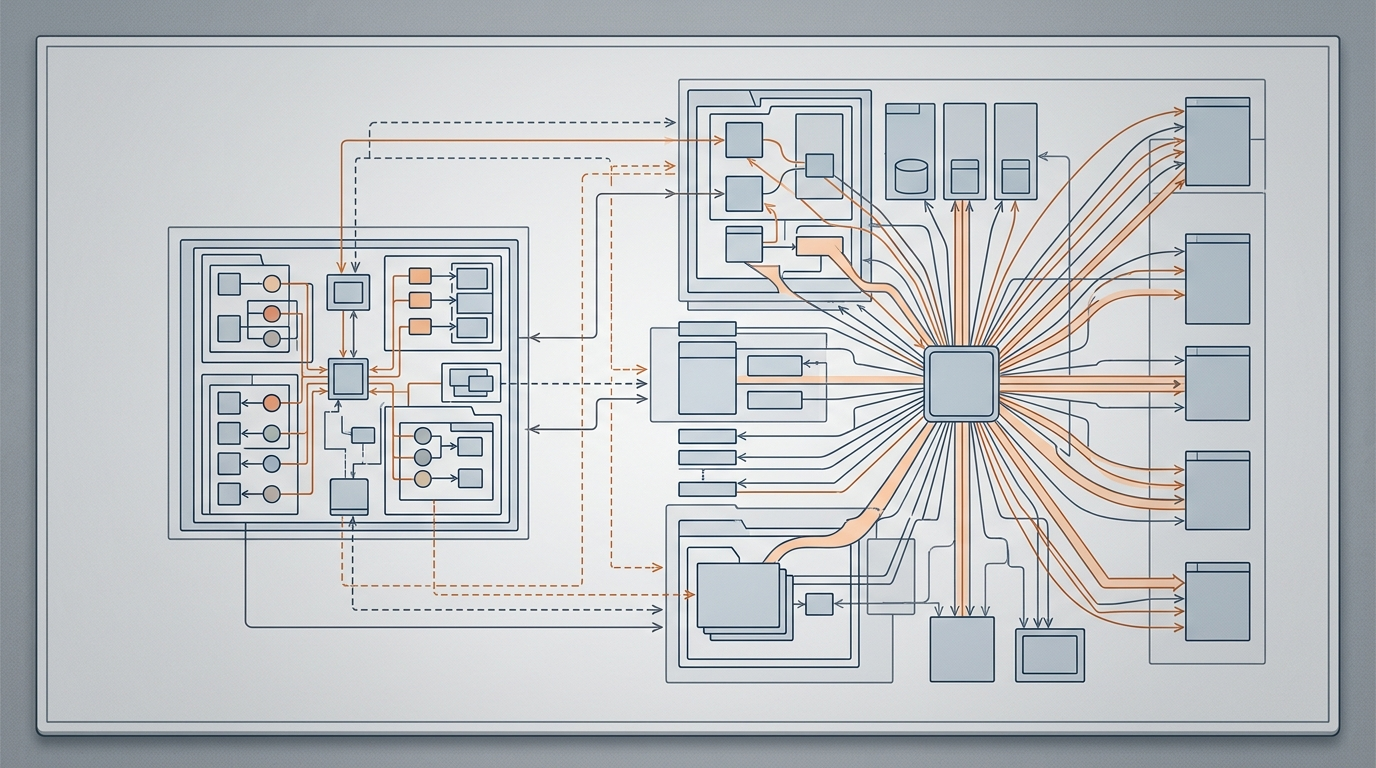
The risk posed by excessive RBAC permissions increases significantly as organizations adopt agentic AI frameworks for cluster operations. In deterministic Kubernetes controllers, an operator executes fixed, procedural logic compiled into code. Even when granted wide permissions, the controller rarely deviates from programmed reconciliation loops unless explicitly hijacked by an external adversary.
The emergence of AI-driven operators introduces non-deterministic execution pathways into the control plane. Current infrastructure architectures implement agentic systems through three distinct integration patterns:
- LLM-Enhanced Logic: Operational controllers that augment diagnostic and remediation loops using external model inferences (such as automated crash analysis via tools like K8sGPT). If granted broad cluster permissions, prompt injection or hallucinated output can cause the model to read cross-namespace configuration data.
- External Agent Bridges: Operators that expose cluster API access to off-cluster cognitive engines using protocols like the Model Context Protocol (MCP). Overprivileged ServiceAccounts effectively grant remote, multi-tenant reasoning engines unfiltered control over cluster state.
- Full In-Cluster Agent Runtimes: Autonomous agent frameworks deployed directly on cluster compute nodes, managing infrastructure changes independently. The unpredictable nature of agentic planning makes broad RBAC permissions dangerous when evaluating changes to critical production workloads.
Enterprise infrastructure teams exploring AI agent security must recognize that non-human identities represent an expanding attack surface. An overly permissive operator deployed as a monitoring utility today can serve as an unchecked execution engine tomorrow if paired with an autonomous LLM integration.
Mitigation Architecture and Governance Controls
Remediating non-human identity risks requires concrete policy adjustments across procurement, deployment, and runtime observability pipelines. Organizations seeking mature frameworks for automating security risk management should enforce the following defensive sequence:
- Bypass Default Community Registries: Prohibit untracked installations directly from public OperatorHub or default OLM catalogs. Validate vendor release channels and deploy strictly via actively maintained Helm charts, ArtifactHub verified repositories, or vetted source manifests.
- Enforce Namespace Scoping: Audit all incoming operator manifests to replace
ClusterRoleandClusterRoleBindingobjects with namespace-specificRoleandRoleBindingdefinitions wherever the operator’s functional scope is limited to a single application domain. - Continuous RBAC Auditing: Incorporate static analysis tools into CI/CD pipelines to scan operator manifests before deployment. Establish automated checks using engines like OperTraitor to flag wildcard permissions, access to secrets, or mutations on cluster roles.
- Establish Kubernetes Audit Logging Baselines: Stream API server audit logs into security information and event management (SIEM) platforms. Create behavioral anomaly detection alerts for ServiceAccounts that query resources outside their typical operational baseline, such as monitoring agents enumerating secrets in kube-system.
- Network and Context Isolation for AI Agents: Enforce strict egress
NetworkPolicyrules on any pod hosting LLM logic or MCP bridges, preventing direct access to the public internet or internal metadata endpoints. Pass only filtered, minimal resource contexts into inference prompts.
Bottom line
Kubernetes operators have simplified the management of complex stateful systems, but their widespread reliance on broad, cluster-scoped RBAC permissions poses a persistent risk to cloud-native environments. Default catalogs contain abandoned packages with extensive privileges, while active vendor offerings can harbor critical vulnerabilities such as CVE-2026-6389 when cluster-wide access to secrets is granted unnecessarily. As IT organizations transition toward autonomous, agentic AI controllers, unmanaged ServiceAccounts will become high-leverage entry points for lateral movement and credential theft. IT leadership must treat non-human identities with the same architectural scrutiny applied to human administrators, enforcing least privilege and automated verification before authorizing new operators across production clusters.
Sources
- OperTraitors: How Kubernetes Operators Betray Your Security Posture
- Security Bulletin: IBM Turbonomic Prometurbo agent used by IBM Turbonomic Application Resource Management is affected by a single vulnerability (CVE-2026-6389)
- GitHub – paloaltonetworks/opertraitor
- Datadog Operator Kubernetes permissions
- CVE-2026-6389 Detail