Key takeaways
- Meituan LongCat-2.0 features 1.6 trillion parameters, activating 48B per token for supreme agentic coding.
- Trained entirely on 50,000 Chinese ASICs, proving true independence from the global Nvidia GPU ecosystem.
- LongCat Sparse Attention enables a 1M token context window by reducing complexity from quadratic to linear.
- Scored an unprecedented 59.5 on SWE-bench Pro, conclusively beating GPT-5.5 on complex coding benchmarks.
- Released under the permissive MIT license, enabling frictionless commercial and enterprise integration globally.
The landscape of artificial intelligence infrastructure and agentic code generation just experienced a seismic, industry-altering shift. On June 30, 2026, the global technology community witnessed the official open-source release of Meituan LongCat-2.0, a near-frontier AI model that fundamentally rewrites the established rules of computational scaling and hardware reliance. Originally tested in the wild under the anonymous pseudonym ‘Owl Alpha’, where it stealthily dominated the OpenRouter developer platform and bewildered researchers with its capabilities, Meituan LongCat-2.0 has now been unmasked. This is not merely another iterative large language model; it is a 1.6 trillion parameter Mixture-of-Experts (MoE) titan specifically engineered for fully autonomous software development. With its verified ability to consistently beat GPT-5.5 on rigorous coding benchmarks, the industry must now grapple with a new reality. Perhaps most crucially for geopolitical technology strategy and global supply chain dynamics, this frontier-level system was trained completely independently of Nvidia’s GPU ecosystem, utilizing a domestic supercomputing cluster composed entirely of Chinese silicon.
The Architectural Reality of Meituan LongCat-2.0
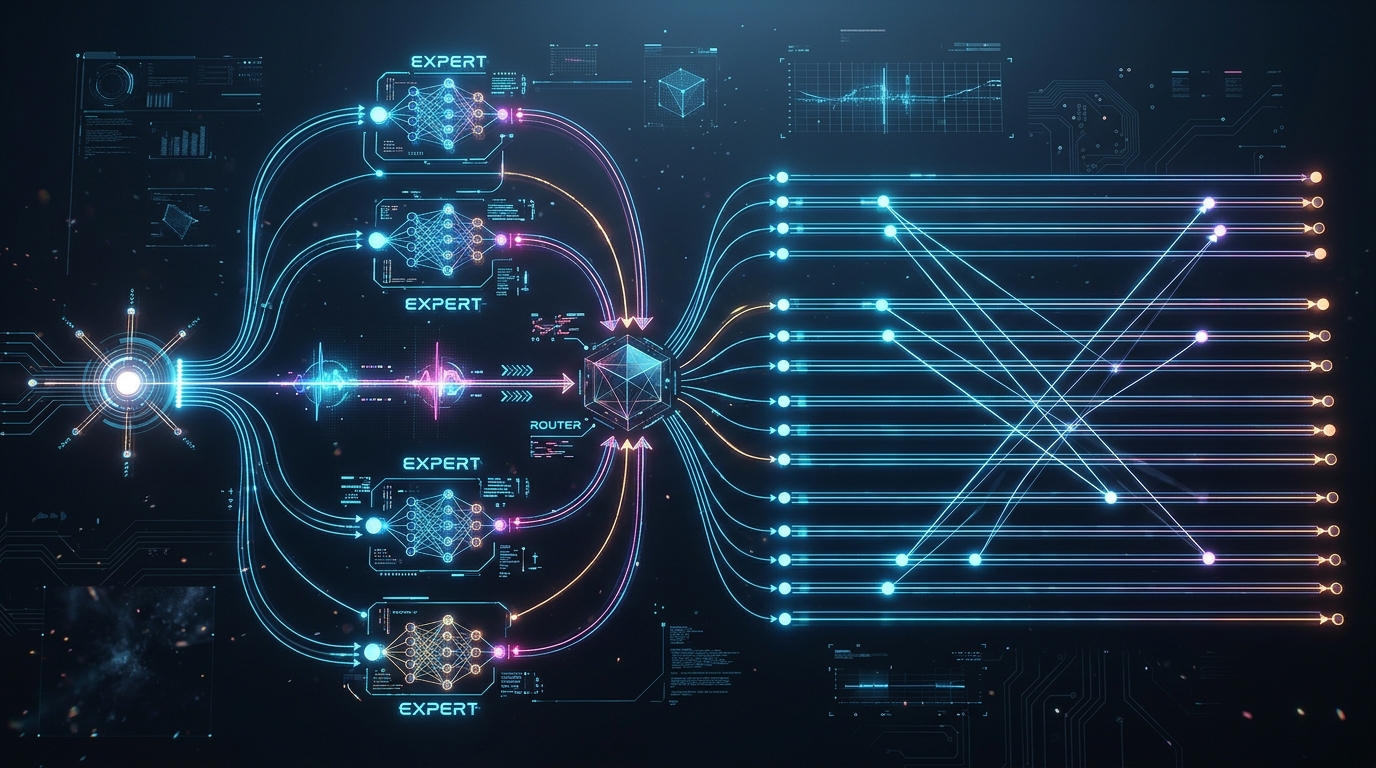
In the fiercely competitive and resource-intensive domain of large language models, the underlying mathematical architecture defines the physical limits of what an Agentic Coding model can achieve. The engineering synthesis behind Meituan LongCat-2.0 is nothing short of revolutionary. At its core, the foundation model boasts an astronomical 1.6 trillion total parameters. However, in the modern AI era, simply brute-forcing scale is no longer the sole path to intelligence or supremacy. To manage this colossal size, the developers implemented a highly optimized Mixture-of-Experts (MoE) topology. Rather than engaging the entire neural network for every single token processed—a strategy that would instantly overwhelm any memory bandwidth—LongCat-2.0 selectively activates approximately 48 billion parameters per token. This dynamic, algorithmic routing mechanism ensures that computational power is deployed with surgical precision, unlocking massive scale and immense knowledge retrieval capabilities without proportional latency penalties or unmanageable energy consumption.
One of the most profound mathematical breakthroughs embedded within this model is the proprietary ‘LongCat Sparse Attention’ (LSA) mechanism. Traditional attention mechanisms in standard transformer models suffer from a fatal flaw: quadratic computational complexity. As the context window expands, the compute and memory required scale exponentially, creating a hard, insurmountable ceiling on processing viability. LSA shatters this barrier by aggressively reducing the computational complexity from quadratic down to linear. Consequently, LongCat-2.0 natively and comfortably supports a staggering 1-million-token context window. To put this engineering feat into perspective, developers can ingest entire enterprise-grade codebases, hundreds of pages of extensive API documentation, and years of fragmented commit histories simultaneously into a single prompt session. All of this is executed while taking full advantage of zero-cost caching for repeated queries, dramatically accelerating response times during iterative debugging sessions.
This architectural superiority is concretely validated by its performance on independent, rigorous benchmarking frameworks. LongCat-2.0 scored an unprecedented 59.5 on SWE-bench Pro, demonstrating unparalleled proficiency in complex software engineering tasks, multi-file code generation, and deep semantic code understanding. Pretrained on a colossal dataset exceeding 30 trillion tokens, the model’s foundational comprehension of programming languages, logical syntax structures, and automated deployment pipelines is remarkably deep.
To conceptualize this for stakeholders outside the specialized engineering department, think of Meituan LongCat-2.0 as a futuristic, highly automated global logistics network. In older, standard models, every single package (or piece of data) had to be routed through a central, highly congested hub (representing quadratic complexity), causing inevitable gridlock when data volume increased. LongCat-2.0, by contrast, acts like a decentralized web of highly specialized local routing hubs. Packages are routed instantly and exclusively to the specific experts equipped to handle them (the MoE architecture), bypassing all unnecessary traffic. This streamlined efficiency allows the network to process millions of packages (a 1-million-token context) simultaneously without ever slowing down or crashing.
Furthermore, this release represents a historic watershed moment for hardware independence. LongCat-2.0 stands as the global industry’s first trillion-parameter model to execute its full pre-training run and operational inference exclusively on a massive, unified cluster of 50,000 Chinese ASIC chips. Widespread industry intelligence reports indicate that these processors are tightly integrated Huawei ASICs. This achievement decisively showcases an unprecedented level of maturity in alternative semiconductor ecosystems. It proves that domestic Chinese silicon now possesses the sophisticated high-speed interconnects, fault-tolerance mechanisms, and software compilers capable of syncing tens of thousands of accelerators for months at a time without critical failure or performance degradation.
Market Impact and Deployment

The geopolitical and commercial ramifications of this release extend far beyond benchmark leaderboards, piercing directly into the heart of Enterprise Deployment strategy and Total Cost of Ownership (TCO) calculations. For Chief Information Officers (CIOs) and Chief Technology Officers (CTOs) globally, the economics of adopting generative AI just flipped upside down. Meituan has boldly opted to release LongCat-2.0 under the highly permissive MIT License. This aggressive open-source strategy completely undercuts the proprietary, highly monetized API walled gardens constructed by Western tech giants. Organizations of all sizes can now self-host a frontier-level agentic coding model, maintaining absolute data privacy for their proprietary intellectual property while entirely avoiding steep, recurring per-token inference fees.
When analyzing the hard return on investment (ROI), the tangible business value is stark. By leveraging a 1-million-token context window that can effortlessly process entire monolithic repositories in seconds, enterprise IT teams can automate massive legacy code migrations, conduct instantaneous and exhaustive security audits across millions of lines of code, and drastically accelerate product velocity. A model capable of scoring 59.5 on SWE-bench Pro is not merely a digital coding assistant; it functions as a highly autonomous, tireless senior engineer capable of reading, diagnosing, and resolving complex GitHub issues end-to-end. Furthermore, the model’s zero-cost caching mechanism drives down operational server costs by allowing frequent, rapid-fire interactions with the same massive context payload without ever incurring repetitive re-computation penalties.
However, an objective red team audit of these capabilities reveals critical potential operational bottlenecks that enterprise leaders must navigate carefully. While the pre-training achievement on 50,000 Chinese ASICs is a historic milestone for supply chain independence, deploying this 1.6T parameter MoE at scale on standard Western enterprise hardware presents a monumental logistical challenge. Most traditional corporate data centers simply lack the specialized high-bandwidth interconnect fabrics, immense power delivery systems, and liquid cooling infrastructure required to run a model of this magnitude efficiently. The heavy reliance on domestic ASICs for optimal, native performance heavily suggests that enterprises attempting to run LongCat-2.0 on standard Nvidia H100 or AMD MI300X clusters might encounter unforeseen friction, severe software stack incompatibilities, or noticeably reduced inference speeds unless significant, customized optimization layers are built in-house. Additionally, while the MIT license itself is entirely free, the sheer physical, capital expenditure required to secure the VRAM necessary to host a 1.6T parameter model—even when aggressively quantized to lower precision—means this is strictly an enterprise-grade deployment, far beyond the reach of casual developers or hobbyist rigs.
Despite these hardware hurdles, the cross-industry disruption sparked by open-sourcing a model of this caliber is undeniable and far-reaching. In the high-frequency financial sector, quantitative trading firms can now securely feed decades of highly confidential market data and algorithmic trading strategies into the 1M context window for real-time, on-premise strategy generation without risking data leaks to external cloud providers. In the realm of Global Health Logistics, NGOs and government agencies can ingest massive, decentralized supply chain databases to dynamically model and instantly optimize global vaccine distribution networks. Even in Cybersecurity, advanced security operation centers (SOCs) can deploy LongCat-2.0 locally to autonomously hunt for subtle vulnerabilities, reverse-engineer malware, and patch zero-day exploits across global networks with unprecedented, superhuman speed.
The Consumer Translation
While Meituan LongCat-2.0 operates deep within the invisible, heavily fortified backend of enterprise data centers, its downstream ripple effects on everyday consumers will be profound and immediate. The general public rarely, if ever, interacts with raw source code, but they continuously interact with the applications, websites, and digital products born from it. As commercial developers aggressively integrate this unprecedented level of agentic coding into their daily workflows, the pace of global software innovation will accelerate exponentially.
For the average end-user, this translates directly to dramatically shorter wait times for exciting new features, vastly superior software stability, and near-instantaneous critical security patches across their favorite smartphones, smart home devices, and web applications. App ecosystems will become substantially richer, more niche, and more diverse, as the financial and temporal barrier to entry for building complex, stable software is drastically lowered. Small indie developer studios and solo entrepreneurs will suddenly possess the raw coding throughput and quality assurance capabilities of a massive, multinational corporation. This democratization of high-level software engineering will lead to an explosion of hyper-personalized tools, creative applications, and immersive digital experiences that were previously too expensive to conceptualize or build.
Furthermore, it is critical to understand that LongCat-2.0 is not an isolated phenomenon; it serves as a foundational, intellectual pillar of the broader, highly ambitious ‘LongCat’ AI family currently being developed by Meituan. This expansive ecosystem is rapidly growing to include LongCat-Video for generating and editing high-fidelity temporal media, specialized multimodal variants for complex image generation, and bespoke models strictly trained for complex, multi-step logical reasoning tasks. As these diverse, highly capable models begin to interconnect and merge their capabilities, consumers can expect the imminent emergence of highly sophisticated digital agents. These future consumer assistants won’t just passively answer search queries; they will actively write custom scripts, build bespoke mobile applications on the fly, edit personal media libraries, and solve intricate logistical problems in real-time, all natively localized on personal consumer devices.
Frequently Asked Questions
Q1: What exactly is Meituan LongCat-2.0 and why is it important?
A1: Meituan LongCat-2.0 is a 1.6 trillion parameter Mixture-of-Experts (MoE) AI model designed specifically for agentic coding. It is revolutionary because it achieves near-frontier performance, beating GPT-5.5 on coding benchmarks, while being trained entirely on domestic Chinese silicon.
Q2: How does the model handle large codebases?
A2: The model natively supports a 1-million-token context window, allowing it to ingest massive repositories at once. This is made mathematically possible by ‘LongCat Sparse Attention’ (LSA), which reduces computational complexity from quadratic down to linear.
Q3: What hardware was used to train this model?
A3: It is the industry’s first trillion-parameter model to complete both full pre-training and operational inference on a large-scale cluster of 50,000 Chinese ASIC chips, which are heavily reported to be Huawei-related.
Q4: Can enterprises use LongCat-2.0 for commercial software development?
A4: Yes. The model has been released under the highly permissive MIT License and is freely available on GitHub and Hugging Face, enabling flexible and unrestricted commercial integration for enterprise IT environments.
Q5: Does Meituan offer other models in this family?
A5: Yes, LongCat-2.0 is part of a broader ‘LongCat’ AI ecosystem that is aggressively expanding. The family also includes LongCat-Video for video processing, specialized image generation models, and AI systems tailored for complex reasoning tasks.
TechNode HQ Verdict: Pros, Cons & Usability
- Pro (Engineering): Achieves linear computational complexity via LongCat Sparse Attention (LSA), enabling a seamless, zero-cost cached 1-million-token context window.
- Pro (Consumer): Drastically accelerates software deployment pipelines, resulting in faster bug fixes, more stable apps, and richer consumer technology ecosystems.
- Con: Hosting a 1.6T parameter MoE model requires massive, specialized server hardware investments and extreme VRAM capacities that price out smaller companies.
- Con: Potential hardware stack discrepancies and compiler hurdles might severely hinder optimal inference speeds on non-Chinese ASIC enterprise deployments.
Enterprise Usability: CTOs with substantial private cloud infrastructure should immediately launch pilot programs utilizing LongCat-2.0 for legacy code migration and internal development automation, aiming to drastically reduce their financial reliance on expensive, proprietary API walled gardens.
Everyday Usability: While LongCat-2.0 is definitively not a tool for everyday consumers to run locally on their laptops, the broader public will rapidly benefit from the resulting surge in software quality, digital security, and application availability powered by these autonomous coding agents working tirelessly in the background.