Key takeaways
- The John Deere Classic 2026 runs July 2-5 at TPC Deere Run for an $8.8M purse.
- Linear TV coverage splits between CBS and the Golf Channel, driving massive streaming fragmentation.
- Comprehensive digital access requires stacking subscriptions like Paramount+, ESPN+, and Peacock.
- Delivering live PGA action requires massive CDN bandwidth to minimize concurrent latency spikes globally.
- Military members and youth receive free in-person admission, contrasting sharply with high digital viewing costs.
The Architectural Reality of the John Deere Classic 2026
The John Deere Classic 2026 represents far more than a critical stop on the PGA Tour; it stands as a monumental stress test for global broadcasting infrastructure. Scheduled to take place from Thursday, July 2, through Sunday, July 5, 2026, at the iconic TPC Deere Run in Silvis, Illinois, the event will draw millions of concurrent viewers worldwide. While fans focus on the massive $8.8 million total purse—with the champion set to earn an impressive $1,584,000 for the win—enterprise architects and network engineers are focused on the staggering backend requirements necessary to deliver flawless, high-definition live feeds across a heavily fragmented media landscape.
Historically, broadcasting a golf tournament meant uplinking a single, consolidated feed to a linear television network. Today, the reality of live sports delivery is defined by disparate media rights agreements and highly complex enterprise IT infrastructures. The Golf Channel holds exclusive rights to Thursday and Friday’s action, while CBS takes over the latter stages of the tournament on the weekend. But the real architectural complexity lies in the digital streaming tier. Platforms like Paramount+ and ESPN+ are tasked with ingesting live telemetry, multiple camera angles (marquee groups, featured groups, and featured holes), and dynamically packaging this content for diverse endpoints.
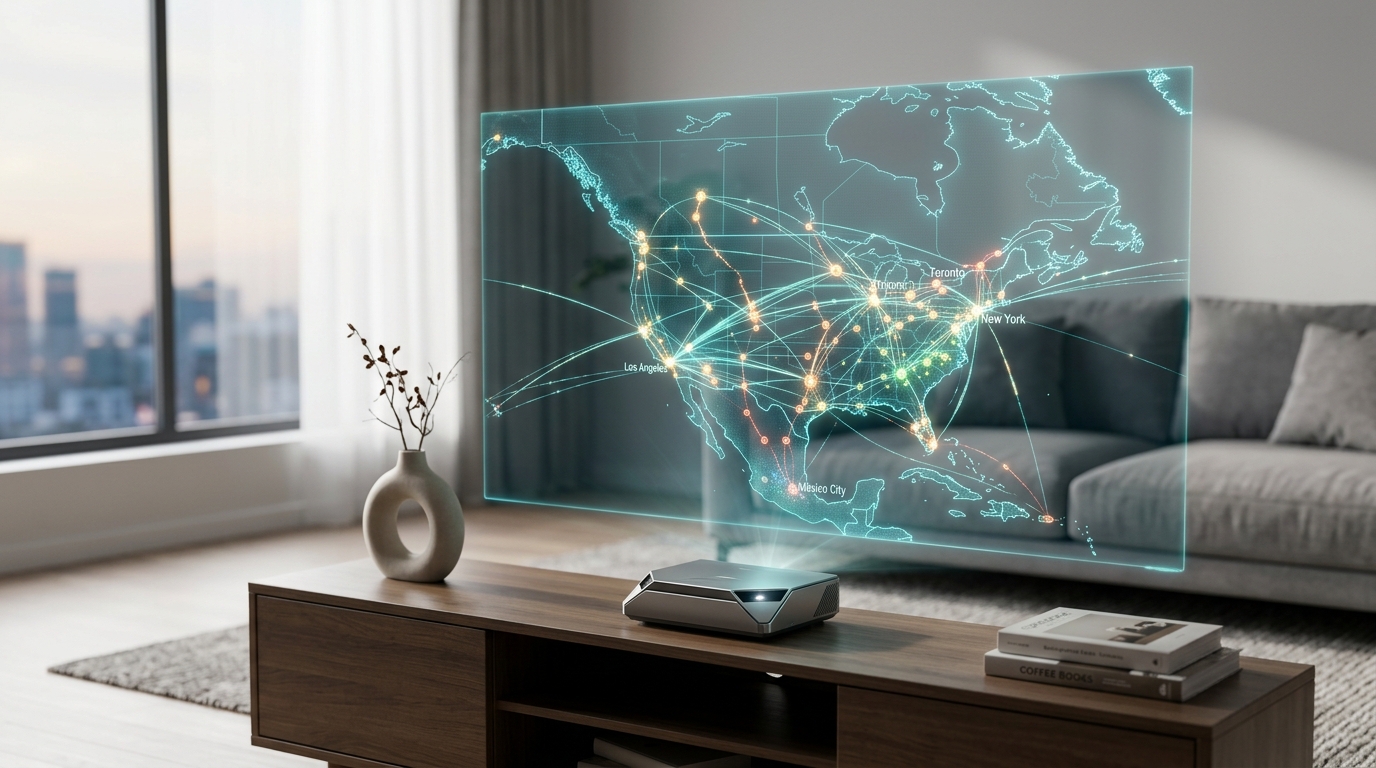
To pull this off without buffering or latency spikes during critical playoff holes, streaming giants rely on globally distributed Content Delivery Networks (CDNs). These CDNs utilize edge computing nodes geographically positioned near the end-user to cache and serve adaptive bitrate streams (using protocols like HLS and MPEG-DASH). When a viewer in London connects via Sky Sports Golf or Now TV, or a fan in Australia tunes in via Kayo Sports, they are not pulling data directly from a server in Illinois; they are pinging a localized edge node that dynamically scales its compute resources to match concurrent demand. The John Deere Classic 2026 perfectly illustrates how sports broadcasting has evolved from a satellite dish model into a massive, multi-cloud computing operation.
Market Impact & Deployment
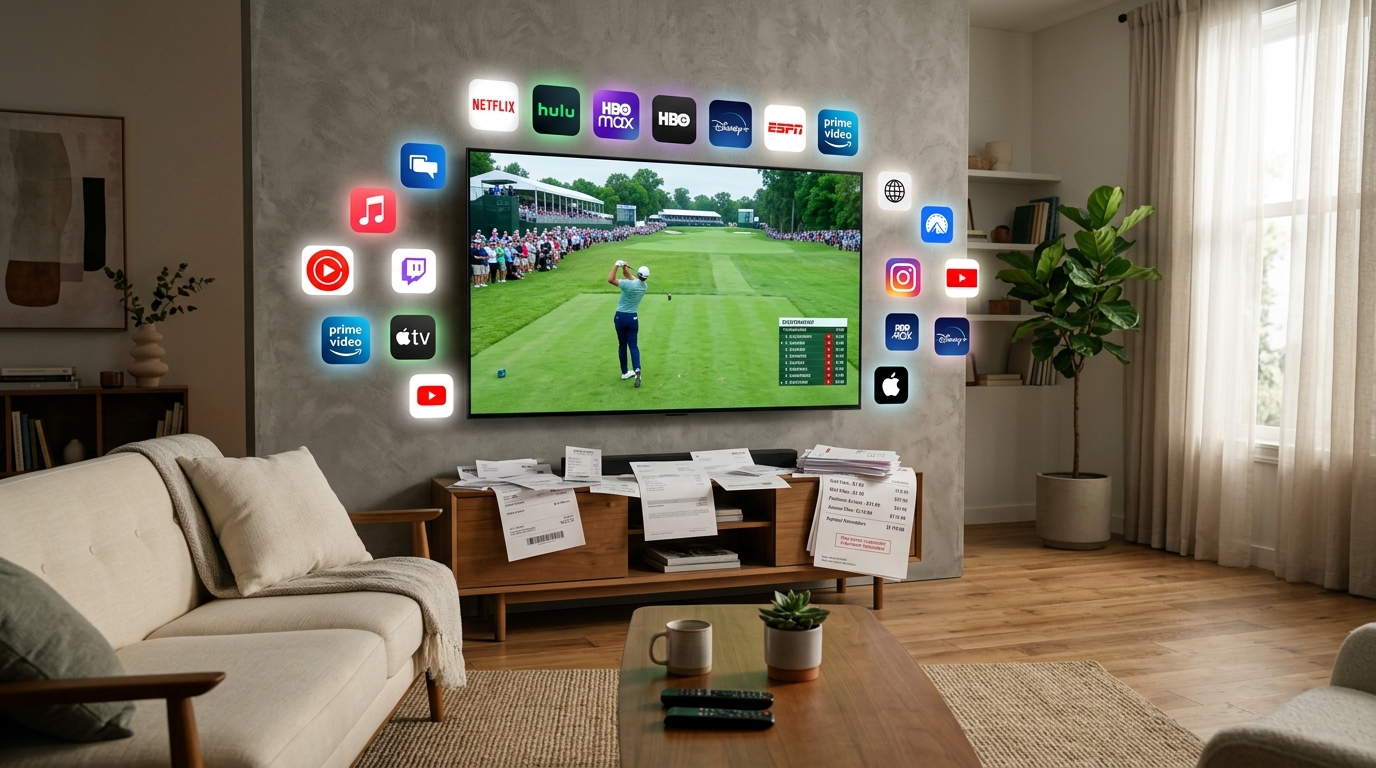
The technological evolution of live sports streaming brings significant financial implications for both the media conglomerates and the end consumer. Media rights fragmentation forces the consumer into a high Total Cost of Ownership (TCO) position. In order to watch all four days comprehensively, a consumer can no longer rely on a simple cable subscription. The baseline requirement demands a fragmented stack of streaming services. ESPN+ is essential for PGA TOUR LIVE feeds, accessible via the ESPN app on mobile and connected TV devices, costing $13 a month for the Select tier or $30 a month for the Unlimited tier. To catch the Golf Channel’s early coverage, viewers might need Peacock ($11 a month). Weekend coverage requires Paramount+, which costs $9 a month for the Essential tier (with ads) or $14 for the Premium Plus tier.
From a deployment perspective, this a la carte model fundamentally shifts the Return on Investment (ROI) for broadcasters. The goal is no longer just selling bulk advertising space; it is about recurring Monthly Recurring Revenue (MRR), programmatic ad-insertion at the server side (SSAI), and detailed user-data harvesting. By trapping live sports within distinct digital walled gardens, network executives can bypass traditional cable operators and establish direct billing relationships with the consumer. However, deploying these ecosystems securely requires massive investment in identity management, DRM (Digital Rights Management), and highly resilient API gateways to handle millions of simultaneous authentication requests exactly at tee time.
For those clinging to traditional unified interfaces, the only workaround is subscribing to expensive virtual Multichannel Video Programming Distributors (vMVPDs). Services like YouTube TV ($83/month), Hulu with Live TV ($90/month), Fubo ($85/month), and DirecTV Stream ($85/month) offer the Golf Channel and CBS in one package, but they represent a premium tax on convenience. The market impact is clear: the underlying broadcast technology has successfully shifted the cost burden directly onto the viewer, masking a massive price increase behind the illusion of “cord-cutting” freedom.
The Consumer Translation
While the backend architecture is a triumph of modern engineering, the human experience—the consumer translation—is increasingly fraught with friction. We have reached peak subscription fatigue. To follow a single golf tournament featuring notable players like Jordan Spieth, Rickie Fowler, Keegan Bradley, Max Homa, and JT Poston, a fan must navigate a dizzying labyrinth of platforms, authentications, and apps. The marketing promise of “Stream all the PGA golf action from anywhere” is heavily diluted by geographic blackouts, VPN blockers, and confusing subscription tiers.
Consider the irony of the modern viewing experience: it is often more straightforward and financially logical to attend the event physically than to navigate its digital broadcast rights. For the 2026 John Deere Classic, active, retired, and veteran military members (plus one guest) are eligible for free admission Wednesday through Sunday. Furthermore, youth aged 15 and under are admitted for free when accompanied by a paid adult. Regular tickets can be easily purchased through the official John Deere Classic website or secondary ticket marketplaces like Vivid Seats. Yet, trying to replicate that seamless experience on a consumer tech device at home requires managing three separate billing cycles, toggling between HDMI inputs or smart TV apps, and deciphering which service holds the rights for which specific hour of the day.
This reality accelerates a growing sentiment among viewers: technological advancement in streaming has degraded the user experience. The constant app-switching disrupts the passive relaxation historically associated with watching weekend golf. It forces the consumer to act as their own network director, continuously managing updates, password managers, and payment methods just to watch Brian Campbell attempt to defend his title.
Streaming Infrastructure & CDN Load Balancing
To truly understand the magnitude of the John Deere Classic 2026 broadcast, one must examine the invisible layers of networking cloud infrastructure that keep the streams alive. When a golfer approaches the 18th green, concurrent viewership spikes exponentially. A traditional server cluster would collapse under a “thundering herd” problem—millions of TCP connections attempting to initialize simultaneously. To mitigate this, streaming providers deploy highly elastic, containerized microservices managed by Kubernetes orchestration systems.
These systems work in tandem with advanced Server-Side Ad Insertion (SSAI). When a commercial break occurs, the CDN does not simply switch to a generic video file. It dynamically stitches targeted advertisements into the specific video manifest (.m3u8 file) of the individual user, based on their demographic profile. This requires processing vast amounts of telemetry data with single-digit millisecond latency. If the ad-stitching servers lag, the viewer experiences the dreaded buffering wheel.
Furthermore, capturing the granular data points of the PGA Tour—such as real-time swing analytics, ball speed, and apex height—requires robust IoT sensor integration on the course itself. This data is transmitted via private 5G networks at TPC Deere Run, ingested into cloud data lakes, processed by edge computing algorithms, and overlayed onto the video feed before being compressed and dispatched to Paramount+ and ESPN+. It is a symphony of raw computational power, masking itself as a leisurely Sunday broadcast.
Frequently Asked Questions
Q1: When and where is the John Deere Classic 2026 taking place?
A1: The John Deere Classic 2026 is scheduled from Thursday, July 2, through Sunday, July 5, 2026. The prestigious tournament takes place at TPC Deere Run in Silvis, Illinois.
Q2: How can I stream the John Deere Classic 2026 in the United States?
A2: Streaming coverage in the US is split across multiple platforms; you can watch the event live on ESPN+, Paramount+, and Peacock, depending on which feeds and broadcast days you wish to access.
Q3: Who are the notable players in the 2026 field?
A3: The competitive field includes defending champion Brian Campbell, Jordan Spieth, Rickie Fowler, Keegan Bradley, Max Homa, and JT Poston, all vying for the title and a massive payout.
Q4: What is the prize money for the tournament?
A4: The tournament features a substantial total purse of $8.8 million. The ultimate champion is set to earn $1,584,000 for securing the victory.
Q5: Are there any free admission options for attending the event in person?
A5: Yes, active, retired, and veteran military members (plus one guest) are eligible for free admission Wednesday through Sunday. Additionally, youth aged 15 and under are admitted for free when accompanied by a paid adult.
TechNode HQ Verdict: Pros, Cons & Usability
- Pro (Engineering): Deep CDN integration and edge computing allow for virtually limitless concurrent scaling, ensuring stable streams during high-traffic playoff moments.
- Pro (Consumer): Highly specific, multi-feed coverage (featured holes, marquee groups) on ESPN+ offers an unprecedented, customizable viewing angle impossible on linear television.
- Con: Extreme subscription fragmentation forces a high financial burden and complex user experience on viewers attempting to watch the full four-day event.
- Con: DRM constraints, geographic blackouts, and Server-Side Ad Insertion complexities often lead to unexpected playback errors on smart TV platforms.
Enterprise Usability: For CTOs and network engineers in the media space, this deployment model is the gold standard for maximizing revenue per user. The architecture demands heavy investment in multi-cloud redundancy, localized edge nodes, and API security, but it successfully bypasses legacy distribution gatekeepers while generating massive streams of actionable viewer telemetry.
Everyday Usability: For the average consumer, the current state of live sports streaming is a headache. Unless you already maintain subscriptions to a vMVPD like YouTube TV or have piecemealed together Paramount+, ESPN+, and Peacock, preparing your living room for the tournament requires active management. The physical event’s generous free admission policies for youth and military members stand in stark, refreshing contrast to the paywalled reality of the digital broadcast.