Key takeaways
- House passed H.R. 139 (Sunshine Protection Act) by 308–117 to lock clocks permanently.
- Permanent DST eliminates biannual server synchronization disruptions for global enterprise IT.
- The bill allows states like Hawaii and Arizona to maintain their standard time opt-outs.
- A locked clock simplifies time-series databases and global API orchestration significantly.
- Critics warn that permanently delayed winter sunrises may impact public health and productivity.
The Architectural Reality of permanent daylight saving time

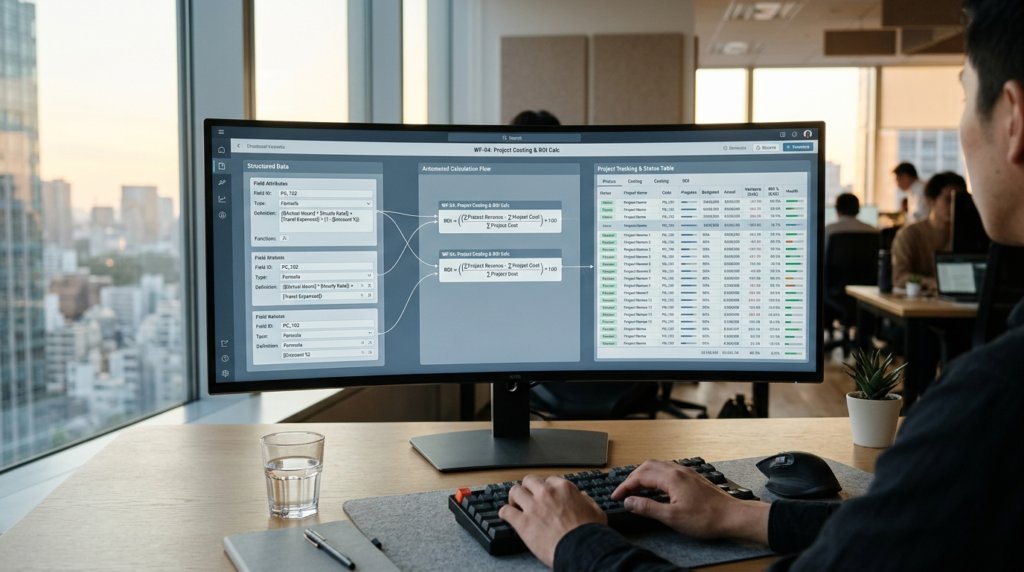
In a profound legislative shift that fundamentally alters how both humanity and digital infrastructure track the passage of hours, the U.S. House of Representatives has passed H.R. 139, officially known as the Sunshine Protection Act. On July 14, 2026, the chamber voted 308–117 in a sweeping bipartisan mandate to establish permanent daylight saving time across the nation. Spearheaded by Representative Vern Buchanan (R-FL) alongside co-sponsors Brett Guthrie and Gus Bilirakis, the bill aims to permanently lock the clock, ending the practice of changing clocks twice a year. For Enterprise IT architects and systems engineers, this is not merely a lifestyle adjustment—it represents the impending deprecation of one of the most universally despised and computationally expensive edge-cases in global software engineering.
The history of daylight saving time is rooted in analog, not digital, concerns. Originally conceived by New Zealand entomologist George Hudson to gain more evening daylight for bug collecting, and later enacted in the U.S. during World War I to maximize wartime productivity, the concept of shifting the clock was designed for an industrial and agricultural world. However, in the modern era of hyper-scale computing, the biannual time shift has morphed into an infamous, costly anomaly. The effort to end this biannual clock change has been a recurring legislative topic in Congress for several years; while the Senate passed a similar version of this bill unanimously in 2022, it failed to gain traction in the House at that time. The current 2026 legislation reflects a renewed and highly potent push.
To understand the profound engineering relief provided by a locked clock, one must look at how machines track time. At the core of almost all modern operating systems is Unix epoch time—a continuous, unyielding count of seconds since January 1, 1970, UTC. This underlying counter is absolute, linear, and entirely immune to political time zones. However, human-readable local time is generated dynamically by applying complex offset rules sourced from the IANA Time Zone Database (tz database). Twice a year, this translation layer introduces severe systemic paradoxes that engineers must actively mitigate.
In the spring, local time jumps forward, creating a “missing” hour. Scheduled cron jobs, automated database backups, and critical batch processes scheduled during this missing hour either skip execution entirely or require highly complex, custom logic to run gracefully. Conversely, in the autumn, local time falls back, creating a duplicated, overlapping hour. This overlap is a nightmare for logging systems, event-driven architectures, and security forensics. Imagine a financial transaction or a cyberattack occurring at 1:30 AM before the fallback, and another event occurring at 1:30 AM after the fallback. Without rigorous UTC standardization applied flawlessly across every layer of the application stack, resolving the exact sequence of events becomes a forensic impossibility. By eliminating the time change, the Sunshine Protection Act effectively eradicates these temporal paradoxes at the source.
To put this in executive terms: imagine managing global logistics where the physical distance between two major cities arbitrarily shrinks and expands twice a year, forcing you to recalculate every delivery route, fuel estimate, and driver schedule manually. That is exactly what the biannual time change does to data orchestration and Networking & Cloud infrastructure. Ending it removes a permanent layer of systemic friction.
Market Impact & Deployment Complexities
Beyond the immediate relief for systems engineers, the financial and operational Total Cost of Ownership (TCO) associated with managing time zones is staggering. Every time a jurisdiction alters its time rules, a massive, global deployment cycle is triggered. Firmware on countless Internet of Things (IoT) devices, operating systems across millions of ephemeral cloud instances, and deeply entrenched legacy on-premises servers must all receive updated tzdata packages. The overhead required to patch, test, validate, and monitor these systems twice a year constitutes a hidden, recurring tax on global IT budgets. Removing this requirement frees up thousands of developer hours annually for feature development rather than maintenance.
While the House has decisively passed H.R. 139, the bill has now been sent to the U.S. Senate for consideration, where its future remains uncertain as the chamber has not yet scheduled a vote. However, should it pass, deployment will require a historic, one-time migration. Enterprise architects will need to orchestrate a final, unified patch across their entire fleet to lock in the new static offsets. Notably, the bill accounts for regional complexities by including a provision allowing individual states to opt out of permanent daylight saving time and remain on standard time if they choose to do so. States like Hawaii and most of Arizona, which currently do not observe DST, would be able to maintain their current practices. This ensures that the global time zone database will not be simplified entirely into a single block, but rather stabilized—the localized offsets will simply become immutable rather than dynamic.
Politically, the legislation carries immense weight. President Donald Trump has expressed his support for the legislation and indicated he would sign the bill into law if it reaches his desk. This echoes sentiments he shared previously, noting that “Daylight Saving Time is inconvenient, and very costly to our Nation.” By framing the issue as an unnecessary economic burden, proponents argue that permanent DST will boost economic activity, improve public safety, and provide more usable daylight in the evenings for retail and recreation.
In the realm of predictive analytics and Machine Learning, the impact of a locked clock is subtle but incredibly significant. Predictive models trained on time-series data—such as consumer behavior metrics, algorithmic trading models, and network traffic anomaly detection systems—are highly sensitive to artificial shifts in data patterns. The biannual time change creates artificial spikes, dips, and missing data points in daily aggregation windows. A locked clock ensures that time-series data remains contiguous, reducing the need for complex data normalization pipelines and greatly improving the baseline accuracy of predictive AI algorithms.
The Consumer Translation and Public Health
While the Enterprise IT community universally rejoices at the prospect of a stabilized tz database, the consumer and public health translation of permanent daylight saving time is far more contentious. The core issue lies in solar noon and the alignment of human circadian rhythms with natural light. The American Academy of Sleep Medicine (AASM) has strongly advocated against permanent DST, warning that it “would delay morning light exposure, making it harder for children and adolescents to wake, learn, and travel safely to school during dark winter mornings.”
By locking the clock forward year-round, the system essentially robs daylight from the morning to extend it in the evening during the winter months. For example, in cities like Chicago, where the latest winter sunrise currently occurs around 7:18 AM under standard time, permanent daylight saving time would push the sunrise to a bleak 8:18 AM. Millions of Americans would begin their commutes, and children would wait for school buses, in total darkness. The proposed trade-off is a winter sunset at 5:31 PM instead of 4:31 PM.
This dynamic has drawn fierce legislative criticism. Critics have raised severe concerns about the potential health and safety impacts of these darker winter mornings. Senator Tom Cotton, a highly vocal opponent of the measure, previously delivered a floor speech emphasizing this exact hazard. “If permanent Daylight Savings Time becomes the law of the land, it will again make winter a dark and dismal time for millions of Americans,” he warned, noting that depriving citizens of morning sunshine is fundamentally detrimental to societal safety and biological well-being.
Conversely, proponents view the extended evening daylight as a massive net positive for consumer lifestyles and the retail economy. Extended evening light correlates directly with increased consumer spending, higher rates of outdoor recreation after work hours, and a reported decrease in certain types of evening traffic accidents and crime. The societal debate is ultimately a zero-sum trade-off between safer, biologically aligned mornings and more productive, economically active evenings.
For the everyday consumer interacting with technology, the transition to a locked clock will largely be seamless, provided device manufacturers push the necessary OTA (over-the-air) updates. Smart home ecosystems, automated lighting routines, and wearable health trackers will require a final, mandatory synchronization to acknowledge the death of the biannual clock change. However, legacy IoT devices with hardcoded time logic that cannot connect to the internet to receive firmware updates will be permanently broken—shifting their clocks incorrectly twice a year forever. This looming wave of minor e-waste aside, once the transition is completed, the most universally annoying nuisance in modern life will finally be relegated to the history books.
Frequently Asked Questions
Q1: What is the Sunshine Protection Act of 2026?
A1: It is a bipartisan bill (H.R. 139) passed by the U.S. House on July 14, 2026, by a 308–117 vote to make permanent daylight saving time a reality across the country.
Q2: Will the Sunshine Protection Act affect time zone databases?
A2: Yes, locking the clock permanently would require massive transitional updates to the global tz database (IANA time zone database) relied upon by virtually all computing systems.
Q3: Can states opt out of permanent daylight saving time?
A3: Yes, the legislation includes a provision allowing states that currently do not observe DST, such as Hawaii and most of Arizona, to remain on standard time.
Q4: What is the business impact of ending biannual time changes?
A4: Permanent DST reduces the Total Cost of Ownership (TCO) for enterprise IT by eliminating the biannual engineering overhead required to patch, test, and synchronize legacy global systems.
Q5: Does the bill have presidential support?
A5: Yes, President Donald Trump has expressed support for the legislation and indicated he would sign it into law if it passes the Senate.
TechNode HQ Verdict: Pros, Cons & Usability
- Pro (Engineering): Eliminates biannual synchronization bugs, missing cron-job executions, and overlapping timestamp anomalies across distributed server fleets.
- Pro (Consumer): Consistently later evening daylight promotes evening economic activity, outdoor recreation, and highly predictable scheduling.
- Con: A hidden bottleneck exists for legacy, offline IoT devices with hardcoded time logic, which will require manual replacement as they will falsely change time twice a year.
- Con: Delayed winter sunrises (pushing past 8:00 AM in many regions) pose documented biological challenges to circadian rhythms and school-run safety.
Enterprise Usability: CTOs should immediately begin auditing legacy applications that rely on hard-coded time zone logic instead of centralized OS-level time databases. IT departments must prepare their fleets for a massive, unified tzdata patch deployment should the Senate schedule a vote and pass the bill.
Everyday Usability: The public should prepare for a radical shift in winter morning routines, trading darker commutes for extended afternoon sunlight. Consumers must also ensure all smart home devices are connected to Wi-Fi to receive the final firmware update that will permanently halt the biannual leap.