Key takeaways
- Astronomers achieved the first interstellar sugar detection by identifying erythrulose 27,000 light-years away.
- Erythrulose was found to be eight times more abundant than simpler three-carbon sugars in the cloud.
- This challenges existing astrochemistry models, suggesting sugars form directly on cosmic dust grains.
- The four-carbon sugar can isomerize into threose, a critical evolutionary predecessor of RNA.
- The breakthrough relied on extreme-precision data from the Yebes 40-meter and IRAM 30-meter radio telescopes.
The Architectural Reality of Interstellar Sugar Detection
The recent breakthrough in deep-space astrochemistry regarding the first verifiable interstellar sugar detection has sent shockwaves through the scientific community. For decades, astronomers and astrophysicists have operated on the theoretical assumption that the complex organic molecules necessary to kickstart biological life—specifically the sugars that form the structural backbone of RNA and DNA—were forged in the relatively hospitable environments of newly formed planetary systems or within the fiery cauldrons of early stars. This long-standing paradigm was abruptly upended in July 2026, when a research team published findings in the journal Nature Astronomy detailing the first direct detection of a ‘true’ sugar in the interstellar medium (ISM).
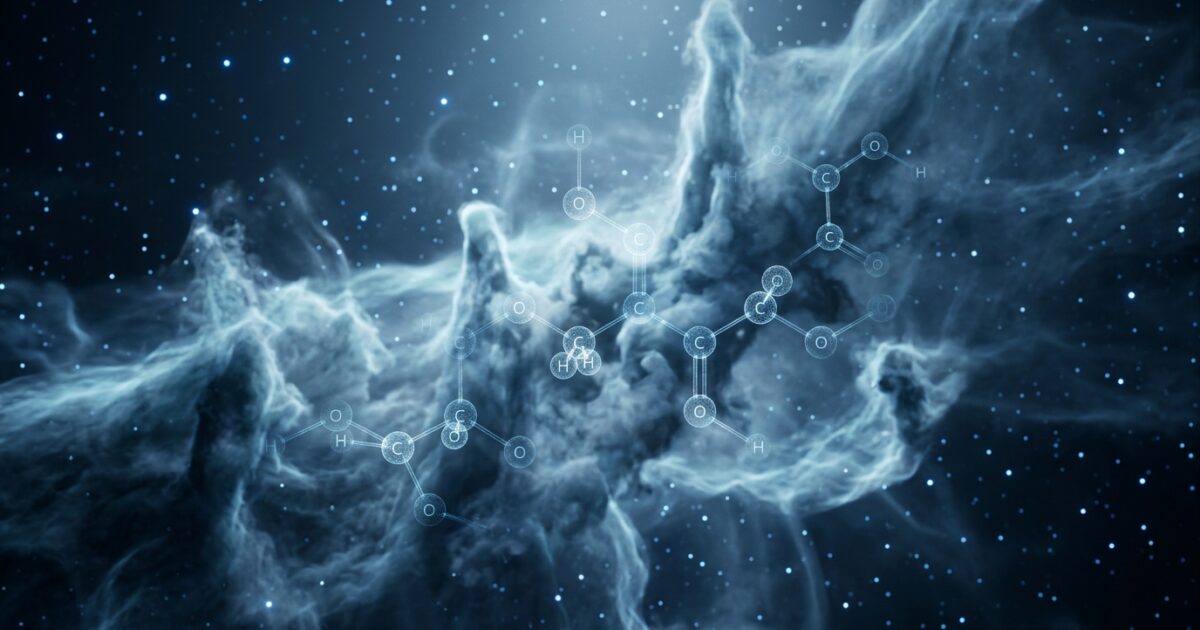
Led by Dr. Izaskun Jiménez-Serra at the Spanish Centre for Astrobiology, the team focused their instruments on a massive, cold molecular cloud of gas and dust known as G+0.693-0.027. Situated near the chaotic and dense center of the Milky Way galaxy—approximately 27,000 light-years away from Earth—this cloud is a pristine stellar nursery where stars have not yet ignited. Prior to this historic study, the scientific community had only managed to identify sugar-related compounds or found traces of actual sugars locked inside physical samples from meteorites and asteroids, such as the near-Earth asteroid Bennu. Discovering a complex sugar floating freely within the freezing, irradiated vacuum of an interstellar molecular cloud requires a monumental leap in both radio telescope arrays and digital signal processing.
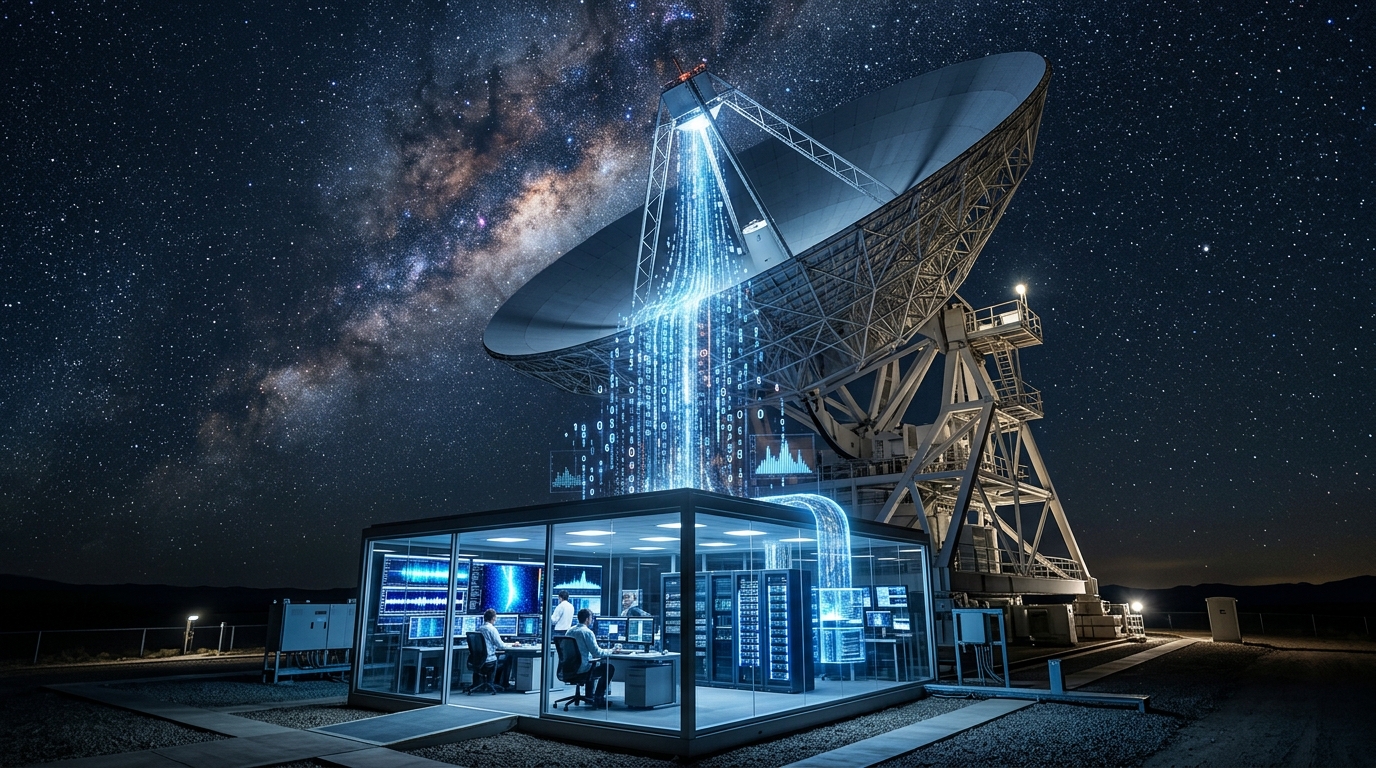
The target molecule, erythrulose, is a four-carbon sugar. While its cosmic implications are profound, on Earth it is surprisingly mundane. It occurs naturally in red raspberries and is commonly synthesized as an active ingredient in commercial sunless tanning products due to its ability to react with amino acids in the skin. But detecting this exact molecular structure across tens of thousands of light-years requires isolating its “characteristic rotational fingerprint.” Every molecule tumbles and rotates through space at specific quantum frequencies, emitting faint radio waves. To capture this whisper in the cosmic static, the researchers harnessed highly sensitive data from the Yebes 40-meter radio telescope in Spain, corroborating their findings with data from the massive IRAM 30-meter radio telescope. Through rigorous spectral data analytics, the team successfully identified 12 independent, perfectly matched spectral lines corresponding to the predicted emission of erythrulose.
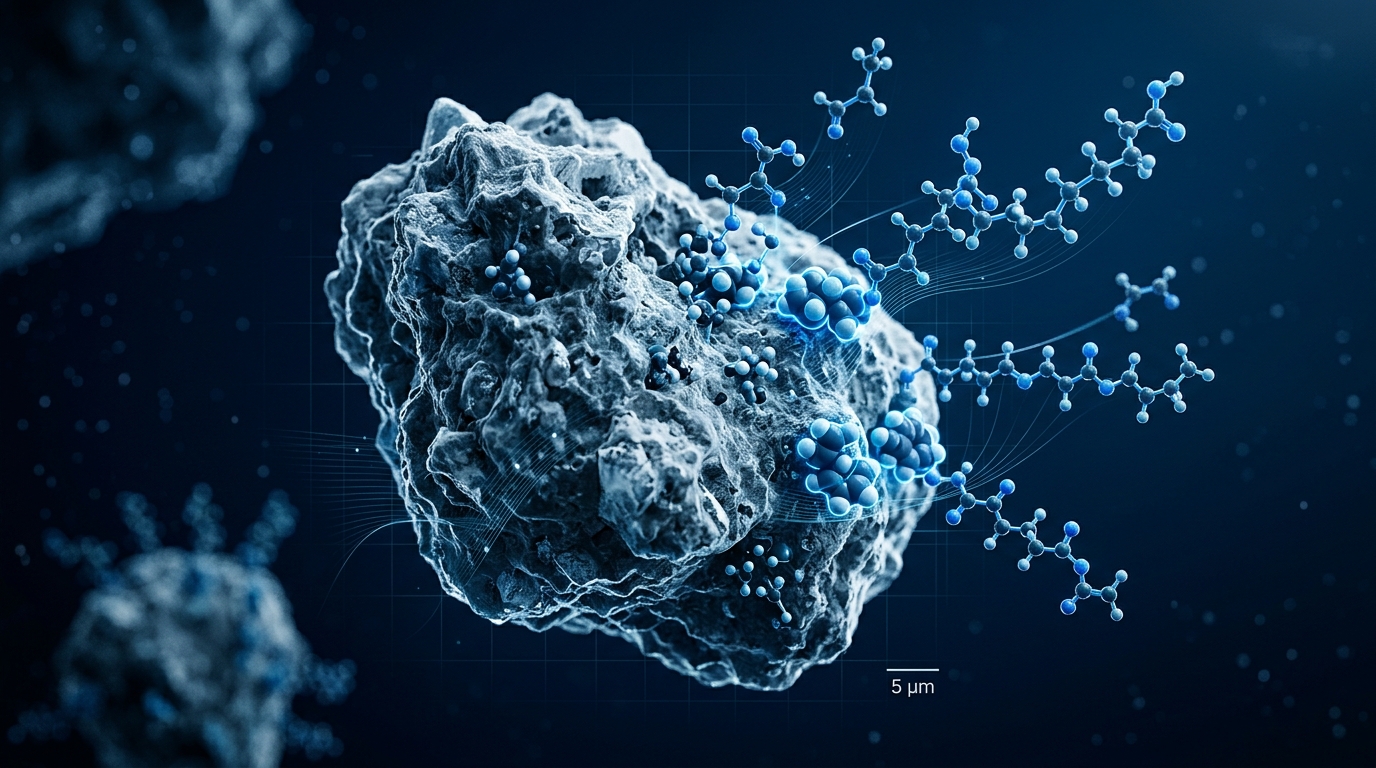
However, the data revealed a massive anomaly that completely defied existing computational chemistry models. The researchers discovered that this complex four-carbon sugar was at least eight times more abundant than simpler three-carbon sugars in the exact same cloud. In fact, three-carbon sugars were notably absent from the observational data. This is akin to exploring a vast automotive factory and finding thousands of fully assembled V8 engines, but absolutely no individual pistons, valves, or spark plugs lying around. It fundamentally challenges the conventional astrochemistry view that interstellar molecules grow slowly and sequentially through the addition of single carbon atoms. Instead, scientists now propose a radically different mechanism: these complex sugars likely form directly on the icy mantles of interstellar dust grains through the merging of simpler compounds like glycolaldehyde and ethylene glycol. This dust-grain catalysis bypasses the expected intermediate steps, proving that the universe is a far more efficient chemical laboratory than we previously imagined.
Market Impact & Deployment: From Radio Telescopes to Biotech
While the discovery of erythrulose in deep space is a triumph of pure science, the technological infrastructure required to achieve it has massive, tangible implications for enterprise IT and commercial sectors. The ability to filter, analyze, and verify 12 incredibly faint, independent spectral lines against a chaotic background of galactic radiation is a masterclass in extreme signal-to-noise resolution. The pipeline utilized by the Spanish Centre for Astrobiology relies on high-performance data processing architectures that ingest petabytes of raw radio frequency data, clean it of terrestrial and cosmic interference, and cross-reference it against vast databases of laboratory-verified molecular signatures.
For Chief Technology Officers and enterprise leaders, this represents the bleeding edge of remote sensing and data orchestration. The exact same algorithms and sensor configurations used to detect parts-per-billion chemical traces 27,000 light-years away are rapidly being adapted for Earth-bound industries. In the agricultural sector, precision spectral analysis deployed via drones and low-Earth-orbit satellites allows for the real-time detection of crop diseases, soil nutrient deficiencies, and water stress long before they are visible to the human eye. In the energy sector, hyperspectral imaging pipelines derived from astrophysical research are currently utilized to monitor pipeline integrity, detecting invisible methane leaks with unprecedented accuracy to prevent catastrophic failures and regulatory fines.
Furthermore, the chemical implications of this discovery are rippling through the biotechnology and pharmaceutical industries. The revelation that complex four-carbon sugars can bypass intermediate evolutionary stages through surface catalysis on dust grains provides computational chemists with entirely new reaction pathways to explore. Pharmaceutical companies, which spend billions on drug discovery and synthesis, rely on complex simulations to understand how molecules fold, bind, and form. The interstellar dust-grain model offers a new paradigm for synthesizing complex organic compounds in extremely cold, low-pressure environments, potentially leading to more efficient manufacturing processes for biologics and advanced therapeutics.
From a Total Cost of Ownership (TCO) perspective, the continued investment in radio astronomy infrastructure yields a massive, indirect ROI across the global tech sector. The demand for increasingly sensitive receivers, cryogenically cooled amplifiers, and massive data storage arrays pushes hardware manufacturers to innovate beyond commercial limits. The resulting trickle-down technology routinely ends up in consumer telecommunications, 6G network development, and quantum computing environments where minimizing thermal noise and signal degradation is paramount.
The Consumer Translation: Reevaluating Our Cosmic Origins
Beyond the servers, sensors, and spectral data, this discovery forces a profound paradigm shift in how the worldwide public understands our place in the universe. For generations, the narrative of life’s origin has been deeply terrestrial: a miraculous, statistically improbable event that occurred in the primordial soup of a young Earth, triggered by lightning and geothermal vents. We viewed space as a barren, sterile void—a hostile emptiness that was fundamentally antagonistic to the delicate chemistry of biology.
The interstellar sugar detection shatters that narrative. Erythrulose is not merely a random configuration of carbon, hydrogen, and oxygen; it is considered a crucial biological precursor. Dr. Jiménez-Serra’s team highlighted that in aqueous environments—such as the oceans of a newly formed, habitable planet—erythrulose can isomerize into other complex sugars like threose. Threose is widely considered by biochemists to be a potential evolutionary predecessor of RNA, the critical macromolecule that carries genetic instructions. This means that the fundamental building blocks of genetics are not unique to Earth. They are being manufactured on an industrial, galactic scale inside the very clouds of dust and gas that will eventually collapse to form new stars and planets.
For the average consumer, this realization fundamentally alters the equation regarding the search for extraterrestrial life. If the raw ingredients for RNA are already synthesized and waiting in the interstellar medium long before a solar system even forms, then every new planet born in that system is effectively pre-seeded with the potential for biology. When comets and asteroids—like the Bennu asteroid, where sugars were previously found—bombard young, cooling planets, they aren’t just delivering water; they are delivering the complex organic kits required to jumpstart life.
This democratization of biological ingredients across the cosmos ensures that public interest in space exploration, funding for planetary science, and the broader cultural imagination will experience a massive resurgence. It transforms the night sky from a cold expanse of dead matter into a vibrant, chemically active nursery teeming with the very sugars that run through our own cells.
Frequently Asked Questions
Q1: What is the significance of the interstellar sugar detection?
A1: The first interstellar sugar detection of erythrulose in the molecular cloud G+0.693-0.027 proves that complex organic molecules, essential for RNA and DNA, can form in deep space long before stars and planets are born.
Q2: How was this sugar molecule discovered?
A2: A team led by Dr. Izaskun Jiménez-Serra used the Yebes 40-meter and IRAM 30-meter radio telescopes to capture highly sensitive data, identifying 12 independent spectral lines matching the unique rotational fingerprint of erythrulose.
Q3: What makes erythrulose special?
A3: Erythrulose is a four-carbon sugar that naturally occurs on Earth in raspberries and is used in sunless tanning products; in space, it acts as a biological precursor that can transform into threose, a building block of RNA.
Q4: Where exactly was this sugar found?
A4: The sugar was detected in a massive dust and gas cloud known as G+0.693-0.027, which is located near the center of the Milky Way galaxy, approximately 27,000 light-years away from Earth.
Q5: Why did the findings surprise scientists?
A5: Researchers found that the four-carbon sugar erythrulose was at least eight times more abundant than simpler three-carbon sugars, challenging the view that interstellar molecules grow only through the slow, sequential addition of single carbon atoms.
TechNode HQ Verdict: Pros, Cons & Usability
- Pro (Engineering): The utilization of surface catalysis on dust grains provides a highly efficient, accelerated mechanism for synthesizing complex molecular structures, bypassing bottleneck intermediate stages.
- Pro (Consumer): Validates the theory of cosmic panspermia, dramatically increasing the statistical likelihood that life-bearing building blocks are universally distributed across exoplanets.
- Con: The extreme distance (27,000 light-years) and reliance on ultra-faint spectral emissions leave the data susceptible to massive interference, requiring immense computational overhead to clean and verify.
- Con: Ground-based radio telescopes face increasing deployment challenges due to the explosive proliferation of commercial satellite constellations crowding the radio frequency spectrum.
Enterprise Usability: For enterprise leaders in data analytics and HPC, the algorithms pioneered for deep-space signal isolation should be immediately evaluated for deployment in Earth-based remote sensing, bioinformatics, and high-noise data environments. CTOs in the chemical and pharmaceutical sectors should closely monitor the dust-grain catalysis models for potential adaptations in cryogenic drug synthesis.
Everyday Usability: While the average consumer cannot “use” a deep-space sugar, the philosophical and educational impact is immediate. This discovery should absolutely be integrated into modern science curricula and serves as a vital talking point regarding the continued funding and support of space exploration agencies globally.