Key takeaways
- Netflix and Disney+ lead the ecosystem with superior content libraries and robust profile curation architectures.
- Kidoodle.TV pioneers a human-in-the-loop Safe Streaming approach, offering vetted content for free.
- Ad-supported tiers introduce hidden costs, requiring strict parental oversight to mitigate commercial exposure.
- Robust PIN protection and maturity algorithms are the primary technological defenses in streaming UX.
- Total cost of streaming ownership (TCO) for families demands strategic subscription consolidation and evaluation.
As the digital media ecosystem rapidly evolves, securing and managing the influx of digital entertainment in households has become a complex technological challenge for consumers and network administrators alike. Navigating the myriad of Kids Streaming Platforms 2026 requires more than just a cursory glance at cartoon rosters; it demands a highly comprehensive understanding of the underlying network architectures, data privacy mechanics, algorithmic recommendations, and the economic realities of subscription bundling. We dissect the premier digital media delivery networks, evaluating them not just as content repositories, but as sophisticated software platforms designed to capture attention while theoretically safeguarding vulnerable end-users.
In this deep dive, TechNode HQ acts as your red-team auditor and enterprise consultant. We evaluate these top-tier services by stripping away the marketing fluff and examining the hard infrastructure. From deterministic content filtering algorithms to the Total Cost of Ownership (TCO) across hybrid subscription models, we translate complex platform mechanics into actionable intelligence for the modern, tech-savvy household. It is critical to view these streaming environments as heavily orchestrated walled gardens that require active access control mechanics to operate securely.
The Architectural Reality of Kids Streaming Platforms 2026

At the core of any premium digital streaming service is a sprawling, globally distributed Content Delivery Network (CDN) optimized for low-latency video playback. However, when evaluating platforms designed specifically for children, the true architectural differentiator lies not in bandwidth allocation, but in the sophisticated access control, profile segmentation, and heuristic filtering algorithms deployed at the edge. The digital architecture of these services is effectively a multi-tenant cloud environment where administrative oversight (the parent) must strictly govern the unprivileged user (the child).
Netflix remains a top choice in this sector due to its extensive library of both licensed and original kids’ content. Behind the scenes, Netflix’s backend architecture relies on highly segmented metadata tagging. When a parent utilizes Netflix’s parental controls to create dedicated kids’ profiles and set maturity ratings, they are essentially configuring a deterministic firewall rule within the application layer. This algorithmic isolation ensures that content exceeding a specific maturity threshold is completely decoupled from the child’s index, making it structurally impossible to surface in search results or recommendation queues.
To prevent unauthorized lateral movement between profiles, Netflix allows parents to pin-protect specific profiles. This cryptographic PIN mechanic functions similarly to multi-factor authentication (MFA) in an enterprise environment, effectively stopping children from bypassing maturity filters by simply clicking into an adult account. Conversely, Disney+ has positioned itself as a central hub for Disney, Pixar, Marvel, and Star Wars content for families. The Disney+ parental controls are characterized by their straightforward UI, strictly focused on age-appropriate ratings. Rather than relying on complex heuristic blocking, Disney utilizes hard-coded metadata barriers that restrict content access at the CDN request level based on the profile’s cryptographic token.
Algorithmic Curation vs. Human-in-the-Loop
The philosophical divide in content curation architecture is stark when comparing algorithmic scale against manual verification. YouTube Kids, powered by parent-company Alphabet’s colossal server farms, relies heavily on machine learning models and automated content scraping to populate its platform. However, cybersecurity and child-development experts generally consider YouTube Kids to be less curated than dedicated premium services. Algorithmic hallucinations and bad-actor manipulation frequently bypass automated filters, resulting in inappropriate content surfacing in the feed.
In stark contrast, Kidoodle.TV utilizes a rigid Safe Streaming approach where every single show is screened by a human before being uploaded to their servers. This human-in-the-loop (HITL) architecture acts as a massive quality assurance bottleneck, which limits library scale but fundamentally guarantees compliance with safety standards. For parents seeking absolute zero-trust architecture regarding content safety, Kidoodle.TV provides a mathematically superior security posture compared to purely algorithmic models. Similarly, PBS KIDS Video operates as a staple for high-quality, educational, and nonprofit-driven content. Unburdened by the hyper-engagement algorithms required by for-profit entities, the PBS infrastructure delivers a calm, educational UI that prioritizes cognitive development over prolonged screen-time metrics.
Educational Deployments and Niche Ecosystems
Beyond pure entertainment, platforms like Curiosity Stream have emerged as powerful tools for specialized knowledge transfer. Curiosity Stream is highly recommended for educational documentaries focusing on science, history, and nature. From an infrastructure perspective, Curiosity Stream offers a robust Kids Mode that actively filters out inappropriate content while surfacing high-fidelity STEM programming. This approach transforms the living room television into a distributed learning endpoint, effectively extending the educational network directly into the home.
Market Impact & Deployment
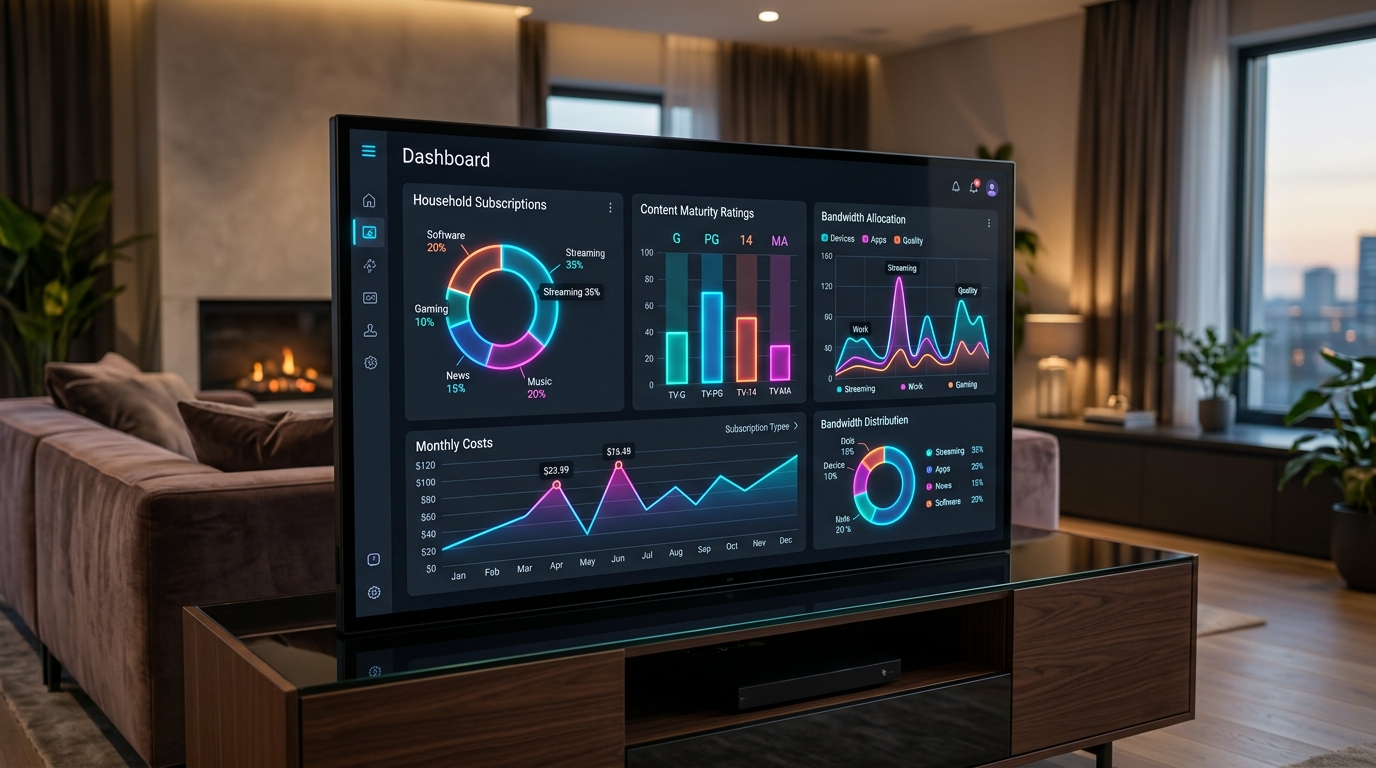
The financial architecture of streaming platforms has undergone a massive paradigm shift. As the market reaches subscription saturation, media conglomerates are rapidly pivoting towards hybrid monetization models. This structural shift fundamentally alters the Total Cost of Ownership (TCO) for household entertainment budgets. A CTO auditing a corporate software stack evaluates licensing costs and seat limits; similarly, a household must execute precise platform benchmarking to navigate pricing tiers, simultaneous stream limits, and ad-supported compromises.
Paramount+ is frequently highlighted for its strength in family-friendly franchises, offering deep catalogs from Nickelodeon. However, acquiring Disney+, Netflix, Paramount+, and HBO Max concurrently creates a fragmented billing environment and overlapping content utility. Deploying a comprehensive entertainment suite can easily exceed the cost of legacy linear cable packages if not properly audited and consolidated.
Ad-Tech and Zero-Data Advertising Frameworks
The most disruptive element in the 2026 streaming market is the pervasive rollout of ad-supported tiers. For cost-conscious consumers, trading attention for access appears mathematically sound, but deploying these tiers in a household with children requires extreme operational caution. When using ad-supported plans, parents should check if the platform explicitly restricts ads on children’s content. Netflix’s ad-based plan, for instance, is architecturally designed to keep advertisements completely out of children’s titles, ensuring compliance with both ethical standards and stringent data privacy regulations like COPPA (Children’s Online Privacy Protection Act).
Conversely, HappyKids.TV is a leading choice for free, ad-supported streaming, meaning that while the content itself is free of subscription costs, the child is actively exposed to commercial messaging. In these environments, the child’s attention is the core product being sold to advertisers. This requires parents to perform a strict risk-reward calculus: does the elimination of a monthly operational expenditure (OpEx) justify the psychological impact of targeted commercial advertising on a developing brain?
The Consumer Translation
Translating these highly technical, enterprise-grade architectures into everyday household reality reveals a fascinating dynamic. The modern parent is no longer just a passive consumer; they are the network administrator of their home. Configuring a kids streaming environment requires navigating digital dashboards, setting up role-based access control (RBAC) via profiles, and managing cryptographic keys (PINs) to maintain sandbox integrity.
Consider the analogy of global shipping logistics. Raw internet content is like a massive shipyard filled with unverified, potentially hazardous cargo. Platforms like YouTube act as highly efficient but chaotic automated sorting facilities—sometimes toxic materials slip past the scanners. In contrast, services like Disney+ and Netflix Kids are heavily fortified, private warehouses. Only pre-approved, certified safe goods are ever allowed on the shelves, and parents hold the only master keys to the loading dock.
Despite these massive technological investments in safety architecture, the human element remains the final and most critical firewall. Leading child psychology experts emphasize that parental controls are not a substitute for active parenting and open conversations. Relying solely on a software platform to raise, educate, and shield a child is equivalent to a corporation relying solely on automated antivirus software while completely ignoring employee security training. The technology is merely a tool; the parent remains the ultimate executive authority.
Furthermore, the cross-industry impact of this technology is staggering. The consumer media ecosystem directly influences the global toy retail market, educational technology (EdTech) deployments in primary schools, and the multi-billion dollar digital advertising sector. An algorithm adjustment at Netflix can instantly alter the supply chain demands for a specific toy franchise worldwide. The software is fundamentally rewriting behavioral economics for the next generation.
Frequently Asked Questions
Q1: What are the best kids streaming platforms in 2026?
A1: The top kids streaming platforms in 2026 include Netflix, Disney+, and Paramount+ for premium content, while Kidoodle.TV and PBS KIDS lead the free, educational tier. These platforms dominate due to strong parental controls and diverse libraries.
Q2: How do Netflix parental controls work for children?
A2: Netflix allows parents to create dedicated kids’ profiles with maturity ratings and pin-protect adult accounts to prevent unauthorized access. This creates a secure, algorithm-driven walled garden.
Q3: Is Kidoodle.TV safe for children?
A3: Yes, Kidoodle.TV utilizes a human-vetted Safe Streaming approach where every show is screened by staff before broadcast. This ensures a highly curated, secure environment for viewers under 12.
Q4: Do ad-supported streaming plans show commercials to kids?
A4: It varies by platform. While Netflix’s ad-based plan keeps ads out of children’s titles, other services like HappyKids.TV actively rely on family-friendly commercials in their ad-supported tiers.
Q5: Can parental controls replace active supervision?
A5: No. Experts emphasize that parental controls are technological safeguards, not a substitute for active parenting and open conversations about digital media literacy.
TechNode HQ Verdict: Pros, Cons & Usability
- Pro (Engineering): Deeply integrated, cryptographically secure profile segmentation and multi-tenant isolation ensures high-fidelity content sandboxing.
- Pro (Consumer): On-demand access to highly curated, educational, and universally acclaimed entertainment without the unpredictability of linear television.
- Con: Total Cost of Ownership (TCO) rapidly escalates as highly fragmented content libraries require consumers to manage and pay for multiple concurrent subscriptions.
- Con: Hidden cognitive costs associated with ad-supported tiers, coupled with the reality that PIN protections can occasionally be bypassed by tech-savvy users.
Enterprise Usability: For household CTOs (parents), immediate deployment should center on a consolidated core platform like Netflix or Disney+, strictly enforcing PIN-based access control and actively auditing ad-tier policies to prevent commercial data harvesting.
Everyday Usability: Absolutely essential for the modern family. However, consumers must actively manage their subscriptions to prevent billing bloat and remember that digital safeguards are enhancements to, not replacements for, active parental engagement.