Key takeaways
- Wizards of the Coast officially announced the D&D Universes Beyond Expansion at Gen Con 2026.
- The World of Warcraft set arrives November 17, 2026, featuring all playable MMO classes and species.
- An included Icecrown Citadel digital adventure targets high-level character progression (levels 16-20).
- A Star Wars collaboration is slated for 2027 under the “Season of Rebellion” content banner.
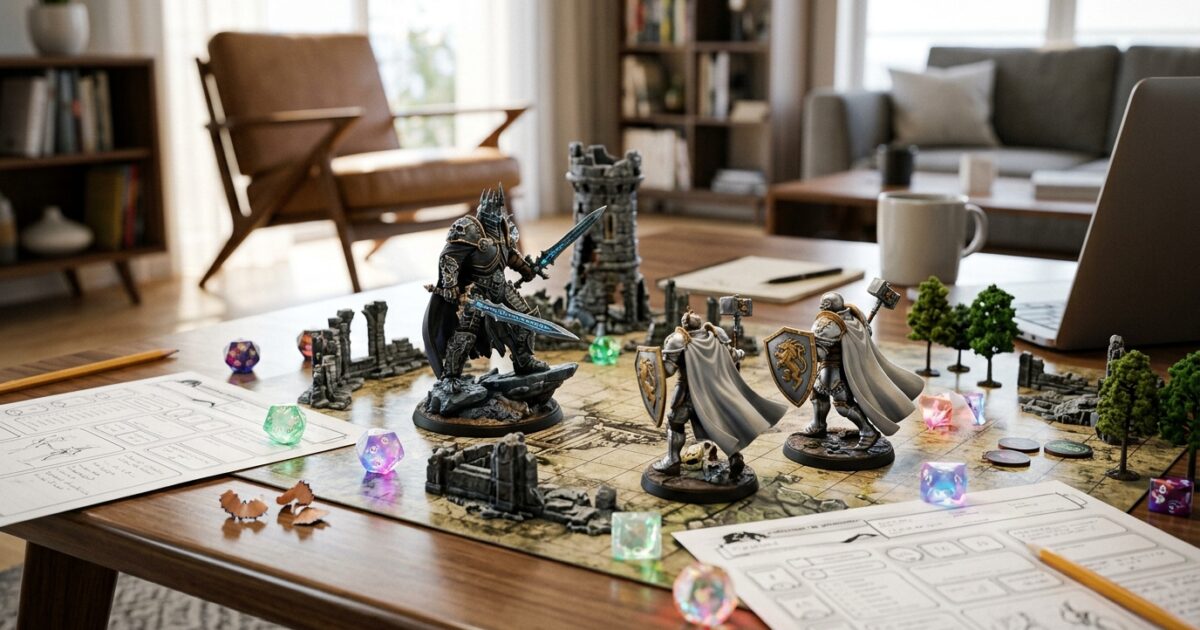
The landscape of tabletop gaming is undergoing a massive structural shift. At the Gen Con 2026 Vision Keynote, Wizards of the Coast officially announced the Universes Beyond Expansion for Dungeons & Dragons, marking an unprecedented strategic pivot for the world’s most popular roleplaying game. By integrating massive external intellectual properties into its core mechanical framework, D&D is executing a highly calculated cross-pollination strategy. The initial rollouts for this ambitious framework are nothing short of industry titans: a comprehensive World of Warcraft integration releasing on November 17, 2026, and a highly anticipated Star Wars collaboration slated for 2027.
This initiative represents more than just a thematic reskin. It is a fundamental expansion of the D20 mathematical engine to accommodate the deeply entrenched logic, physics, and lore of entirely different digital ecosystems. By transforming real-time, server-based MMO mechanics and sci-fi cinematic universes into analogue, turn-based tabletop rulesets, Wizards of the Coast is attempting a monumental feat of systems engineering. The Universes Beyond Expansion serves as the vanguard for a new era of Franchise Architecture, fundamentally altering how consumers interact with legacy IP.
The Architectural Reality of the Universes Beyond Expansion
Translating a massively multiplayer online roleplaying game into a pen-and-paper framework requires rigorous structural alignment. Created in direct partnership with Blizzard Entertainment, the World of Warcraft expansion brings the sprawling continent of Azeroth to the D&D tabletop for the first time in two decades. The sheer volume of mechanical data being ported over is staggering. The expansion will feature comprehensive rules for all playable World of Warcraft species, including complex integrations for 11 species that are entirely new to the D&D ecosystem, such as the Dracthyr, Earthen, and Pandaren.
Furthermore, the WoW set will include rules for all playable World of Warcraft classes. This necessitates the introduction of entirely new mathematical models to balance iconic WoW classes like the Death Knight, Demon Hunter, and Shadow Priest against traditional D&D archetypes. Players will have access to new spells within the World of Warcraft D&D expansion, specifically designed to mirror the cooldowns and mana-management systems inherent to the MMO experience, while remaining compatible with D&D’s spell slot architecture.
The bestiary is also receiving a massive overhaul. New monsters from the WoW universe will be added to the D&D bestiary, providing Dungeon Masters with an arsenal of iconic raid bosses and mobs, complete with carefully calculated stat blocks designed for three-to-five-person parties. To support this, the WoW expansion will introduce new magic items based on the game, replicating the complex loot tables and itemization that drive the MMO’s core engagement loop. Even the macro-structures of WoW are being ported: factions and professions from WoW will also make their way into the D&D setting, requiring new subsystems for crafting, resource gathering, and reputation management.
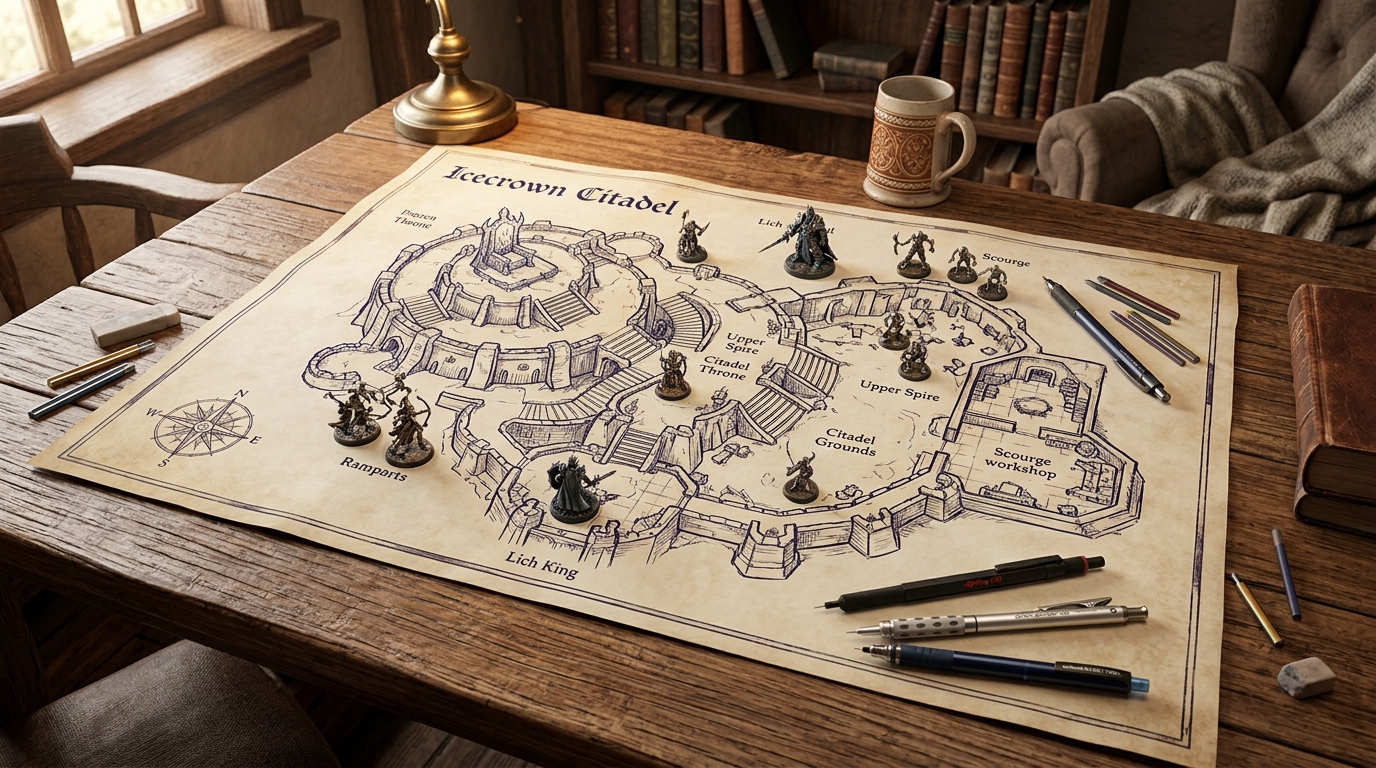
The crown jewel of this technical integration is the accompanying ‘Icecrown Citadel Map Pack’ included as part of the WoW release. This isn’t merely a physical asset; the Icecrown Citadel Map Pack includes a digital adventure that specifically targets high-level character optimization, taking players from level 16 to 20. Designing balanced combat encounters for Tier 4 D&D characters is notoriously difficult, making this adventure a critical stress test for the new WoW mechanics.
Market Impact & Deployment Strategy
From a business perspective, the deployment of these new universes is a calculated move to capture massive, adjacent audiences. Pre-orders for the D&D: World of Warcraft release are currently live on D&D Beyond, leveraging the platform’s robust digital infrastructure to drive immediate software-as-a-service (SaaS) style revenue before the physical books even hit store shelves. This dual physical-digital pipeline is crucial for modern Consumer Tech deployments, ensuring that the friction from purchase to play is minimized.
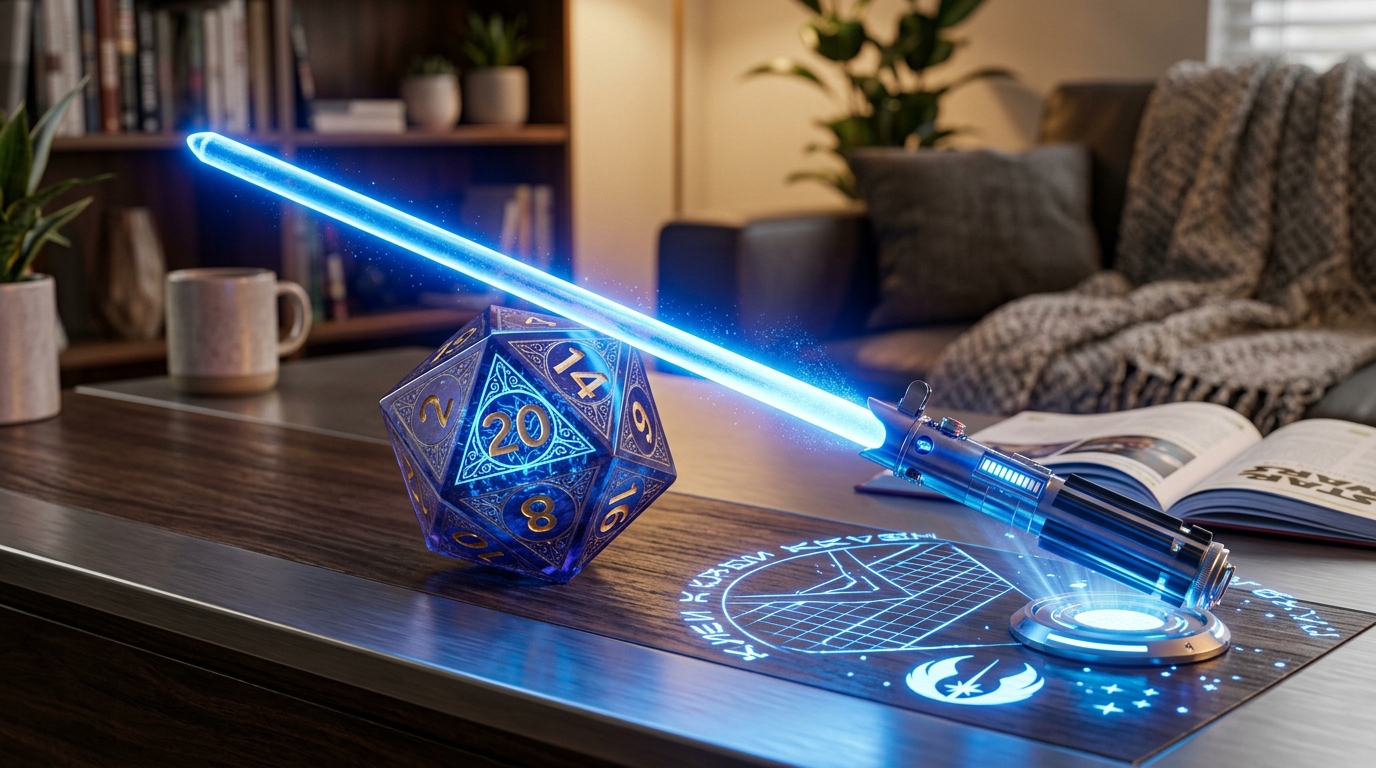
The strategic roadmap extends far beyond Azeroth. A D&D: Star Wars expansion is coming in 2027, signaling an ongoing, multi-year licensing agreement with Disney. The Star Wars release will be part of a new D&D content season boldly titled ‘Season of Rebellion’. This seasonal approach mimics the content delivery networks of modern live-service video games, creating predictable revenue cycles and sustained community engagement. During the Gen Con Vision Keynote, Darth Vader made a surprise appearance for the Star Wars announcement, instantly generating viral marketing momentum.
While information regarding the D&D Star Wars collaboration remains heavily guarded as of late July 2026, the metadata surrounding the announcement provides critical clues. The title and theme of the Star Wars set strongly suggest it will be set during the Galactic Civil War era. This era provides a stable, universally recognized narrative framework (the Rebellion vs. the Empire) that easily translates into traditional D&D alignment systems and quest structures. The looming question for game designers is how the D20 system will process high-velocity starship combat and the metaphysical mechanics of the Force without breaking the fundamental action economy of the game.
By establishing this cross-franchise pipeline, Wizards of the Coast is building a monopolistic gravity well. They are positioning the D&D ruleset not just as a game, but as the underlying operating system for all narrative tabletop experiences. If successful, this could dramatically scale their Total Addressable Market, bringing millions of PC gamers and sci-fi cinephiles into the lucrative tabletop ecosystem.
The Consumer Translation: Bridging Digital and Analogue
For the worldwide public, this highly technical shift represents a profound convergence of media consumption habits. Over the past twenty years, millions of players have invested tens of thousands of hours roaming the Barrens of Kalimdor or battling the Lich King. By porting these experiences into a collaborative, face-to-face tabletop format, Wizards of the Coast is offering a deeply nostalgic yet entirely novel way to interact with beloved IP. It transforms the often solitary or screen-mediated experience of an MMO into a tangible, socially grounded activity driven by Data and dice rather than server tick rates.
Consider the structural analogy: Imagine translating a high-speed, automated global logistics network (a digital MMO) into a hyper-localized, hand-delivered courier service (a tabletop RPG). Both systems move the same packages (the lore, the combat, the character progression), but the manual system requires entirely different tools, pacing, and human oversight. The magic of this translation is that it allows consumers to pause the relentless, real-time progression of the digital world and meticulously examine the mechanics of their favorite characters at their own pace.
The Star Wars expansion presents an even more fascinating consumer shift. While Star Wars has had numerous successful bespoke tabletop RPGs (such as those published by West End Games and Fantasy Flight Games), bringing the franchise explicitly into the D&D ecosystem standardizes the experience. Players will no longer need to learn proprietary dice systems or niche rulebooks; they can simply map their understanding of Jedi Knights and Sith Lords onto familiar concepts of Paladins and Sorcerers. This dramatically lowers the barrier to entry for fans who are D&D-curious but intimidated by learning entirely new systems.
Ultimately, these expansions democratize narrative control. In World of Warcraft, players are bound by the rigid narrative coding of Blizzard’s servers. In D&D’s Azeroth, players have the ultimate agency to break the script, forge unprecedented alliances, and permanently alter the geopolitical landscape of the world. This level of unconstrained interactivity is the true value proposition of the tabletop medium.
Frequently Asked Questions
Q1: When does the D&D World of Warcraft set officially release?
A1: The D&D World of Warcraft set is scheduled for a full release on November 17, 2026, with pre-orders currently live on D&D Beyond.
Q2: What new mechanics does the World of Warcraft D&D expansion include?
A2: The expansion includes rules for all playable World of Warcraft species and classes, alongside new spells, magic items, factions, professions, and monsters.
Q3: When will the Star Wars D&D expansion be available?
A3: The D&D Star Wars expansion is set to arrive in 2027 as part of a new D&D content season titled ‘Season of Rebellion’.
TechNode HQ Verdict: Pros, Cons & Usability
- Pro (Engineering): Successfully standardizes disparate, complex IP mechanics (MMO cooldowns, Force powers) into a single, unified, battle-tested mathematical engine (the D20 system).
- Pro (Consumer): Dramatically lowers the barrier to entry for fans of massive franchises to experience collaborative, analogue storytelling without learning entirely new bespoke game systems.
- Con: The introduction of MMO-style mechanics (factions, professions, complex magic items) threatens to bloat the already dense D&D ruleset, potentially overwhelming casual Dungeon Masters.
- Con: Translating high-level digital content (like the Level 16-20 Icecrown Citadel raid) into a balanced tabletop experience is notoriously difficult and prone to mathematical breakdowns at the table.
Enterprise Usability: For IP holders and game studios, this demonstrates the immense licensing value of partnering with established tabletop infrastructure. Wizards of the Coast has effectively built the ‘iOS of tabletop gaming,’ providing a platform where other massive properties can deploy their content to a highly engaged, high-spending demographic. Competitors should take note of the SaaS-style pre-order pipelines utilized via D&D Beyond.
Everyday Usability: For the average consumer, this is a must-buy if you possess any nostalgia for Azeroth or a galaxy far, far away. The ability to dictate the narrative pace of these highly regimented digital worlds offers a refreshing, tactile counter-programming to modern screen fatigue. Whether you are a veteran dice-roller or a lapsed MMO player, these sets provide a perfect on-ramp to modern tabletop gaming.