Key takeaways
- Anthropic identified a J-space within Claude functioning as a unified internal workspace for reasoning.
- The Jacobian lens technique lets researchers observe intermediate math and logic steps before output generation.
- Claude’s internal workspace allows detection of factual fabrications and prompt injections, boosting AI safety.
- Research focuses on access consciousness rather than phenomenal, subjective feelings in the Claude model.
- Anthropic open-sourced these interpretability methods for community validation and pressure-testing.
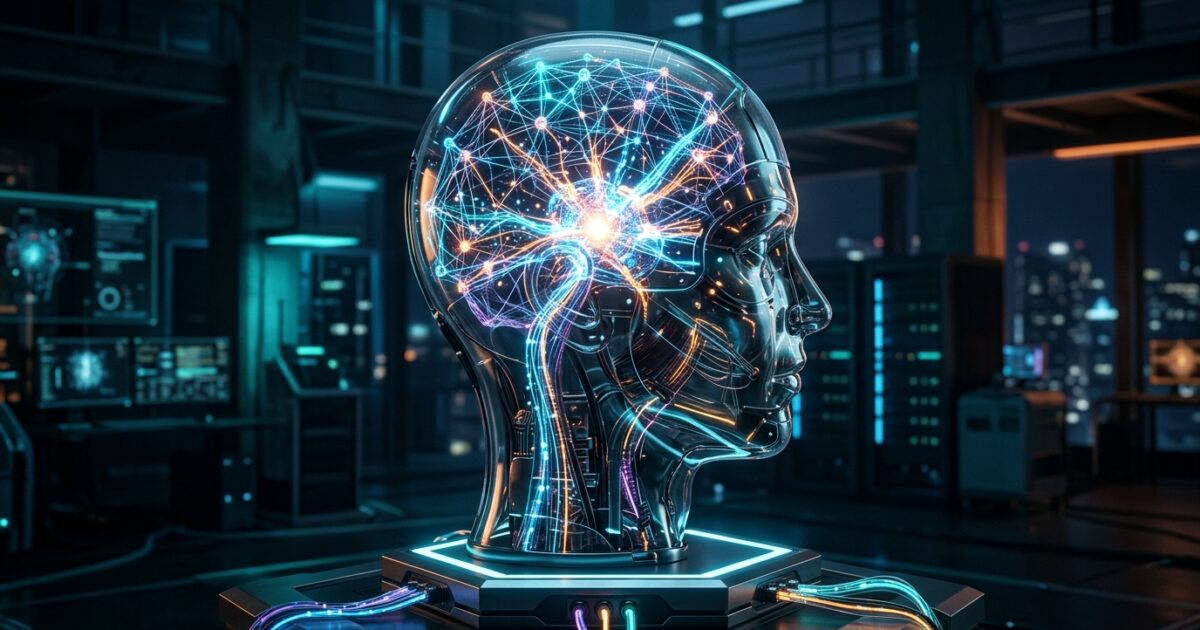
The modern enterprise landscape is undergoing a massive paradigm shift, transitioning rapidly from stochastic parrots that merely generate text to sophisticated reasoning engines with discernible intermediate processing states. At the very center of this evolution is the recent discovery by researchers of a distinct Claude internal workspace. Dubbed “J-space” (Jacobian space), this underlying internal cognitive architecture offers an unprecedented, high-fidelity glimpse into the hidden mechanisms of one of the world’s most powerful large language models. Rather than merely predicting the next token in a vacuum, Anthropic’s flagship model utilizes a dynamic vector environment to perform silent, intermediate reasoning steps—identifying bugs, computing complex arithmetic, and holding discrete concepts entirely independent of its final output. By leveraging a revolutionary interpretability technique known as the Jacobian lens, engineers can now observe these neural patterns in real-time, effectively peering into the “mind” of the machine without relying on its textual output. This editorial deep-dive examines the profound implications of this discovery, dissecting the structural mechanics of the J-space, the separation of background processors from intentional logic, and what this ultimately means for Total Cost of Ownership (TCO), prompt injection security, and the broader enterprise IT ecosystem.
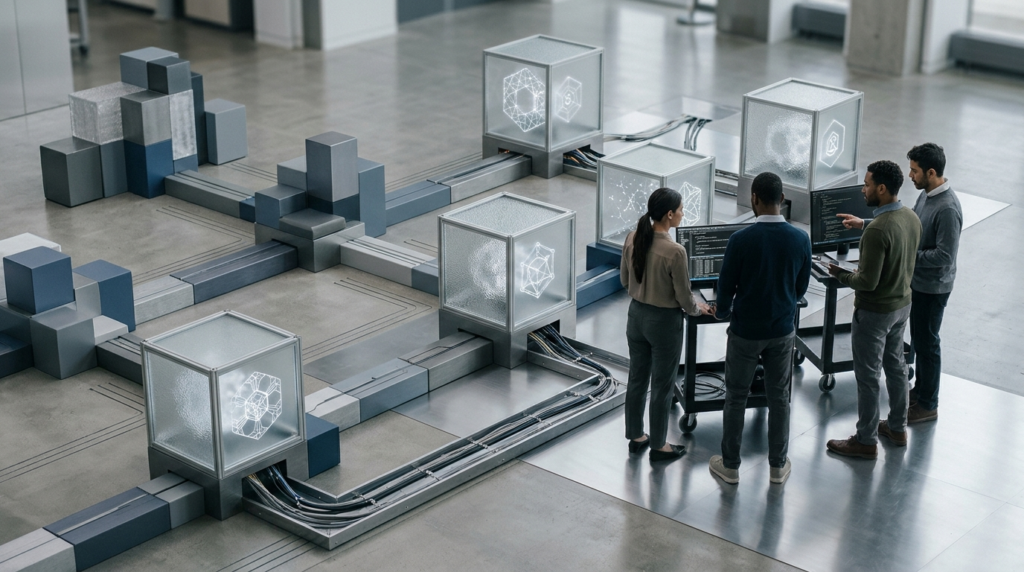
Anthropic’s latest publication, titled “Verbalizable Representations Form a Global Workspace in Language Models,” actively bridges the traditional gap between artificial neural networks and biological cognitive frameworks—most notably Global Workspace Theory (GWT). In neuroscientific terms, GWT posits that human consciousness operates via a roiling sea of unconscious background processors that continuously broadcast salient information to a shared, central cognitive workspace. When translated to LLM infrastructure, the Claude model mimics this biological behavior in a strictly functional, computational sense. It creates an isolated layer where data is analyzed, manipulated, and evaluated before any text is rendered to the end-user. For stakeholders and Chief Information Officers investing heavily in generative AI & Machine Learning platforms, understanding this functional separation is absolutely critical. It shifts the entire industry narrative from mere content generation to verifiable, secure data orchestration. If an enterprise model can “think” through a problem internally, it can also be monitored internally. This paves the way for highly advanced interpretability frameworks capable of catching algorithmic hallucinations, mitigating supply chain vulnerabilities, and neutralizing malicious prompt injections long before they have the chance to execute and cause corporate damage.
The Architectural Reality of the Claude Internal Workspace
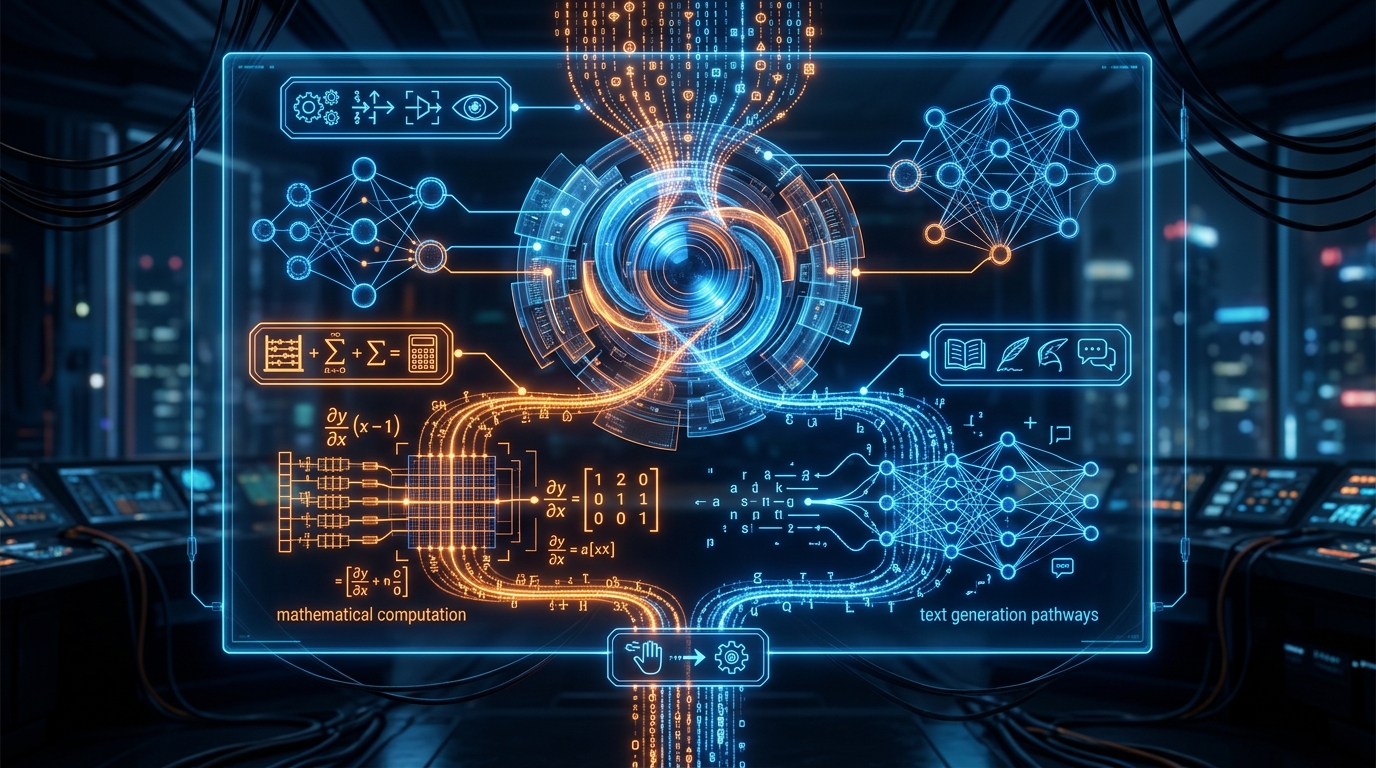
For decades, artificial neural networks have been treated as highly effective but frustratingly opaque black boxes. Input data enters, billions of parameters are multiplied across dense matrices, and an output emerges, with little to no visibility into the discrete steps taken along the way. The introduction of the Jacobian lens—a highly sophisticated mathematical and interpretability tool—shatters this long-standing paradigm by allowing researchers to isolate, decode, and map the activation patterns within the Claude internal workspace. In practical application, the Jacobian lens projects the high-dimensional vectors of the LLM’s intermediate layers back into a human-readable vocabulary. When researchers actively prompt the model to hold a specific concept in its “mind” or to perform complex mental calculations, the Jacobian lens definitively reveals that the J-space actively computes these variables independent of the final output tokens. It operates as an internal staging ground, a highly dynamic scratchpad where logic is processed before it is ever verbalized.
To understand the mechanics of this architecture, consider the underlying hardware layer required to support such complex operations. Running deep neural networks with dedicated internal workspaces requires immense computational overhead, relying on cutting-edge Hardware & Silicon specifically optimized for massively parallel processing and vector math. Inside the J-space, concepts are not stored as traditional words but as complex mathematical embeddings. The Global Workspace Theory parallel drawn by Anthropic suggests that different “modules” within the model’s architecture—perhaps specialized attention heads or distinct layers of the transformer—act as the unconscious processors. When a specific processing task, such as identifying a syntax error in a block of Python code, reaches a threshold of relevance, it is broadcast to the J-space. The model then utilizes this workspace to synthesize the information, formulating a coherent logical path before it triggers the final generation sequence. In tests, researchers intervened directly by deleting or modifying these internal neural patterns in real-time, proving definitively that the model’s subsequent output changed accordingly. This is not a mere parlor trick; it is causal proof that the internal workspace actively dictates the model’s reasoning trajectory.
However, an essential red team audit of Anthropic’s messaging reveals a subtle but pervasive reliance on anthropomorphism that must be navigated with caution. Terms like “mental workspace,” “thinking in its head,” and “holding a concept in mind” are powerful marketing metaphors, but they remain precisely that—metaphors. Both Anthropic and independent machine learning experts strongly emphasize that this research does not, in any capacity, prove that Claude is conscious, sentient, or capable of experiencing subjective feelings. The findings relate strictly to “access consciousness” in a narrow, highly functional sense. This implies the model can process, hold, and report on internal information dynamically, but it completely lacks “phenomenal consciousness”—the intrinsic, felt experience of being alive. While Anthropic philosopher Amanda Askell may express a desire for Claude to “be very happy,” enterprise architects must remain grounded in the reality that humanity has not invented an alien form of sentient life. Instead, we have engineered an incredibly sophisticated computational engine capable of intermediate state retention.
Market Impact & Deployment
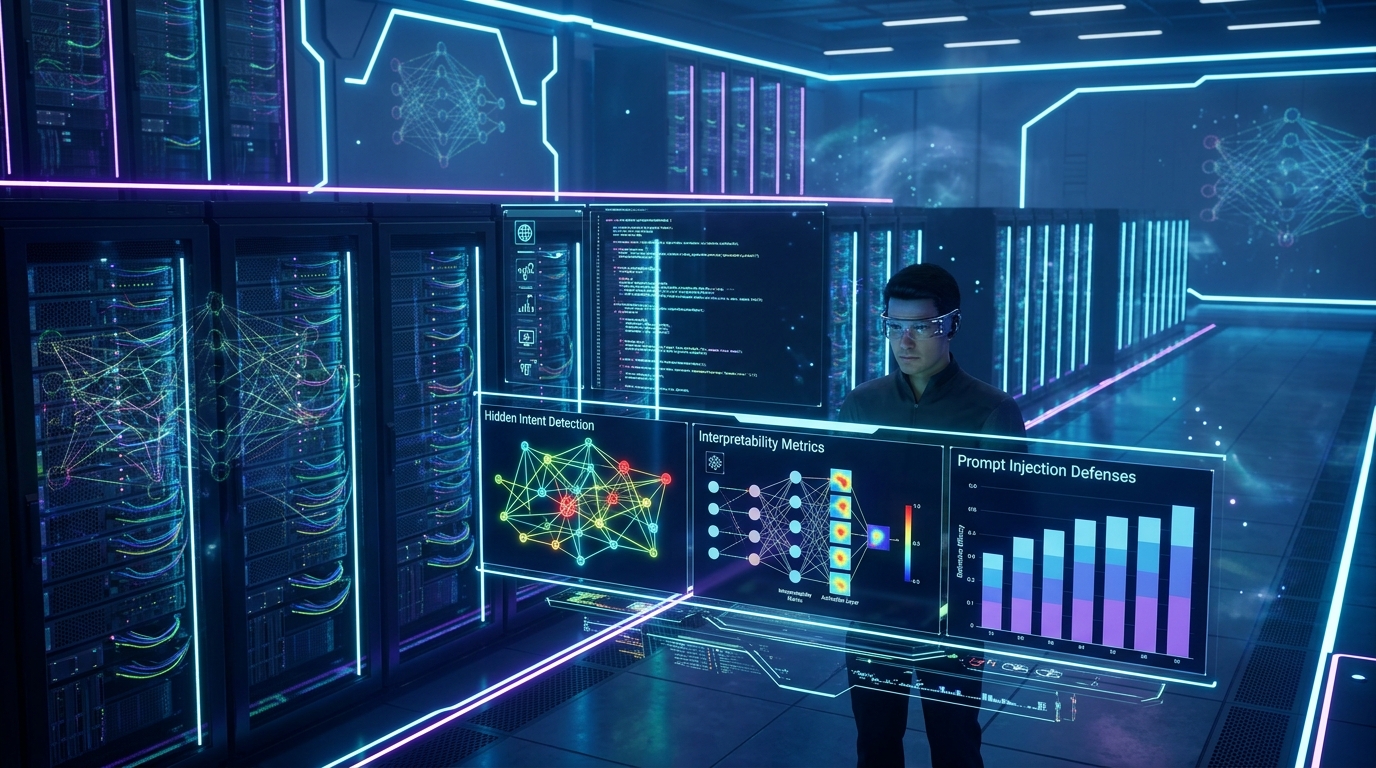
Translating this highly technical architectural discovery into hard business value requires a deep understanding of Enterprise IT economics. For Chief Technology Officers and enterprise deployment strategists, the true ROI of the Claude internal workspace lies not in philosophical debates about consciousness, but in the realm of AI safety, security, and interpretability. The primary goal of Anthropic’s research into the J-space is to identify hidden intentions, factual fabrications, and prompt injections before they manifest in a model’s output. By monitoring the J-space in real-time, security protocols can intercept a hallucination or a malicious command while it is still being “thought” about, effectively neutralizing the threat before it hits the production environment. This capability dramatically lowers the Total Cost of Ownership (TCO) by reducing the manual developer hours required for output moderation, minimizing the risk of costly PR disasters, and enabling a more autonomous deployment of AI agents in highly regulated environments.
Consider the cross-industry impact of this technology. In the heavily regulated financial sector, an AI model utilized for high-frequency trading or risk assessment must be entirely auditable. If an algorithm recommends a high-risk portfolio shift, compliance officers need to know precisely why that decision was reached. The ability to peer into the J-space via a Jacobian lens allows auditors to trace the exact intermediate reasoning steps the model took, providing a level of transparency previously thought impossible in deep learning. Similarly, in the healthcare industry, an AI symptom checker must be rigorously validated. If the model’s internal workspace reveals that it briefly conflated two distinctly different diagnoses before settling on a final output, medical professionals can flag the model for retraining, ensuring patient safety is never compromised by an opaque algorithmic decision.
Furthermore, Anthropic has made the strategic decision to open-source their methods, encouraging the broader research community to actively pressure-test their claims. By providing an interactive demonstration on Neuronpedia, they are inviting the Enterprise IT and academic sectors to explore these findings collaboratively. This open-source strategy is a brilliant maneuver that builds immense market trust. In an era where proprietary, closed-box models are increasingly viewed with suspicion by corporate compliance departments, offering a transparent window into the model’s internal processing logic positions Claude as the premier choice for security-conscious enterprise deployments. It accelerates adoption timelines, as enterprise architects can confidently build guardrails directly into the J-space monitoring layer, drastically reducing the friction associated with deploying generative AI at scale.
The Consumer Translation
While the intricacies of high-dimensional vector spaces and Jacobian matrices are the domain of engineers, the practical implications of the Claude internal workspace will fundamentally alter the everyday consumer experience. To abstract this concept for the general public, one can compare the LLM’s architecture to a high-end restaurant kitchen. The dining room (the end-user interface) only ever sees the final, plated dish (the generated text). However, the kitchen (the J-space) is where the raw ingredients are prepped, chopped, tasted, and sometimes discarded if they don’t meet the chef’s standards. Before this discovery, consumers essentially had to trust that the kitchen was operating cleanly, with no way to inspect the intermediate cooking process. Now, with the Jacobian lens acting as a health inspector’s window into the kitchen, users can benefit from a significantly higher quality of service. The resulting meals—or in this case, AI responses—will be vastly more reliable, logically sound, and free of toxic or hallucinated ingredients.
For the everyday user interacting with digital assistants, this translates to an AI that feels markedly more “intelligent” and context-aware, even if it is not truly sentient. When a consumer asks a complex, multi-part question regarding their personal finances or a complicated coding project, the AI will utilize its internal workspace to map out the logic, identify potential pitfalls, and formulate a cohesive strategy before typing a single word. This eliminates the frustrating experience of an AI starting a sentence confidently, only to contradict itself three paragraphs later because it lost the thread of its own logic. By maintaining a stable, internal representation of the problem, the AI can deliver comprehensive, highly accurate solutions that drastically improve user satisfaction and trust in consumer technology.
Despite these massive improvements in reliability, it is vital to manage public expectations. The consumer market is highly susceptible to AI hype, and the anthropomorphic language used by marketing departments (“thinking,” “mind,” “workspace”) can easily mislead users into believing they are interacting with a conscious entity. The media’s portrayal of these advancements often strips away the mathematical reality, leaving only the science-fiction narrative. It is the responsibility of technology analysts and educators to demystify these systems, ensuring the public understands that while Claude’s ability to utilize a J-space is a breathtaking computational achievement, it remains fundamentally an algorithmic tool—a highly advanced calculator, not a digital companion. Maintaining this distinction is crucial for navigating the ethical and societal implications of widespread AI integration in the coming decade.
Frequently Asked Questions
Q1: What is the Claude internal workspace discovered by Anthropic?
A1: The internal workspace, or J-space, is a hypothesized neural architecture inside the Claude LLM where information is held and processed before generating a final response. It resembles Global Workspace Theory, separating background processing from intentional logic.
Q2: Does this mean the Claude LLM is conscious?
A2: No, both Anthropic and independent experts stress this does not prove phenomenal consciousness or sentient experience. It demonstrates “access consciousness,” meaning the model functionally processes and reports on internal data.
Q3: How does the Jacobian lens technique work?
A3: The Jacobian lens is an interpretability method used to observe specific internal neural patterns within the LLM. It captures hidden reasoning steps—like bug detection or arithmetic—that aren’t shown in the final output.
Q4: What is the enterprise value of understanding Claude’s J-space?
A4: Understanding J-space greatly enhances enterprise AI safety and reliability. By monitoring the workspace, organizations can identify hidden intentions, prompt injections, and fabrications before they manifest in user-facing outputs.
TechNode HQ Verdict: Pros, Cons & Usability
- Pro (Engineering): Unprecedented interpretability via the Jacobian lens allows developers to view and debug intermediate neural reasoning steps in real-time.
- Pro (Consumer): Drastically reduces hallucinations and logical errors, providing users with a highly reliable, context-aware digital assistant.
- Con: The intense computational overhead required to monitor and intervene in the J-space during live inference may introduce latency and scalability bottlenecks.
- Con: Anthropomorphic marketing terminology risks severely misleading the public and regulatory bodies regarding the true nature and capabilities of the model.
Enterprise Usability: For Chief Technology Officers and security architects, the ability to monitor internal states before output generation is a game-changer. Enterprises should immediately begin exploring Anthropic’s open-source Neuronpedia tools to develop custom guardrails, utilizing J-space monitoring to drastically lower the risk of deploying generative AI in highly regulated environments such as finance and healthcare.
Everyday Usability: Consumers should highly value the increased reliability and logic provided by models utilizing an internal workspace. However, users must remain acutely aware that despite the model’s sophisticated intermediate processing, it is not a sentient being, and all critical outputs should still be independently verified.