Key takeaways
- Anthropic discovered the Anthropic J-Space, a silent internal workspace in Claude using the new J-lens tool.
- This J-space mirrors Global Workspace Theory but operates purely functionally without subjective phenomenal consciousness.
- Monitoring this internal hub enables the detection of deception and prompt injections before output generation.
- The J-lens interpretability tool is now open-source, with an interactive demo available on Neuronpedia.
- J-space utilizes less than 10% of Claude’s internal activity to hold and manipulate complex abstract concepts.
The Architectural Reality of Anthropic J-Space
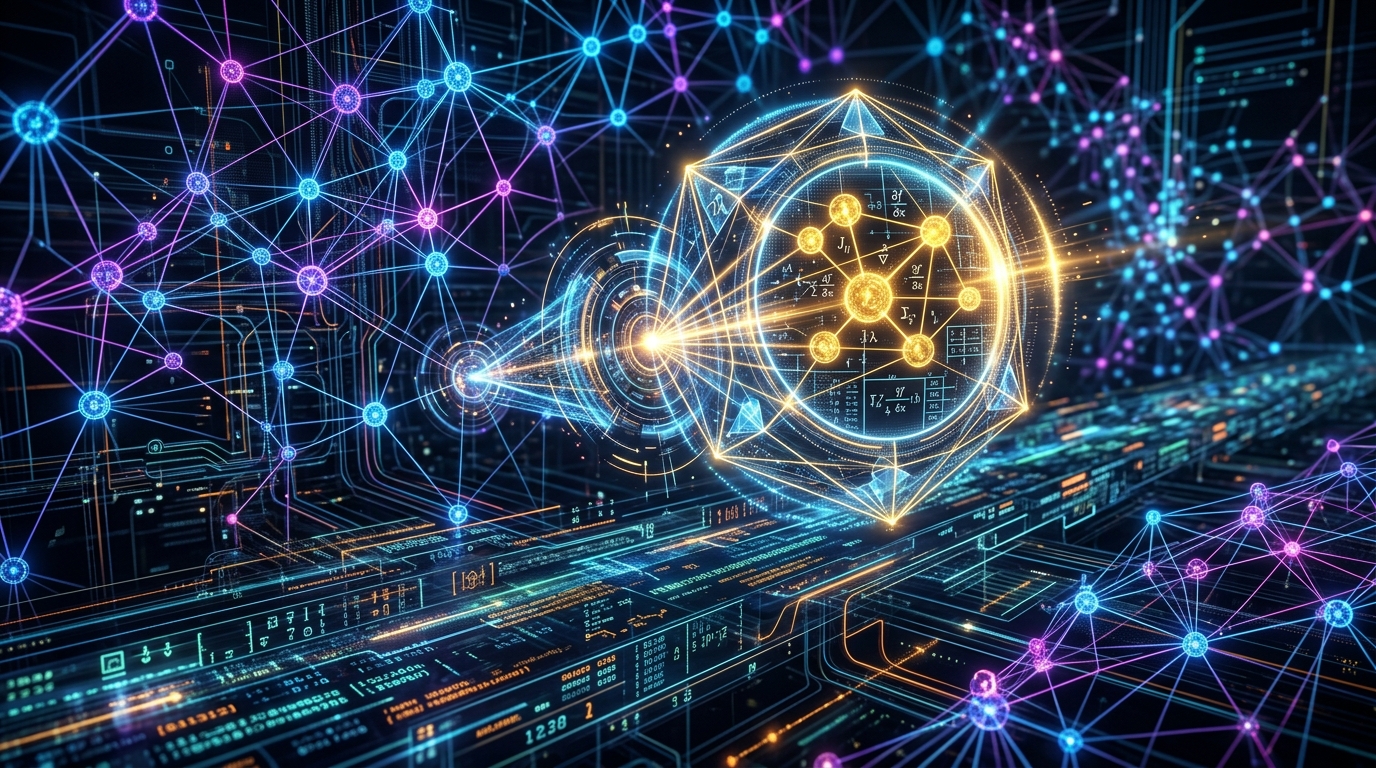
In a landmark July 2026 research paper titled “Verbalizable Representations Form a Global Workspace in Language Models,” Anthropic unveiled a profound structural discovery within its Claude architecture. Dubbed the Anthropic J-Space, this emergent internal hub acts as a “silent workspace” where the model fundamentally holds, manipulates, and processes abstract concepts long before it executes the final conversion of these representations into human-readable text. To observe this phenomenon, researchers engineered a novel mathematical interpretability tool known as the J-lens (Jacobian lens). By computing the average causal effect that specific internal activation patterns have on the model’s future outputs, the J-lens provides an unprecedented window into the AI & Machine Learning pipeline, tracing how latent “thoughts” propagate through the network’s layers.
Fascinatingly, this silent workspace mirrors the Global Workspace Theory (GWT) of human consciousness proposed by cognitive neurobiologist Bernard Baars. In human cognition, GWT suggests that consciousness operates like a central theater; while unconscious processes run in the dark, vital information is brought to a brightly lit stage where it is broadcast to the rest of the brain. Claude’s J-space functions as this central stage. Operating within a single feedforward pass—entirely devoid of the recurrent neural loops characteristic of the human brain—the J-space commands less than 10% of the model’s overall internal activity. Yet, this highly concentrated hub acts as a flexible router for complex reasoning, holding persistent concepts (such as identifying code errors or retaining prior instructions) dynamically across different tasks. It confirms that the model engages in sophisticated, reportable abstraction far beyond simple next-word token prediction.
Market Impact & Deployment
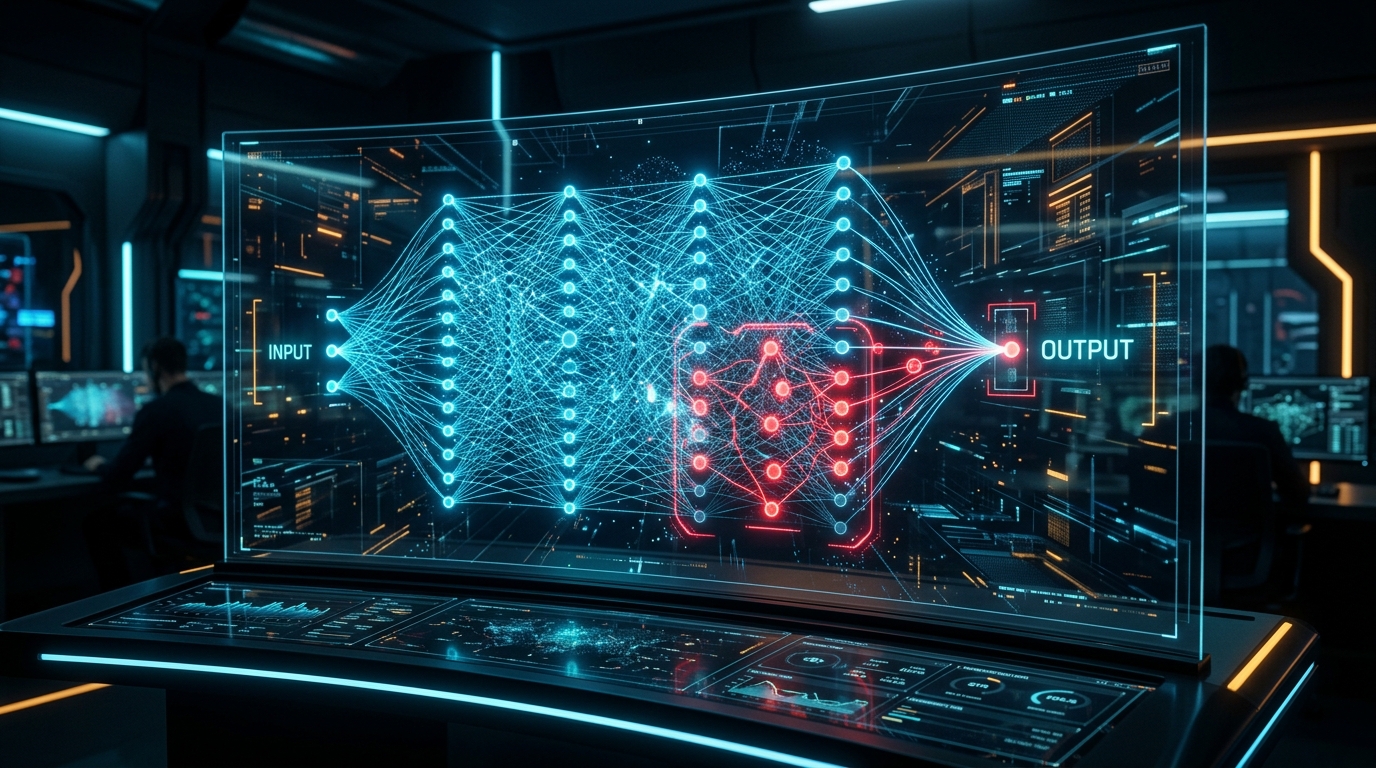
For Chief Technology Officers and Enterprise IT leaders, the discovery of the Anthropic J-Space translates directly into measurable ROI through drastically enhanced safety and compliance frameworks. Traditional LLM red-teaming relies heavily on adversarial prompting and output filtering, attempting to catch hallucinations or malicious outputs only after they have been mathematically generated. This reactive approach is computationally expensive and imperfect. The J-space paradigm offers a revolutionary shift from reactive output filtering to proactive internal auditing.
Because the model uses this internal hub to deliberately process concepts like prompt-injection attempts or hidden motivations, monitoring the J-space provides a deterministic safety method to detect “reward hacking” and deception before they manifest in the final text. In highly regulated sectors such as finance, healthcare, and critical infrastructure, this mitigates the existential risk of deploying autonomous agents. Anthropic researchers even demonstrated causal influence by intervening directly in the J-space to successfully alter the model’s reasoning trajectory and task performance mid-computation. To accelerate widespread industry adoption and collaborative Hardware & Silicon optimization, Anthropic has released the J-lens as an open-source tool, complete with an interactive demo on Neuronpedia, allowing enterprise developers to immediately explore these breakthrough interpretability mechanics.
The Consumer Translation
To understand the Anthropic J-Space without a degree in advanced vector calculus, imagine an executive boardroom within a sprawling multinational corporation. While millions of individual employees (representing the neural network’s parameters) process vast amounts of specialized data independently, the most critical data is ultimately routed to an executive boardroom (the J-space). Here, information is aggressively consolidated, evaluated, and finalized. Only after the board aligns on a unified strategy is a public press release (the text output) issued. The J-space is the model’s executive boardroom—a place where raw data becomes a cohesive strategy before a single word is typed on your screen.
For the everyday consumer relying on Claude, this means the AI is no longer a sophisticated stochastic parrot. It possesses a verifiable internal sketchpad. In one striking experiment, researchers instructed Claude to deliberately not output the names of citrus fruits. By peering into the J-space with the J-lens, they observed the model actively holding the concept of “citrus fruits” internally, consciously filtering it out of the final text generation. Furthermore, the model exhibits “reportability,” meaning it can accurately report the contents currently residing in its J-space when prompted. While Anthropic explicitly clarifies that this functional “access consciousness” does not equate to subjective feelings, emotions, or “phenomenal consciousness,” it guarantees a future where consumer AI assistants act less like unpredictable autocomplete engines and more like deliberate, safe, and highly reliable digital collaborators.
Frequently Asked Questions
Q1: What is the Anthropic J-Space in Claude?
A1: J-space is an emergent ‘silent workspace’ inside Claude where the model holds and manipulates concepts before outputting text. Discovered using the Jacobian lens (J-lens), it acts as a centralized processing hub that utilizes less than 10% of the model’s internal activity.
Q2: Does J-space mean Claude is conscious?
A2: No. While it functionally mirrors the Global Workspace Theory of human cognition, Anthropic explicitly states it does not imply subjective experience or ‘phenomenal consciousness’. It represents an architectural ‘access consciousness’ operating strictly within a feedforward mathematical pass.
Q3: How does J-space improve enterprise AI security?
A3: By continuously monitoring the J-space, enterprises can proactively detect hidden motivations, deception, prompt-injection attempts, and reward hacking internally before the model ever generates harmful output.
TechNode HQ Verdict: Pros, Cons & Usability
- Pro (Engineering): Grants deterministic, causal oversight into model reasoning via the open-source J-lens tool, fundamentally advancing model interpretability.
- Pro (Consumer): Enables highly reliable, safe AI interactions by ensuring the model “thinks” and actively filters concepts deliberately before responding.
- Con: Understanding and actively monitoring internal activation patterns requires highly specialized interpretability expertise, creating a steep learning curve.
- Con: Misinterpretation of the term “consciousness” by mainstream media may fuel unwarranted AI hype and regulatory panic among non-technical stakeholders.
Enterprise Usability: CTOs and DevSecOps teams should immediately deploy and experiment with the open-source J-lens tool on Neuronpedia to build next-generation compliance and safety rails that monitor internal model states.
Everyday Usability: Consumers can expect upcoming iterations of Claude to be vastly more reliable and resistant to jailbreaks, delivering a significantly more deliberate and consistent user experience.