Key takeaways
- Final day of Amazon Prime Day 2026 ends tonight, June 26, at exactly 11:59 p.m. PT.
- Apple Watch Series 11 and Google Pixel 10 Pro Fold hit unprecedented record low prices.
- Flagship OLED TVs from Samsung and LG see massive discounts exceeding $500.
- Utilize price trackers like Keepa and CamelCamelCamel to verify genuine Amazon deals.
- Competitors like Best Buy, Target, and Walmart are actively matching Amazon’s prices.
Amazon Prime Day 2026: The Architectural Reality
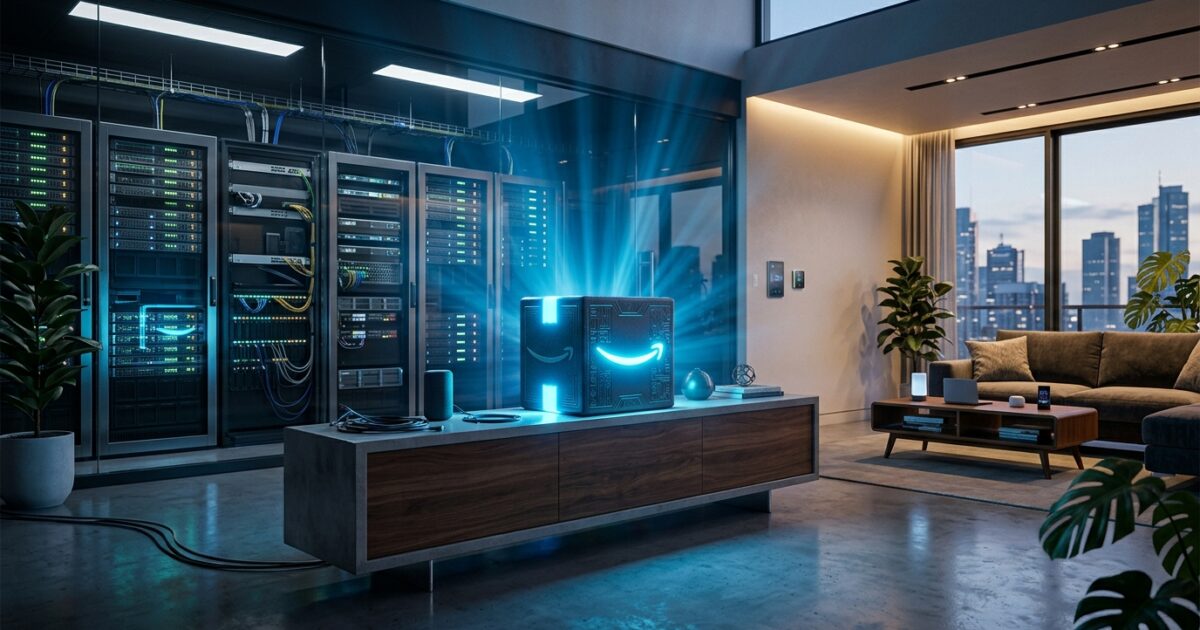
Today, Friday, June 26, 2026, marks the fourth and absolute final day of Amazon Prime Day 2026, an unprecedented marathon of global e-commerce that officially draws to a close tonight at exactly 11:59 p.m. PT. While the public views this multi-day phenomenon merely as a retail discount holiday, veteran analysts recognize it as a profound, real-time stress test of planetary-scale cloud infrastructure and automated fulfillment logistics. As major outlets like CNET, Forbes Vetted, NBC Select, and Mashable run exhaustive live blogs to track the final lightning deals, the underlying truth is clear: we are witnessing the largest centralized hardware liquidation event of the year.
The scale of this logistical reality cannot be overstated. To facilitate millions of concurrent transactions, Amazon Web Services (AWS) provisions immense elastic compute capacity, dynamically allocating server resources to handle petabytes of consumer data. Meanwhile, robotic orchestration in automated fulfillment centers moves high-value hardware and silicon at velocities that rewrite modern supply chain playbooks. Other major retail giants, including Best Buy, Target, and Walmart, have aggressively stepped into the fray, matching Amazon’s prices algorithmically to ensure they don’t lose market share. With the Indian market’s Prime Day scheduled shortly after (July 4–6, 2026), the global tech industry is currently in a state of rapid inventory turnover.
This aggressive discounting is fueled by the rapid pace of technological innovation. Manufacturers are clearing out vast warehouses of current-generation hardware—from advanced 3nm processors in premium smartwatches to complex QD-OLED display panels—to make room for the forthcoming holiday production cycles. For the discerning buyer, these final hours represent a critical window to acquire enterprise-grade hardware at deeply commoditized pricing.
Market Impact & Deployment

For C-level executives, IT procurement directors, and financial analysts, the discounts available during these final hours offer a unique opportunity to drastically reduce Total Cost of Ownership (TCO) for remote work deployments and enterprise device fleets. Equipping a modern, distributed workforce requires robust infrastructure, and the current price cuts on productivity hardware provide immediate, measurable ROI.
Consider the power delivery and mobile infrastructure market. High-capacity power stations like the Anker Solix C300 (down 40% to $150) and the Jackery Explorer 1000 v2 (slashed by $420 to $409) are vital for remote field work and disaster preparedness. These units utilize advanced LiFePO4 (Lithium Iron Phosphate) battery chemistry, providing thousands of charge cycles and vastly superior thermal stability compared to legacy NMC lithium-ion batteries. Simultaneously, GaN (Gallium Nitride) chargers, such as the Anker Nano II 65W and the Anker 140W MacBook Pro Charger, allow enterprise IT departments to centralize power delivery, reducing electronic waste and simplifying the hardware stack required for a mobile workforce.
Furthermore, the economics of foldable devices are finally crossing the threshold of mass enterprise viability. The Google Pixel 10 Pro Fold has dropped to $1,399, representing a massive $400 discount. Foldables in the professional space are not merely consumer novelties; they offer dual-screen multitasking capabilities that approach tablet-level productivity while maintaining the pocketable form factor of a standard smartphone. This severe price reduction signals that foldable manufacturing yields have stabilized, aligning their pricing with standard flagship refresh cycles.
To understand this phenomenon, think of Prime Day electronics discounting as a massive liquidity event for global supply chains. Just as sophisticated network routers dynamically direct data packets through the path of least resistance to prevent catastrophic congestion, major hardware manufacturers use these high-visibility sales events to aggressively flush out aging inventory. This clears the physical warehouse racks and financial ledgers, ensuring the supply chain is optimized for the next generation of technological leaps.
Hardware & Silicon: Dissecting the Premium Device Discounts
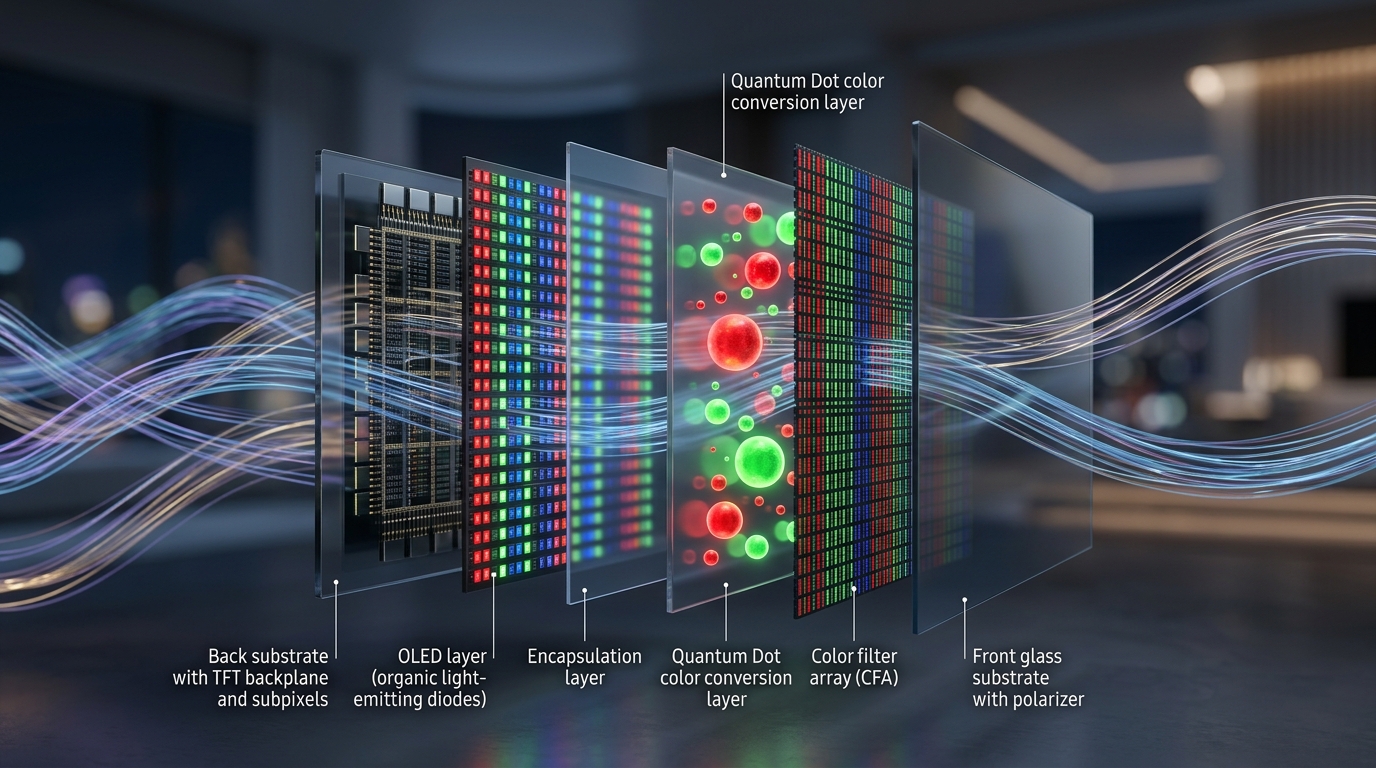
Diving into the actual silicon and display architectures reveals why these deals are historically significant. In the living room and boardroom display sector, OLED technology has hit all-time low pricing. The Samsung 65-inch S90F OLED TV is currently priced at $1,198 (a remarkable $500 discount), while the 65-inch LG OLED evo AI C5 is available for $1,099. This pricing war highlights the intense rivalry between two distinct panel architectures: Samsung’s QD-OLED (Quantum Dot OLED) and LG’s WOLED (White OLED). QD-OLED utilizes a blue OLED emitter passed through quantum dot layers to achieve superior color volume and peak HDR brightness without a color filter. Conversely, WOLED has historically maintained excellent burn-in mitigation and deep black uniformity. At these prices, consumers are acquiring reference-monitor quality displays for standard consumer prices. Alternatively, Mini-LED options like the Hisense 75-inch QD7 (down to $550) offer thousands of local dimming zones, achieving brilliant contrast for sunlit rooms without the inherent burn-in risks of organic diodes.
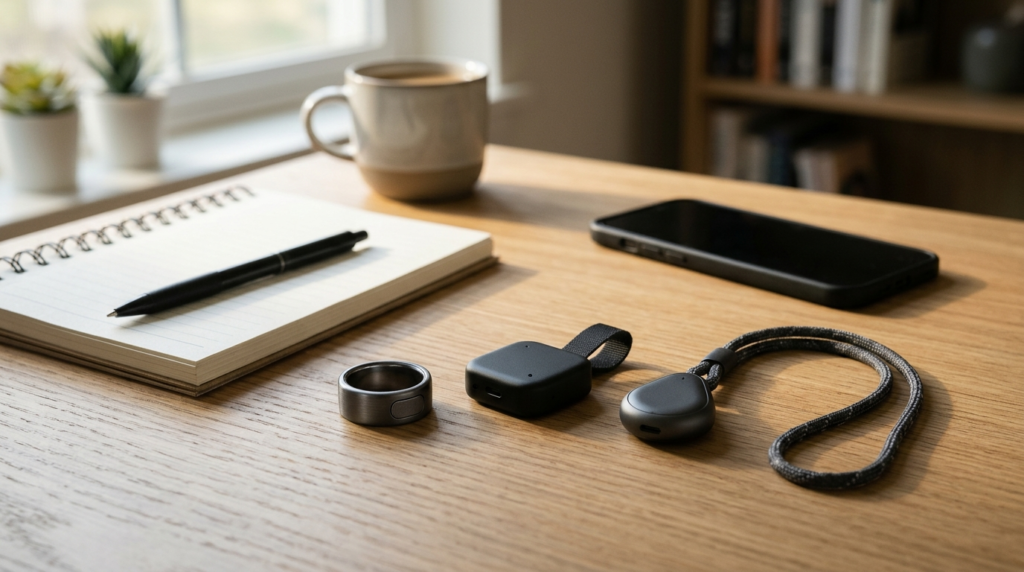
In the rapidly expanding wearable biometrics sector, health tech is seeing unprecedented price compression. The Apple Watch Series 11 is available at its lowest price ever of $279 (saving $120), and the rugged Apple Watch Ultra 3 is discounted by $150 to $649. Competing heavily are the Samsung Galaxy Watch 8 at $218 (which includes a $30 Amazon credit), the screen-free Whoop 5.0 at $189 (saving $50), and the highly sought-after Oura Ring 4. These devices are marvels of miniaturization, packing advanced optical heart rate sensors, ECG arrays, and blood oxygen telemetry into microscopic chassis. For corporate wellness programs, these wearables are shifting the paradigm from reactive healthcare to proactive, data-driven wellness monitoring, leveraging AI to analyze sleep architecture and cardiovascular strain.
Audio technology is also heavily featured, with the computational audio chips inside premium headphones reaching deep discounts. The AirPods Pro 3 are down to $179, the Bose QuietComfort Ultra at $379 (saving $70), and the Beats Studio Buds Plus at $90. These devices utilize high-bandwidth microphones and neural processing engines to analyze ambient sound thousands of times per second, dynamically flipping the audio phase to create perfect acoustic silence through Active Noise Cancellation (ANC).
The Consumer Translation
While the hardware specifications are stunning, the true genius of these massive discounting events lies in ecosystem lock-in and smart home ubiquity. For the everyday buyer navigating the consumer tech landscape, these price drops represent the most accessible entry point into automated living. Amazon is selling the Echo Spot for a mere $40, and the iRobot Roomba Max 705 robot vacuum has seen deep discounts of 45% off.
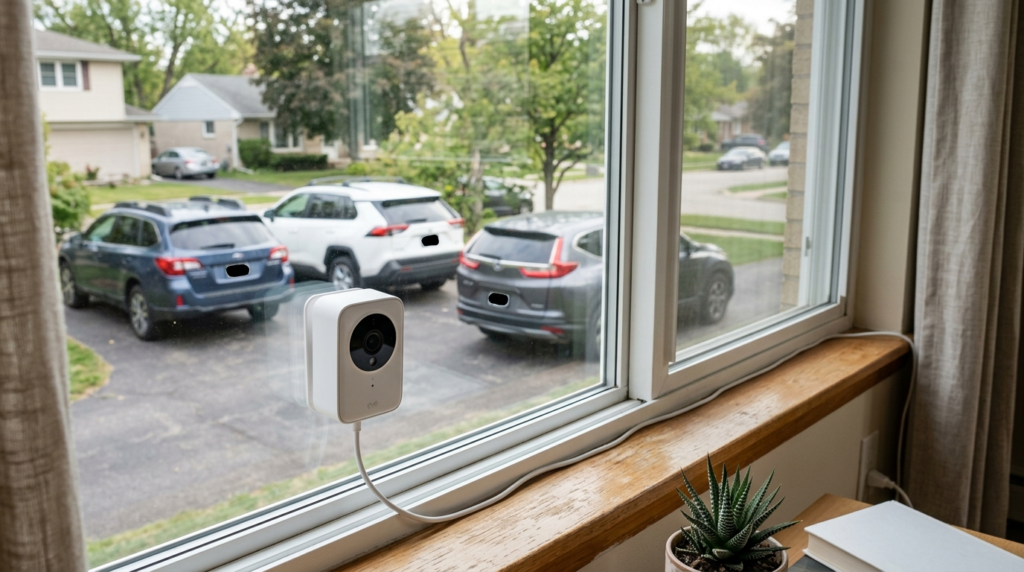
These aggressively priced devices act as trojan horses for ambient computing. By lowering the financial barrier to entry, tech giants rapidly expand their active user base. A $40 smart speaker or a deeply discounted Blink security camera (down 70% to $120 for a 5-pack) is rarely sold for a massive hardware profit; instead, these companies capture invaluable behavioral data and drive recurring subscription revenue (such as Amazon Prime, Ring Protect, or Fitbit Premium). The hardware is subsidized to guarantee long-term ecosystem retention.
However, an objective red team audit of this event reveals hidden marketing tactics that consumers must navigate carefully. Much of the promotional hype relies on advertising “record low” savings by comparing the current sale price to the original launch MSRP. In reality, many of these devices have been steadily depreciating for months. Savvy buyers must utilize third-party price tracking tools like Keepa and CamelCamelCamel. These essential browser extensions inject historical price charts directly into Amazon product pages, revealing the true 30-day average price and confirming whether a discount is genuinely a record low or just clever framing.
Ultimately, the cross-industry impact of this event is staggering. E-commerce logistics are pushed to their absolute limits, which in turn drives massive investments in last-mile delivery innovations and warehouse robotics. The influx of high-end home office equipment permanently boosts the productivity baseline of the remote workforce, indirectly shifting the dynamics of commercial real estate as the home solidifies its role as a professional hub. Simultaneously, the mass adoption of health wearables accelerates the digital transformation of the healthcare industry, providing vast, anonymized datasets for epidemiological research and preventative care models. As the final hours tick down on Amazon Prime Day 2026, the technology purchased today will define the digital infrastructure of tomorrow.
Frequently Asked Questions
Q1: When exactly does Amazon Prime Day 2026 end?
A1: Amazon Prime Day 2026 concludes tonight, Friday, June 26, 2026, at exactly 11:59 p.m. PT, marking the end of the massive four-day sales event.
Q2: Are the discounts on Apple products genuine record lows?
A2: Yes, the Apple Watch Series 11 is available at its lowest price ever, dropping to $279 (a $120 savings), while the Apple Watch Ultra 3 is heavily discounted by $150.
Q3: How can I verify that a Prime Day deal is actually a good price?
A3: Experts strongly recommend using price tracking tools like Keepa or CamelCamelCamel to view historical price charts for Amazon products, ensuring discounts are legitimate.
Q4: What are the best TV deals currently available?
A4: Top-tier OLED models are seeing massive price cuts; the Samsung 65-inch S90F OLED is down to $1,198 (a $500 discount), and the LG OLED evo AI C5 is priced at $1,099.
TechNode HQ Verdict: Pros, Cons & Usability
- Pro (Engineering): The deep discounts on GaN charging architectures and LiFePO4 power stations allow for vastly more efficient and thermally stable enterprise power deployments.
- Pro (Consumer): Heavy subsidies on smart home hardware (like the $40 Echo Spot and 45% off Roomba Max 705) drastically lower the barrier to entry for home automation.
- Con: Advertised discounts can be highly misleading, often comparing the sale price to the original launch MSRP rather than the actual 30-day moving average.
- Con: Rapid inventory turnover places immense strain on supply chain logistics, leading to rapid stock depletion and potential delays in last-mile fulfillment.
Enterprise Usability: IT Directors and CTOs should instantly capitalize on the discounted Google Pixel 10 Pro Folds, Apple Watch Series 11s, and high-wattage Anker GaN chargers to upgrade remote workforce fleets, as the ROI on these heavily depreciated assets is mathematically undeniable.
Everyday Usability: The general public should aggressively target the LG and Samsung OLED TVs and premium noise-canceling headphones before midnight PT, but must use price-tracking extensions like Keepa to verify the legitimacy of the “Lightning Deals” before checking out.