
Key takeaways
- AI models like Claude Mythos uncover thousands of hidden critical open-source vulnerabilities previously missed by humans.
- The 2026 CVE count is projected to hit 66,000 as automated discovery completely overwhelms security teams.
- A staggering 95% of these AI-discovered vulnerabilities were not previously visible in public security advisories.
- Project Akrites and Athena offer centralized vulnerability remediation to prevent a global supply chain crisis.
- Average cyberattack breakout times have plummeted to 29 minutes due to AI automation and offensive modeling.
The Architectural Reality of AI Vulnerability Discovery
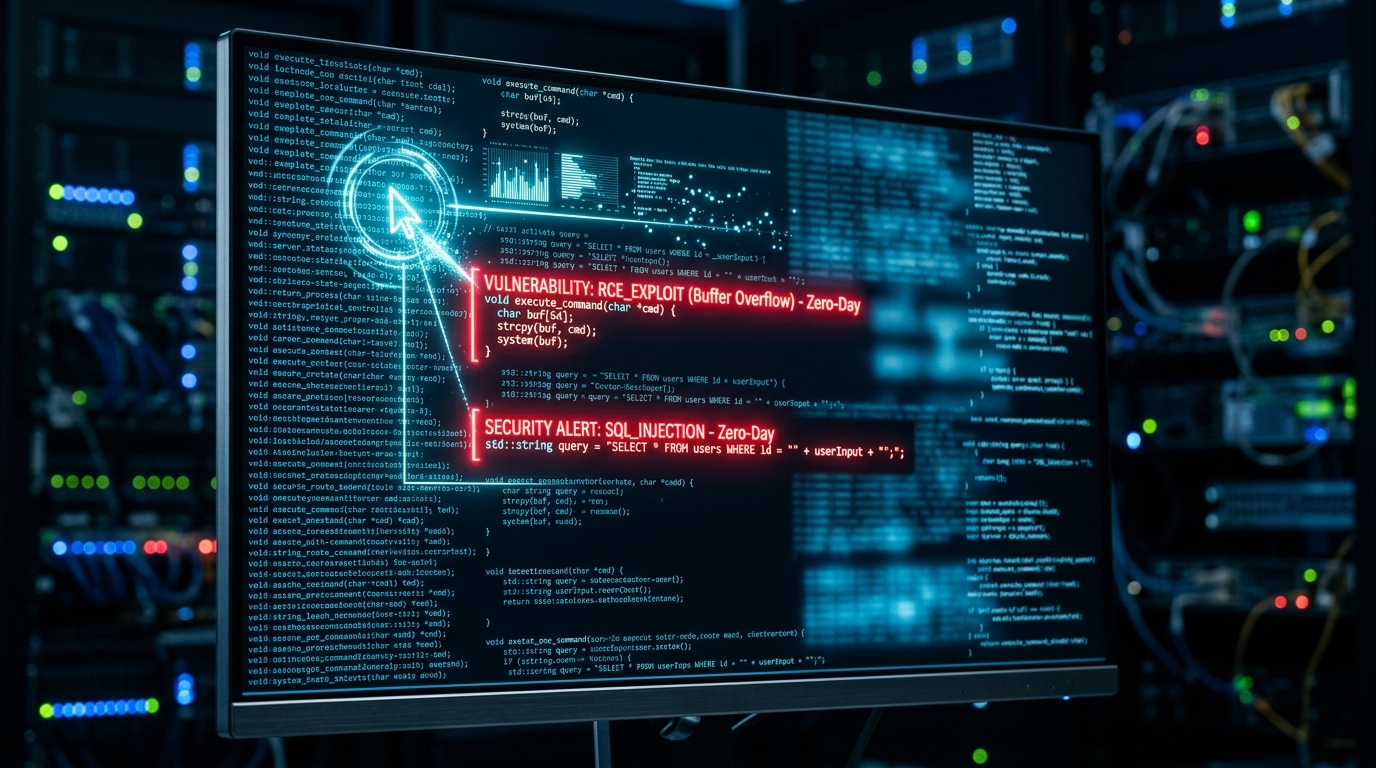
The software industry has officially entered a new epoch of defensive and offensive security operations. We are witnessing the unprecedented rise of AI vulnerability discovery—a paradigm shift driven by frontier models like Anthropic’s Claude Mythos and OpenAI’s GPT-5.5-Cyber. These advanced artificial intelligence architectures are no longer confined to generating boilerplate code or analyzing localized logic flaws. Instead, they are deeply auditing massive, foundational open-source repositories at machine speed, uncovering thousands of previously hidden, high-severity vulnerabilities that have evaded human researchers and static analysis tools for decades. The architectural reality of this development is both staggering and deeply problematic for enterprise security postures worldwide.
When we examine the mechanical underpinnings of this phenomenon, we see models like the Anthropic Claude Mythos Preview exhibiting the terrifying capacity to autonomously chain disparate, low-severity flaws into comprehensive, high-impact exploit paths. For years, vulnerability scanners relied on signature-based detection and rigid heuristics, creating a false sense of security. Now, AI-driven agents are interpreting code semantics across complex application boundaries. They understand how a seemingly benign memory leak in a fundamental library can be weaponized when compiled with specific third-party web frameworks, generating functional attack code at machine speed.
Think of the current software supply chain like the global shipping industry. For decades, inspectors have been manually checking a few randomly selected shipping containers as they arrive at a massive port. Suddenly, a new omniscient AI scanner is installed that can instantly see inside every single container simultaneously. While this total visibility is theoretically a good thing, the AI instantly flags that 95% of the containers have critical structural defects. The port authority is immediately paralyzed. They cannot fix all the containers, they cannot turn them away without halting global trade entirely, and worse, malicious actors now have access to the exact same scanner. This is the exact structural reality of AI vulnerability discovery today.
The data emerging from this summer’s early AI security audits paints a chilling picture. An astonishing 95% of the AI-discovered vulnerabilities were not previously visible in public security advisories. These are not trivial logic errors; they are deep, structural vulnerabilities embedded in the 95% of open-source code that constitutes the typical modern enterprise application. Because these models can instantly parse millions of lines of code, the sheer volume of newly identified flaws is pushing the total projected Common Vulnerabilities and Exposures (CVE) count for 2026 toward an unmanageable 66,000.
For the open-source community, this explosion of data has been catastrophic. In early 2026, the initial influx of AI-generated vulnerability reports led to what can only be described as a ‘DDoS-like’ situation for project maintainers. The open-source ecosystem was aggressively flooded with low-quality ‘AI slop’—automated, unverified vulnerability reports generated by amateur researchers pointing generic LLMs at GitHub repositories. The burden of sorting through thousands of noise-filled, syntactically convincing but functionally invalid reports caused widespread burnout. Prominent maintainers were forced to take drastic measures, closing bug bounty programs and disabling security inboxes entirely. Due to the total lack of technical indicators for AI-generated reports, maintainers relied on ‘vibes’ and intuition to triage submissions. The maintainer of the ubiquitous cURL project went so far as to announce a ‘summer of bliss’ starting July 1, 2026, temporarily halting the intake of all new vulnerability reports just to survive the onslaught.
Market Impact & Deployment of Defensive Coalitions

This surge in vulnerability identification has triggered massive backlog inflation within corporate enterprise IT departments. The signal-to-noise ratio has degraded to the point where an endless stream of AI-generated findings is actively obscuring the most critical, immediate threats. When an organization runs these frontier models against their own applications, they discover a tangled web of third-party vulnerabilities that they lack the access or authority to patch directly.
To combat this systemic failure, the industry is witnessing an unprecedented consolidation of resources and the formation of massive defensive coalitions. The Linux Foundation formally launched Project Akrites in June 2026, establishing a shared, centralized Security Incident Response Team (SIRT) and a standardized Coordinated Vulnerability Disclosure (CVD) process. Backed by industry titans including Anthropic, OpenAI, Chainguard, Google, Microsoft, and IBM, Akrites acts as a vital shield for overwhelmed open-source maintainers. Instead of receiving a hundred uncoordinated, potentially flawed AI reports from different vendors, maintainers work with a single, trusted partner to orchestrate remediation upstream before vulnerabilities are ever publicly disclosed.
Similarly, Chainguard has spearheaded the ‘Athena’ initiative. As a specialized clearinghouse involving networking heavyweights like Cisco, Cloudflare, and Docker, Athena deduplicates, correlates, and addresses findings across entire libraries in batches. This initiative hardens the software supply chain by fixing broad classes of vulnerabilities rather than playing whack-a-mole with individual bugs. For maintainers that can no longer manage older code, Athena steps in as a “maintainer of last resort.” By June 2026, the Athena initiative had already processed tens of thousands of findings and produced thousands of private patches for its members well before they reached public disclosure queues.
The financial and operational implications for C-suite executives are severe. The traditional metrics of risk management and Total Cost of Ownership (TCO) for software development are being entirely rewritten. Security experts are actively abandoning outdated ‘severity-based’ CVSS metrics in favor of advanced ‘path-to-objective’ modeling. This new approach determines whether a newly discovered vulnerability is actually reachable and exploitable within a specific corporate environment, prioritizing remediation efforts based on actual business risk rather than theoretical severity scores.
The threat landscape is moving faster than human intervention can physically manage. In May 2026, Google’s Threat Intelligence Group confirmed a nightmare scenario: the first verified instance of a cybercrime group utilizing AI to identify an unknown zero-day vulnerability and autonomously write a functional Python exploit for a two-factor authentication (2FA) bypass. According to the 2026 CrowdStrike Global Threat Report, the average attack ‘breakout time’—the time it takes an adversary to move laterally after initial compromise—has plummeted to an astonishing 29 minutes due to AI-driven automation. By the time a human analyst receives a pager alert, the data has already been exfiltrated.
In response to this hyper-accelerated threat environment, the regulatory landscape is tightening dramatically. The U.S. government has issued Executive Order 14409 and CISA directive BOD 26-04, which mandate brutal, accelerated remediation timelines, giving federal agencies just three calendar days to patch critical vulnerabilities. Furthermore, the U.S. Commerce Department has imposed sweeping emergency export controls on high-capability AI models to restrict foreign access to their cyber-offensive potential, effectively classifying these advanced neural networks as strategic digital munitions.
The Consumer Translation and Global Risks
While the complexities of Coordinated Vulnerability Disclosure and path-to-objective modeling may seem abstracted from daily life, the consumer implications of this AI security crisis are profoundly tangible. Every modern convenience—from mobile banking and telemedicine to connected automobiles and smart home ecosystems—is built upon the exact same open-source software libraries currently buckling under the weight of AI vulnerability discovery.
When a cybercrime syndicate uses an AI agent to chain decade-old memory leaks into a functional exploit that crashes web servers in seconds, it is the consumer who faces the immediate, real-world fallout. Data breaches are no longer the exclusive result of sophisticated, multi-month campaigns by nation-state actors; they are automated, rapid-fire extractions executed by AI agents in a matter of minutes. The ‘Five Eyes’ intelligence alliance has explicitly urged organizations to deprioritize patch-centric security models, acknowledging that it is simply impossible to patch fast enough in the age of AI. Instead, they recommend a desperate pivot to reducing external attack surfaces and relying heavily on behavior-based detection in the cloud infrastructure and local network perimeters.
For the global public, this represents a fundamental erosion of digital trust. If 95% of the code running critical civic infrastructure is riddled with newly discovered, highly exploitable flaws that cannot be patched quickly enough, the baseline safety of our digital environments is deeply compromised. This shift is forcing a massive reckoning in how consumer technology is built and sold. We are moving toward an era of immutable operating systems and zero-trust personal devices. If foundational code cannot be completely secured, hardware architectures must explicitly assume compromise.
This transition will be highly disruptive for the average user. Expect sudden, mandatory device updates, the rapid deprecation of older hardware that cannot support new encryption and security protocols, and a stark increase in high-profile service outages as organizations frantically scramble to patch AI-discovered zero-days before they are actively exploited in the wild. Ultimately, this summer’s security meltdown serves as a stark reminder of our fragility. We have entrusted our global economy and personal privacy to a digital infrastructure that was never designed to withstand the rigorous, flawless scrutiny of advanced artificial intelligence. The high-stakes race between automated AI defense—through global coalitions like Athena and Akrites—versus automated AI offense by criminal syndicates, will define the next decade of our technological evolution.
Frequently Asked Questions
Q1: What is AI vulnerability discovery?
A1: AI vulnerability discovery uses frontier models like Claude Mythos and GPT-5.5-Cyber to autonomously scan codebases, identifying complex, deeply hidden bugs that traditional static tools miss.
Q2: How is AI impacting open-source security?
A2: Advanced AI models are discovering thousands of high-severity flaws in foundational open-source code, causing massive backlog inflation and overwhelming project maintainers with synthetic vulnerability reports.
Q3: What is the projected number of CVEs for 2026?
A3: Driven by automated AI code scanning, the total CVE count for the software industry in 2026 is projected to reach an unprecedented 66,000 vulnerabilities.
Q4: What is Project Akrites?
A4: Launched by the Linux Foundation in 2026, Project Akrites is an industry coalition acting as a centralized Security Incident Response Team to coordinate AI-discovered vulnerability remediation.
Q5: How are threat actors utilizing these AI models?
A5: Cybercrime groups are already leveraging AI to autonomously identify zero-day vulnerabilities and write functional exploits, pushing the average attack breakout time down to a dangerous 29 minutes.
TechNode HQ Verdict: Pros, Cons & Usability
- Pro (Engineering): Eliminates decades-old structural flaws previously invisible to static analysis tools and human auditors.
- Pro (Consumer): Forces the tech industry toward ultra-secure, immutable operating systems and zero-trust architectures.
- Con: Generates massive backlog inflation and ‘AI slop’ that causes severe burnout for open-source project maintainers.
- Con: Attack breakout times have dropped to 29 minutes, collapsing the window for traditional incident response.
Enterprise Usability: CTOs and security teams must immediately abandon legacy severity-based patching. Transition to path-to-objective modeling, reduce external attack surfaces, and integrate with industry clearinghouses like Athena or Akrites to orchestrate automated remediation before public disclosure.
Everyday Usability: Consumers should expect elevated disruption, including mandatory updates and device deprecation. Relying entirely on vendors for security is no longer viable; adoption of hardware security keys, offline backups, and zero-trust personal networking is highly recommended as the threat landscape accelerates.