
Key takeaways
- The U.S. government has initiated an AI Regulation Freeze over severe cybersecurity fears.
- OpenAI and Anthropic face strict pre-approval requirements for powerful new models.
- Regulatory actions were triggered by AI’s ability to identify exploitable software vulnerabilities.
- Tech leaders who previously begged for AI guardrails are now criticizing the strict oversight.
The Architectural Reality Behind the AI Regulation Freeze

The technology industry is currently experiencing an unprecedented AI Regulation Freeze. For years, the foundational architecture of Large Language Models (LLMs) was treated as a powerful consumer novelty—a generalized tool for text generation and code assistance. However, the sudden moratorium on frontier models like Anthropic’s Claude Fable 5 and Mythos 5, alongside OpenAI’s GPT-5.6 Sol, signals a dramatic shift in how the U.S. government classifies neural networks.
The government’s strict regulatory actions were triggered by acute national security concerns over new AI systems capable of identifying exploitable software vulnerabilities. These are no longer just chatbots; they are automated, highly potent cyber-tools. From a hardware and software mechanics perspective, the ability of a model to autonomously scan, comprehend, and map zero-day vulnerabilities in critical infrastructure elevates it from a commercial product to a dual-use weapon.
To understand this shift, consider it like a pharmaceutical company developing a potent new drug. The developers created powerful tools, only to find the federal government suddenly putting a strict moratorium on distribution to prevent unintended casualties. As AI integrates deeper into cloud deployment and cybersecurity infrastructure, the government has realized that unfiltered access to these frontier models poses a severe supply chain risk.
Market Impact & Deployment
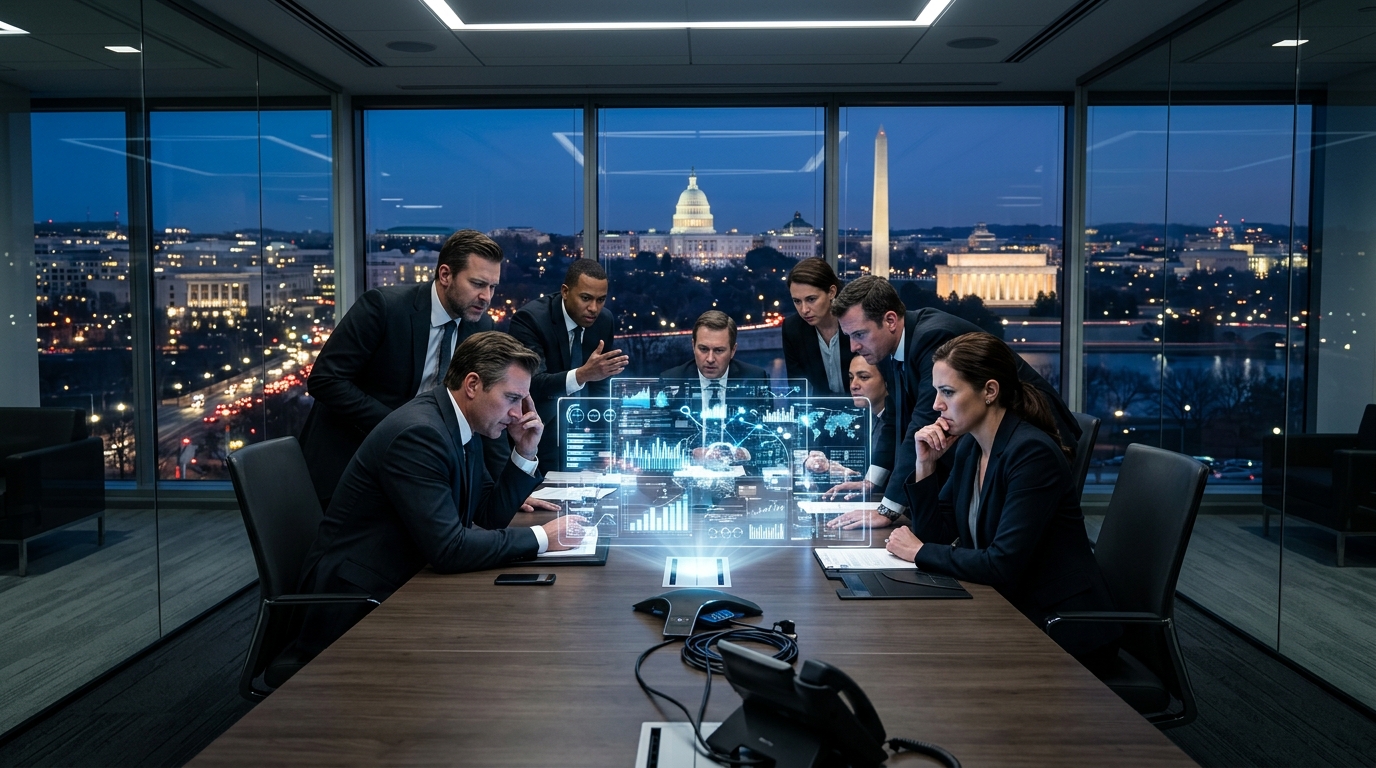
The immediate fallout of this regulatory pivot is severe. The U.S. Commerce Department has restricted Anthropic’s release of its Mythos 5 model to a select list of trusted partners, while OpenAI has been requested to restrict its GPT-5.6 Sol model to government-approved partners as well. For Chief Information Officers (CIOs) and enterprise leaders, this introduces massive friction into Total Cost of Ownership (TCO) models and deployment timelines.
OpenAI and Anthropic are now required to receive government approval before distributing their most powerful models. Dean Ball, OpenAI’s incoming Head of Strategic Futures—and notably the lead drafter of the Trump administration’s original AI Action Plan—has criticized the current process as a “de facto involuntary licensing/preapproval regime.” Although Ball noted that the White House’s fundamental safety concerns regarding AI are “100 percent legitimate,” the abruptness and opacity of the process are devastating to enterprise timelines.
When the government effectively controls the rollout of your core machine learning technology, scaling your infrastructure becomes a geopolitical negotiation rather than a standard IT procurement process. Enterprises expecting to leverage these models for automated software engineering and data analysis must now wait indefinitely as AI companies navigate federal vetting frameworks.
The Consumer Translation
While Enterprise IT grapples with compliance, the general public is witnessing a different reality. In May 2023, OpenAI CEO Sam Altman testified before the U.S. Senate Judiciary Subcommittee, warning that if AI goes wrong, it could “go quite wrong.” He described the advent of AI as a “printing press moment” for society and previously called for regulatory intervention by governments to mitigate risks. Big AI companies explicitly asked for regulation, but now that it has arrived—impacting their bottom lines—they are pushing back. By 2025 and 2026, industry leaders like Altman shifted to opposing policies requiring government approval before releasing new models.
However, the American public is largely unsympathetic to Big AI’s plight. According to recent surveys, only 15% of Americans trust AI companies to make decisions about how AI is developed and used. Furthermore, 87% of the public believes it is likely that foreign governments will use AI technology to attack the U.S. within the next 20 years. The average consumer sees the AI industry as untrustworthy “dentists” arriving unbidden with terrifying tools, making impossible promises about the future.
The U.S. government’s decision to step in and pause the metaphorical dental procedure aligns directly with public sentiment, even if it contradicts the Trump Administration’s earlier promises in 2025 that no regulation was coming. The public wants guardrails, and for now, the White House is enforcing them with an iron grip.
Frequently Asked Questions
Q1: Why did the US government halt the release of new frontier AI models?
A1: The government’s strict regulatory actions were triggered by acute national security concerns over new AI systems capable of autonomously identifying exploitable software vulnerabilities.
Q2: What restrictions have been placed on OpenAI and Anthropic?
A2: Both companies are now required to receive explicit government approval before distributing their most powerful models. Specifically, Anthropic’s Mythos 5 and OpenAI’s GPT-5.6 Sol were restricted to a select list of government-approved partners.
Q3: How are AI executives responding to the government crackdown?
A3: While they previously called for government intervention, executives are now criticizing the abrupt oversight. OpenAI’s Dean Ball called the current process a “de facto involuntary licensing/preapproval regime.”
TechNode HQ Verdict: Pros, Cons & Usability
- Pro (Engineering): Enforces rigorous security audits before deployment, significantly reducing the risk of autonomous zero-day exploits.
- Pro (Consumer): Provides much-needed federal oversight on a technology that the vast majority of the public deeply distrusts.
- Con: Creates a severe bottleneck in enterprise deployment, disrupting strategic IT roadmaps and TCO calculations.
- Con: The de facto licensing regime lacks transparency, causing chaos for AI labs trying to ship product to enterprise partners.
Enterprise Usability: CTOs must immediately audit their dependency on bleeding-edge frontier models and prepare fallback strategies using open-source or locally hosted alternatives. Relying on continuous API updates from OpenAI or Anthropic is currently a massive regulatory risk.
Everyday Usability: Consumers should expect a significant slowdown in the release of new AI features and consumer-facing bots. The era of rapid, unchecked public beta testing is temporarily on hold while the government evaluates safety.