Key takeaways
- MZX Tech LLC, an operating entity tied to Elon Musk’s xAI and SpaceX infrastructure, is seeking to purchase 418 residential properties in Southaven, Mississippi.
- Purchase contracts contain mandatory liability releases requiring sellers to waive claims and withdraw from the federal class-action lawsuit, Haley v. X.AI Corp.
- The litigation centers on persistent acoustic emissions and low-frequency vibrations generated by unpermitted mobile natural gas turbines powering the Colossus AI cluster.
- Municipal monitors report decibel readings compliant with Southaven’s 70 dB threshold, though acoustic specialists highlight health risks from sustained 50 dB exposure.
- Property acquisitions have sparked local displacement concerns, with renters receiving 60-day eviction notices following landlord buyouts.
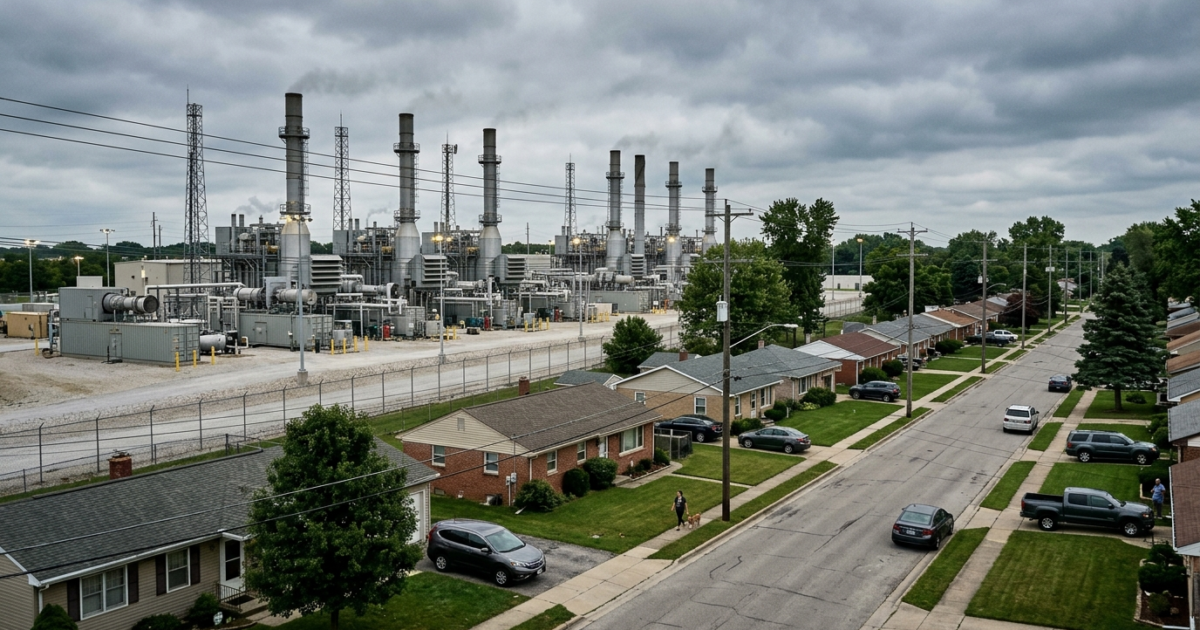
Elon Musk’s artificial intelligence infrastructure operation is attempting to acquire an entire residential neighborhood in Southaven, Mississippi, offering buyouts to 418 homeowners under the strict legal condition that sellers forfeit their right to participate in an ongoing class-action noise pollution lawsuit. The buyout initiative, orchestrated by xAI and SpaceX affiliate MZX Tech LLC in the Colonial Hills subdivision, follows months of community complaints over round-the-clock noise and low-frequency vibrations emitted by temporary natural gas turbines powering the nearby Colossus AI supercomputer cluster. While the company frames the property acquisitions as employee housing and goodwill mitigation, the mandatory litigation waivers prevent affected residents from seeking damages for industrial nuisance.
Conditional Buyouts and the Haley Litigation
Real estate agents working on behalf of MZX Tech LLC have been canvassing door-to-door through Colonial Hills, a residential community situated roughly half a mile from the power-generation facility supporting the Colossus site. According to investigative disclosures first reported by The Guardian and confirmed by local real estate documentation, the acquisition program targets 418 parcels. Public deed transfers registered with DeSoto County property offices confirm that the corporate entity has already closed on multiple homes across the subdivision.
The acquisition contracts, however, extend well beyond typical residential real estate transactions. To complete a sale at offered market benchmarks, homeowners are required to execute a binding legal release waiving all historical and future claims regarding environmental noise, ground vibration, and industrial nuisance. The clause specifically targets participation in Haley v. X.AI Corp. (Case No. 3:26-cv-00148), a class-action lawsuit filed in June in the U.S. District Court for the Northern District of Mississippi. Plaintiffs in the suit allege that unceasing acoustic resonance from the facility has deprived neighbors of sleep, altered residential quietude, and diminished local property valuations.
Turbine Noise and Power Constraints at Colossus
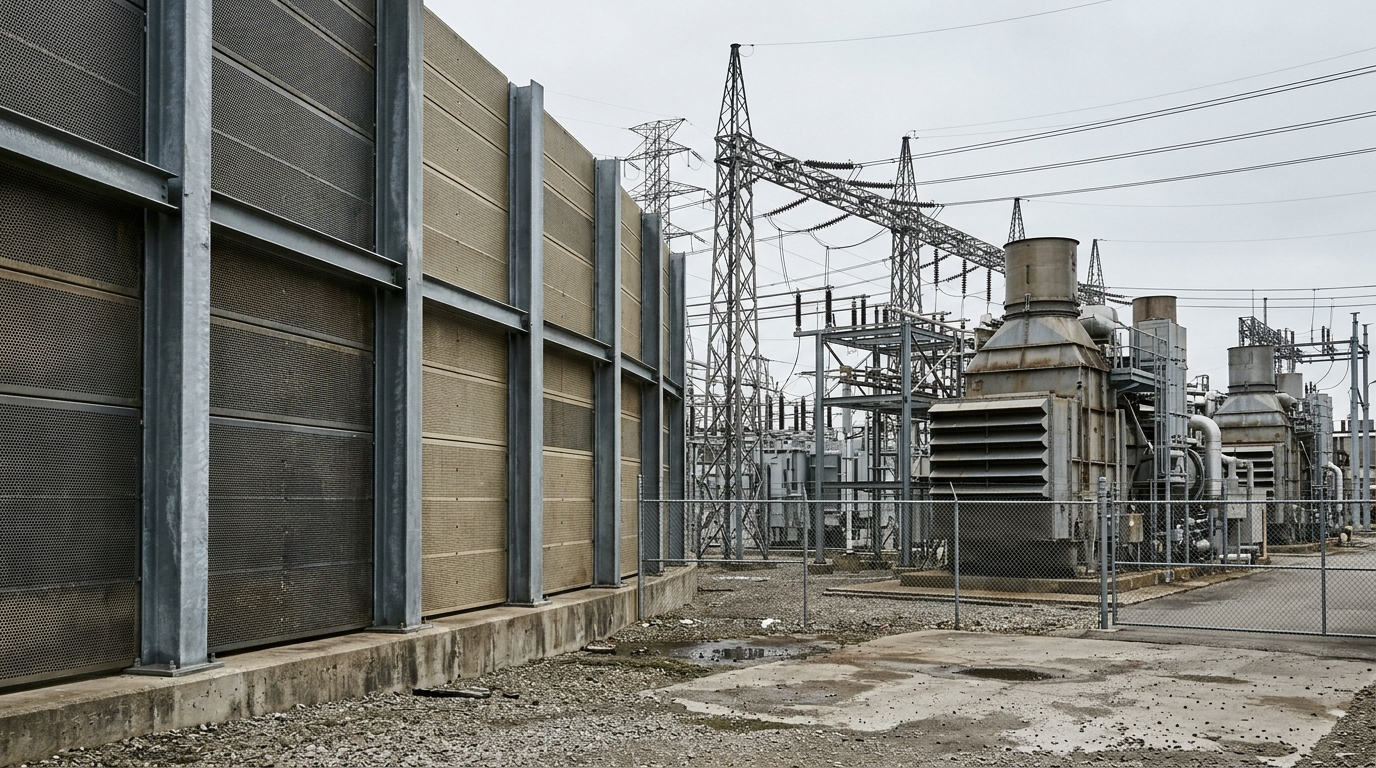
The root of the conflict lies in the rapid operational scaling of Musk’s flagship AI training facility, which trains the Grok family of large language models across tens of thousands of advanced graphics processors. To bypass lengthy utility grid interconnection queues, the development team installed a sprawling fleet of mobile methane gas turbines along Stanton Road on the former Duke Energy industrial site in Southaven. The turbines provide off-grid thermal generation while permanent 1.2-gigawatt electrical substations remain under construction.
This off-grid stopgap has drawn severe regulatory and environmental scrutiny, including legal challenges over unpermitted emissions under clean air statutes. While operators have pledged to decommission the temporary gas units within twelve months as high-capacity utility feeds energize, the physical byproduct of continuous turbine combustion—a relentless low-frequency rumble described by residents as akin to an idling jetliner—remains unmitigated. The friction illustrates the acute physical bottlenecks confronting modern high-density compute, echoing broader industry tensions surrounding AI data center infrastructure sustainability and power capital.
| Parameter | Facility Operating Specification | Observed Community & Regulatory Status |
|---|---|---|
| Target Buyout Scope | 418 residential lots in Colonial Hills | Multiple parcel deeds recorded; door-to-door offers ongoing |
| Contractual Contingency | Full liability release and litigation waiver | Requires dismissal from Haley v. X.AI Corp. class action |
| Current Generation Type | Mobile methane-fired gas turbines | Subject to environmental notice; 12-month retirement pledge |
| Planned Grid Interconnect | 1.2-gigawatt dedicated power infrastructure | Under staged construction to transition off mobile turbines |
| Acoustic Regulatory Limit | 70 dBA Southaven municipal industrial ceiling | Monitors show compliance; sustained 50 dBA linked to sleep harm |
Displaced Residents and the Threat of a Company Town
Municipal leadership has largely defended the corporate land acquisitions. Southaven Mayor Darren Musselwhite characterized the buyouts as voluntary goodwill measures designed to accommodate residents dissatisfied with adjacent industrial expansion, stating that purchased properties would be repurposed as workforce housing for incoming technical staff. City officials also emphasized that municipal noise monitoring has not recorded decibel spikes exceeding Southaven’s 70-decibel regulatory cap.
Acoustic and occupational health specialists, however, note that broad-spectrum decibel ceilings frequently fail to capture the physiological toll of continuous low-frequency noise. Sustained industrial drone between 50 and 60 decibels can disrupt human sleep architecture and induce chronic stress, regardless of municipal compliance thresholds.
Meanwhile, the demographic fallout extends beyond homeowners. Tenants residing in single-family rental properties across Colonial Hills have reported receiving mandatory 60-day move-out notices after absentee landlords accepted buyouts. Because tenants possess no ownership stake to leverage in buyout negotiations, they face immediate displacement from the suburban enclave without relocation bonuses or recourse under the liability waivers.
What happens next
Federal court proceedings in Haley v. X.AI Corp. represent the immediate legal testing ground. Legal counsel representing the plaintiff class may challenge the validity of the conditional buyouts, questioning whether conditioning private real estate transactions on class-action opt-outs constitutes improper communication or coercive settlement solicitation under federal procedural rules.
Simultaneously, environmental regulators and local civic organizations continue to evaluate whether emissions from the mobile turbine arrays violate state air quality permits prior to their promised retirement. Over the coming quarters, enterprise infrastructure planners and municipal regulators will closely watch how Southaven balances high-density AI power demands against suburban zoning boundaries, establishing a critical precedent for how hyper-scale AI operators manage local environmental friction across the American Sunbelt.
Sources
- Tom’s Hardware: Elon Musk’s SpaceX buying out 418 homes near flagship AI data center
- The Guardian: Investigative Reporting on Colonial Hills and MZX Tech Property Buyouts
- U.S. District Court for the Northern District of Mississippi: Haley et al. v. X.AI Corp. et al., Case No. 3:26-cv-00148 (June 2026).