Key takeaways
- Cisco announced the CW9176ISEC access point, introducing post-quantum cryptography aligned to the NSA’s CNSA 2.0 mandate for enterprise Wi-Fi 7 networks.
- A partnership with Qualcomm, Microsoft, and Intel delivers post-quantum cryptography over the air (PQC OTA) across Cisco’s Wi-Fi 7 portfolio starting in January.
- Cisco IOS XE 26.2.1 introduces Auto MACsec on Catalyst C9350 switches, automating certificate-based 802.1AE encryption across wired access point uplinks.
- Starting in January, Cisco Wireless 9800 Series Wireless LAN Controllers and Campus Gateways receive quantum-resilient hardware and firmware updates.
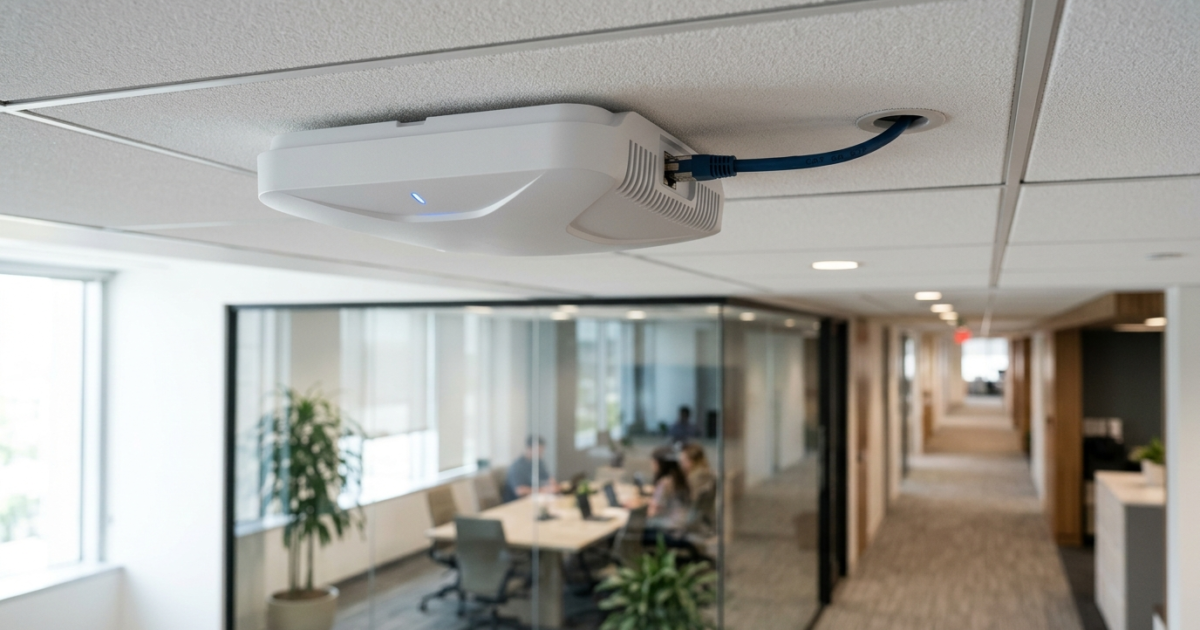
quantum-safe Wi-Fi 7 enterprise hardware has arrived with Cisco’s launch of the Cisco Wireless CW9176ISEC access point, establishing post-quantum cryptographic defenses across the entire wireless path. Announced by Cisco Systems alongside partners Qualcomm Technologies, Intel, and Microsoft, the new hardware portfolio addresses “harvest now, decrypt later” threats by introducing quantum-resilient secure boot, post-quantum cryptography over the air (PQC OTA), and automated wired uplink encryption through Auto MACsec. Designed to satisfy upcoming Commercial National Security Algorithm Suite (CNSA 2.0) mandates, the CW9176ISEC and refreshed Catalyst 9800 Series Wireless LAN Controllers provide an early migration path for government agencies and enterprise network operators preparing for cryptographic transitions.
Quantum-Ready Hardware and Air-Interface Cryptography
The Cisco Wireless CW9176ISEC serves as the anchor for the new architecture. Built directly on the foundation of the enterprise CW9176I platform, the new access point incorporates quantum-safe secure boot and cryptographic accelerators designed to comply with CNSA 2.0. The National Security Agency (NSA) framework mandates that all new national security system deployments adopt quantum-resistant algorithms starting January 1, 2027, with legacy fielded equipment required to complete migration by the end of 2030. Because enterprise wireless equipment typically remains deployed in production for five to eight years, hardware installed today will operate directly through these enforcement deadlines.
Securing wireless infrastructure against quantum adversaries requires protecting client-to-access-point traffic over the radio frequency spectrum. To address the air interface without forcing organizations to replace their entire fleet of endpoint devices, Cisco worked with Qualcomm, Microsoft, and Intel to deliver PQC over the air (OTA). In this cross-vendor model, Cisco access points run on Qualcomm silicon, while the client endpoint relies on an Intel Wi-Fi chipset paired with updated drivers and native Windows system software security controls provided by Microsoft. Beginning in January, PQC OTA support will roll out across Cisco’s Wi-Fi 7 access point portfolio, enabling compatible Windows clients and access points to negotiate quantum-resistant session keys over the air.
Harvest-Now Decrypt-Later Risks and CNSA Timelines
The primary motivation for introducing post-quantum cryptography into wireless infrastructure is the prevalence of “harvest now, decrypt later” attacks. Adversaries and nation-state intelligence agencies regularly intercept and store encrypted air-gap, radio, and transit traffic today, anticipating that sufficiently powerful quantum processors will break classical public-key cryptography—such as RSA and elliptic-curve schemes—in the coming decade. Because wireless transmissions propagate beyond physical building perimeters, unhardened radio signals represent an accessible capture surface for interception.
Beyond bulk payload decryption, quantum computing introduces severe threats to device authentication, software code signatures, and automated firmware distribution. If signature verification mechanisms are compromised, rogue devices or malicious firmware updates could masquerade as legitimate components. Cisco is extending quantum-resilient protections beyond standalone access points by refreshing its Catalyst 9800 Series Wireless LAN Controllers and Campus Gateways starting in January. This alignment ensures that control-plane traffic between access points and controllers maintains cryptographic integrity against retroactive decryption.
| Layer | Technology | Hardware & Software Requirements | Security Function |
|---|---|---|---|
| Air Interface (Client-to-AP) | PQC Over the Air (OTA) | Cisco Wi-Fi 7 APs (Qualcomm), Intel Wi-Fi chipsets, Windows OS | Protects session negotiation and wireless data frames against post-quantum interception. |
| Hardware Root of Trust | Quantum-Safe Secure Boot | Cisco Wireless CW9176ISEC, refreshed Catalyst 9800 Controllers | Enforces CNSA 2.0 firmware signature verification to prevent persistent boot-level tampering. |
| Wired Uplink (AP-to-Switch) | Auto MACsec (802.1AE) | Cisco Catalyst C9350 Smart Switches, Cisco IOS XE 26.2.1 | Automates certificate-based Layer 2 encryption between access points and switchports. |
| Operational Defense | Live Protect & SGT Segmentation | Catalyst 9800 Series, Campus Gateways, Cisco Identity Services | Applies vulnerability mitigations without reboots and enforces micro-segmentation. |
Automated Uplink Encryption and Ecosystem Compatibility
Securing the wireless interface does not protect network traffic if the physical Ethernet uplink between the access point and the switch remains unencrypted. While IEEE 802.1AE MACsec provides link-layer encryption to block wiretapping and rogue insertion on switchports, traditional MACsec rollouts required manual, port-by-port configuration, creating friction for network teams managing thousands of distributed access points.
To eliminate this barrier, Cisco introduced Auto MACsec in Cisco IOS XE 26.2.1, supported on Cisco Catalyst C9350 Series Smart Switches. Auto MACsec uses Link Layer Discovery Protocol (LLDP) to detect compatible Wi-Fi 7 access points automatically. The switch authenticates the access point using 802.1X and the access point’s hardware Secure Unique Device Identifier (SUDI) certificate, negotiating encrypted MACsec tunnels without manual administrative intervention. If an access point is relocated to another switchport, the security policy automatically transfers to the new interface. The CW9176ISEC includes Auto MACsec capability out of the box, while existing deployed access points can activate automated 802.1X and MACsec after upgrading to IOS XE 26.2.1.
These wireless edge defenses feed telemetry directly into Cisco’s broader security fabric. Wireless telemetry connects with tools like Security Group Tags (SGTs) for micro-segmentation, providing visibility into lateral east-west traffic generated by autonomous mobile AI agents and IoT devices. As enterprises work toward unifying endpoint and cloud defense architectures, integrating continuous posture verification at the access point closes gaps between initial authentication and perimeter inspection.
What happens next
Cisco’s quantum-resilient wireless rollouts will follow a phased schedule throughout the first half of 2027. Enterprise network engineers and security architects planning upcoming refresh cycles should evaluate several immediate milestones:
- January Rollout: PQC over the air updates become available across Cisco’s standard Wi-Fi 7 access point portfolio. Compatible Intel-based Windows devices will be able to initiate post-quantum key exchanges once system software updates are deployed.
- Infrastructure Refreshes: Refreshed Cisco Wireless 9800 Series Wireless LAN Controllers and Campus Gateways enter availability starting in January, delivering CNSA 2.0-aligned control-plane cryptography.
- Wired Infrastructure Upgrades: Network administrators can deploy Auto MACsec immediately by updating compatible Catalyst C9350 Series Smart Switches to Cisco IOS XE 26.2.1.
- CNSA 2.0 Compliance Deadlines: Federal agencies and defense industrial base contractors must verify that all wireless procurement planned for deployment on or after January 1, 2027 meets CNSA 2.0 specifications ahead of the final 2030 legacy retirement date.