Key takeaways
- 99.
- Bass Tube engineering: Integrated acoustic Bass Tubes preserve low-end resonance and sub-bass clarity without compromising open-air ventilation.
- Ergonomics: Ultrasuede memory foam ear cushions and an approximately 10-ounce frame prevent heat buildup and physical fatigue during extended sessions.
- Connectivity and controls: Modular cabling provides 3.5mm analog, PC splitter, and USB-C/A connections, though in-line cable joints add noticeable weight.
- Operational constraints: Audio leaks readily into shared environments, the mute toggle introduces a recorded audio blip, and HyperX Ngenuity software currently fails to recognize the device.
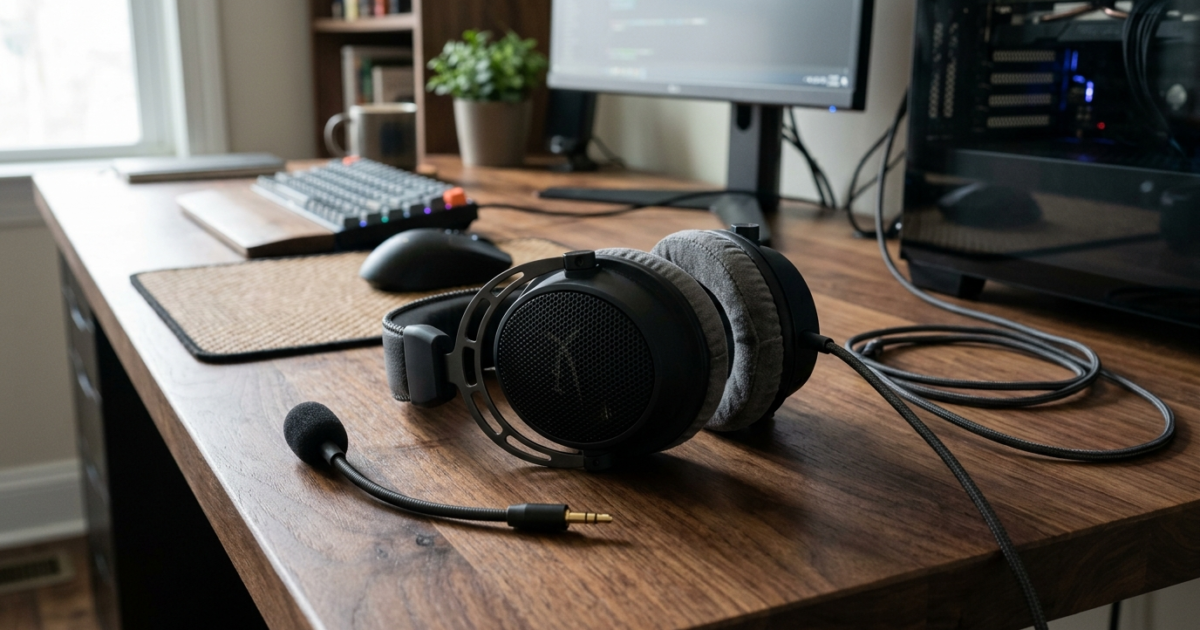
The HyperX Cloud Alpha Air is a wired open-back gaming headset priced at $149.99 that delivers an expansive spatial soundstage. Featuring 40mm neodymium drivers, a 20Hz-20,000Hz frequency range, and 34-ohm impedance, it uses custom Bass Tube acoustic chambers to preserve low-end punch without muddying treble. It weighs approximately 10 ounces and uses breathable Ultrasuede memory foam ear cushions to minimize heat buildup. While well-suited for immersive gaming in quiet spaces, its open metal grilles leak audio, provide zero noise isolation, and current Ngenuity software fails to detect the hardware.
For years, mainstream gaming audio has relied almost exclusively on closed-back circumaural designs. Closed acoustic cups prioritize passive noise isolation, preventing domestic distractions from intruding while sealing in high-impact low frequencies. However, this isolation comes at the cost of a confined soundstage and heat retention during prolonged sessions. While premium open-back models exist in the enthusiast space, they frequently command high price tags. With the Cloud Alpha Air, HyperX attempts to balance open-back spatial acoustic benefits with a relatively accessible price point, targeting gamers who prioritize expansive environmental perception over environmental isolation.
Acoustic architecture and open-back soundstage
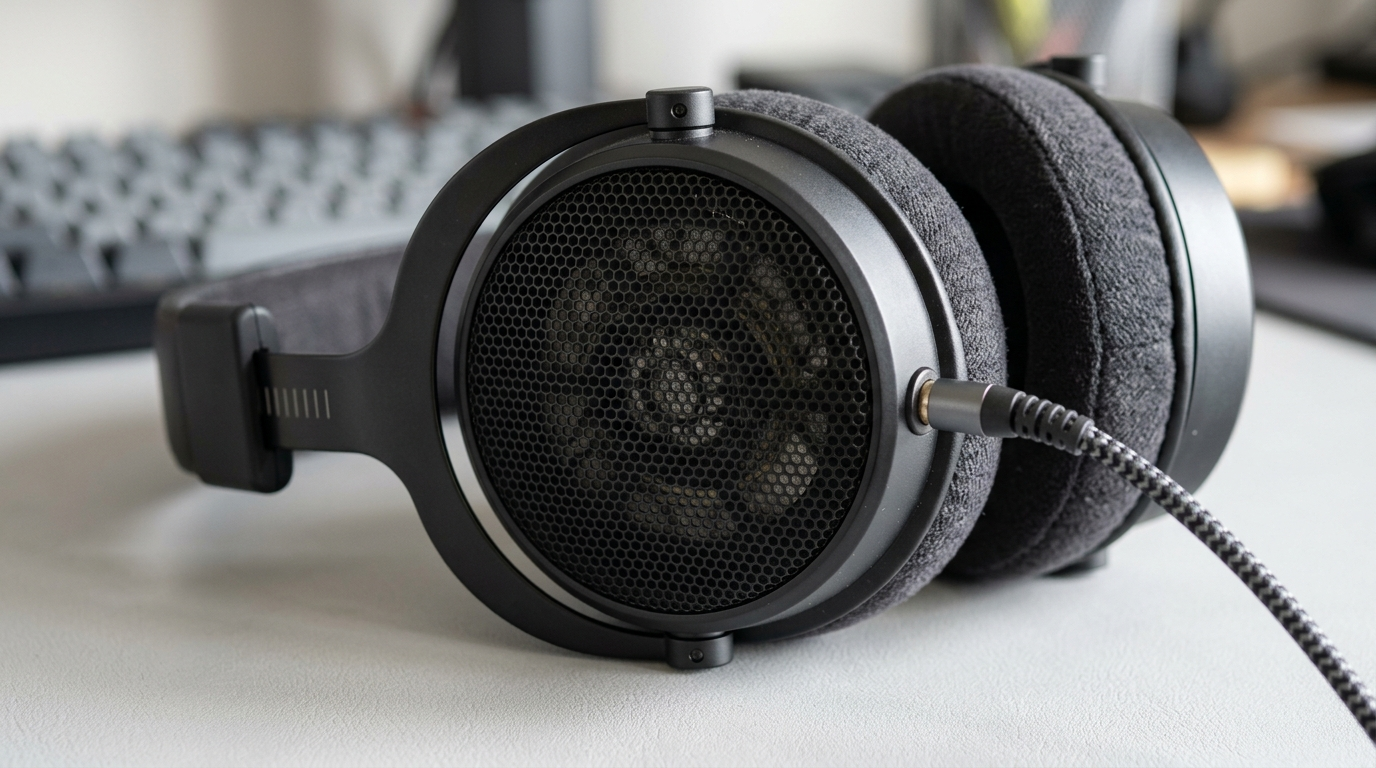
The defining characteristic of the Cloud Alpha Air is its open-back acoustic architecture. Unlike conventional gaming headsets that house their drivers inside sealed plastic shells, the Cloud Alpha Air uses large oval earcups backed by open, perforated metal grilles. This construction permits air and acoustic energy to circulate unrestricted through the rear of the speaker housing.
Acoustically, this design eliminates the internal reflections and trapped resonances that often muddy the lower mid-range in closed-back headsets. Sound waves propagate outward naturally, creating an acoustic profile that feels significantly broader and more lifelike than conventional sealed alternatives. Rather than perceiving game audio as originating directly against the eardrums, players perceive directional cues as occurring naturally within their physical room environment.
In independent evaluation conducted by Tom’s Hardware, this spatial expansion delivered noticeable benefits in narrative titles with complex, multi-layered sound design. During gameplay sessions in titles such as Uncharted 4 and God of War: Ragnarok, ambient environmental layers—including rustling foliage, distant wildlife, and subtle atmospheric reverberations—remained distinct from dialogue and foreground action. The natural acoustic presentation allowed positional cues to emerge without relying on artificial software virtualization.
However, the open-back approach introduces distinct physical trade-offs documented by Press Play Media. Because the perforated grilles offer zero passive attenuation, external ambient noise enters the listening space unimpeded. Mechanical keyboard clicks, computer cooling fans, and conversations in adjacent rooms remain audible. Simultaneously, audio playback radiates outward into the room. In shared living environments, dormitories, or office spaces, sound leakage can distract others or bleed into sensitive streaming microphones.
Driver performance and the HyperX Bass Tube
Open-back headphones routinely struggle with low-frequency reproduction. When air moves freely behind the diaphragm, the acoustic cancellation between the front and rear sound waves tends to attenuate sub-bass output, leaving many open headsets sounding thin or overly clinical. To counteract this inherent physical challenge, HyperX engineered a proprietary mechanical solution called the Bass Tube, as highlighted by Engadget.
The Bass Tube operates as an internal acoustic duct within each earcup. By channeling and tuning back-wave airflow through dedicated acoustic paths, it preserves low-end resonance before the acoustic energy dissipates through the external grille. This mechanical tuning maintains low-frequency presence without introducing the boomy, uncontrolled bass typical of heavily ported closed-back gaming peripherals.
Acoustic evaluation reveals a balanced, mostly neutral frequency profile across the 20Hz to 20,000Hz operating range:
- High frequencies: The treble range is crisp, detailed, and airy, allowing high-frequency transients such as reloading sounds, ricochets, and orchestral strings to cut through the mix without sounding harsh or sibilant.
- Midrange: The mid-frequency band is forward and articulate. In musical testing on vocal-dense recordings like K-931’s “Lonely World” and Enya’s “Orinoco Flow,” vocal lines preserved full harmonic separation from synth pads and acoustic instrumentation.
- Low frequencies: Bass response is tight, controlled, and textured. In rhythm testing using Lorde’s “Royals,” the bass drum pattern resolved with clear attack and decay. However, listeners accustomed to the heavy sub-bass thump of closed-back units, such as the Razer BlackShark V3 Pro, will notice less visceral sub-bass vibration.
The resulting acoustic presentation favors clarity and balance over exaggerated bass boost, making the headset versatile for analytical music listening, video editing, and immersive single-player campaigns.
Ergonomics, Ultrasuede materials, and build quality
Prolonged gaming comfort depends heavily on weight distribution, clamping pressure, and thermal regulation. The Cloud Alpha Air weighs approximately 10 ounces (283 grams) for the headset alone, according to Tom’s Hardware measurements, which sits slightly above the manufacturer’s rated specification of 9.6 ounces (272 grams). With the detachable boom microphone attached, weight increases marginally to roughly 10.6 ounces (under 300 grams), placing it among the lighter circumaural headsets available.
A notable design departure from earlier HyperX models is the choice of earpad covering. As detailed by Gizmodo, HyperX wrapped the thick memory foam cushions in breathable Ultrasuede rather than traditional polyurethane leatherette. This material choice yields two functional advantages:
- Thermal management: Ultrasuede facilitates air permeation and moisture evaporation, preventing the sweaty, heated skin contact common with non-porous synthetic leather during multi-hour sessions.
- Material durability: Synthetic protein leather frequently degrades, cracks, and flakes after extensive exposure to skin oils and friction. The micro-fiber Ultrasuede weave resists surface flaking over time.
The physical structure features a padded steel headband with leatherette exterior trim and metal-reinforced yokes. The earcups offer independent vertical adjustment through approximately one inch of travel per side, accommodating inner headband spans up to 12 inches (300mm). The earcups provide modest tilt to align against the jawline, but they do not swivel flat for neck storage. Testers with larger head sizes noted that the relatively rigid steel band can exert moderate downward pressure on the crown of the skull, suggesting that individuals sensitive to top-head pressure may need periodic breaks.
Microphone performance and hardware controls
Communication is handled by a detachable 10mm unidirectional boom microphone mounted on a flexible 3-inch metal gooseneck. The capsule represents the same hardware component deployed on HyperX’s wireless headsets, including the Cloud III S Wireless and Cloud Alpha 2 Wireless.
In vocal evaluations across Discord and local digital audio workstation captures, the microphone produced intelligible, clean, and natural voice reproduction. Speech intelligibility remained high, avoiding the muffled nasal tone common in entry-level headset microphones. However, hardware and firmware limitations present notable inconveniences:
- Low default gain: The microphone capsule exhibits relatively low output gain out of the box, requiring users to boost software input levels or move the gooseneck closer to their lips to achieve optimal broadcast volume.
- Audible mute blip: Depressing the mechanical mute switch on the left earcup injects a sharp, audible pop into the recorded audio stream. For content creators and live streamers, this electronic artifact is readily audible to listeners.
- Mute indicator visibility: An integrated red LED near the microphone capsule indicates mute status, but its low luminosity and downward positioning make it difficult to see within peripheral vision without manually repositioning the arm.
On-ear controls remain straightforward and analog. The left earcup hosts the microphone mute toggle and dual 3.5mm input jacks—one for the microphone and one for the main audio lead. The right earcup integrates a smooth, analog potentiometer volume dial for immediate level adjustments without software dependencies.
Cabling, modular adapters, and software limitations
As documented by Hardcore Droid, the Cloud Alpha Air includes a versatile adapter bundle to ensure compatibility across diverse gaming hardware. With an impedance of 34 ohms and a standard analog foundation, the headset can be driven efficiently by mobile devices, handheld consoles, desktop soundcards, and game controllers without requiring a dedicated high-output headphone amplifier.
The retail package supplies three primary braided cable assemblies:
- Primary analog lead: A 4-foot (1.2-meter) standard 3.5mm TRRS cable suited for mobile devices, Nintendo Switch, PlayStation controllers, and Xbox controllers.
- USB-C and USB-A digital adapter: A 4.5-foot (1.37-meter) extension cable incorporating an inline digital-to-analog converter with a USB-C terminal and an attached USB-A adapter for desktop PC and PlayStation console connections.
- PC analog splitter: A 3.5-foot (1.0-meter) Y-cable separating headphone output and microphone input into discrete 3.5mm plugs for legacy motherboard sound cards.
When fully assembled with extensions, total cable reach extends to approximately 8.5 feet, providing ample slack for desktop cable management. However, the modular coupling creates a noticeable drawback: the heavy metal connection barrels sit suspended midway along the cable run, pulling downward against the left earcup during seated play.
On the software front, the Cloud Alpha Air encountered significant compatibility hurdles during review testing. While marketed to interface with HyperX’s Ngenuity companion software for equalisation adjustments and microphone sidetone configuration, the current release of Ngenuity failed to detect the headset on PC test systems. Fortunately, because the headset relies on standard class-compliant USB and analog audio protocols, core listening and communication functions operate without software intervention.
Market comparisons and competitive pricing
Priced at $149.99, the Cloud Alpha Air occupies an unusual position in the gaming audio market. Open-back gaming headsets are rare, with most competing offerings positioned at higher price tiers or targeting audiophile reference listening rather than mainstream gamers.
| Headset Model | Acoustic Architecture | Measured Weight | Connectivity | MSRP | Primary Distinctions |
|---|---|---|---|---|---|
| HyperX Cloud Alpha Air | Open-back | 10.0 oz (283g) | Wired (3.5mm, USB-C/A) | $149.99 | HyperX Bass Tube, Ultrasuede earpads, budget price point, Ngenuity detection bug |
| Turtle Beach Atlas Air | Open-back | 10.6 oz (301g) | Wireless (2.4GHz, BT) & Wired | $179.99 | Floating earcup suspension, dual wireless connectivity, wider earcup flex |
| Corsair Virtuoso Pro | Open-back | 11.9 oz (338g) | Wired (3.5mm) | $199.99 | 50mm graphene drivers, premium aluminum chassis, higher clamping force |
| Audeze LCD-GX | Open-back | 16.0 oz (454g) | Wired (3.5mm) | $899.00 | Audiophile planar magnetic drivers, magnesium housing, substantial weight |
| Razer BlackShark V3 Pro | Closed-back | 11.3 oz (320g) | Wireless & Wired | $199.99 | Total passive isolation, prominent sub-bass punch, esports competitive focus |
Compared to the $180 Turtle Beach Atlas Air, the Cloud Alpha Air foregoes wireless freedom in exchange for a $30 price reduction and a slightly lighter frame. Against the $200 Corsair Virtuoso Pro, the HyperX option trades aluminum alloy framing and graphene drivers for plush Ultrasuede ear cushions and custom bass ports at a $50 discount. Closed-back alternatives like the Razer BlackShark V3 Pro serve a completely different operational use case, offering aggressive environmental isolation and heightened sub-bass resonance at the expense of soundstage width.
Best fit by use case
Deciding whether the HyperX Cloud Alpha Air represents an effective hardware investment depends entirely on acoustic preferences, gaming genre, and physical room environment.
- Single-player and open-world gamers: Recommended. Players dedicated to narrative-driven action titles, role-playing games, and atmospheric exploration benefit substantially from the open-back soundstage. The acoustic separation clarifies environmental ambience and orchestral scores without artificial audio manipulation.
- Users in quiet home offices: Recommended. In controlled environments where background noise is minimal and audio leakage will not disturb roommates or family members, the combination of a 10-ounce frame and breathable Ultrasuede padding delivers exceptional long-session comfort.
- Multi-platform desktop players: Conditional recommendation. The comprehensive adapter bundle accommodates PC, console, and mobile setups out of the box. However, buyers should prepare for the ergonomic drag of inline cable junctions and verify that physical cable routing matches their desk layout.
- Competitive esports players in active households: Skip. Those competing in fast-paced first-person shooters in noisy living rooms should opt for closed-back headsets. The absence of passive noise isolation makes it difficult to track subtle positional audio over domestic interruptions.
- Streamers requiring software customization: Skip or await patches. Content creators who depend on granular microphone gain adjustment, noise gating, and software parametric EQ within Ngenuity should postpone purchasing until HyperX resolves driver recognition issues and updates firmware.