Key takeaways
- Convergence of Strategic Priorities: Customer dialogues at HPE Labs consistently center on the intersection of artificial intelligence, quantum readiness, and data sovereignty.
- Regulatory Drivers: More than 170 national privacy and data protection frameworks are compelling organizations to transition from external public cloud processing to localized, sovereign infrastructure.
- Closing the Memory Vulnerability Gap: Moving beyond traditional encryption at rest and in transit, confidential computing is essential to safeguard live model weights and telemetry in use across CPUs, GPUs, and accelerators.
- Proactive Post-Quantum Migration: Deploying post-quantum cryptography (PQC) and researching Quantum Key Distribution (QKD) safeguards sensitive institutional workloads against long-term “harvest now, decrypt later” threats.
- Collapsing Exploit Timelines: Insights from Anthropic’s Project Glasswing (Claude Mythos Preview) show that automated AI exploit synthesis has outpaced manual patch cycles, mandating hardware-embedded security at every infrastructure layer.
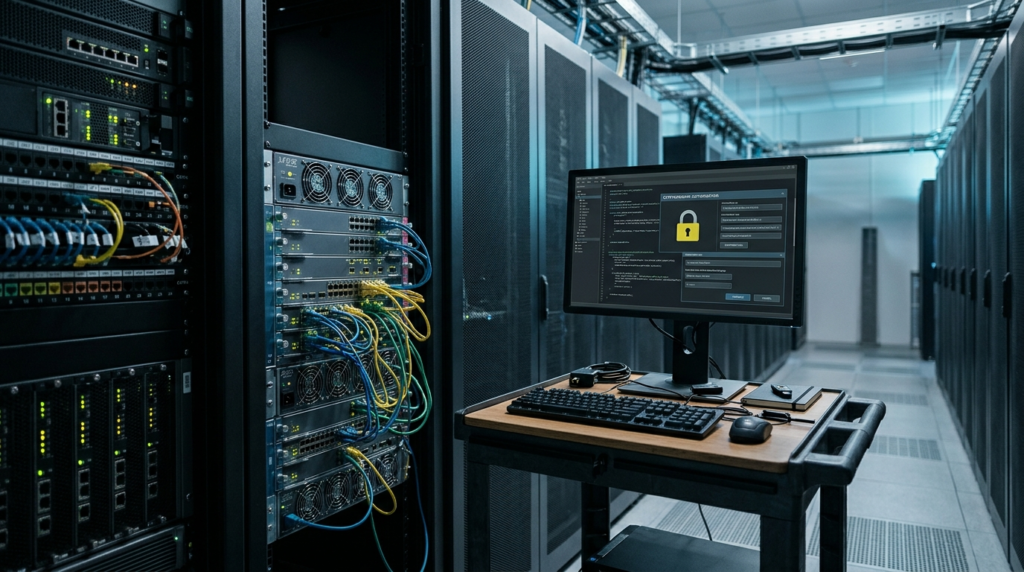
Sovereign AI security requires organizations to maintain strict jurisdictional control, local data processing boundaries, and hardware-enforced cryptographic protections across their artificial intelligence infrastructure. As enterprise adoption of AI accelerates, traditional cloud models that export telemetry or sensitive training data across external boundaries increasingly clash with more than 170 national data protection and privacy frameworks worldwide. Hewlett Packard Enterprise (HPE) Labs is addressing this friction by uniting data sovereignty with post-quantum cryptographic defenses and confidential computing. Rather than treating compliance and security as perimeter software add-ons, modern sovereign AI architecture embeds cryptographic posture management, memory encryption for accelerators, and post-quantum readiness directly into compute, storage, and networking layers.
During an interview with Dave Vellante on theCUBE’s video series “Sovereign AI: From Strategy to Reality,” Andrew Wheeler, Director of HPE Labs and Senior Vice President at Hewlett Packard Enterprise, revealed that customer conversations have converged around three interdependent concerns: artificial intelligence, quantum computing, and data sovereignty. Where enterprises once evaluated these technologies within separate technical silos, geopolitical mandates and emerging cyber threats now compel technology leaders to address them as a unified architectural imperative. According to Wheeler, organizations must systematically rethink who controls their data, infrastructure, operational models, and economic exposure.
The Sovereignty Imperative: Local Control Meets Global Regulation
The push for data sovereignty represents an operational evolution of regional data privacy regulations. Over the past decade, governments across Europe, Asia-Pacific, North America, and the Middle East established strict requirements governing where personal information resides and how it moves across borders. The deployment of large language models and autonomous AI agents has amplified these mandates. When enterprises feed proprietary code bases, customer records, and operational telemetry into multi-tenant frontier models hosted abroad, they risk severe compliance penalties and unintentional intellectual property leakage.
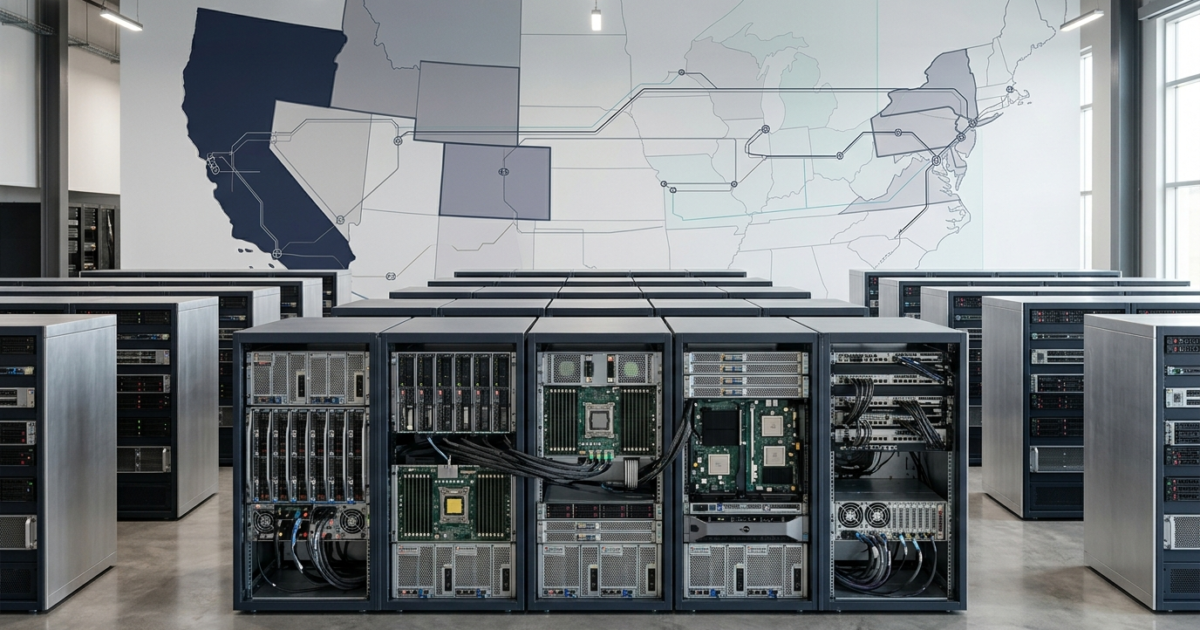
Wheeler pointed out that sovereign AI is a direct response to this regulatory reality. With more than 170 nations enforcing distinct legal baselines for digital privacy, enterprises cannot rely on centralized, one-size-fits-all cloud pipelines. Sovereign AI shifts the computational center of gravity toward localized environments: regional sovereign clouds, dedicated on-premises supercomputing clusters, and edge deployments located within national borders. This architectural transition ensures that data ingest, model tuning, vector indexing, and inference execution remain strictly within designated jurisdictions.
However, physical proximity alone does not guarantee security. Simply hosting high-performance computing clusters inside a specific nation’s borders offers little defense if underlying systems run vulnerable hypervisors or unencrypted memory channels. As Wheeler emphasized in his discussion on theCUBE, achieving genuine sovereignty requires end-to-end infrastructure transformation. Security and compliance must function as intrinsic hardware and platform properties rather than superficial management layers.
Confidential Computing: Securing Data in Use Across Accelerators
For decades, enterprise security architectures focused primarily on two states of data: data at rest and data in transit. Organizations implemented self-encrypting drives (SEDs), storage controller-based encryption, and network protocols like TLS and IPsec to mitigate perimeter interception. While these controls remain necessary, modern AI workloads introduce a third, highly vulnerable vector: data in use.
When high-density AI clusters process multi-billion-parameter models, enormous volumes of sensitive training data, embedding vectors, and model weights reside in active system memory. Standard processors and graphics processing units (GPUs) routinely decrypt information in main memory before execution. If an attacker breaches the hypervisor, operating system, or firmware, they can inspect raw memory contents, steal proprietary model weights, or manipulate execution logic without tripping external alarms.
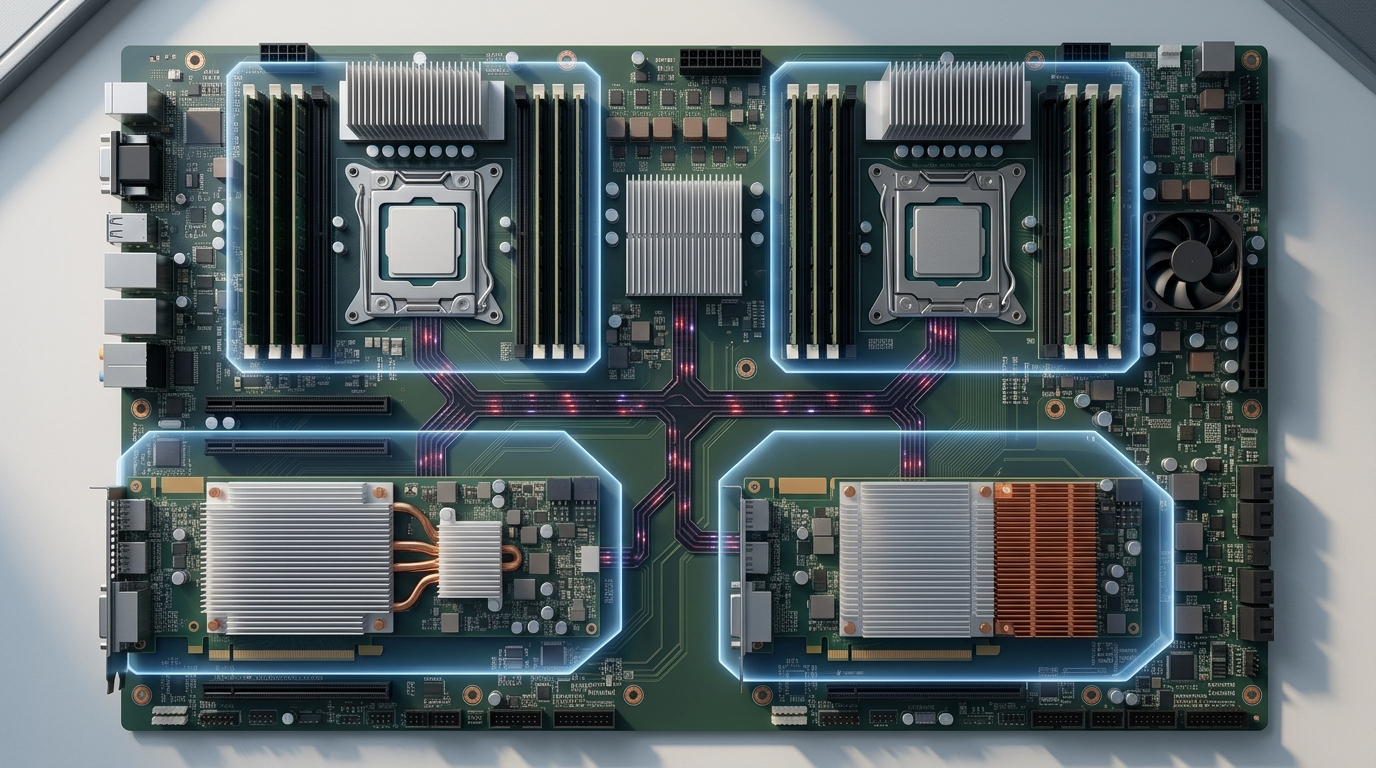
To eliminate this blind spot, HPE Labs and industry partners are advancing confidential computing architectures for AI accelerators. Confidential computing relies on hardware-isolated trusted execution environments (TEEs) that cryptographically shield memory pages from privileged host access. In Wheeler’s view, protecting data while it is actively being operated on inside CPUs, GPUs, and custom accelerators represents the next major milestone in enterprise defense.
This approach aligns with broader industry initiatives where hardware vendors and cybersecurity providers establish hardware-level isolation and security controls for AI workloads to prevent memory tampering. By enforcing cryptographically attested memory boundaries, enterprise IT teams can execute complex training and inferencing tasks across hybrid cloud environments without exposing raw tenant data to infrastructure operators.
The Quantum Threat: PQC Readiness and Quantum Key Distribution
While artificial intelligence challenges immediate operational security, the emergence of quantum computing poses an existential threat to long-term cryptographic integrity. Enterprise IT leaders often treat quantum computing as a distant horizon, yet nation-state threat actors are actively executing “harvest now, decrypt later” campaigns. In these operations, adversaries intercept and archive encrypted government and enterprise communications today, anticipating the day when cryptanalytically relevant quantum computers can break standard public-key algorithms such as RSA and elliptic-curve cryptography (ECC).
For sovereign AI deployments—where national defense records, critical infrastructure telemetry, and enterprise trade secrets must remain confidential for decades—relying on classical cryptography is an unacceptable liability. Wheeler stated that national readiness requires proactive defense against quantum decryption while simultaneously building capability to capture quantum computational advantages.
Hewlett Packard Labs is addressing this challenge across two parallel domains:
- Post-Quantum Cryptography (PQC) Readiness: Transitioning core compute, firmware, and operating platforms to standardized quantum-resistant mathematical algorithms. This includes implementing cryptographic posture management to identify legacy encryption dependencies across enterprise estates and updating cryptographic libraries without disrupting operational continuity.
- Quantum Key Distribution (QKD): Researching optical and quantum networking solutions that leverage the fundamental physical properties of photons to exchange cryptographic keys. Because any interception attempt alters the quantum state of the transmitted photons, QKD allows network operators to detect eavesdropping attempts instantly, reinforcing Zero Trust network architectures across distributed data centers.
Although QKD introduces practical constraints—such as specialized optical fiber infrastructure, transmission distance limits, and the current absence of commercial quantum repeaters—its integration into hybrid classical-quantum networks offers a path toward provably secure inter-site communications.
Lessons From Project Glasswing: The Collapsing Vulnerability Window
The urgency behind hardware-embedded security was demonstrated through HPE’s participation in Project Glasswing, an initiative established by Anthropic PBC. Project Glasswing granted a select coalition of technology infrastructure leaders early access to Claude Mythos Preview, an advanced frontier AI model with deep capabilities in autonomous software analysis, code synthesis, and vulnerability discovery.
In a technical essay published on September 28, 2026, titled “No window, no warning: why security has to live in every layer,” Wheeler detailed how frontier AI tools are fundamentally altering cybersecurity dynamics. Historically, organizations relied on a predictable lag between when a vulnerability was theorized, when a proof-of-concept emerged, and when adversaries attempted active exploitation. This grace period allowed software vendors to craft, validate, and distribute security patches.
With models like Claude Mythos Preview capable of analyzing complex code bases and synthesizing potential exploit chains at machine velocity, that defensive buffer has collapsed. The time between discovery and active exploitation has shrunk from weeks to minutes, rendering manual triage and post-hoc patching obsolete. As Wheeler observed, organizations cannot solve this asymmetry by simply purchasing additional point products.
Instead, HPE has overhauled its internal secure development lifecycle. Hardware architectures, firmware layers, network fabrics, and storage arrays are treated as mission-critical systems designed to withstand automated adversarial analysis. Security must be an active property verified through continuous cryptographic attestation rather than an administrative policy applied after deployment.
Architectural Matrix: Evaluating Enterprise Security Layers
To assist enterprise architects and IT leaders in structuring their defense posture, the following matrix compares traditional baseline protections with sovereign AI requirements and emerging quantum-safe capabilities:
| Security Domain | Traditional Enterprise Baseline | Sovereign AI Requirement | Quantum-Safe Evolution |
|---|---|---|---|
| Data at Rest | AES-256 controller encryption and self-encrypting drives (SEDs) | Geographically restricted storage partitions with localized key vaults | Stateful hash-based signatures and quantum-resistant key encapsulation |
| Data in Transit | TLS 1.3 and standard IPSec VPN tunnels | Policy-enforced regional network routing and isolated private fabrics | Hybrid post-quantum key exchange (ML-KEM) and Quantum Key Distribution (QKD) |
| Data in Use | Standard OS memory allocation without execution isolation | Hardware-enforced confidential computing TEEs across CPUs and GPUs | Cryptographically verified accelerator attestation with quantum-safe root of trust |
| Vulnerability Management | Periodic vulnerability scanning and scheduled monthly patch cycles | Automated static analysis and agentic threat modeling | Continuous hardware runtime verification and rapid firmware attestation |
| Regulatory Compliance | Broad international compliance certifications (SOC 2, ISO 27001) | Strict adherence to regional mandates across 170+ national frameworks | Auditable cryptographic posture management proving jurisdictional data isolation |
Strategic Checklist for Enterprise IT Leaders
Migrating enterprise AI workloads to sovereign, quantum-safe architectures requires disciplined planning across infrastructure, security, and procurement teams. IT leaders should evaluate the following structural priorities:
- Map Data Flows and Jurisdictional Dependencies: Conduct a comprehensive audit of all AI training pipelines, retrieval-augmented generation (RAG) data sources, and user prompt telemetry to identify cross-border transfers that breach local privacy mandates.
- Implement Accelerator-Aware Confidential Computing: Ensure future GPU server and accelerator procurements support hardware-isolated trusted execution environments to protect active model weights and memory contents from unauthorized host inspection.
- Establish a Cryptographic Inventory: Catalog all public-key certificates, algorithms, and key management systems across enterprise infrastructure to prioritize systems requiring early migration to NIST-standardized post-quantum algorithms.
- Reinforce Hardware Roots of Trust: Mandate cryptographically verified boot sequences and continuous firmware attestation across compute, networking, and storage hardware.
- Engage Hybrid Classical-Quantum Planning: Evaluate sensitive inter-facility communication links for potential pilot deployments of quantum key distribution or post-quantum virtual private networking.
Bottom line
The intersection of artificial intelligence, data sovereignty, and quantum computing marks a permanent shift in enterprise infrastructure strategy. As Andrew Wheeler and HPE Labs have articulated, organizations can no longer treat cybersecurity as a distinct layer maintained separately from core compute, storage, and networking systems. With over 170 nations enforcing localized data privacy laws and frontier AI models accelerating exploit development, the traditional perimeter defense model is no longer tenable.
For CIOs, CTOs, and enterprise architects, the path forward requires designing sovereign-by-design systems that unify jurisdictional compliance, confidential computing for accelerators, and post-quantum cryptographic resilience. Investing in hardware-level security and proactive cryptographic posture management today is the only reliable strategy to ensure long-term data ownership, operational continuity, and regulatory compliance in an increasingly divided technological landscape.