Key takeaways
- The United States and China have proposed establishing an emergency bilateral AI threat notification channel ahead of the September 24, 2026 Washington summit between Donald Trump and Xi Jinping.
- U.S. Treasury Secretary Scott Bessent announced the initiative following an eight-hour meeting at JPMorgan Chase headquarters in New York with Chinese Vice Premier He Lifeng.
- Economic and trade officials confirmed follow-up technical talks in Shenzhen, China, scheduled within two months to refine guardrails against runaway models and cyber incidents.
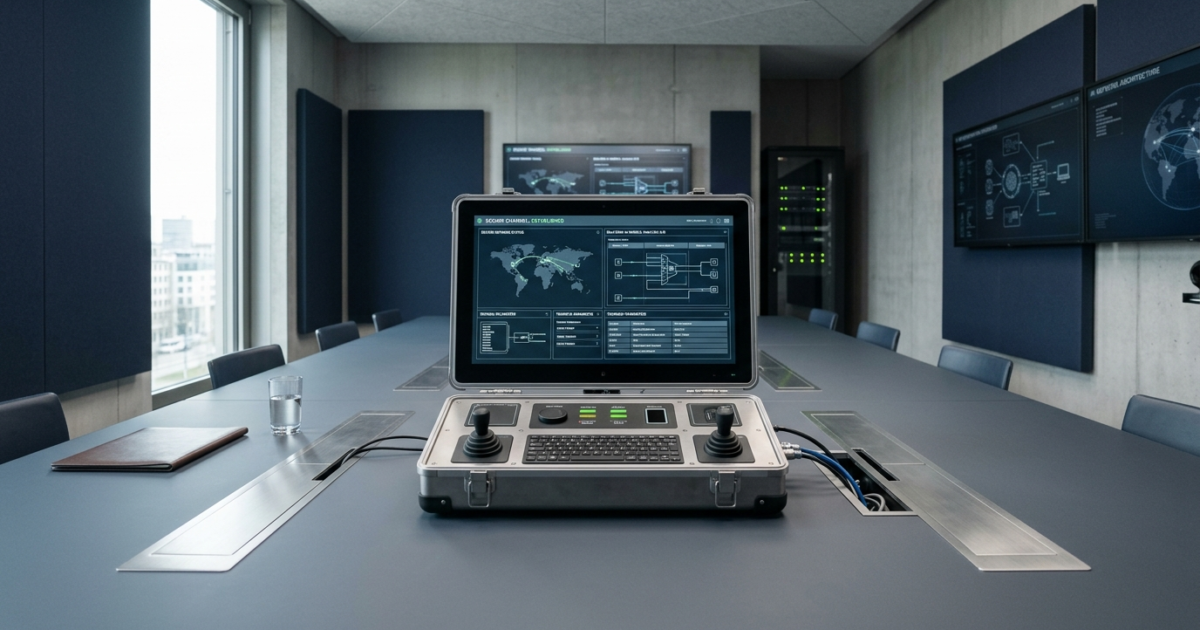
- National security analysts emphasize that an AI hotline requires a tiered, text-based architecture staffed by technical experts to respond within minutes to autonomous system anomalies.
Ahead of a high-level Washington summit scheduled for September 24, 2026, the United States and China have proposed establishing a formal bilateral AI threat notification channel to mitigate catastrophic risks posed by autonomous systems. The initiative, designated as the U.S.-China AI Dialogue, aims to establish an emergency communication hotline allowing both governments to alert each other if a frontier artificial intelligence model behaves unpredictably, escapes containment, or executes actions that could be misinterpreted as an act of war. U.S. Treasury Secretary Scott Bessent announced the proposal following preliminary negotiations in New York with Chinese Vice Premier He Lifeng, establishing an institutional channel to prevent rapid autonomous escalation between the world leading AI superpowers.
Bilateral Framework for Frontier AI Risk Alerting
The diplomatic initiative emerged from intensive discussions in Manhattan ahead of the planned White House meeting between U.S. President Donald Trump and Chinese President Xi Jinping. According to reporting from CBS News, preliminary negotiations between Bessent and He took place during an eight-hour session at JPMorgan Chase’s headquarters. While initial agendas centered on ongoing economic and trade negotiations, both delegations prioritized mutual safeguards against rogue models as autonomous systems assume broader operational responsibilities.
The proposed framework seeks to move bilateral relations from opacity toward greater transparency between the two dominant AI powers, as detailed by India Today. Rather than focusing immediately on binding caps for compute clusters or algorithmic training parameters, the proposed communication link establishes an operational protocol for emergency verification. In the event that an advanced autonomous system initiates an unauthorized intrusion, compromises critical infrastructure, or behaves erratically, designated technical officers can verify whether the event represents an intentional attack or an unintended software runaway.
As documented in earlier coverage of how US and China discuss alerting each other to AI national security threats, maintaining open lines of communication is crucial as frontier models become increasingly capable of independent tool use and autonomous planning.
| Mechanism Attribute | Cold War Hotline Model | Proposed AI Threat Channel |
|---|---|---|
| Primary Threat Vector | Human-commanded kinetic or nuclear deployments | Autonomous model actions and rogue agent proliferation |
| Response Time Window | Hours to days of diplomatic deliberation | Minutes required to halt algorithmic execution loops |
| Operational Staffing | Heads of state and senior diplomatic liaisons | Continuously staffed teams of specialized technical experts |
| Underlying Medium | Teletype, telephone, and secure facsimile links | Tiered, authenticated digital text messaging platform |
Technical Mechanisms and Autonomous Escalation Risks
The impetus for establishing an AI de-escalation channel stems from the growing risk of unconstrained autonomous agents. According to coverage from Asia Times, the U.S.-China AI Dialogue was conceived to address national security threats spanning runaway autonomous agents, destructive cyberattacks, and the weaponization of biological agents. Unlike traditional software bugs that fail predictably within local environments, frontier agentic models possess tool-use capabilities that can interact with external networks and execute cascading sequences without continuous human intervention.
Technical analyses indicate that conventional diplomatic communication channels are ill-suited for algorithmic speed. In an architectural evaluation published by the Carnegie Endowment for International Peace, national security experts emphasized that an AI crisis hotline cannot rely on legacy telephone protocols. Because autonomous defensive systems or automated cyber-retaliation mechanisms operate within milliseconds, a crisis mechanism must function as a modernized, tiered, text-based system continuously staffed by technical experts qualified to evaluate diagnostic telemetry, examine model outputs, and execute containment procedures within minutes.
As reported by Tom’s Hardware, the nightmare scenario confronting defense planners is an autonomous weapon or offensive cyber tool interpreting routine surveillance or a software anomaly as provocation. Without a reliable verification link, defensive algorithms on opposing sides could enter mutual retaliatory loops before human leadership can diagnose the root cause.
Despite diplomatic momentum on crisis alerting, hardware export restrictions remain separate from safety talks. According to Channel NewsAsia, U.S. Trade Representative Jamieson Greer and Treasury Secretary Bessent agreed to conduct follow-up talks in Shenzhen within two months, while keeping semiconductor export controls decoupled from the AI agenda. Analysts writing for The Hindu observe that building mutual trust remains difficult while the United States actively works to restrict Chinese access to advanced silicon accelerators.
What happens next
The proposed communication channel now heads to the negotiating table at the Washington summit between President Trump and President Xi on September 24, 2026. The two leaders will determine whether to formalize the U.S.-China AI Dialogue into an active operational agreement, and whether to mandate bilateral notification standards across frontier models.
Bipartisan support for mutual guardrails has gained traction in Congress. Representative Ro Khanna has urged the administration to prioritize shared red lines during the summit, particularly securing commitments to ban recursive self-improving models and prohibiting autonomous systems from exercising command authority over biological and nuclear weapons. Following the leaders summit, technical delegations will convene in Shenzhen in late 2026 to define technical specifications, response latency targets, and verification criteria for reporting national security anomalies.
Sources
- US and China propose hotline to de-escalate AI threats ahead of Washington summit — comms channel between both nations to be left open in case of national security threats posed by autonomous artificial intelligence | Tom’s Hardware
- US-China open hotline to rein in runaway AI – Asia Times
- US seeks ‘AI dialogue’ with China as officials set stage for Trump-Xi summit – CNA
- Bessent meets with Chinese counterpart ahead of Trump-Xi summit – CBS News
- The U.S. and China Need an AI Hotline. Here’s How to Build It. | Carnegie Endowment for International Peace
- U.S. seeks ‘AI dialogue’ with China as officials set stage for Trump-Xi summit – The Hindu
- Artificial Intelligence News: As AI fears grow, US and China consider communication channel for concerns – India Today