Key takeaways
- Smart locks secure residential doors by replacing the entire deadbolt assembly or retrofitting directly over the interior thumb turn.
- Modern access methods include digital wallet passes via the Aliro standard, biometric fingerprint readers, numeric keypads, and physical backup keys.
- Routine installation requires only a screwdriver on standard residential doors, with battery runtimes averaging several months to a year on standard AA or rechargeable cells.
- Hardware prices span entry-level retrofits ($70–$149) with BHMA Grade 1 or 2 ratings up to flagship models ($250+) offering Matter integration and Ultra-Wideband hands-free unlocking.
A smart lock is an electromechanical door lock that pairs wireless connectivity with motor-driven mechanical hardware to enable keyless entry, remote access control, and real-time monitoring. Designed to replace either the entire deadbolt assembly or retrofit directly over an existing interior thumb turn, a smart lock connects to home Wi-Fi and mobile devices to eliminate reliance on conventional brass keys. Users manage door access through smartphone applications, digital wallet credentials, biometric fingerprint readers, or numeric PINs. In addition to daily convenience, smart locks introduce automated features such as scheduled locking, time-limited guest passcodes, and instant entry alerts without compromising physical door security.
Hardware Architecture: Full Replacements vs. Interior Retrofits
Residential smart locks divide into two primary mechanical architectures: complete deadbolt replacements and interior retrofit adapters. Choosing between them dictates installation complexity, exterior aesthetics, and lease compliance.
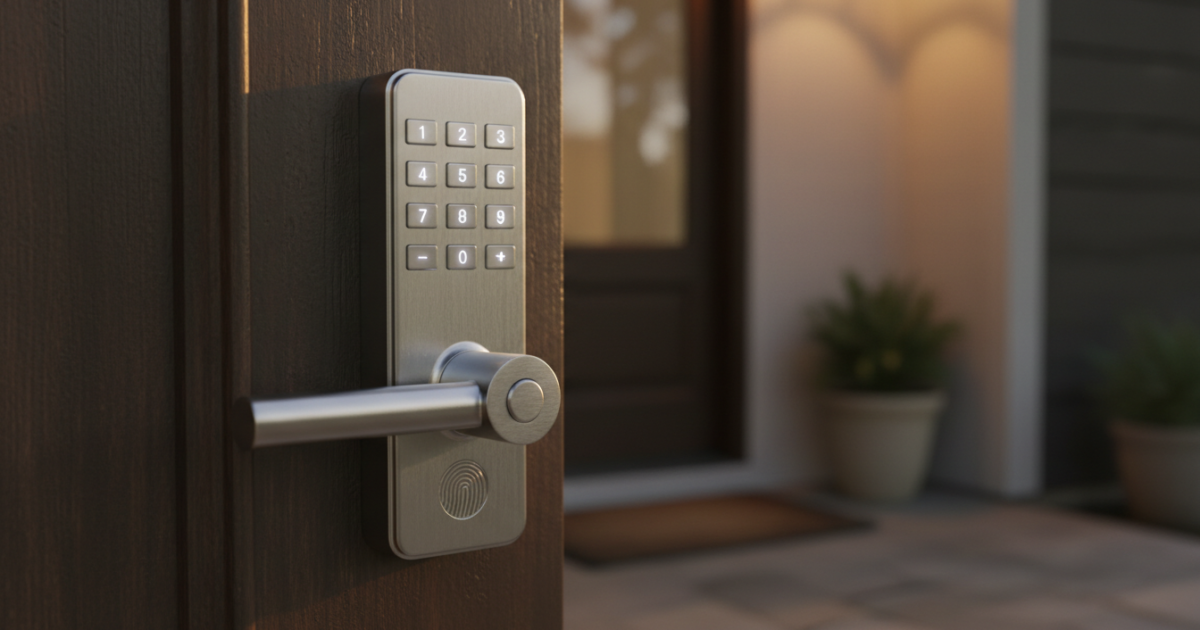
A full deadbolt replacement removes the existing exterior cylinder, interior thumb turn, and latch bolt mechanism. In their place, it installs an integrated exterior escutcheon plate equipped with an interactive interface—such as an illuminated keypad, fingerprint scanner, or NFC target. The interior housing contains the motorized drive unit, battery compartment, and wireless radios. This design provides a unified appearance and supports advanced access methods directly on the door face, but it requires standard door preparation, specifically a 2-1/8 inch (54mm) face bore hole and proper backset spacing.
Conversely, an interior retrofit smart lock leaves the exterior lock cylinder, trim, and deadbolt latch untouched. The device installs strictly on the inside surface of the door, replacing only the thumb turn lever. Because the original exterior keyway remains in place, traditional physical keys continue to work without modification. This design simplifies setup, lowers costs, and makes the hardware an ideal choice for apartments where lease covenants prohibit altering exterior locks.
Access Methods: Wallets, Biometrics, and Keypads
Smart locks replace physical keys with multiple electronic credentials, giving homeowners flexible options depending on who is entering and how frequently access is needed.
- Digital Wallets and the Aliro Standard: The establishment of the Aliro protocol standardizes digital key functionality across major mobile operating systems. Homeowners can store encrypted digital passkeys directly in Apple Wallet, Google Wallet, or Samsung Wallet. Utilizing Near Field Communication (NFC) and Ultra-Wideband (UWB) technology, compatible locks detect authenticated smartphones or smartwatches, allowing users to unlock doors with a tap or through proximity-based hands-free unlocking.
- Biometric Fingerprint Scanners: Many full-replacement models feature capacitive fingerprint readers built into the exterior housing. Fingerprint scanners provide rapid, sub-second authentication for household members, eliminating the need to carry a phone, memorize a PIN code, or search for physical keys.
- Numeric Keypads and Timed Passcodes: Backlit keypads remain one of the most versatile entry methods. Rather than handing out physical keys to service workers, pet sitters, or visiting guests, users can issue unique PIN codes via the companion app. These passcodes can be configured with recurring schedules or set to expire automatically after a specified time window, maintaining a verifiable access log in the companion software.
- Keyless Housings vs. Physical Overrides: Several advanced smart locks intentionally omit exterior keyways altogether. Eliminating the keyhole removes vulnerability to lock picking and cylinder bumping. However, because keyless designs depend entirely on electronic operation, manufacturers incorporate exterior emergency power terminals to prevent lockouts if internal batteries deplete.
Power, Battery Management, and Wireless Protocols
Because residential doors lack hardwired electrical connections, smart locks operate entirely on internal direct current power. Balancing motor torque against wireless radio power consumption is the defining engineering challenge of smart lock hardware.
Most models rely on two to four standard AA alkaline batteries, while select locks utilize removable, rechargeable lithium-ion battery packs. Under typical residential usage—averaging 8 to 12 cycles per day—batteries deliver between several months and a full year of operation. Advanced power management architectures, including sleep modes and expanded multi-cell battery arrays such as eight-battery configurations, can extend operational life up to three years. Companion applications issue warning alerts when power reserves drop below critical thresholds, usually around 20 percent capacity.
Wireless communication dictates both responsiveness and battery drain. Traditional smart locks connect directly to 2.4 GHz Wi-Fi networks for out-of-home remote control, but sustained Wi-Fi polling draws considerable power. To optimize efficiency, modern locks increasingly adopt Matter-over-Thread protocols. Matter provides local, vendor-neutral interoperability across Apple Home, Google Home, Amazon Alexa, and Samsung SmartThings, while Thread delivers a low-power, self-healing mesh network that routes commands locally through nearby border routers without draining the lock’s batteries.
Installation, Door Compatibility, and Rental Realities
Installing a residential smart lock is generally a straightforward do-it-yourself project that requires only a standard Phillips screwdriver and basic mechanical alignment.
Before installing new hardware, the door must meet standard architectural tolerances. Most residential doors in North America measure either 1-3/8 inches or 1-3/4 inches in thickness, with a deadbolt bore hole of 2-1/8 inches and a backset of either 2-3/8 inches or 2-3/4 inches. The critical installation factor is deadbolt alignment: the bolt must extend and retract smoothly into the strike plate without manual door pressure. If a door is warped or misaligned, the motor will encounter excessive friction, causing the lock to jam and draining batteries prematurely.
For tenants evaluating upgrade options, rental rules present a major constraint. Leases universally require tenant deadbolts to match the property’s master key system for maintenance and emergency entry. Installing a full deadbolt replacement risks lease violations. An interior retrofit lock overcomes this limitation by preserving the landlord’s exterior cylinder, offering keyless automation for residents and students outfitting smart dorm devices without modifying exterior door hardware.
Durability Grades and Hardware Pricing Tiers
Smart locks span a broad price continuum, with cost driven by materials, certified security ratings, motorized tolerances, and integrated radio hardware. When assessing options, buyers should examine certification from the Builders Hardware Manufacturers Association (BHMA), which rates locks from Grade 3 (basic residential) to Grade 1 (highest residential security and commercial endurance).
| Pricing Tier | Typical Price Range | Hardware Architecture | Key Capabilities | Target Use Case |
|---|---|---|---|---|
| Entry-Level | $70 – $149 | Interior retrofits, basic full deadbolts | Auto-locking, scheduled guest PINs, local Bluetooth, optional Wi-Fi bridge | Renters, budget-conscious apartments, secondary entrances |
| Mid-Range | $150 – $249 | Full deadbolt replacements, robust retrofits | Integrated Wi-Fi, capacitive fingerprint readers, BHMA Grade 1 or 2 certification | Main residential entrances, single-family homes, high-traffic doors |
| Flagship | $250 – $400+ | Premium deadbolts, low-profile invisible locks | Matter over Thread, Apple Home Key, UWB hands-free entry, keyless pick-proof bodies | Smart home enthusiasts, multi-platform households, maximum physical security |
In the entry-level bracket of $70 to $149, locks prioritize functional retrofits and straightforward keypad deadbolts, delivering essential features like auto-locking and temporary guest passes while maintaining certified Grade 1 or Grade 2 physical durability. Moving into the $150 to $249 range adds rapid biometric fingerprint scanning, direct onboard Wi-Fi without external plug-in bridges, and refined finishes. Premium models priced at $250 and above—including options like the Yale Assure Lock 2, the discreet Level Lock Pro, and the Schlage Sense Pro—incorporate precision metal construction, Ultra-Wideband proximity detection, and multi-ecosystem Matter interoperability.
Bottom line
A smart lock provides an immediate upgrade to home access, combining keyless entry convenience with granular guest management and automated security monitoring. Buyers should base their selection on physical door mechanics and housing requirements rather than chasing unnecessary features. Renters and apartment dwellers should focus on interior retrofit models that leave the landlord’s exterior key cylinder intact, while homeowners can invest in full deadbolt replacements equipped with biometric scanners and Matter-over-Thread compatibility. Verifying that the door latch throws without friction and choosing hardware backed by BHMA security ratings ensures dependable operation and long-term protection.
Sources
- What Is a Smart Lock? Why I Recommend This Security Upgrade for Everyone – CNET
- Best Smart Locks of 2026: Excellent Door Upgrades – CNET
- Best Budget Smart Locks for 2026: Affordable and Tough – CNET
- Your Smart Lock Buying Guide: Choose the Best Lock for Your Door – CNET
- My Complete DIY Smart Lock Installation Guide – CNET
- You Can Now Use Your Samsung Wallet to Open Your Front Door. Here’s How – CNET
- I Tested the Smart Lock of the Future, Built by a Century-Old Lock Maker – CNET