Key takeaways
- Cisco’s UCS X-Series utilizes a midplane-free architecture for dynamic GPU resource pooling.
- Intersight Managed Mode (IMM) transitions UCS deployments to API-driven, cloud-native automation.
- Splunk’s AI Toolkit (AITK) allows engineers to use ML-SPL commands to predict system anomalies.
- Cisco’s “Rev Up to Recert” offers 15 CE credits for mastering these AI infrastructure ecosystems.
- Transitioning to AI operations drastically reduces enterprise TCO and eliminates alert fatigue.
The enterprise data center is undergoing a violent paradigm shift, driven by the insatiable computational demands of Generative AI, Retrieval-Augmented Generation (RAG), and large-scale model inference. Conventional rack-mount servers and legacy operational paradigms are buckling under the thermal, spatial, and telemetry requirements of these workloads. To survive this transition, network engineers and systems architects must pivot toward intelligent, disaggregated hardware and predictive operational analytics. This is the new domain of Cisco AI Infrastructure, a holistic ecosystem that bridges bare-metal hardware innovation with machine learning-driven network operations.
Through Cisco’s recent “Rev Up to Recert: Stack” initiative, the company has heavily signaled that mastering this convergence is no longer optional for IT professionals. By offering up to 15 Continuing Education (CE) credits across two sprawling, highly specialized Learning Paths—Designing Cisco UCS-X Series for AI and Cisco Splunk AI Operations—Cisco is rapidly pushing its engineering base into the future. But beyond the certifications, what exactly lies under the hood of this modern stack? Let us break down the architectural reality of the UCS X-Series and the predictive power of Splunk’s AIOps.
The Architectural Reality: Cisco UCS X-Series
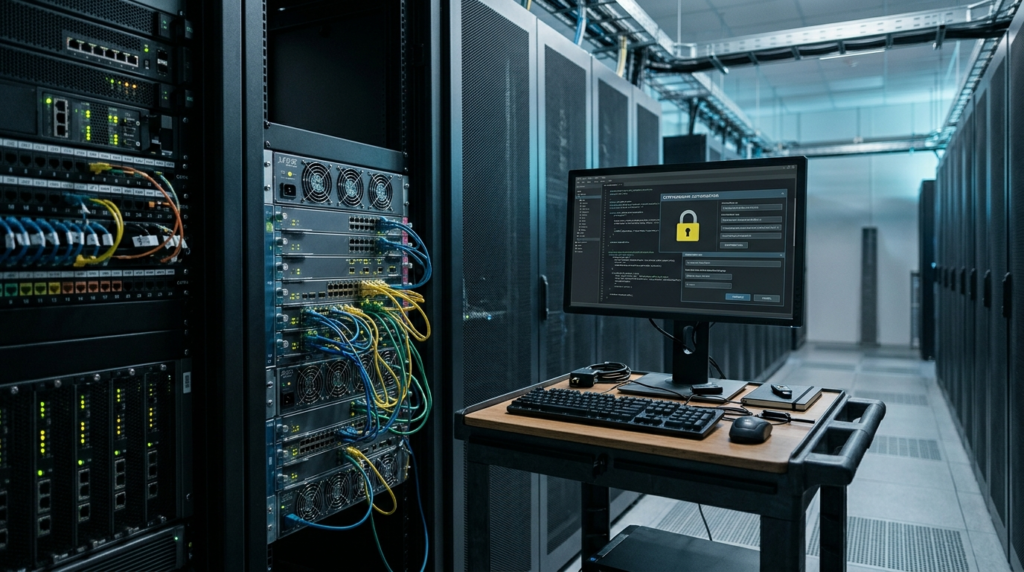
For organizations deploying sophisticated AI Workloads, the traditional boundaries between compute, memory, and acceleration are a bottleneck. The Cisco UCS X-Series—anchored by the 7RU X9508 Chassis—shatters this limitation through a radical “midplane-free” design. In legacy blade servers, a rigid physical midplane severely restricted the bandwidth and thermal dissipation capabilities of the chassis, making it impossible to cram high-wattage GPUs next to standard CPUs.
Cisco bypassed this by implementing X-Fabric Technology. This high-speed, PCIe-based interconnect fabric acts as a dynamic nervous system, allowing high-performance compute nodes (like the Intel-powered UCS X210c M7 or the AMD EPYC-driven X215c M8) to seamlessly bind with dedicated PCIe GPU nodes (such as the UCS X440p and X580p). This means an enterprise can pool up to 24 enterprise-grade GPUs—ranging from NVIDIA H100 and H200 NVL enterprise accelerators to the highly versatile L40S and RTX Pro 6000—within a single footprint.
The return on investment for this architecture is profoundly clear. As the demands of large language models shift, organizations do not need to execute costly “forklift upgrades” to replace entire server racks. They can merely hot-swap or attach additional GPU modules, fundamentally altering the physics of data center scaling. But raw hardware density is only half the equation; the deployment orchestration must match the speed of the hardware. This is where Cisco Intersight Managed Mode (IMM) completely rewrites the playbook.
Transitioning away from the localized constraints of legacy UCS Manager, IMM moves the control plane to a cloud-native, SaaS-based platform. Engineers are no longer trapped in tedious click-ops. Through native Redfish RESTful APIs and OpenAPI standards, deployment templates, storage configurations, and firmware upgrades via the Hardware Compatibility List (HCL) are executed instantly. This enables deep integration with modern Infrastructure-as-Code (IaC) tools like Terraform and Ansible, allowing infrastructure to be spun up at the speed of software within Enterprise IT environments.
Market Impact & Deployment: Splunk’s AI Toolkit

Once the multi-million-dollar AI hardware stack is racked, stacked, and powered on, a secondary crisis emerges: telemetry overload. An enterprise-grade AI deployment generates a staggering volume of logging data, metrics, and network traffic metadata. Attempting to parse this data using brute-force regular expressions and traditional Syslog monitoring is a fast track to critical system failure. Enter Cisco Splunk AI Operations.
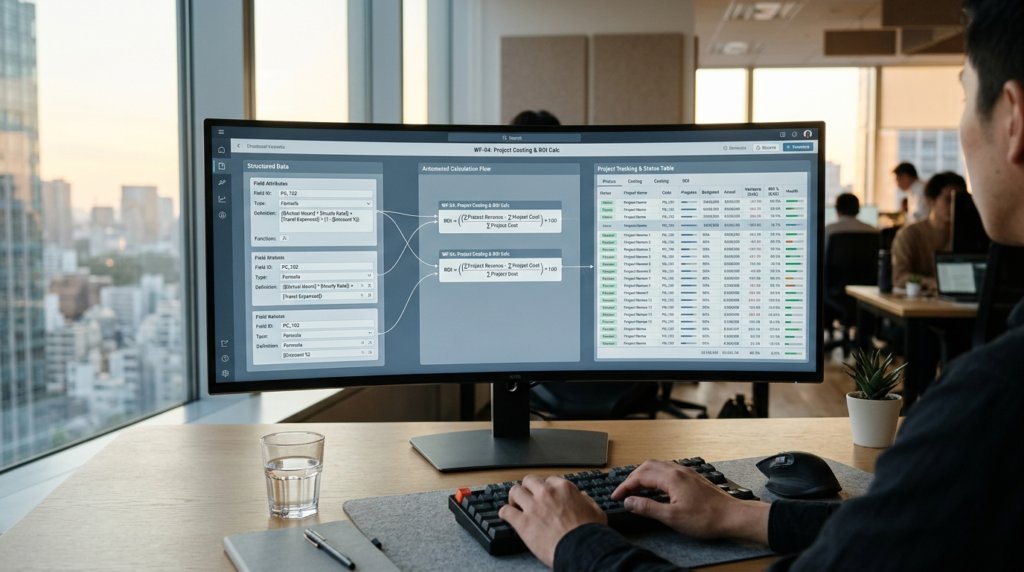
The Splunk AI Toolkit (AITK), previously known as the Machine Learning Toolkit (MLTK), is designed specifically to operationalize massive data streams and implement true AIOps. Splunk does not just ingest data; it predicts the future state of the infrastructure. The toolkit extends the native Search Processing Language (SPL) with dedicated ML-SPL commands that allow administrators to fit (train) and apply machine learning models directly against real-time data pipelines.
This deployment strategy yields immediate dividends in alert fatigue reduction. Using density functions and advanced outlier detection, Splunk AITK can establish a baseline of “normal” behavior for the UCS-X GPU nodes and associated Networking & Cloud fabrics. If a thermal anomaly occurs or if GPU memory utilization spikes outside of predicted confidence intervals, Splunk triggers a precise, highly contextual alert before a hardware degradation impacts the application layer. Furthermore, the Smart Forecasting Assistant utilizes predictive analytics to anticipate when capacity limits will be breached, shifting IT from a reactive break-fix mentality to proactive lifecycle management.
For the C-suite, this translates to massive savings in Total Cost of Ownership (TCO). Splunk’s AIOps governance frameworks allow enterprises to scale their machine learning capabilities safely, utilizing role-based access controls (like the mltk admin role) to ensure that automated remediation actions are securely executed. Recent updates, including Agent Launchpad and integrations with Large Language Models, are paving the way for autonomous agents that can automatically isolate compromised network segments or re-route data traffic dynamically.
The Consumer Translation: Invisible Reliability
While the intricacies of PCIe fabric and ML-SPL commands are the domain of senior engineers, the worldwide public feels the impact of this highly technical shift every single day. When you prompt a generative AI assistant on your smartphone to write an email, analyze a spreadsheet, or generate a photorealistic image, you expect a response in milliseconds.
Behind the scenes, the request hits a vast data center. Without Cisco’s UCS-X architecture, the server might buckle under the intense computational weight of the request, leading to timeouts, errors, and a frustrating user experience. By disaggregating the GPUs and dynamically allocating power exactly where it is needed, the hardware guarantees that consumer AI applications remain fluid and responsive.
Simultaneously, Splunk’s AIOps acts as an invisible shield for global digital services. Whether you are using a mobile banking application that relies on real-time fraud detection algorithms, or utilizing telemedicine services that require flawless uptime, AIOps ensures the backend infrastructure is self-healing. By predicting failures before they happen and correlating disparate telemetry events across the hybrid cloud, this combination of Cisco hardware and Splunk software ensures that the modern digital world remains online, secure, and infinitely scalable.
Frequently Asked Questions

Q1: What makes the Cisco UCS X-Series ideal for AI workloads?
A1: The UCS X-Series uses a midplane-free architecture, allowing compute nodes to connect directly to dedicated PCIe GPU nodes via high-speed X-Fabric. This enables massive scalability for power-hungry NVIDIA H100 and L40S GPUs required for large language models.
Q2: How does Cisco Intersight Managed Mode (IMM) improve operations?
A2: IMM shifts management from localized fabric interconnects to a cloud-based, API-first control plane. This enables engineers to use Infrastructure-as-Code tools like Terraform for automated deployment, hardware compliance monitoring, and telemetry collection.
Q3: What is the role of the Splunk AI Toolkit (AITK) in network operations?
A3: The Splunk AI Toolkit replaces brute-force manual log analysis with machine learning. It uses ML-SPL commands to cluster similar events, detect outliers, and forecast resource utilization, drastically reducing alert fatigue and accelerating root-cause analysis.