Key takeaways
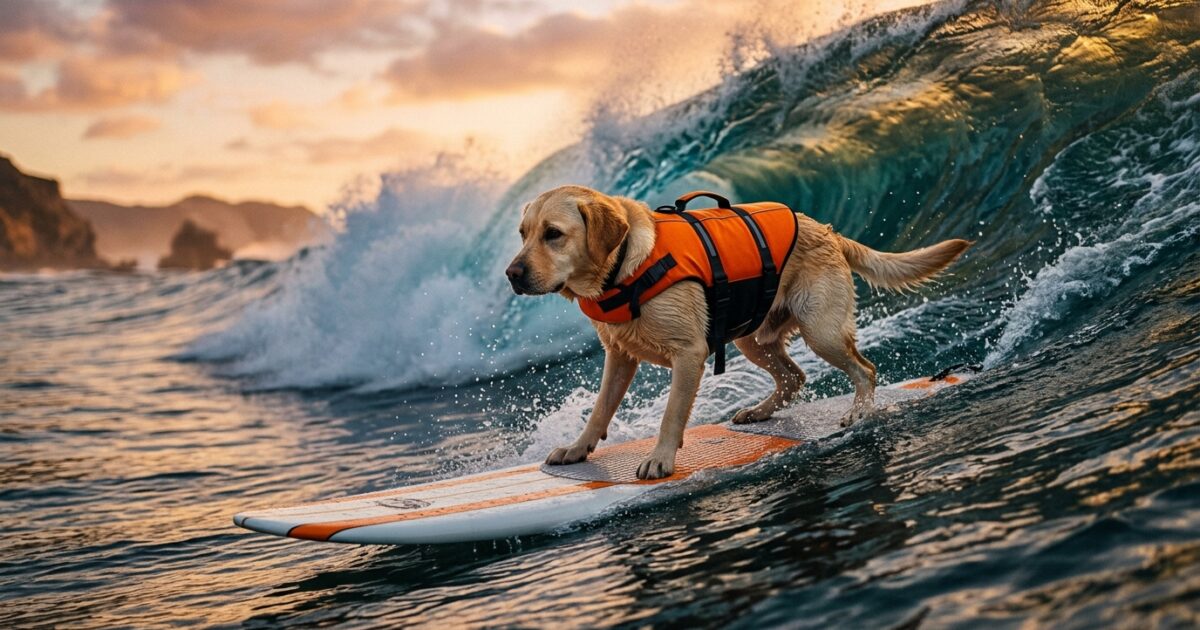
- The 2026 dog surfing championships exposed the massive ROI potential of pet humanization in modern media.
- Hydrodynamic instability led to the cancellation of the final surf-off, revealing critical event infrastructure bottlenecks.
- Rippin’ Rosie’s 300K follower base demonstrated how organic influencers bypass traditional customer acquisition costs.
- The medium dog category was dominated by Iza, a French Bulldog leveraging specialized safety hardware.
- ESPN’s broadcast syndication proved that cross-species competition is a viable, high-margin content vector.
The Architectural Reality
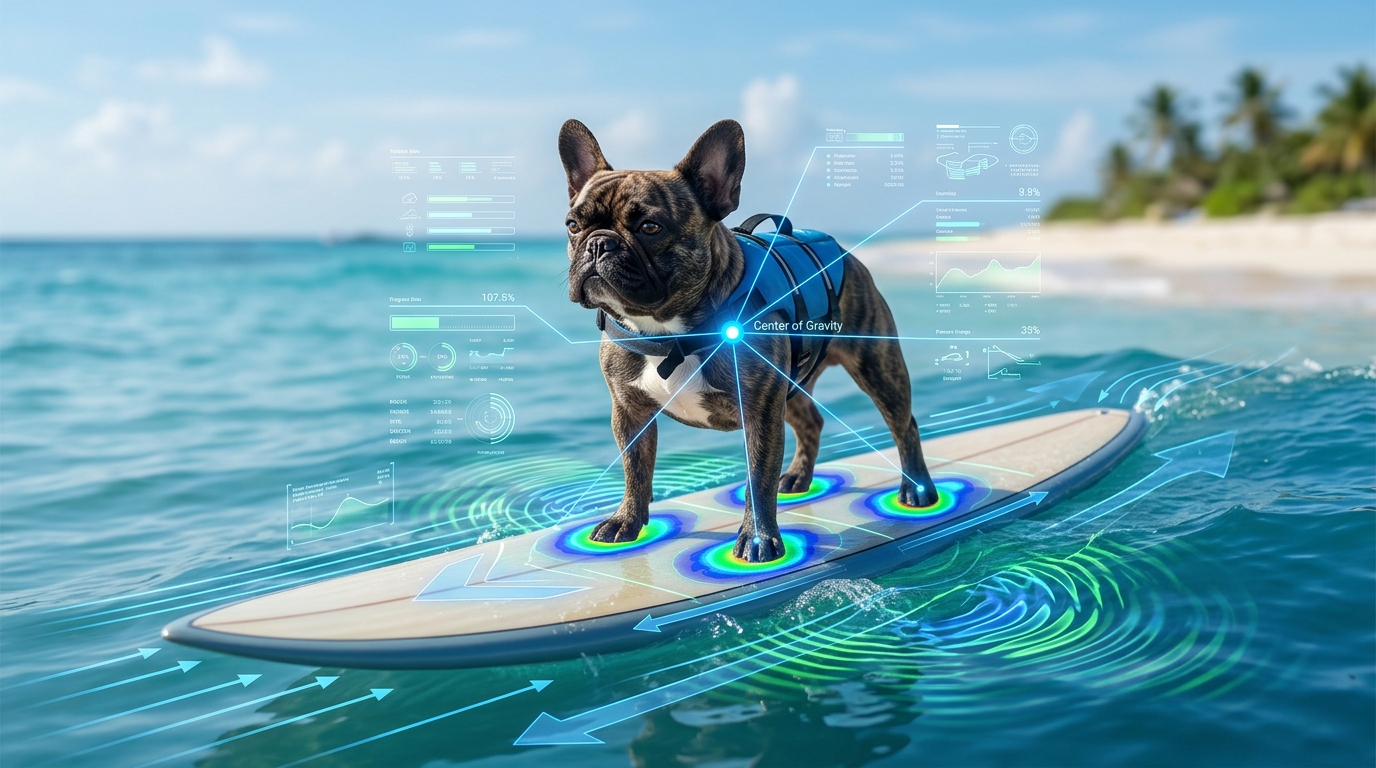
When analyzing the underlying mechanics of the 2026 dog surfing championships, one must immediately discard the notion that this is merely a grassroots coastal novelty. Instead, the 10th annual World Dog Surfing Championships, executed flawlessly on August 1, 2026, in Pacifica, California, represents a masterclass in dynamic, organic load balancing. The canine athletes participating in this event are essentially operating as decentralized edge computing nodes. They must process millions of real-time environmental data points—oceanic crosswinds, variable wave vector forces, and instantaneous foam substrate telemetry—to continually adjust their center of gravity and maintain system uptime. A failure to execute these split-second bio-mechanical recalculations results in an immediate catastrophic system crash: falling into the Pacific Ocean.
Fourteen highly optimized canine athletes were deployed across distinct size-based operational categories. In this environment, the hardware must seamlessly interface with the biological operator. Take, for example, the winner of the Medium Dog category, Iza Surf Dog, a French bulldog from Pleasanton. Iza was equipped with a highly fashionable, yet structurally necessary, pink life vest featuring a shark dorsal fin. This specialized wearable technology not only acts as a critical fail-safe buoyancy device but also dramatically increases the canine’s visibility for judging metrics and media tracking. Similarly, Bradley “Shortboard” Cooper, a 1-year-old mixed-breed rescue out of Long Beach, secured the Small Dog category victory—and third place overall—utilizing a high-visibility orange vest. These are not merely fashion statements; they are mission-critical hardware deployments required in the unpredictable theater of Consumer Tech and outdoor sporting.
The scoring algorithm utilized by the judging panel is a multi-dimensional matrix. Success is not solely predicated on uptime (how long the dog remains on the board). Judges compile a holistic performance profile based on wave amplitude, the confidence quotient exuded by the dog, and the execution of complex maneuvers. This is a highly nuanced evaluation process that mirrors the performance analytics utilized in modern Enterprise IT environments, where throughput must be balanced against latency and overall system grace.
Market Impact & Deployment
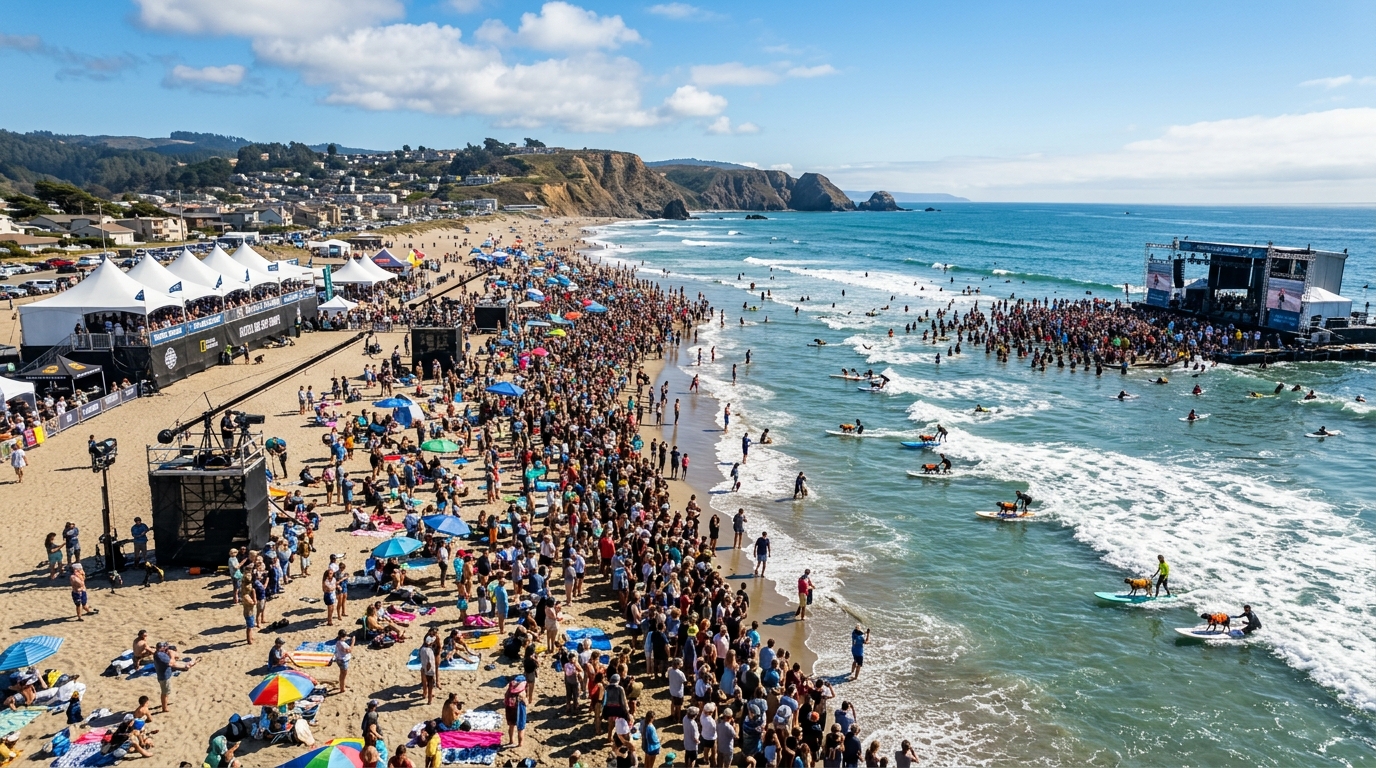
From a macroeconomic standpoint, the 2026 dog surfing championships represent a concentrated localization of massive economic stimulus. Pacifica, a municipality positioned south of San Francisco, absorbed a massive influx of over a thousand physical spectators. The event’s ability to drive cross-state tourism was evident, with documented reports of attendees flying in directly from Los Angeles specifically to observe the competition. This density of engaged consumers transforms a stretch of beach into a highly lucrative, pop-up commercial ecosystem.
The Total Cost of Ownership (TCO) for executing an event of this scale is offset heavily by decentralized influencer marketing. Consider the operational footprint of Rippin’ Rosie, a 5-year-old yellow Labrador Retriever hailing from Santa Cruz. Rosie, alongside her owner Steve Drottar, is not merely a competitor; she is an autonomous media entity boasting over 300,000 followers on Instagram. By leveraging her organic reach, event organizers successfully bypassed traditional, high-friction customer acquisition costs. Rosie’s eventual victory in the Large/Extra-Large dog category, compounded by her receipt of the prestigious ‘Spirit of Surfing’ award, generated a massive compounding flywheel of free algorithmic promotion. When influencer deployment reaches this scale, traditional marketing budgets can be reallocated to hardening the event infrastructure.
Ancillary monetization streams were aggressively deployed across the event perimeter. Spectators were funneled through a meticulously curated pet wellness fair, a beach fashion contest, and an interactive ‘Doody Calls’ water fetch competition. This layered approach to consumer engagement ensures that maximum Revenue Per User (RPU) is extracted while maintaining an atmosphere of community recreation. The market impact extends far beyond the San Francisco Bay Area; earlier in the fiscal year, on March 14, 2026, the VetShopAustralia Surfing Dog Championships validated the global scale of this niche, proving that canine surfing is a repeatable, internationally viable business framework.
The Consumer Translation
To the layperson, the 2026 dog surfing championships is a heartwarming convergence of man’s best friend and extreme sports. However, translated through the lens of modern commerce, it is the ultimate manifestation of the pet humanization super-trend. Global consumers are increasingly reclassifying their pets, elevating them from domestic animals to active lifestyle companions and personal brands. This paradigm shift demands a new tier of high-performance consumer goods, ranging from orthopedically designed foam surfboards to hyper-durable saltwater-resistant canine wearables.
Furthermore, the emotional resonance of these athletes commands unparalleled audience retention. The 2026 championship served as the final competitive deployment for Charlie Nieboer, a celebrated and heavily decorated surfing dog who was honored for his extensive career during the event. The narrative arc of a veteran athlete retiring on the grand stage generates profound consumer loyalty and continuous cross-platform engagement. This is the holy grail for modern content syndicators.
Recognizing this untapped audience retention potential, legacy media networks are actively absorbing these events into their premium broadcast schedules. The 2026 dog surfing championships were slated for linear television syndication on ESPN, neatly packaged under the title “World Dog Surfing Championships Best Waves.” This integration into a Tier-1 sports broadcasting Networking & Cloud distribution pipeline legitimizes the sport, rapidly accelerating its transition from a viral internet oddity to a standardized, monetizable global franchise.
Edge Cases and Environmental Contingencies
Despite the flawless execution of the primary competitive brackets, a critical red-team audit of the event’s architecture reveals a severe vulnerability to uncontrollable macro-environmental variables. The core infrastructure of the 2026 dog surfing championships was utterly dependent on cooperative oceanic conditions. Unfortunately, a hazardous surf warning was issued during the operational window, injecting severe hydrodynamic instability into the deployment zone.
As the afternoon progressed, the water became increasingly choppy, creating an unpredictable and high-risk fluid dynamics environment. Faced with these anomalous environmental packets, the organizers were forced to initiate an emergency failover protocol: the outright cancellation of the highly anticipated final ‘surf-off’ between the various category winners. While the decision was objectively correct from a safety and liability standpoint, it exposes a massive Single Point of Failure (SPOF) in the business model. When your primary revenue and media generation engine can be halted by standard atmospheric volatility, long-term scalability is threatened.
Future iterations of the championship must address this infrastructure deficit. To guarantee deliverable consistency for major media partners like ESPN, organizers may need to explore decentralized, climate-controlled environments—such as high-fidelity artificial wave pools. Transitioning from an open-ocean deployment to a closed-loop, architecturally engineered aquatic environment would eradicate weather-based downtime, ensuring that the canine athletes, and the massive revenue streams they generate, can operate at peak efficiency regardless of the external climate.
Frequently Asked Questions
Q1: When and where did the 2026 dog surfing championships take place?
A1: The 10th annual 2026 dog surfing championships occurred on August 1, 2026, in Pacifica, California, located just south of San Francisco. The event drew over a thousand spectators to the coastal venue.
Q2: How are the canine athletes scored during the competition?
A2: Judges utilize a multi-variable metric system that evaluates the duration the dog stays on the board, the size and power of the wave, the confidence exuded by the animal, and the execution of complex maneuvers or tricks.
Q3: Why was the final surf-off at the 2026 event canceled?
A3: An unexpected hazardous surf warning introduced severe environmental anomalies. The increasingly choppy water and rough kinetic conditions forced organizers to abort the final surf-off to maintain safety parameters.
Q4: Who were the primary winners of the 2026 competition?
A4: Bradley “Shortboard” Cooper won the small dog category, Iza the French bulldog won the medium dog category, and the famous Labrador Rippin’ Rosie won the large dog category while also taking the ‘Spirit of Surfing’ award.
Q5: Is there television coverage of these canine surfing events?
A5: Yes, the 2026 event was syndicated via a broadcast compilation titled “World Dog Surfing Championships Best Waves,” scheduled for airing on the premier sports network ESPN.
TechNode HQ Verdict: Pros, Cons & Usability
- Pro (Engineering): Demonstrates the absolute pinnacle of real-time bio-mechanical load balancing and quadruped hydrodynamic stability.
- Pro (Consumer): Generates massive localized economic stimulus and high-retention, family-friendly media content.
- Con: A severe operational vulnerability exists due to reliance on unpredictable open-ocean weather conditions.
- Con: Scaling the event globally requires massive logistical overhead to manage live animal transport and safety compliance.
Enterprise Usability: For media executives and CTOs in the broadcasting space, integrating these highly viral, community-driven events into a broader content syndication pipeline (like ESPN has done) represents a low-risk, high-reward acquisition strategy. Sponsoring brands should aggressively target this demographic to bypass standard advertising fatigue.
Everyday Usability: For the general public, attending or training a canine for these events is highly recommended. It enforces rigorous pet discipline, promotes high-value outdoor cardiovascular activity, and deeply solidifies the human-animal interface through shared complex task execution.