Key takeaways
- John Boorman’s 1977 sequel represents a catastrophic failure in product-market alignment and enterprise strategy.
- The 112-minute documentary explores experimental 1970s cinematic hardware, including early Steadicam prototypes.
- Boorman’s near-fatal illness during production highlights the systemic fragility of single-point-of-failure leadership.
- The commercial failure of the film permanently altered Hollywood’s risk tolerance and IP management protocols.
- Debuting at Venice 2025, the documentary holds a 100% rating on Rotten Tomatoes ahead of its August 2026 release.
The Anatomy of the Exorcist II Disaster
When migrating a highly successful legacy system to a next-generation platform, the cardinal rule of Enterprise IT is to ensure backward compatibility and maintain user expectations. In 1977, Warner Bros. completely abandoned this protocol. The resulting implosion is widely regarded as one of the most notorious commercial misfires in the history of entertainment, a catastrophic system crash that fundamentally altered how the industry manages its Intellectual Property (IP). Now, the Exorcist II disaster is being thoroughly audited in David Kittredge’s new 112-minute documentary, Boorman and the Devil.
Following the paradigm-shifting success of William Friedkin’s 1973 masterpiece, The Exorcist, Warner Bros. possessed a golden asset. Instead of iterating safely, they handed a blank-check CAPEX to director John Boorman—fresh off the success of Deliverance—to engineer the sequel. But Boorman didn’t want to build a sequel; he wanted to build an entirely new metaphysical architecture. The new documentary, distributed by Yellow Veil Pictures, meticulously reconstructs the sequence of events that led to a breakdown so severe that it nearly ended Boorman’s career and redefined Hollywood’s risk tolerance.
The Architectural Reality: Cinematic Infrastructure
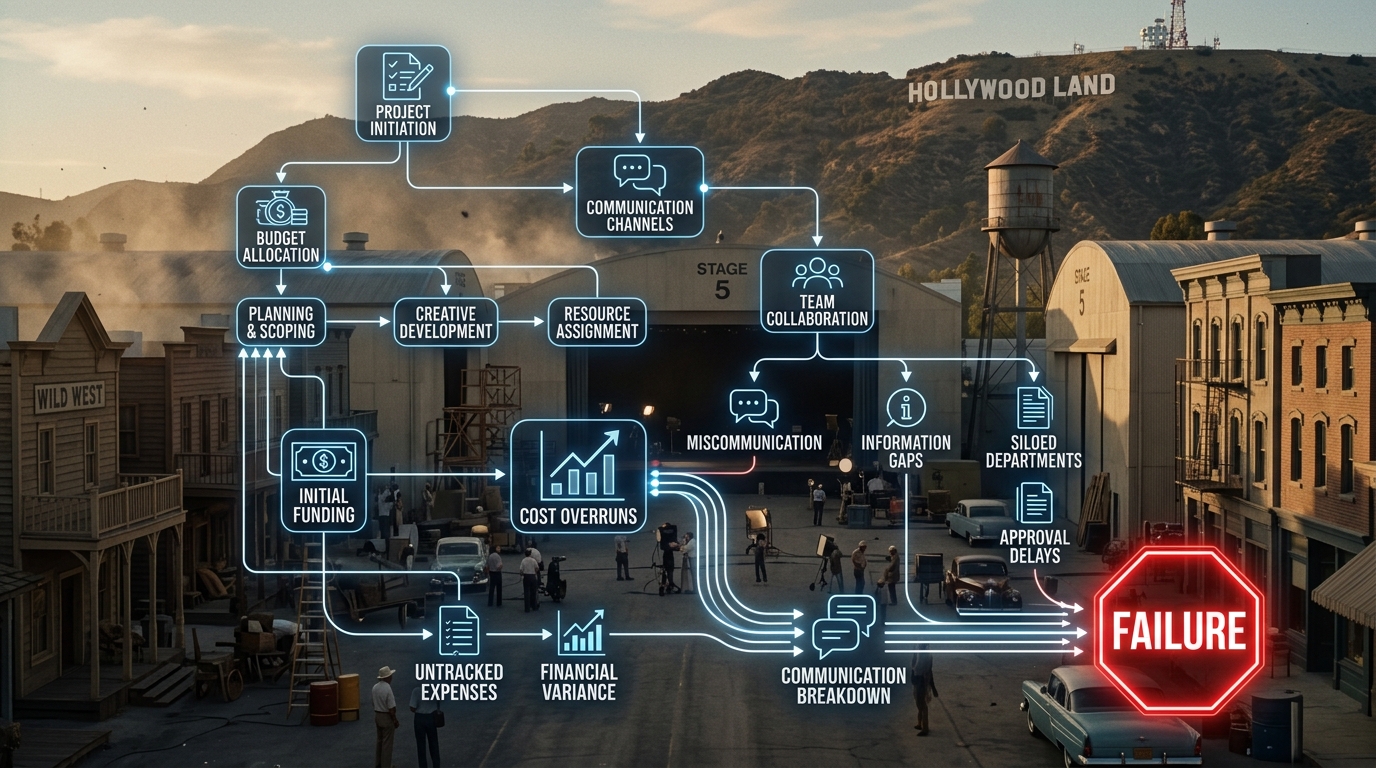
From an engineering perspective, the production of Exorcist II: The Heretic is a fascinating case study in experimental deployment. Boorman refused to rely on standard industry methodologies. Instead, he heavily integrated beta-stage Hardware & Silicon and optical techniques that were highly unstable. The documentary dives deep into his use of “ghost glass”—a complex in-camera optical effect used to overlay reflections and images without post-production compositing.
Furthermore, the production served as an early testing ground for Steadicam technology, pushing the physical limits of what camera operators could achieve in the 1970s. Massive soundstages were constructed, and vast matte paintings were deployed to simulate African landscapes. However, this heavy reliance on experimental infrastructure created severe bottlenecks. When Boorman contracted a mysterious, near-fatal illness during the shoot, the entire multi-million dollar enterprise ground to a halt, brutally exposing the fragility of a system designed with a single-point-of-failure leadership structure. There was no redundancy in the director’s chair, and the project hemorrhaged capital while waiting for him to recover.
Market Impact & Deployment
When analyzing the Total Cost of Ownership (TCO) and market launch, the release of Exorcist II serves as a masterclass in how not to deploy a product. Audiences lined up expecting a terrifying continuation of the demonic possession IP. Instead, they were served a surreal, pseudo-scientific exploration of a synchronized global consciousness. The product-market fit was entirely nonexistent.
The consumer backlash was so immediate and violently negative that Boorman was forced into emergency crisis management. In a move equivalent to live-patching a broken server infrastructure while users are actively logging in, Boorman literally re-cut the negative while the film was already playing in theaters across the country. He dispatched new reels to projectionists in a desperate attempt to fix the pacing and narrative flow. This unprecedented, hot-swapping approach to theatrical distribution failed to save the film from critical annihilation.
The Consumer Translation
For the general public, the documentary—which premiered to high acclaim at the 82nd Venice International Film Festival in September 2025 and currently holds a 100% rating on Rotten Tomatoes—offers a fascinating glimpse into the hubris of 1970s auteur filmmaking. It highlights how a staggering cast including Linda Blair, Louise Fletcher (fresh off her Oscar for One Flew Over the Cuckoo’s Nest), Richard Burton, Max von Sydow, and James Earl Jones could be assembled for a project that fundamentally misunderstood its own audience.
As noted in advanced Reviews & Comparisons, Boorman and the Devil succeeds by not merely mocking the failure. Through interviews with modern genre masters like Mike Flanagan, Joe Dante, and Karyn Kusama, it examines the necessity of taking massive creative risks. Without the spectacular failure of Exorcist II, we wouldn’t have Ennio Morricone’s deeply experimental, highly regarded musical score, nor would we have the infamous, wildly meme-able dialogue (“Come, fly the teeth of the wind!”).
Risk Assessment and Future IP Infrastructure
The shockwaves of this failure forced a complete restructuring of studio risk assessment. The days of giving a visionary director absolute, unchecked authority over a valuable corporate IP were numbered. The industry shifted toward the modern franchise model: heavily vetted, committee-driven, low-variance product deployments designed to minimize risk and maximize backward compatibility with audience expectations.
As Boorman and the Devil prepares for its exclusive theatrical engagement at the Quad Cinema in New York City on August 28, 2026, before expanding nationally on September 4, it serves as a stark reminder for any enterprise. Whether you are deploying a global cinematic release or rolling out a massive cloud migration, ignoring the core user base in favor of experimental vanity architecture is a direct path to a catastrophic system failure.
Frequently Asked Questions
Q1: When does the Boorman and the Devil documentary release?
A1: The documentary premieres theatrically at the Quad Cinema in New York City on August 28, 2026, followed by a wider nationwide expansion starting September 4, 2026.
Q2: What technological innovations were attempted in Exorcist II?
A2: Director John Boorman utilized highly experimental cinematic hardware, including in-camera “ghost glass” opticals, massive matte paintings, and early Steadicam technology, attempting a complex metaphysical visual architecture rather than a standard sequel.
Q3: How was the documentary received critically?
A3: Following its premiere at the 82nd Venice International Film Festival in September 2025, David Kittredge’s 112-minute documentary currently holds a rare 100% approval rating on Rotten Tomatoes based on early critical reviews.
Q4: Why is Exorcist II considered such a monumental failure?
A4: The film completely abandoned the established user expectations of the original IP, resulting in massive public backlash. The failure forced John Boorman to literally re-edit the film while it was actively playing in theaters—the equivalent of live-patching a catastrophic software bug post-deployment.
TechNode HQ Verdict: Pros, Cons & Usability
- Pro (Engineering): The documentary provides an incredible archival look at beta-stage 1970s hardware and experimental in-camera optical engineering.
- Pro (Consumer): A highly entertaining, 112-minute autopsy of a cinematic disaster featuring interviews with top-tier genre talent like Mike Flanagan and Joe Dante.
- Con: The narrative occasionally romanticizes a severe failure in product-market fit, framing executive mismanagement merely as “artistic ambition.”
- Con: The limited theatrical rollout (initially only NYC) restricts immediate access for nationwide analysts and film historians.
Enterprise Usability: For project managers, CTOs, and IP managers, this documentary is essential viewing as a post-mortem on what happens when a team builds a product the market aggressively does not want, ignoring established legacy parameters.
Everyday Usability: For cinephiles and fans of Hollywood history, it is a must-watch breakdown of one of the most fascinating trainwrecks in cinematic history.