Key takeaways
- Comic-Con 2026 trailers highlight the escalating infrastructure demands on global Content Delivery Networks.
- Amazon’s staggered release of Reacher Season 4 optimizes edge computing load management and reduces TCO.
- The October 7 release of Carrie requires massive bandwidth for an 8-episode concurrent content drop.
- Modern enterprise IT must prioritize predictive caching when scaling direct-to-consumer streaming capabilities.
- Sprawling sci-fi and fantasy epics drive the adoption of highly efficient AV1 and H.265 video codecs.
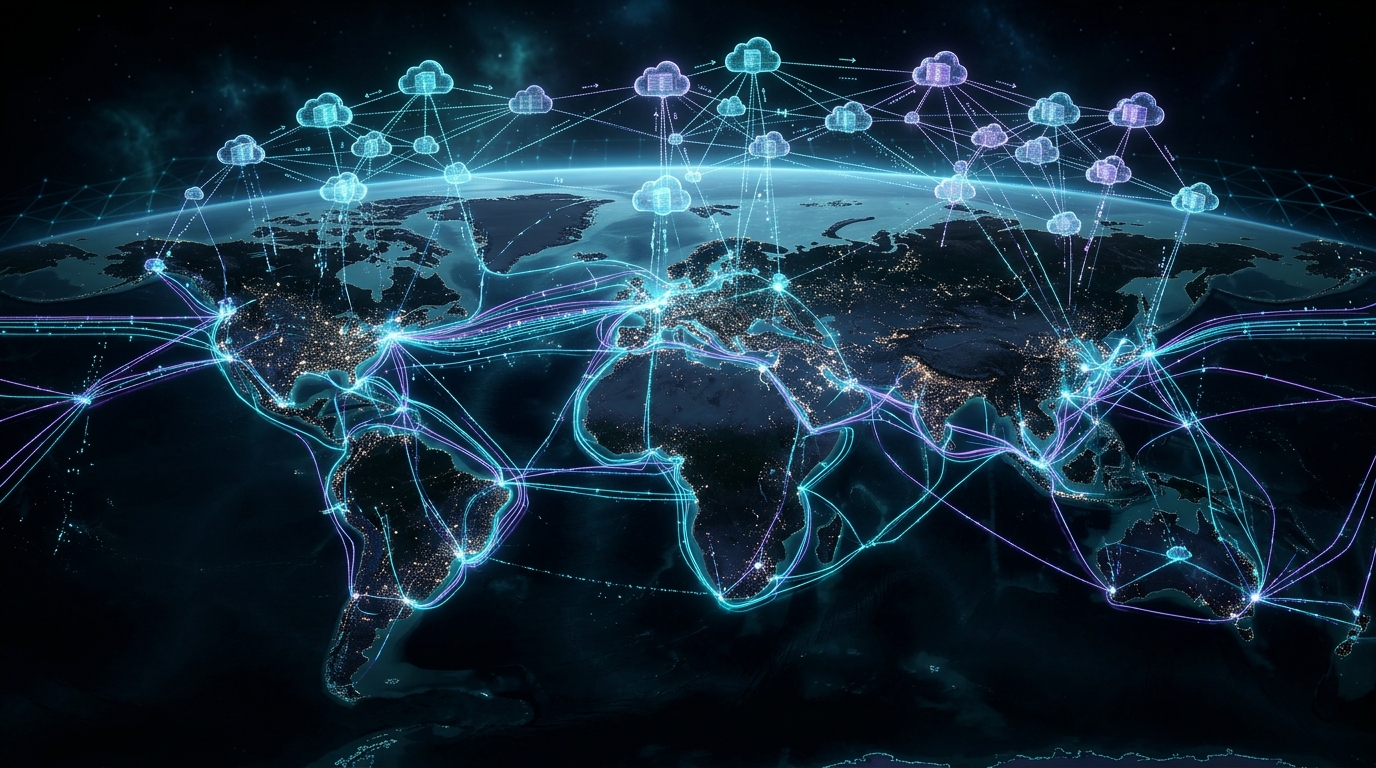
San Diego Comic-Con is traditionally viewed as a celebration of global pop culture, but for network architects and datacenter operators, it serves as a highly precise forecasting mechanism. The Comic-Con 2026 trailers released this weekend provide a direct look into the network traffic payloads expected over the next eighteen months. As streaming giants like Prime Video, Apple TV, and HBO Max unleash their slates, the underlying cloud infrastructure must scale elastically to meet unprecedented and highly localized consumer demand. For Chief Information Officers (CIOs) and network administrators, these trailers do not just represent entertainment; they represent massive data payloads that must be routed across Content Delivery Networks (CDNs) with zero latency.
Think of global network routing for a highly anticipated television series premiere as a massive, synchronized global logistics operation. Instead of physical cargo ships converging on a single port, millions of simultaneous, high-definition data streams are requested from decentralized edge servers by individual households. If the edge caches are not properly stocked with the right data “inventory” before the consumer surge, the central network core becomes rapidly overwhelmed. This results in latency, buffering, dropped packets, and ultimately, a complete logistical breakdown of the streaming application.
Comic-Con 2026 Trailers And The Architectural Reality
The sheer volume of high-bitrate content announced dictates caching strategies for the remainder of the fiscal year. Amazon’s Prime Video slate is particularly demanding. When the official trailer for Reacher Season 4 was released at San Diego Comic-Con 2026, engineers immediately began calculating the bandwidth requirements. Reacher Season 4 is confirmed to premiere on Prime Video on August 12, 2026. The series, which sees Jack Reacher navigating a dangerous conspiracy following a chance encounter on a subway in a new urban setting in Philadelphia, will consist of eight total episodes. Based on Lee Child’s 13th novel, Gone Tomorrow, the infrastructure load is strategically mitigated by Prime Video’s highly controlled release schedule: the first three episodes of Reacher Season 4 will drop on the premiere date, followed by a staggered weekly rollout until the finale of Reacher Season 4 airs on September 16, 2026.
This staggered deployment strategy is a textbook example of traffic shaping within Networking & Cloud operations. By intentionally avoiding a full-season “binge drop,” Prime Video flattens the bandwidth curve, dramatically reducing the peak load on its edge computing servers. Interestingly, this aligns with the release of the franchise’s new extended universe. A teaser for the new spinoff series Neagley starring Maria Sten debuted at Comic-Con, and the spinoff series is scheduled to release its first season on September 16, 2026—the exact same day as the Reacher finale. This creates a calculated, concurrent traffic spike designed to seamlessly bridge subscriber sessions from one network request to another. Furthermore, Alan Ritchson confirmed that Reacher has been renewed for a fifth season. Reacher Season 5 will adapt the 20th novel in the series, Make Me, and production for Reacher Season 5 is already underway, ensuring that AWS infrastructure teams will be managing this specific payload pattern for years to come.
In stark contrast to this staggered approach, Prime Video is employing a massive “binge drop” strategy for its highly anticipated horror adaptation. Mike Flanagan is the showrunner and director for the upcoming Carrie miniseries, with Stephen King heavily involved as an executive producer on the new project. Prime Video debuted the official teaser trailer for the modernized adaptation of Carrie at Comic-Con. Unlike Reacher, all eight episodes of the Carrie miniseries will premiere simultaneously on October 7, 2026, on Amazon Prime Video. Starring Summer H. Howell as Carrie White, Samantha Sloyan as Margaret White, Siena Agudong as Sue Snell, and Matthew Lillard as Principal Grayle, the new Carrie miniseries focuses on the evolution of bullying in the age of social media and the internet. Delivering eight continuous hours of 4K HDR content globally at the exact same moment requires immense, preemptive data positioning at edge nodes, representing a significantly higher risk of localized network congestion.
Market Impact & Deployment
The Total Cost of Ownership (TCO) for streaming platforms is heavily dictated by their compute elasticity and delivery expenditures. When evaluating the slate of Comic-Con 2026 trailers, it becomes immediately evident that sprawling sci-fi and fantasy properties are driving the highest Enterprise IT infrastructure costs due to their reliance on high-bitrate visual effects.
Take, for instance, Blade Runner 2099, which will debut on November 25 on Prime Video. The eight-episode limited series, a direct sequel to the 2017 film Blade Runner 2049, stars Michelle Yeoh and Hunter Schafer alongside Sheila Atim, Katelyn Rose Downey, Dimitri Abold, and Daniel Rigby. Set in an alternate version of Los Angeles where replicants run things, the visually dense, darkly lit cyberpunk aesthetic requires advanced compression algorithms to stream efficiently without sacrificing visual fidelity. Similarly, The Lord of the Rings: The Rings of Power Season 3 debuts on November 11 on Prime Video. Featuring Jamie Campbell Bower as Celeborn and introducing the Nazgnagôl (Ringwraiths), the series demands top-tier adaptive bitrate allocation to render expansive, high-motion battles across Middle-earth without dropping frames.
Warner Bros. Discovery and HBO Max are simultaneously deploying their own high-TCO network assets. The DC series Lanterns arrives on HBO Max on August 16. With Kyle Chandler as Hal Jordan challenging John Stewart’s worthiness, and the duo facing off against Manhunters and Sinestro, the VFX-heavy payload will rigorously test HBO’s CDN elasticity. Concurrently, HBO Max is streaming the Big Bang Theory multiversal spin-off Stuart Fails to Save the Universe, starring Kevin Sussman, with new episodes airing Thursdays at 9 p.m. ET. For younger demographics, Regular Show: The Lost Tapes will distribute its bandwidth impact across multiple disparate platforms: debuting on Cartoon Network and HBO Max on September 7, Cartoon Network exclusively on September 19, and finally HBO Max and Hulu on October 11.
Apple TV continues to push the absolute boundaries of high-fidelity streaming architecture. Dark Matter Season 2 returns on August 28, testing the stability of the Dessen family and Apple’s global edge network. Following this, Apple TV will launch Matchbox The Movie on October 9, starring John Cena, Jessica Biel, Teyonah Parris, Sam Richardson, and Arturo Castro. Looking further ahead into the next fiscal year, Apple’s highly anticipated cyberpunk series Neuromancer, starring Callum Turner, is slated for January 22, 2027. These premium deployments highlight exactly why Apple invests so heavily in proprietary backbone infrastructure to ensure flawless delivery.
Disney Plus is not exempt from these scaling challenges. Season 3 of Percy Jackson and the Olympians will premiere on November 20. Based on The Titan’s Curse, the eight-episode season introduces a massive ensemble cast including Dafne Keen (Artemis), Holt McCallany (Atlas), Jesse L. Martin, Ming-Na Wen (Hera), Jennifer Beals (Demeter), Hubert Smielecki (Apollo), and Kate McKinnon (Aphrodite). Delivering this highly anticipated family content during the pre-holiday Thanksgiving traffic surge requires meticulous routing protocols and dedicated peering agreements.
Cross-Industry Impact: Beyond the Living Room
The secondary effect of these massive streaming releases cascades far beyond the streaming providers themselves. Internet Service Providers (ISPs) must drastically upgrade their backbone peering points to accommodate the surging traffic. Furthermore, this heavy influx of pop-culture payload delivery disrupts merchandising and e-commerce supply chains. For example, when a show like The Lord of the Rings: The Rings of Power drops a new episode, Amazon’s AWS handles the video stream while their underlying retail infrastructure handles instantaneous, highly correlated surges in related merchandise search queries. These parallel systems must communicate seamlessly to maximize revenue capture.
The Consumer Translation
For the average viewer, intricate network routing protocols and edge server deployments remain entirely invisible. The baseline Consumer Tech expectation in 2026 is that a 4K Dolby Vision stream will begin playing within milliseconds of pressing a button on a smart TV. When audiences sit down to watch the AMC premiere of Queen of the Damned—the fourth season of Interview With the Vampire focusing on the vampire Akasha (Sheila Atim) alongside Jacob Anderson, Assad Zaman, and Eric Bogosian—they do not consider the complex BGP routing tables making that instant connection possible.
This strict expectation of seamless delivery extends beyond standard live-action television to highly detailed animated epics. Avatar: Seven Havens, following twin avatars Pavi and Nisha, debuts this fall on Paramount Plus. The precise delivery of animation requires specialized codec configurations to maintain crisp lines and vivid colors without digital macroblocking. Similarly, the anime film Mobile Suit Gundam RG XARX-ZERO, directed by Kenji Kamiyama and set 100 years before Gundam Rogue Orbit, will demand flawless streaming metrics when it arrives in 2027 to tie into a larger, latency-sensitive video game universe.
Even theatrical releases highlighted at Comic-Con rely heavily on digital infrastructure for distribution to digital cinema packages (DCP) worldwide. The live-action/animation hybrid Coyote vs. Acme, starring Will Forte, John Cena, and Lana Condor, opens in theaters on August 28. Later in the year, the star-studded Ebenezer, featuring Johnny Depp, Rupert Grint, Ian McKellen, Daisy Ridley, and Sam Claflin, hits theaters on November 13. Meanwhile, ongoing legacy franchises like Star Trek: Strange New Worlds, which previewed its 4th season at the convention, continue to drive consistent, predictable traffic patterns that network operators rely upon to baseline their backend systems.
Ultimately, the true marvel of San Diego Comic-Con 2026 isn’t merely the sheer volume of storytelling; it is the staggering, unseen technological capability required to deliver these stories into billions of living rooms across the globe. As developers, backend engineers, and IT leaders analyze these cinematic release schedules, they are essentially viewing a highly anticipated roadmap of network stress tests, actively shaping the future of global data infrastructure.
Frequently Asked Questions
Q1: What are the biggest releases announced among the Comic-Con 2026 trailers?
A1: Prime Video dominated the Comic-Con 2026 trailers with massive payload announcements for Reacher Season 4 (premiering August 12, 2026) and a new Carrie miniseries (dropping October 7, 2026).
Q2: How does the release strategy for Reacher Season 4 impact network infrastructure?
A2: Reacher Season 4 will drop its first three episodes on August 12, 2026, with the finale on September 16, 2026, allowing Content Delivery Networks to balance bandwidth over time rather than enduring a massive spike.
Q3: Why is the Carrie miniseries release considered a heavier infrastructural load?
A3: Unlike staggered releases, all eight episodes of the Mike Flanagan-directed Carrie miniseries will premiere simultaneously on October 7, 2026, forcing cloud providers to pre-cache massive amounts of data at edge nodes.
Q4: What spinoffs were announced alongside the main shows?
A4: A teaser for the Reacher spinoff series Neagley, starring Maria Sten, debuted at Comic-Con, with its first season scheduled to release on September 16, 2026.
Q5: Has Reacher been renewed beyond Season 4?
A5: Yes, Alan Ritchson confirmed that Reacher has been renewed for Season 5, which will adapt the 20th novel, Make Me, and production is already underway.
TechNode HQ Verdict: Pros, Cons & Usability
- Pro (Engineering): Staggered episodic releases, like Reacher Season 4, significantly reduce peak load on edge computing nodes, lowering CDN overhead and improving network stability.
- Pro (Consumer): Heavy competition forces streaming platforms to adopt advanced codecs like AV1, ensuring flawless 4K HDR playback even on constrained residential internet connections.
- Con: Binge-drop models, such as the 8-episode Carrie miniseries, create massive, localized traffic spikes that can quickly overwhelm regional ISPs and degrade Quality of Service (QoS).
- Con: The spiraling infrastructure costs associated with high-fidelity sci-fi and fantasy rendering continue to drive up overarching subscription prices for end-users.
Enterprise Usability: CTOs managing media delivery networks must aggressively implement predictive caching algorithms leading up to Q4 2026. The simultaneous arrival of heavy streaming properties like Blade Runner 2099, Percy Jackson, and the Reacher/Neagley crossover requires dynamic scaling policies to prevent core network saturation.
Everyday Usability: Consumers should ensure their local home networks and Wi-Fi routers are optimized, as the sheer density of 4K content dropping in late 2026 will continuously push residential internet connections to their absolute limits.