
Key takeaways
- Alkaline thermal treatment converts mixed plastics into high-purity hydrogen at a highly efficient 350°C.
- The ATT process captures released carbon as a solid mineral, completely avoiding greenhouse gas emissions.
- A brief oxidation pretreatment enables inert polyethylene to decompose efficiently in alkaline conditions.
- Commercial scaling in 2026 relies on integrating pyrolysis oil directly into existing fluid catalytic cracking units.
- Emerging catalysts like layered zeolites and molten salts are establishing powerful new paradigms for plastic upcycling.
The Architectural Reality of Alkaline Thermal Treatment
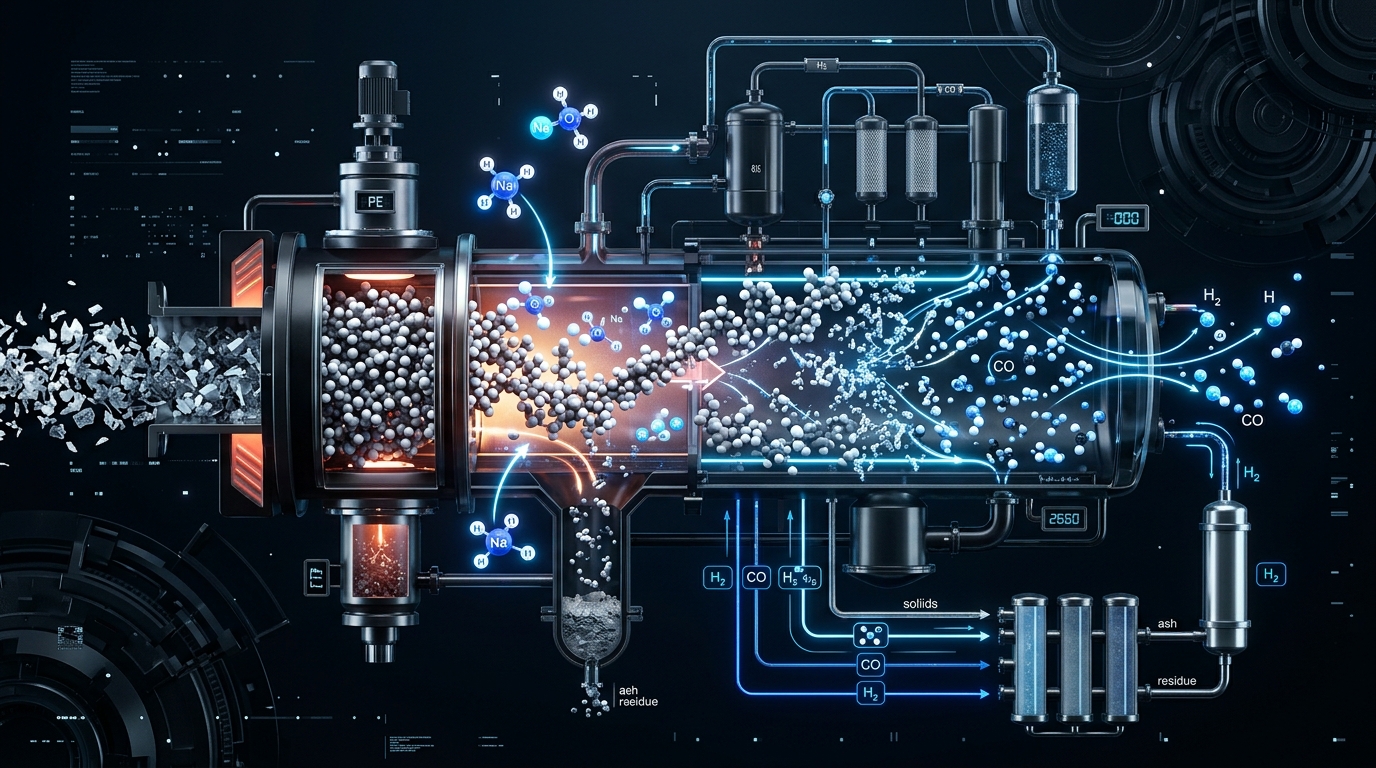
The global plastic crisis and the urgent need for decarbonized energy have long existed as parallel, seemingly insurmountable challenges. Traditional methodologies have largely failed to address the massive scale of the problem; in 2022, the global recycling rate remained stagnant at a mere 9%, while an astonishing 40% of discarded plastic ended up in landfills and 34% was incinerated, contributing heavily to atmospheric pollution. However, a revolutionary chemical process known as alkaline thermal treatment (ATT) has recently emerged from collaborative research at Ewha Womans University and the University of California, Los Angeles, offering a compelling solution to solve both crises simultaneously.
By leveraging sodium hydroxide (NaOH) as a primary alkaline reactant, alkaline thermal treatment facilitates the direct conversion of everyday mixed plastic waste—including polyethylene terephthalate (PET), polyethylene (PE), and polypropylene (PP)—into high-purity clean hydrogen. Unlike conventional gasification, which demands extreme temperatures, high pressures, and immense energy inputs, this newly adapted ATT process operates highly efficiently at approximately 350°C. This lower thermal threshold completely rewrites the energy economics of waste-to-hydrogen conversion, fundamentally altering how we view the lifecycle of synthetic polymers.
In practice, the structural decomposition of PET under ATT is immediate and highly productive, yielding up to 43.7 millimoles of hydrogen gas per gram of plastic. However, PE and PP, which consist entirely of highly resilient carbon-hydrogen bonds, present a unique challenge as they remain chemically inert under standard alkaline conditions. To overcome this, researchers introduced a critical oxidation pretreatment phase. This brief, calculated exposure to mild heat and oxygen breaks the profound chemical inertia of PE and PP, allowing the materials to decompose fully under alkaline conditions and yielding 51.9 and 30.2 millimoles of hydrogen, respectively.
The true architectural marvel of the alkaline thermal treatment process lies in its carbon sequestration methodology. Rather than oxidizing the carbon matrix of the plastics and releasing it as atmospheric carbon dioxide, the ATT process captures the released carbon and crystallizes it as a solid mineral—specifically, sodium carbonate. This ensures that the reaction produces negligible direct greenhouse gas emissions, elevating ATT from a mere waste management tool into a definitive, carbon-neutral energy production vector for the future of global enterprise operations.
Beyond ATT: The Global Innovation Ecosystem
While alkaline thermal treatment represents a monumental leap in the pursuit of clean hydrogen, it is merely the vanguard of a massive, globally distributed innovation ecosystem focused on advanced plastic upcycling. Leading scientific institutions and heavy industry conglomerates are actively developing a sweeping array of alternative catalytic processes designed to bypass the traditional limitations of thermal degradation.
At the University of Adelaide, researchers have pioneered a spectacular solar-driven photoreforming technique. Utilizing ambient sunlight and advanced, non-toxic, metal-free photocatalysts, this process breaks down discarded plastics—such as PET and nylon—into green hydrogen, syngas, and vital industrial chemicals at standard room temperature and atmospheric pressure. This completely eliminates the need for external thermal energy inputs, relying purely on photochemistry to untangle complex polymer chains. Simultaneously, breakthroughs in room-temperature catalytic conversion have demonstrated over 95% efficiency utilizing chloroaluminate ionic liquid catalysts, successfully converting mixed plastic waste directly into high-value, gasoline-range hydrocarbons without applying any external heat.
Further pushing the boundaries of low-temperature processing, scientists at the U.S. Department of Energy’s Oak Ridge National Laboratory are currently deploying inexpensive aluminum molten salts as catalysts. This breakthrough allows for the conversion of robust polyethylene into gasoline and diesel-like fuels at temperatures below 200°C, completely sidesteicing the need for expensive noble metal catalysts or highly toxic organic solvents. Concurrently, Nanyang Technological University (NTU Singapore) has utilized specialized high-temperature pyrolysis configurations to violently decompose plastic waste into not just hydrogen, but pristine solid carbon nanotubes—a highly lucrative advanced material critical to the Hardware & Silicon industry.
Most recently, the deployment of layered, self-pillared zeolite catalysts has enabled a radical “self-supplied hydrogen” strategy for plastic upcycling. This bespoke chemical architecture is capable of converting polyethylene into high-octane gasoline with up to 99% selectivity and an extraordinary yield exceeding 80%. When combined with the rapid maturation of microwave-assisted catalytic pyrolysis in 2026—which leverages focused electromagnetic radiation to achieve faster, more uniform volumetric heating—the global scientific community is clearly converging on a future where plastic waste is universally recognized as an infinitely recyclable, high-density energy asset.
Market Impact & Deployment Challenges
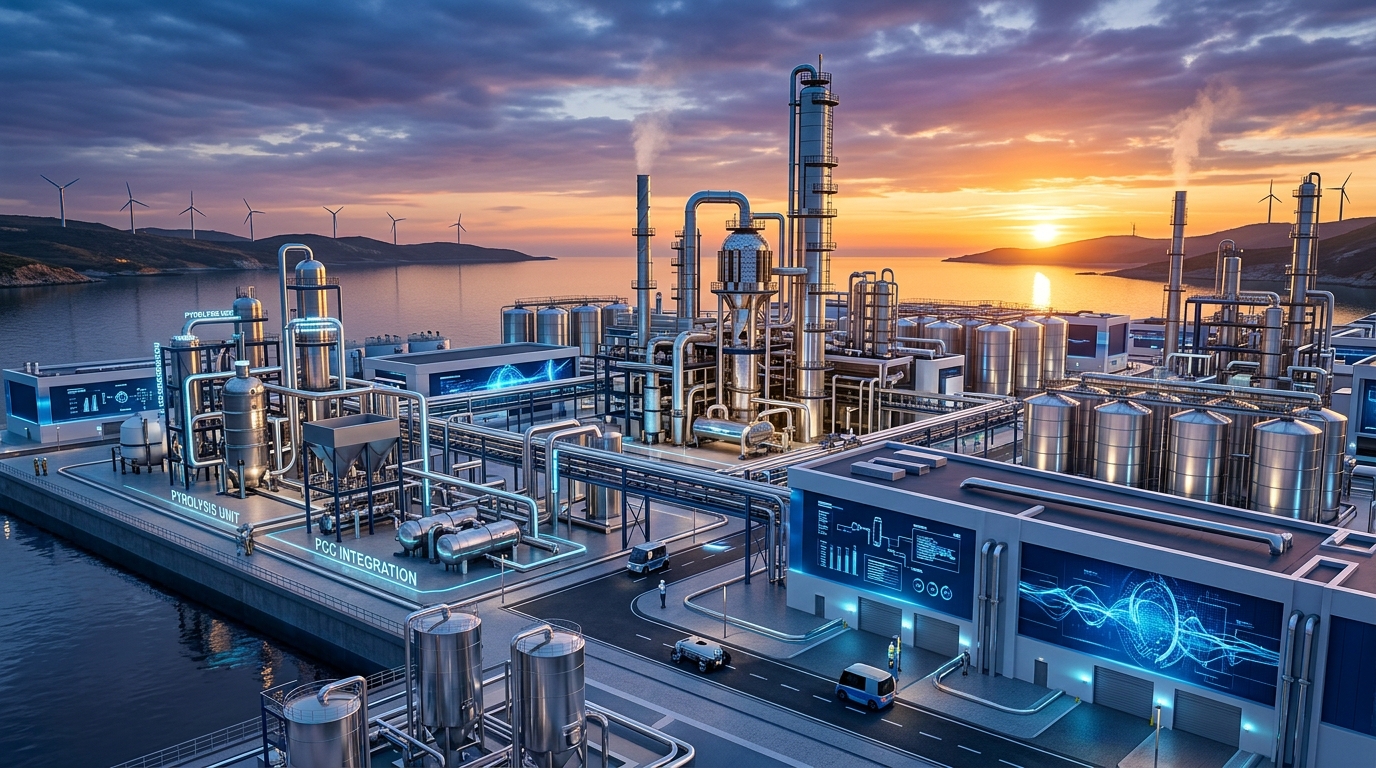
For Enterprise IT leaders, supply chain executives, and energy architects looking to scale green infrastructure, the Total Cost of Ownership (TCO) for clean hydrogen production has always represented an insurmountable barrier. Conventional plastic recycling is notoriously crippled by the staggering operational costs of precise sorting, mechanical cleaning, and chemical decontamination. Alkaline thermal treatment bypasses these logistical bottlenecks by handling mixed, inherently contaminated plastics directly. However, the path from successful milligram-scale laboratory feasibility to gigawatt-scale industrial commercialization remains fraught with intense economic and engineering challenges.
The primary hurdle for standalone ATT deployment is the substantial consumption of alkali reagents and the temporal bottleneck of the oxidation pretreatment. Real-world economic viability relies heavily on developing highly efficient, closed-loop systems to constantly recycle the sodium hydroxide reactant. Until a comprehensive, full-scale life-cycle analysis is conducted on large volumes of heavily contaminated, food-soiled municipal waste, the true commercial footprint of the technology remains theoretical. Consequently, massive petrochemical conglomerates are currently pivoting toward a more immediate, pragmatic approach to scaling waste-to-fuel initiatives.
A dominant, defining market trend throughout 2025 and 2026 is the strategic integration of pyrolysis oil directly into existing refinery infrastructures. Rather than attempting to finance and construct entirely new, standalone waste-to-fuel mega-facilities, industry leaders are aggressively routing crude pyrolysis effluent through highly established fluid catalytic cracking (FCC) units. This brilliant logistical maneuver not only scales production immediately but allows petrochemical companies to efficiently recover highly valuable C3–C5 olefins, effectively closing the loop for new virgin polymer production.
This massive infrastructural shift is already materializing in the real world. Clean Planet Technologies recently opened a pioneering pilot facility in the UK specifically engineered to produce zero-emission Sustainable Aviation Fuel (SAF) from entirely non-recyclable mixed plastic waste using optimized pyrolysis vectors. Globally, the Asia-Pacific region is overwhelmingly leading the plastic-to-fuel market in absolute revenue share for 2026, driven by an aggressive combination of massive state-sponsored waste management initiatives, heavy government capital investment, and an overwhelming regional mandate to rapidly decarbonize high-density manufacturing hubs.
The Consumer Translation: Clean Energy From Trash
To fully grasp the magnitude of alkaline thermal treatment without requiring a postgraduate degree in chemical thermodynamics, it is helpful to visualize the process through a simple, universally understood analogy. Imagine attempting to dismantle a massive, intricately glued Lego castle. Traditional incineration and gasification are conceptually equivalent to throwing the entire castle into a roaring blast furnace—it absolutely destroys the structure, but it releases clouds of highly toxic smoke, melts the plastic into an unusable puddle, and requires massive amounts of destructive thermal energy.
Alkaline thermal treatment, on the other hand, is like soaking that exact same Lego castle in a highly specialized, magical solvent. This solvent gently, methodically dissolves only the glue, safely separating the individual building blocks into perfectly pristine, reusable materials without a single spark of fire and without releasing any toxic smoke into the room. This elegant, low-temperature dismantling is precisely what ATT achieves at the molecular level with complex polymers.
For the everyday consumer, the successful maturation of this technology represents a highly tangible, desperately needed path toward a true circular economy. The statistical reality is grim: global plastic usage is actively projected to balloon from 464 megatons recorded in 2020 to an apocalyptic 884 megatons by 2050. Without a radical paradigm shift, our landfills and oceans face irreversible systemic collapse. If ATT and its complementary catalytic methods can successfully scale alongside the rapid modernization of global Networking & Cloud infrastructure, the exact same unrecyclable trash currently polluting our beaches and choking marine ecosystems could be seamlessly converted into the clean hydrogen powering our homes, our data centers, and our zero-emission vehicles—all without contributing a single microscopic ounce of carbon dioxide to the global atmosphere.
Frequently Asked Questions
Q1: What is alkaline thermal treatment?
A1: Alkaline thermal treatment (ATT) is an advanced chemical process that mixes plastic waste with sodium hydroxide and applies moderate heat (around 350°C) to produce high-purity hydrogen. It requires much less energy than traditional gasification and avoids generating direct CO2 emissions.
Q2: Can alkaline thermal treatment process mixed plastics without sorting?
A2: Yes, the ATT process is designed to handle mixed plastic waste without extensive pre-sorting. However, chemically inert plastics like polyethylene and polypropylene require a brief, mild oxidation pretreatment to ensure they decompose efficiently in the alkaline environment.
Q3: How does this method eliminate greenhouse gas emissions?
A3: Unlike traditional incineration or standard gasification, alkaline thermal treatment produces negligible direct carbon dioxide emissions. The process intelligently captures released carbon as a solid mineral, sodium carbonate, effectively sequestering it instead of releasing it into the atmosphere.
Q4: What alternative technologies are competing with alkaline thermal treatment?
A4: Emerging alternatives include solar-driven photoreforming using non-toxic photocatalysts, room-temperature catalytic conversion utilizing chloroaluminate ionic liquids, and low-temperature molten salt catalysis. Microwave-assisted catalytic pyrolysis is also gaining traction for faster conversions.
Q5: Is this zero-emission technology ready for immediate commercial deployment?
A5: Not entirely. While the chemical feasibility of ATT has been proven in milligram-scale laboratory tests, significant engineering optimization is required. Current commercial scaling efforts are instead focused on integrating pyrolysis oil into existing refinery fluid catalytic cracking units.
TechNode HQ Verdict: Pros, Cons & Usability
- Pro (Engineering): Operates at significantly lower temperatures (350°C) than traditional gasification, massively reducing the raw thermal energy required for large-scale conversion.
- Pro (Consumer): Enables the direct, zero-emission transformation of unrecyclable, hopelessly mixed plastic waste into universally usable clean hydrogen fuel.
- Con: A heavy, ongoing dependence on substantial alkali reagents and the necessity of a lengthy oxidation pretreatment severely limits immediate, standalone commercial scalability.
- Con: Comprehensive real-world economic viability and full life-cycle carbon footprint analyses remain unproven and highly theoretical beyond isolated, milligram-scale laboratory tests.
Enterprise Usability: CTOs, energy architects, and industrial developers should actively monitor alkaline thermal treatment as a critical future backend capability for decentralized green energy grids. However, in the immediate near-term, aggressively routing pyrolysis oil into existing fluid catalytic cracking units offers a vastly more pragmatic, scalable, and profitable energy offset for large-scale operations.
Everyday Usability: Consumers cannot directly purchase or interact with this advanced chemical technology today. Nevertheless, its eventual municipal deployment promises to drastically reduce the sheer volume of global plastic waste while simultaneously providing an infinitely renewable, incredibly clean baseline energy source for public utility grids and public transportation networks.