Key takeaways
- The $299 Bose Lifestyle Ultra Speaker embraces open standards like Google Cast and AirPlay 2 over proprietary lock-in.
- An upward-firing driver utilizes direct reflecting technology to create a surprisingly expansive soundstage for a compact footprint.
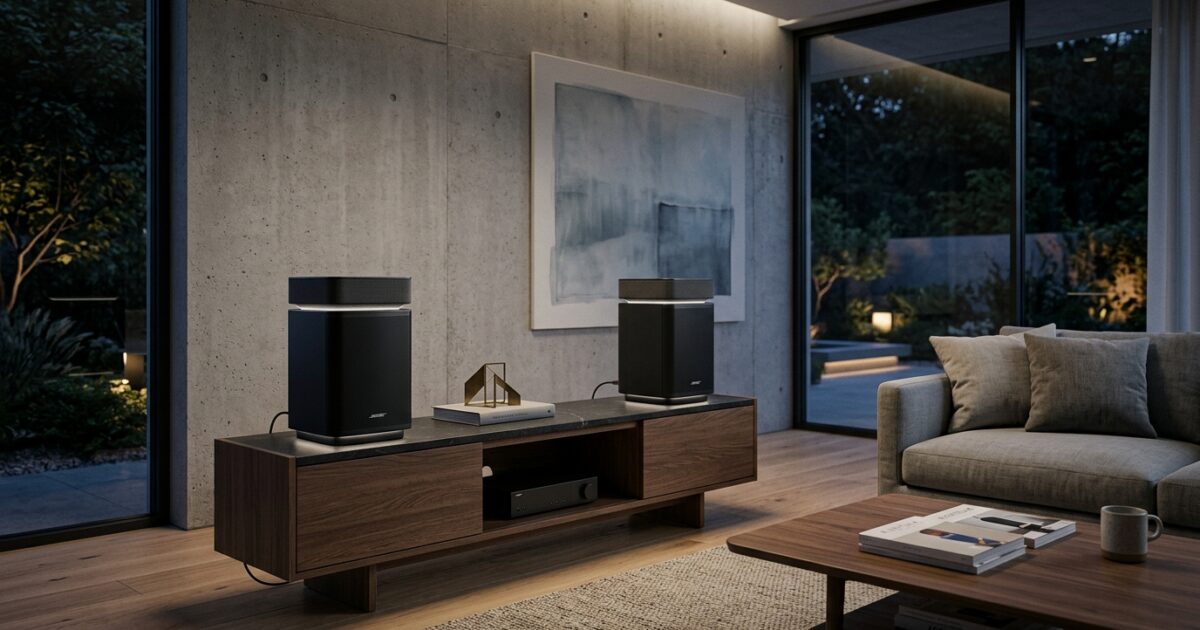
- A true stereo pair configuration ($530) is practically mandatory to fully unlock the speaker’s acoustic potential.
- Lack of backward compatibility with older Bose Wi-Fi speakers presents a difficult upgrade path for legacy users.
- Audiophiles may be deterred by the lack of native 24-bit/192kHz high-resolution audio support at launch.
The Architectural Reality: Re-engineering the Acoustic Footprint

The Bose Lifestyle Ultra Speaker represents a fascinating pivot in acoustic engineering and ecosystem strategy. Priced at $299 per unit, this compact device fundamentally abandons the restrictive proprietary enclosures of previous generations. Instead, Bose has engineered a highly capable single-channel system equipped with an upward-firing height driver that employs the company’s signature “direct reflecting” technology. This enables a remarkably expansive soundstage, pushing acoustic boundaries within a chassis that measures just 7.3 by 4.8 by 6.6 inches.
Internally, the architecture is designed to maximize spatial representation. While a standalone unit cannot function as a dedicated Atmos channel, pairing it as a rear surround component with the broader Lifestyle Ultra Soundbar ($1,099) transforms that same height driver into a localized Atmos vector. However, a significant caveat lies in the streaming infrastructure: the hardware currently streams CD-quality 16-bit/44.1kHz audio and lacks native support for 24-bit/192kHz high-resolution playback at launch, a limitation that will certainly resonate within the Hardware & Silicon enthusiast community.
Market Impact & Deployment: Escaping the Walled Garden
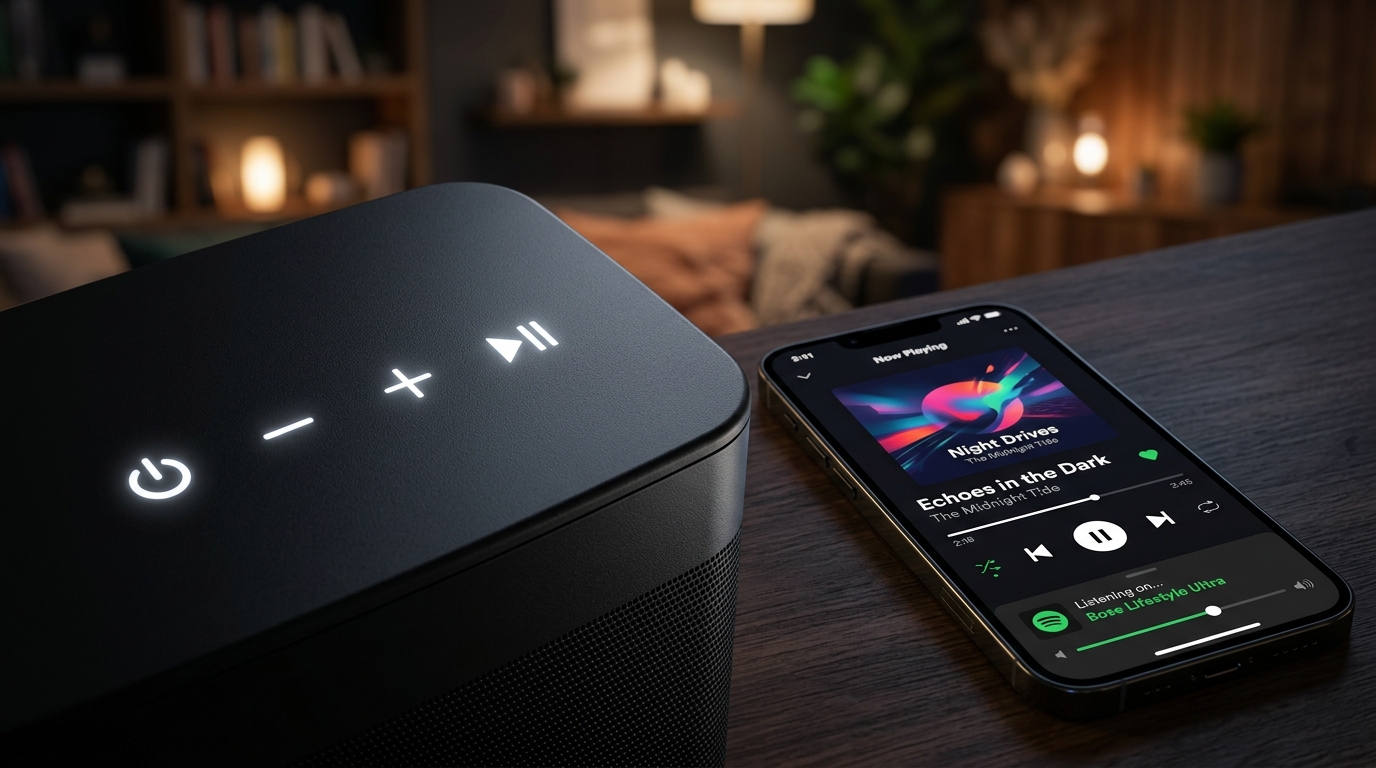
From an enterprise and strategic deployment perspective, Bose is executing a massive ecosystem shift. By integrating standard protocols like Google Cast and Apple AirPlay 2, the Bose Lifestyle Ultra Speaker acts as an interoperable node within heterogeneous Networking & Cloud audio environments. This is a deliberate strike against competitors like Sonos, who have historically thrived on ecosystem lock-in. This open-standard approach drastically lowers the Total Cost of Ownership (TCO) for consumers who wish to mix and match hardware across different brands.
However, this forward-looking protocol adoption comes with a ruthless deprecation of legacy systems. The Lifestyle Ultra Speaker is entirely incompatible with earlier Bose Wi-Fi hardware, including the Home Speaker 300 and 500 lines. Furthermore, the lack of advanced streaming integrations, such as Tidal Connect in certain configurations, indicates that Bose is prioritizing mass-market aggregator protocols over niche, audiophile-specific software integrations. Offered in Black, White Smoke, and an exclusive Driftwood Sand, the hardware is clearly positioning itself as premium lifestyle technology.
The Consumer Translation: Why a Pair is Non-Negotiable
When translating this technical reality to the everyday listener, the directive is uncompromising: to experience the true capabilities of this Consumer Tech, you must buy a stereo pair. While a standalone unit delivers tighter, punchier bass than the rival Sonos Era 100, a single speaker remains inherently limited by physical acoustics. Linking two units over Wi-Fi expands the soundstage exponentially, utilizing the dual height drivers to create an immersive, room-filling performance that easily justifies the $530 paired investment.
In practice, setup via the Bose app is streamlined, though initial firmware updates can bottleneck deployment times. The inclusion of an auxiliary 3.5mm input provides a critical bridge for analog sources like turntables, ensuring the speakers maintain relevance in hybrid digital-analog setups. Integrated Amazon Alexa support rounds out the smart home usability, providing essential hands-free control without tethering the user entirely to a specific smart-home hub.
Frequently Asked Questions
Does the Bose Lifestyle Ultra Speaker support High-Res audio?
No, the speaker does not natively support 24-bit/192kHz high-resolution audio at launch. It streams at a CD-quality 16-bit/44.1kHz rate.
Can I connect this speaker to my older Bose Wi-Fi system?
Unfortunately, no. The new Lifestyle Ultra series is not backward compatible with earlier Bose Wi-Fi speakers, marking a deliberate shift toward open ecosystems like Google Cast and AirPlay 2.
Is a single Bose Lifestyle Ultra Speaker loud enough for a living room?
While a single unit can comfortably fill a smaller room with well-defined sound and punchy bass, true stereo separation requires a pair, which drastically elevates the listening experience.
Does it support voice assistants?
Yes, the Lifestyle Ultra Speaker features built-in Amazon Alexa support, allowing for hands-free voice commands, though it notably competes directly with the Alexa-enabled Sonos Era 100.
TechNode HQ Verdict: Pros, Cons & Usability
- Pro (Engineering): Upward-firing direct reflecting technology creates an expansive vertical soundstage from a minimal physical footprint.
- Pro (Consumer): Adoption of Google Cast and Apple AirPlay 2 eliminates ecosystem lock-in, enabling seamless multi-brand audio networking.
- Con: A hard cutoff in backward compatibility means legacy Bose owners must start their networks from scratch.
- Con: The lack of 24-bit/192kHz high-res support and missing Tidal Connect integration isolates the audiophile demographic.
Enterprise Usability: For smart-home architects and AV integrators, the reliance on open casting standards makes this speaker a highly versatile, brand-agnostic node for complex, multi-room deployments.
Everyday Usability: For the general public, it is a highly attractive, premium audio solution, provided you are willing to invest in a stereo pair to unlock its true acoustic potential.