
Key takeaways
- The WEC voted 5-1 to refer Elon Musk for criminal bribery investigation.
- The Brown County DA has a strict 40-day window to file formal criminal charges.
- Musk spent over $22 million directly and via PACs in the 2025 judicial race.
- A concurrent civil lawsuit alleges illegal voter-incentive schemes and bribery.
- Wisconsin law strictly prohibits offering anything of value in exchange for voting.
The intersection of immense technological wealth, algorithmic amplification, and democratic infrastructure has reached a critical inflection point. As decentralized capital continues to stress-test traditional regulatory frameworks, the Elon Musk Wisconsin election bribery allegations represent a watershed moment for campaign finance oversight. On July 10, 2026, the bipartisan Wisconsin Elections Commission (WEC) convened in a closed session, culminating in a decisive 5-1 vote to refer two formal complaints against the SpaceX and Tesla CEO to the Brown County District Attorney’s office. This referral, grounded in the explicit finding of probable cause that Musk violated state election laws, initiates a strict 40-day procedural window for the District Attorney to evaluate the evidence and determine whether to levy formal criminal charges.
Unlike previous political cycles where tech billionaires operated exclusively through traditional, obfuscated Super PAC structures, the 2025 Wisconsin Supreme Court election witnessed a direct, unfiltered deployment of capital to individual voters. Musk’s utilization of his social media platform, X, to advertise financial incentives—specifically $1 million checks—has transformed a theoretical legal loophole into an active, high-stakes judicial battleground. This deep-dive editorial from TechNode HQ dismantles the architectural realities, the market impact, and the profound legal ramifications of deploying tech-scale wealth as a direct mechanism for electoral engineering. By analyzing the data streams, the specific statutory language, and the concurrent civil litigation, we can fully comprehend the unprecedented stress this operation places on modern civic infrastructure.
The Architectural Reality of the Elon Musk Wisconsin Case

When analyzing the deployment of capital in modern elections, it is essential to view the campaign apparatus as a sophisticated technology stack. In a standard, legacy architecture, funds flow through heavily regulated intermediaries—political campaigns, national committees, and standard Political Action Committees—each acting as a compliance firewall designed to prevent direct corruption. However, the events surrounding the 2025 judicial election in Wisconsin demonstrate a comprehensive bypassing of these legacy systems, utilizing a direct-to-consumer financial distribution model powered by massive algorithmic reach. This represents a fundamental shift in the Enterprise IT of political campaigning, where the platform owner acts simultaneously as the broadcaster, the targeting algorithm, and the sole financial distributor.
During the lead-up to the highly contested 2025 Supreme Court race between Republican-backed Brad Schimel and Democratic-backed Susan Crawford, Musk and his affiliated entity, America PAC, aggressively offered direct financial incentives to Wisconsin voters. The mechanics of this deployment were striking in their simplicity and audacity. Initially, one of the primary financial incentives offered was a $100 payout for merely signing a petition. However, the strategy escalated dramatically when Musk began publicly advertising the distribution of massive $1 million checks to selected voters residing in the state.
The crux of the legal vulnerability—and the primary catalyst for the WEC’s criminal referral—lies in the precise terminology broadcasted over his proprietary network. Musk’s original, now-deleted post explicitly stated that the $1 million checks were “in appreciation for you taking the time to vote.” In the strict realm of legal compliance, this explicit linkage between a massive financial reward and the physical act of voting constitutes a critical failure in risk management. Wisconsin state law strictly prohibits giving, offering, or promising anything of value in exchange for voting. By attempting to aggressively incentivize voter turnout through direct, lottery-style payouts, the operation tripped robust anti-bribery statutes designed to protect the fundamental integrity of the ballot box.
Recognizing the immense legal exposure, Musk rapidly initiated a digital rollback, deleting the original post and issuing a subsequent “clarification.” This revised messaging stated that the checks were actually intended for individuals to act as “spokesmen” for a petition opposing “activist judges.” This frantic attempt at retroactive compliance perfectly mirrors the act of patching a severe software vulnerability after a devastating exploit has already occurred. The Wisconsin Elections Commission’s referral specifically targets this digital footprint, alleging that the initial social media post clearly offered money to individuals to induce them to vote, thereby establishing the undeniable probable cause necessary for a criminal bribery investigation.
Market Impact & Deployment
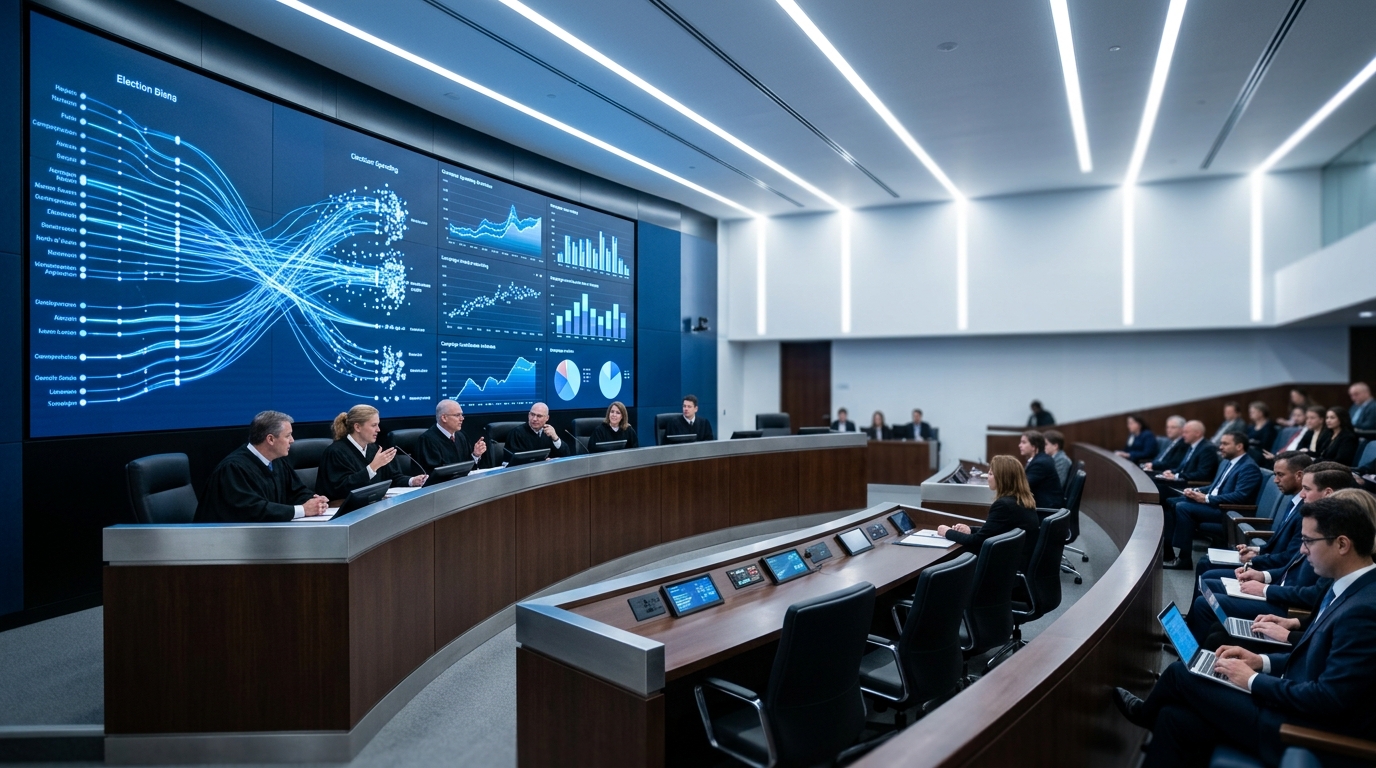
The 2025 Wisconsin Supreme Court election was not merely a regional judicial contest; it functioned as a multi-million dollar proving ground for extreme campaign finance tactics. The race shattered all previous financial metrics, breaking the national record for the most money ever spent on a state judicial race with a staggering total investment exceeding $100 million. In this hyper-capitalized environment, Musk’s individual financial footprint was overwhelmingly massive. The SpaceX CEO directly deployed at least $3 million of his personal wealth into the race. Furthermore, decentralized political groups operating within his direct orbit, such as America PAC and Rebuilding America’s Future, injected an additional $19 million into the ecosystem.
This unprecedented level of capital deployment demands a rigorous analysis of the Return on Investment (ROI) and the Total Cost of Ownership (TCO) for electoral influence operations. Despite the massive financial pressure and the highly publicized $1 million voter incentives, the systemic outcome did not align with the investment. Susan Crawford ultimately secured the judicial seat by a decisive 10-point margin over Schimel. However, the true market impact extends far beyond the immediate win-loss record of a single candidate. The deployment of direct voter payments establishes a dangerous precedent, functioning as a real-world beta test for future electoral cycles across the country.
For C-suite executives and elite political strategists monitoring this space, the Wisconsin case represents a critical case study in regulatory threshold testing. In 2024, Musk deployed an identical $1 million check strategy in key swing states during the presidential election and successfully avoided legal consequences when Pennsylvania ultimately dropped its case. The bold attempt to port this exact tactic into the Wisconsin judicial race was a highly calculated risk, predicated entirely on the assumption of permanent regulatory paralysis. The spectacular failure of this assumption—evidenced by the WEC’s 5-1 bipartisan vote to aggressively pursue criminal referrals—signals a severe hardening of the regulatory perimeter.
The financial and reputational costs are now mounting exponentially. Prior to the WEC’s referral, the Attorney General of Wisconsin, Josh Kaul, attempted to preemptively halt the distribution of the $1 million checks by filing a lawsuit before Musk even physically arrived in the state. While the courts initially rejected that preemptive strike, the subsequent investigative actions by the WEC demonstrate that the state’s legal apparatus is actively compiling a comprehensive, multi-pronged response. The strategic calculus for future tech billionaires attempting to engineer election outcomes via direct financial inducement has now fundamentally shifted, with the legitimate threat of severe criminal penalties acting as a massive systemic deterrent.
The Legal and Regulatory Infrastructure
The architecture of legal accountability in Wisconsin is currently operating on two distinct but highly parallel tracks: criminal and civil. The criminal vector is governed by a strict, unforgiving temporal constraint. Following the WEC’s July 10, 2026, closed session, the Brown County District Attorney’s office immediately entered a mandatory 40-day procedural window. During this highly scrutinized period, the DA must exhaustively review the WEC’s referrals, heavily analyze the digital forensic evidence—including the deleted social media posts and the algorithmic targeting data—and determine whether the evidentiary standard has been met to formally file criminal charges against one of the wealthiest and most influential individuals on the planet.
This 40-day countdown places immense structural pressure on local law enforcement infrastructure, effectively pitting a county-level prosecutor against the limitless legal and financial resources of a global oligarch. The specific statute in question addresses election bribery, a serious felony offense designed to thoroughly insulate the democratic process from transactional corruption. If the District Attorney proceeds with formal charges, it will trigger an unprecedented, high-visibility legal battle, testing the ultimate resilience of state-level judicial systems against asymmetrical legal warfare. This highlights an era where the Networking & Cloud infrastructure that amplifies these illicit messages is fundamentally detached from the geographical jurisdictions attempting to regulate and police them.
Concurrently, Musk is facing a highly robust civil challenge. In 2025, the Wisconsin Democracy Campaign, alongside several other plaintiffs, filed a comprehensive civil lawsuit addressing the exact same voter-incentive schemes. This civil litigation operates entirely independently of the DA’s criminal review and specifically alleges that the strategic distribution of $100 petition payouts and $1 million checks constituted illegal bribery under state law.
The civil case has proven remarkably resilient, with active legal filings continuing well into 2026. Musk’s sophisticated legal defense team has predictably deployed a heavy barrage of procedural motions attempting to dismiss the civil suit entirely, leveraging complex jurisdictional arguments and expansive First Amendment defenses. However, the sheer persistence of this lawsuit ensures that even if the criminal referrals face unexpected political or procedural bottlenecks, the underlying conduct remains subject to intense judicial scrutiny, sweeping discovery processes, and massive potential financial penalties. The dual-track legal exposure represents a comprehensive stress test of Wisconsin’s regulatory framework and its ability to rein in rogue capital.
The Consumer Translation
Beyond the intricate legal maneuvers, the regulatory frameworks, and the staggering financial metrics, the fundamental impact of this technological and financial convergence falls squarely on the everyday consumer—the individual voter. The normalization of direct financial incentives for political participation represents a profound, deeply disturbing paradigm shift in modern civic engagement. When a tech billionaire leverages a proprietary communication platform to distribute gamified, lottery-style payouts explicitly tied to electoral events, the foundational concept of a democratic vote is rapidly and brutally commodified.
For the general public, this dynamic introduces a toxic layer of transactional logic into the civic process. It actively exploits economic vulnerabilities, transforming the polling place from a venue of civic duty into a speculative financial opportunity. This algorithmic approach to voter mobilization, powered by advanced data targeting and massive, unregulated capital reserves, fundamentally bypasses organic political discourse. It treats the electorate not as citizens to be persuaded by policy or debate, but as manipulatable nodes in a network to be seamlessly incentivized by cash drops.
The rapid erosion of public trust in institutional integrity is a secondary, yet equally devastating, consequence of these actions. When the richest person on Earth is permitted to aggressively test the boundaries of felony bribery laws with apparent impunity—as initially seen in the dropped 2024 Pennsylvania case—the public perception of equality under the law is severely compromised. The current 40-day window for the Brown County DA is not merely a procedural deadline; it is a critical, highly visible test of whether the American legal system possesses the capacity, the funding, and the will to hold unprecedented concentrations of wealth accountable. If the systemic architecture fails to rigorously enforce its own anti-bribery protocols, the precedent set will permanently alter the landscape of American elections, rendering them little more than high-stakes auctions dictated entirely by the algorithmic reach of a handful of tech billionaires. The Cybersecurity of our electoral infrastructure must now urgently evolve to include active defenses against aggressive financial exploits targeting the voters themselves.
Frequently Asked Questions
Q1: Could Elon Musk actually face criminal charges for his actions in Wisconsin?
A1: Yes. The bipartisan Wisconsin Elections Commission found probable cause of election law violations and referred the case to the Brown County District Attorney. The DA now has a 40-day window to decide on filing formal criminal charges for bribery.
Q2: What exactly did Musk do to trigger these referrals?
A2: Musk used his platform, X, to offer $1 million checks to voters in the 2025 Wisconsin Supreme Court election. He explicitly tweeted that the money was “in appreciation for you taking the time to vote,” which constitutes a likely violation of state anti-bribery statutes.
Q3: How much money was spent on the Wisconsin Supreme Court election?
A3: The race broke national records with over $100 million invested overall. Musk personally spent at least $3 million, while his affiliated groups like America PAC spent over $19 million more to influence the outcome.
Q4: Is there any other legal action being taken against Musk regarding this?
A4: Yes, in addition to the potential criminal charges, Musk is fighting an ongoing civil lawsuit filed in 2025 by the Wisconsin Democracy Campaign, which also alleges his voter-incentive schemes were illegal bribery.
TechNode HQ Verdict: Pros, Cons & Usability
- Pro (Engineering): Demonstrates the unprecedented efficiency of decentralized social platforms to execute direct-to-consumer financial deployment at an absolute massive scale, bypassing traditional institutional bottlenecks entirely.
- Pro (Consumer): In a purely transactional sense, individual participants in the scheme received massive, potentially life-altering financial payouts for minimal civic engagement.
- Con: Exposes severe vulnerabilities in state-level regulatory frameworks, highlighting the complete inability of legacy campaign finance laws to rapidly counter agile, hyper-funded technical exploits.
- Con: The intense legal backlash, including protracted civil litigation and the severe threat of felony criminal charges, creates an unsustainable and toxic risk profile for continued operations using this specific deployment model.
Enterprise Usability: For C-level strategists, venture capitalists, and high-net-worth political actors, the Wisconsin case acts as a massive, flashing red flag. The era of assuming regulatory paralysis for direct voter payouts is definitively over. Attempting to replicate this tactic carries an unacceptably high Total Cost of Ownership (TCO) in terms of massive legal exposure, permanent reputational damage, and potential criminal liability. Future influence operations must revert to more obfuscated, traditionally compliant PAC structures to properly mitigate operational risk.
Everyday Usability: The general public should view these gamified financial incentives with extreme skepticism and caution. While the short-term financial allure of a $1 million payout is incredibly real, the long-term consequence is the complete commodification of civic power. Voters are heavily advised to reject transactional politics that seek to purchase democratic participation, as it fundamentally degrades the structural integrity of the electoral system and diminishes the power of the individual voice.