
Key takeaways
- AI API aggregators reduce large-scale generative token costs by up to 97.5%.
- Direct AI integrations cause severe vendor lock-in and high maintenance debt.
- Aggregators seamlessly normalize disparate provider schemas into a unified endpoint.
- Aggregators obscure advanced niche features and pose a single-point-of-failure risk.
- Hybrid architectures dynamically route commodity tasks while maintaining direct enterprise integrations.
The Architectural Reality of AI API aggregators
Six months ago, a prominent founder found themselves staring at a staggering $48,000 invoice from a premier artificial intelligence provider. The initial enterprise promise of “priority routing” and “negotiated rates” had rapidly dissolved into unexpected rate hikes, prolonged outages during critical product launches, and sluggish 72-hour support turnaround times. This scenario is far from an isolated incident; it represents a systemic failure in how modern applications consume machine intelligence. Across the technology sector, startups and established organizations alike are falling into the same monolithic trap. In response, visionary engineering leaders are abandoning single-vendor dependency and adopting AI API aggregators to reclaim their profit margins, operational resilience, and architectural autonomy.
When engineering teams first integrate generative AI & Machine Learning models, the initial developer experience is deceptively frictionless. You read the official documentation, generate a secret API key, implement the provider’s SDK, and ship a compelling feature to production. Investors applaud, and the user base grows. However, the true cost of operating direct provider models in production environments is rarely reflected on a retail pricing page. Scaling an AI application involves hidden complexities: rate limits that strangle throughput, the necessity of intricate caching layers, exploding context windows, and prompt engineering iterations that compound costs exponentially. One development team infamously burned $20,000 in a single weekend simply because they streamed code completions without implementing a strict max_tokens guardrail. Beyond the immediate financial bleed, direct providers implicitly lock organizations into their proprietary ecosystems. The moment a team wishes to A/B test a newly released, highly efficient model, they are forced to completely rewrite their integration logic, wrestling with disparate prompt formats, SDK peculiarities, and conflicting authentication schemes.
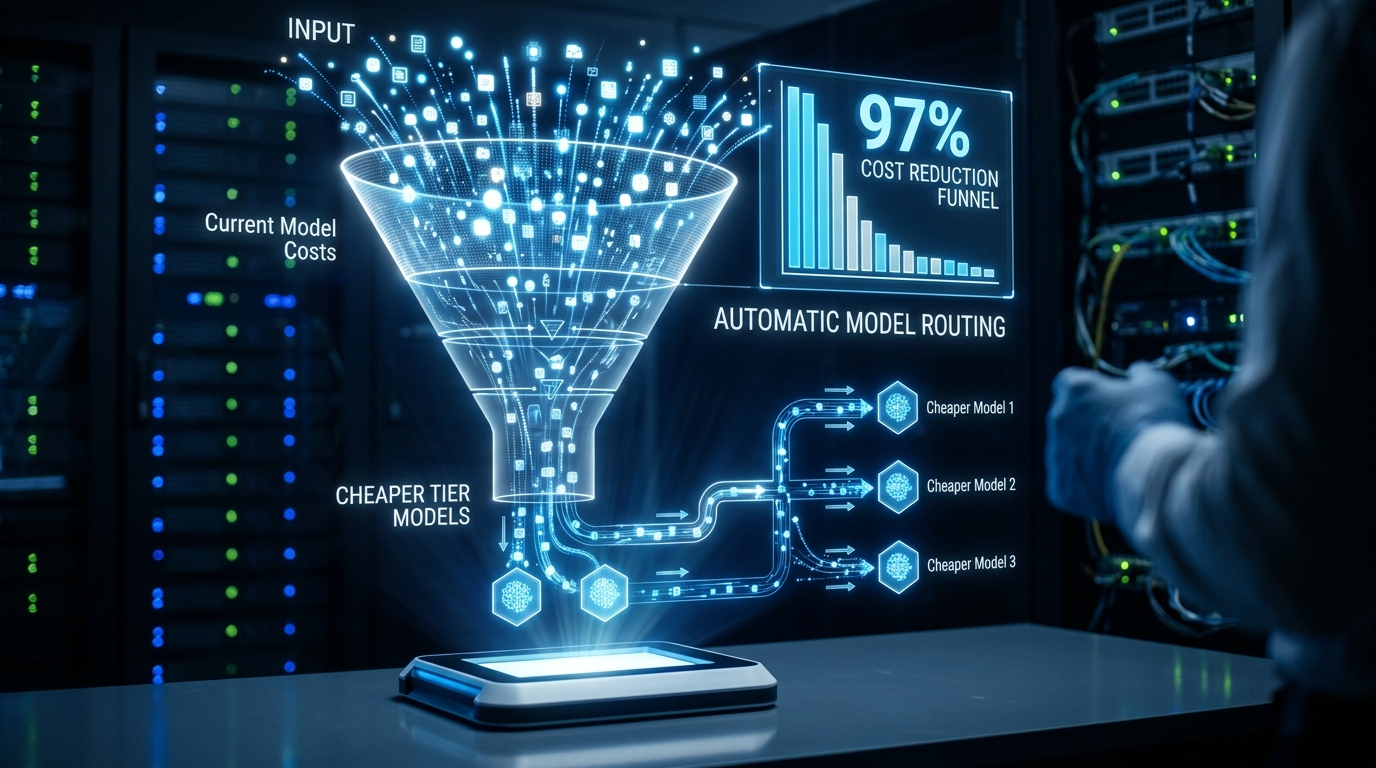
This integration friction is heavily mitigated by modern routing architectures. By abstracting the integration layer, developers can instantly pivot workloads to the most cost-effective and capable models available on the market. Instead of rewriting code for every new provider, systems interact with a unified endpoint. This shift from vendor lock-in to an agnostic infrastructure layer represents a fundamental evolution in software engineering, separating the cognitive logic of the application from the underlying execution engine.
The Engineering Mechanics: Integration Debt and Data Normalization
To truly understand the paradigm shift, we must examine the underlying software mechanics. Each new direct API integration demands a unique, intensive engineering effort. This directly increases integration debt and significantly delays time-to-market. Developers must manually handle complex authentication handshakes, build custom rate-limiting backoffs, track disparate schema updates, and manage distinct pagination structures for every single provider they add to their stack. Consequently, direct integrations transform from a quick feature addition into a strategic, long-term operational burden. While this might be manageable for one or two stable providers, attempting to orchestrate five or more distinct APIs natively creates a fragile, unmaintainable codebase.
Conversely, aggregators function as a powerful translation layer. They handle the heavy lifting of data normalization, mapping incredibly disparate provider schemas into a single, predictable common model. Instead of juggling a half-dozen OAuth flows and manually rotating access tokens across multiple vendor dashboards, development teams interact with unified security policy management centralized within the aggregator. By acting as a universal adapter, aggregators completely eliminate the integration debt that otherwise stifles product velocity.
However, this abstraction is not without its architectural tradeoffs. Aggregators inherently normalize data to a lowest common denominator. In doing so, they can obscure or completely hide advanced, niche API features specific to a proprietary model. For instance, if a specific model provider releases a highly specialized tool-calling format or an advanced multimodal streaming capability, it may take weeks or months for the aggregator to support it in their unified schema. Furthermore, inserting a middleman introduces an abstraction layer overhead, which can limit the granular control developers possess when fine-tuning connection parameters.
The Math That Matters: 97.5% Margin Compression
The most compelling argument for restructuring your AI pipeline is the raw, unadulterated unit economics. Let us examine the actual numbers from a live production system scaling to billions of tokens. At the Minimum Viable Product (MVP) scale, supporting roughly 100 users and processing 5 million tokens per month, relying directly on a premium model like GPT-4o costs approximately $50—amounting to $10.00 per million output tokens. While $50 is negligible, the scaling curve is punishing. Running that exact same workload via a router to a model like DeepSeek V4 Flash through an aggregator drops the cost to $1.25, or $0.25 per million tokens. This represents an astonishing 97.5% cost reduction from day one.
As the application transitions to a beta phase serving 1,000 users and 50 million tokens, the direct premium model bills $500, whereas the aggregator routes the load for a mere $12.50. At a public launch with 10,000 users driving 500 million tokens, the cost disparity yawns to $5,000 versus $125. Finally, at true growth scale—100,000 active users processing 5 billion tokens—a direct provider contract commands a crippling $50,000 per month. The aggregator routing infrastructure handles the identical volume for $1,250. Because the unit economics are linear, the 97.5% savings hold firm at every stage of corporate growth.
For C-level executives, this mathematical reality is the difference between a failing, unprofitable SaaS wrapper and a highly lucrative, venture-scale business. By avoiding subscription fees and markup costs sometimes introduced by rigid legacy contracts, startups effectively secure 18 additional months of runway before requiring another round of venture funding. The Total Cost of Ownership drops dramatically, freeing capital to be aggressively deployed into core product differentiation, engineering talent, and marketing acquisition.
Market Impact & Deployment: The Hybrid Architecture Reality
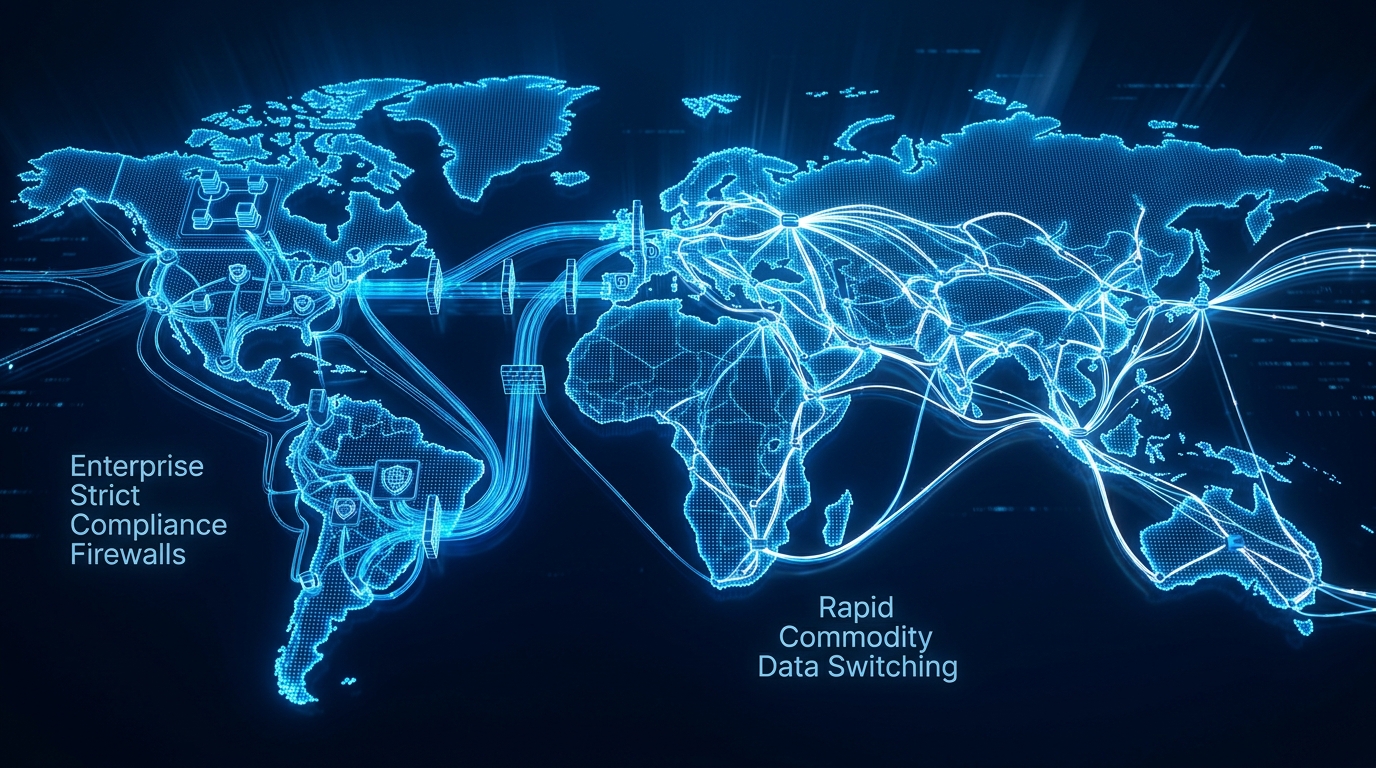
Despite the overwhelming economic advantages of aggregators, abandoning direct provider APIs entirely is a simplistic and often flawed strategy. The reality of modern Enterprise IT demands a more sophisticated approach. If an aggregator suffers a critical outage or unilaterally changes its pricing structure, it impacts all downstream application integrations simultaneously. This single point of failure increases dependency risk to an unacceptable level for Fortune 500 deployments.
Moreover, regulated industries face strict compliance barriers. Fintech applications processing real-time market trades or healthcare platforms managing sensitive patient records are frequently not permitted to use third-party aggregators in their data path. For core, mission-critical integrations where complete data sovereignty, customized Data Processing Agreements (DPAs), and ultra-low latency are paramount, developers must establish direct APIs. Direct provider integrations mean no middleman, which strips away an extra layer of latency, eliminates an external point of failure, and guarantees direct vendor support.
Therefore, the definitive industry standard in 2026 is the Hybrid Architecture. Sophisticated engineering teams utilize an internal Python model router. This router directs 95% of routine, high-volume commodity tasks—such as text summarization, data extraction, and basic classification—to inexpensive models via an aggregator. Simultaneously, the router catches high-stakes, cognitively demanding requests—like complex code review or logical reasoning—and escalates them to premium models. For true enterprise clients demanding SOC 2 compliance, 99.9% uptime SLAs, and Net-30 invoicing, the architecture utilizes a direct integration. This hybrid strategy leverages aggregators for scalable commodity data while rigorously maintaining direct integrations for mission-critical operations, achieving the ultimate balance of cost, performance, and security.
The Consumer Translation: Democratizing Global Compute
While the architectural shift from direct APIs to aggregators is deeply technical, its impact on the everyday consumer is profound. For the worldwide public, the cost of operating artificial intelligence is directly correlated to the features and accessibility of the software they use daily. When a company’s backend computing costs drop by 97%, the economic constraints on their product vanish. Applications that previously restricted users to ten AI prompts a day can now offer unlimited, unrestricted usage on their free tiers. Small, independent developers can now build and sustain powerful virtual assistants, educational tutors, and creative tools without the fear of bankruptcy via token usage.
To visualize this structural shift without writing a line of code, consider the logistics of global shipping. Relying exclusively on a single direct API provider is akin to a retail company signing an exclusive contract with a single cargo shipping line. If that specific shipping company experiences a strike, a storm, or a massive price hike, the retailer’s entire supply chain freezes, and shelves go empty. An AI aggregator acts as a highly intelligent global freight broker. It looks at the data “package” that needs to be delivered and instantly evaluates hundreds of carriers worldwide, automatically routing it onto the cheapest, fastest ship available that second. If one carrier sinks, the system seamlessly redirects the cargo to another. However, for highly sensitive, multi-million dollar military cargo, the broker is bypassed, and a secure, direct, dedicated jet is chartered. This is the essence of modern Networking & Cloud routing—dynamic, resilient, and highly optimized.
Beyond consumer apps, this technology violently disrupts diverse industries. In legal tech, firms can now process millions of pages of case law overnight for pennies, rather than restricting automated analysis to only high-profile cases due to compute costs. In supply chain logistics, automated agents can continuously negotiate and route physical goods worldwide, powered by inexpensive cognitive reasoning. The decoupling of the application from the underlying AI engine means that humanity’s access to machine intelligence is no longer bottlenecked by the pricing strategy of a single mega-corporation.
Frequently Asked Questions
Q1: What are AI API aggregators?
A1: AI API aggregators are unified abstraction layers that map disparate provider schemas into a single common model. They allow developers to swap between models like OpenAI, DeepSeek, and Qwen without rewriting application code.
Q2: Why are direct provider APIs considered more expensive at scale?
A2: Direct providers charge retail prices and require significant integration maintenance for authentication, schema changes, and rate limits. Aggregators bypass these constraints and allow automated fallback to drastically cheaper models.
Q3: When should a company still use direct API integrations?
A3: Direct integration is recommended for 1-2 stable providers or when you need full control over granular proprietary features. Regulated industries like fintech may also be required to use direct connections to avoid third-party risk.
TechNode HQ Verdict: Pros, Cons & Usability
- Pro (Engineering): Achieves a massive 97.5% reduction in token costs while eliminating integration debt by standardizing distinct provider schemas into a unified endpoint.
- Pro (Consumer): Enables software developers to offer drastically cheaper or fully unlimited AI features to end-users without facing bankruptcy from unpredictable backend compute bills.
- Con: Aggregators act as an abstraction layer that normalizes data to the lowest common denominator, effectively hiding the most advanced, niche capabilities of proprietary APIs.
- Con: Centralizing routing through a single third-party aggregator introduces a severe single point of failure; if the aggregator experiences an outage, all downstream integrations fail simultaneously.
Enterprise Usability: Chief Technology Officers should immediately implement a hybrid routing architecture. Offload 95% of routine, high-volume commodity tasks to aggregators to compress margins, while strictly reserving direct provider APIs for highly sensitive, latency-critical, or heavily regulated data pathways.
Everyday Usability: Everyday consumers will not buy an API aggregator directly, but they should actively seek out and support software applications that leverage this infrastructure, as these platforms will reliably offer superior uptime, faster features, and significantly lower subscription costs.