
Key takeaways
- Sony Music closed Kings Road Merch hours before their first union bargaining session.
- Kings Road Merch staff organized due to low base pay and inflexible contracts.
- Teamsters Local 970 unanimously supported the workers’ petition to unionize.
- Sony acquired the Minneapolis-based warehouse in June 2025 via The Orchard.
- Artists like The Casualties publicly support the workers amidst union-busting allegations.
The Architectural Reality of Sony Union Busting

When assessing the latest allegations of Sony Union Busting, one must look beyond the cultural irony of a punk rock merchandise warehouse being shuttered by a global conglomerate. This is fundamentally a story about supply chain architecture and the relentless drive for optimization within Enterprise IT and global logistics systems. Kings Road Merch, based in Minneapolis, was a vital physical node in the merchandising network for legendary punk and hardcore acts such as the Dropkick Murphys, Rancid, Descendents, and Converge. On the surface, the warehouse represents the physical manifestation of DIY, working-class ethos; beneath the surface, it operates as a distinct data point within a sprawling, highly optimized corporate supply chain network.
In June 2025, Sony Music Entertainment executed a quiet but strategic acquisition of Kings Road Merch via its distribution subsidiary, The Orchard. This move was a clear indicator of the music industry’s broader transition toward vertical integration, aiming to capture the high margins associated with direct-to-consumer merchandise sales. However, the integration of grassroots operations into a multinational corporate structure rarely happens without significant friction. According to verified research, the operational reality for the warehouse workers quickly deteriorated post-acquisition. Employees reported systemic issues, ranging from depressed base pay and the underpayment of crucial overtime hours to the utilization of highly inflexible temporary contracts. In the modern corporate ecosystem, these cost-saving measures are often dictated by algorithms and Enterprise Resource Planning (ERP) software seeking to maximize efficiency and minimize overhead, often treating human labor as a highly elastic variable cost.
Faced with these deteriorating conditions, the workers at Kings Road Merch took action. On April 9, 2026, the staff formally petitioned to form a union. By mid-May 2026, they had voted unanimously to unionize under the banner of Teamsters Local 970. This unanimous vote represents a total failure of internal management to address worker grievances, leading to a complete breakdown in the employer-employee social contract. In the realm of enterprise operations, a unionized workforce transitions labor from a flexible, variable expense into a predictable, highly negotiated fixed cost. It is this fundamental shift in the economic modeling of the warehouse that set the stage for the dramatic and highly controversial events that followed.
Market Impact & Deployment: The Abrupt Closure
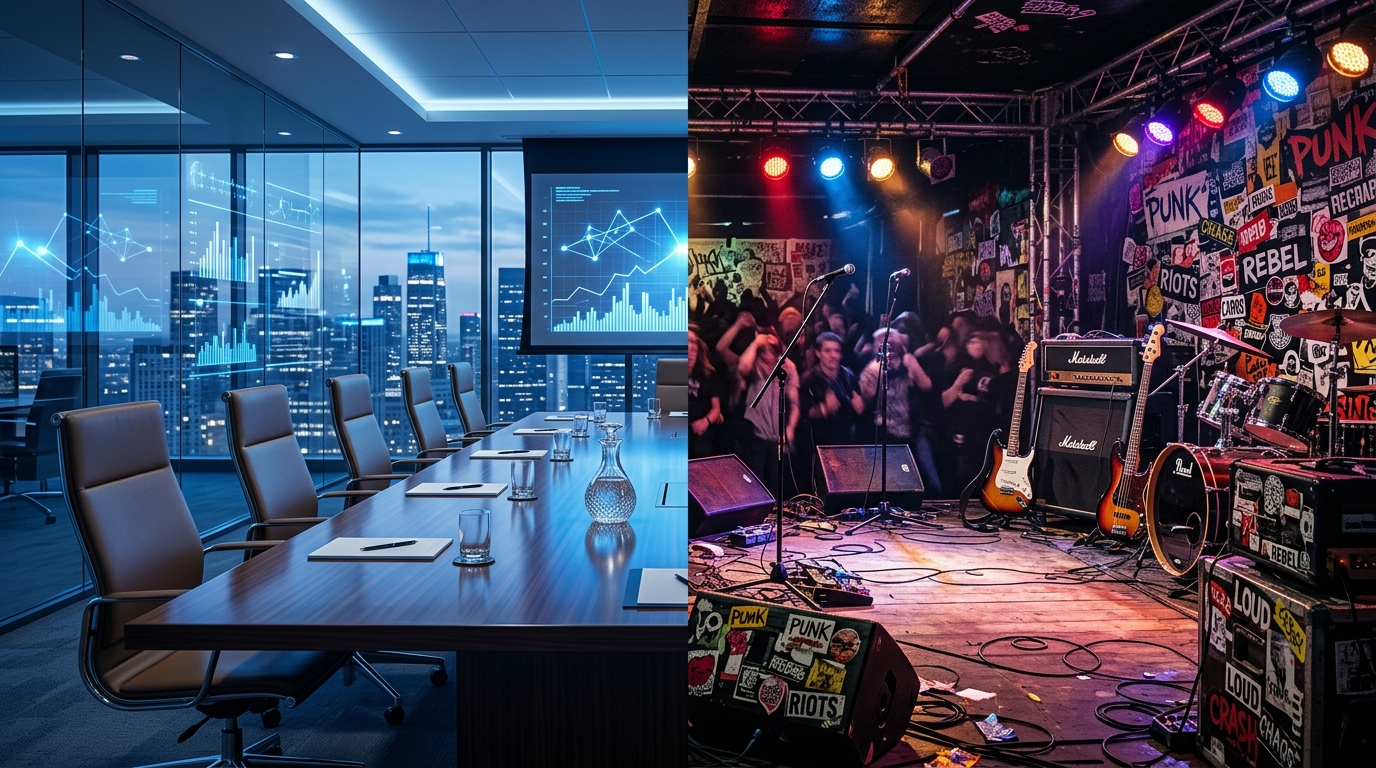
The timeline of events strongly underscores the tension between corporate consolidation and labor rights. On June 23, 2026, just hours before the newly formed union and Sony management were scheduled to hold their very first formal bargaining session, Sony Music announced that it would permanently shutter the Kings Road Merch warehouse. The timing of this announcement was explosive, immediately sparking widespread accusations of retaliatory union-busting from both the workers and the Teamsters union leadership. Teamsters Local 970 President Chris Reichow publicly joined the employees in accusing Sony of engaging in textbook anti-labor tactics, transforming a local warehouse dispute into a high-profile case study of corporate risk management.
From a purely operational standpoint, closing a functional warehouse mid-cycle is an incredibly complex undertaking. It requires the sudden rerouting of physical inventory, the cancellation or migration of pending orders, and the rapid deployment of alternative logistical solutions. The fact that Sony was willing to endure this logistical nightmare rather than sit at the bargaining table speaks volumes about the perceived threat that organized labor poses to their optimized, algorithm-driven supply chain model. Sony Music, for its part, vehemently denied the union-busting allegations. A corporate representative asserted that the decision to close the facility was “many months in the making,” ostensibly predating the staff’s initial unionization efforts. The company claimed that the closure was part of a broader strategy to focus on its “core strength of partnering with clients to develop and execute effective merch strategies.”
To a seasoned IT and logistics executive, this corporate phrasing translates clearly: Sony is pivoting away from owning the physical execution of merchandise fulfillment (the capital-intensive warehouses and the associated labor costs) and is instead moving toward a highly abstracted, asset-light model. By leveraging robust Networking & Cloud architectures, modern conglomerates prefer to act as the strategic orchestration layer. They control the intellectual property, the digital storefronts, and the consumer data, while entirely outsourcing the messy, human-centric reality of packing and shipping boxes to third-party logistics (3PL) providers who operate at extreme scale and with heavily optimized, non-unionized workforces. When the Kings Road Merch workers voted to unionize, they unwittingly triggered a fail-safe in Sony’s operational protocol: when a supply chain node becomes unexpectedly expensive or complex to manage, you simply deprecate the node.
The Consumer Translation: When Punk Meets Corporate Logistics
The irony of this situation is palpable and deeply unsettling for the consumer base. Punk rock, a genre historically rooted in anti-establishment sentiment, working-class solidarity, and anti-corporate rebellion, relies upon these merchandising networks to survive in an era of fractions-of-a-penny streaming royalties. The fact that bands known for singing about fighting the system are inextricably tethered to the very systems they critique is a harsh reality of modern Consumer Tech and e-commerce platforms. The fans who purchase a Dropkick Murphys or Casualties t-shirt expect their money to support the artists and the grassroots scene. They rarely consider the sprawling, multi-national logistics apparatus that processes their transaction, prints the garment, and ships the package.
The closure of Kings Road Merch is forcing a profound reckoning within this subculture. Several artists whose merchandise was handled by the warehouse, including members of the band The Casualties, have publicly expressed support for the terminated employees. This public backing puts immense pressure on Sony Music, as the authenticity of the punk brand is heavily reliant on consumer perception. If consumers perceive that their purchases are directly funding retaliatory corporate practices, the brand value of these artists could suffer significant damage. Sony has stated that it is committed to negotiating a fair separation for the workers and will continue to work with the Teamsters until the warehouse is fully decommissioned, but for many observers, the damage is already done.
The consumer translation of this event is clear: the convenience of modern, centralized e-commerce comes at a distinct human cost. As multinational corporations continue to consolidate the backend infrastructure of every conceivable niche market—from punk rock t-shirts to artisanal coffee—the localized workforces that historically drove these subcultures are increasingly marginalized. The Kings Road Merch saga is a microcosm of a much larger global trend, demonstrating that no subculture is immune to the overarching demands of corporate efficiency and supply chain optimization.
Supply Chain Optimization vs. Human Capital
To fully grasp the magnitude of the Kings Road Merch closure, one must employ an executive abstraction: imagine a massive, global data center network. When a single server rack begins to generate unpredictable errors, require excessive maintenance, or operate outside of the established cost parameters, the system architecture does not pause to negotiate with the failing hardware. The orchestration layer simply reroutes the data traffic to a more efficient, compliant server rack and permanently unplugs the problematic hardware. In the eyes of Sony’s corporate logistics strategy, the unionizing workforce at Kings Road Merch transitioned from a reliable operational asset to an unpredictable, high-maintenance server rack. The decision to shutter the warehouse, while devastating to the human beings involved, was likely a coldly rational execution of a predetermined operational playbook.
This approach to human capital—treating labor as a purely mathematical variable within a larger logistics equation—is the defining characteristic of modern enterprise scalability. It is heavily reliant on technological advancements in supply chain management. The ability to seamlessly migrate fulfillment operations from a dedicated, owned warehouse in Minneapolis to a sprawling, automated 3PL facility in a different state is only made possible by deeply integrated, real-time data networks. However, this level of ruthless efficiency carries inherent, long-term risks. The total cost of ownership (TCO) for an asset-light strategy must account for the highly volatile metric of public relations and brand degradation. In a hyper-connected digital landscape, the reputational damage incurred by allegations of union-busting can swiftly outpace the marginal savings achieved by avoiding collective bargaining.
Furthermore, this dynamic disrupts industries far beyond the music business. From publishing and apparel to specialty foods and consumer electronics, independent creators are increasingly forced to utilize corporate fulfillment infrastructure to reach their audiences. The Kings Road Merch closure serves as a stark warning to any industry reliant on consolidated distribution networks: your operational stability is only guaranteed as long as your specific node remains the most cost-effective option on the spreadsheet. The moment that calculus changes, the corporate parent will not hesitate to pull the plug, leaving the workers, the creators, and the consumers to deal with the fallout of their optimized efficiency.
Frequently Asked Questions
Q1: Why did Sony Music close the Kings Road Merch warehouse?
A1: Sony Music claims the decision was “many months in the making” and focused on partnering with clients for effective merch strategies. However, workers and Teamsters Local 970 accuse Sony of retaliatory union-busting, as the closure was announced just hours before their first bargaining session.
Q2: What were the working conditions like at Kings Road Merch?
A2: Employees reported frustrations over low base pay, underpayment of overtime, and inflexible temporary contracts. These deteriorating conditions prompted staff to unanimously vote to unionize in May 2026.
Q3: When did Sony Music acquire Kings Road Merch?
A3: Sony Music Entertainment acquired Kings Road Merch in June 2025 through its distribution subsidiary, The Orchard, significantly consolidating its merchandise supply chain.
Q4: How have punk artists reacted to the warehouse closure?
A4: Several artists whose merchandise was handled by the warehouse, including members of The Casualties, have publicly expressed support for the employees following the closure announcement, highlighting a cultural clash between punk ethos and corporate action.
TechNode HQ Verdict: Pros, Cons & Usability
- Pro (Engineering): Total abstraction of physical logistics enables rapid scaling and hyper-efficient capital allocation for corporate parents.
- Pro (Consumer): Centralized corporate distribution usually results in faster shipping times and standardized customer service for global fanbases.
- Con: Severe reputational risk and brand degradation when algorithmic efficiency inevitably clashes with grassroots cultural authenticity and labor rights.
- Con: Complete loss of institutional knowledge and highly specialized local labor forces when smaller, dedicated warehouses are shuttered in favor of massive 3PL providers.
Enterprise Usability: For CTOs and supply chain executives, this incident is a critical case study in the limits of pure optimization. While migrating to an asset-light, 3PL-heavy model can drastically improve your quarterly margins, executives must proactively model the qualitative risks of aggressive labor disputes. The friction cost of unionization must be weighed against the catastrophic PR failure of sudden, retaliatory facility closures.
Everyday Usability: For the general public and consumers of niche subcultures, this is a wake-up call regarding the reality of modern commerce. The convenience of buying direct-to-fan merchandise is largely powered by massive corporate infrastructure. Consumers must consciously decide if they are willing to accept the hidden labor costs associated with their seamlessly optimized e-commerce experiences.