Key takeaways
- Postgres vs ClickHouse isn’t a battle; it’s a strategic division based on data mutability.
- Postgres excels at OLTP transactions, managing configuration changes and MVCC constraints with precision.
- ClickHouse dominates OLAP workloads, compressing billions of append-only telemetry rows into fractions of their size.
- DoubleDelta and T64 codecs in ClickHouse reduce massive timestamp datasets to single bits per row.
- Utilizing TTLs and Materialized Views in ClickHouse drastically cuts dashboard latency and storage costs.
In the modern era of hyperscale applications and relentless telemetry generation, database architecture has moved beyond a singular “one-size-fits-all” solution. The debate surrounding Postgres vs ClickHouse is not a zero-sum battle for supremacy, but rather a masterclass in recognizing the fundamental physics of data storage. When building platforms that monitor uptime, process high-frequency financial tick data, or ingest endless streams of IoT sensor diagnostics, architects are inevitably forced to confront the absolute limits of monolithic database design.
At the core of this discussion is a single, defining rule: separate your data based on how it is written, not by which engine claims the fastest benchmark. Configuration files, user settings, and active incident reports are living, breathing entities. They require constant modifications, strict relational constraints, and absolute transactional integrity. Conversely, a network probe result or a telemetry ping is a historical fact—written once and never touched again. Attempting to force an infinite, append-only stream of billions of rows into a traditional row-oriented database will inevitably and catastrophically degrade performance.
By adopting a split-stack methodology, engineering teams treat Postgres as the operational “hot” store, managing complex state and concurrency, while ClickHouse functions as the “cold” or historical analytics engine, ingesting the firehose of immutable events. This architectural divergence is reshaping how we deploy backends, ensuring that the primary system of record remains completely unbloated while complex analytical dashboards continue to load in milliseconds.
Postgres vs ClickHouse: The Architectural Reality

When evaluating the technical dynamics of Postgres vs ClickHouse, we must first dive into the underlying storage mechanics that dictate their respective strengths. Postgres is arguably the world’s most robust open-source Online Transaction Processing (OLTP) database. Designed for row-by-row operations, it is typically used as the primary system of record for user accounts, transactional orders, and secure payment processing. Postgres handles SQL UPDATE and DELETE operations efficiently through Multi-Version Concurrency Control (MVCC). MVCC ensures that multiple transactions can read and write to the database simultaneously without locking the entire table, making it an indispensable tool for maintaining the complex, ever-shifting state of active business logic.
However, this row-oriented design introduces severe friction when applied to massive, append-only time-series data. Postgres relies heavily on B-tree indexes, which are meticulously optimized for precise point lookups. When an application generates thousands of telemetry rows per second, the continuous maintenance of these B-tree indexes imposes a punishing I/O tax. Over time, as tables bloat to hundreds of millions or billions of rows, scanning these rows for analytical aggregations becomes a devastating bottleneck. For analytics workloads, columnstore index extensions in Postgres can be an alternative, but they often struggle to match the raw, native parallel processing power of a purpose-built analytical engine.
Enter ClickHouse, a columnar database engineered from the ground up for massive-scale Online Analytical Processing (OLAP) workloads. Because ClickHouse stores identical data types contiguously on disk rather than row-by-row, it compresses column data highly efficiently and achieves unparalleled scan speeds. In any modern Enterprise IT environment, this columnar architecture allows the engine to run aggregations over billions of rows in sub-second times.
Crucially, ClickHouse replaces the traditional B-tree with a sparse primary index. Instead of tracking the exact location of every single row, the sparse primary index allows it to skip large chunks of data called granules. When a query is executed, ClickHouse instantaneously ignores massive blocks of irrelevant granules, reading only the specific slices of data required to answer the query. This means that an append-only stream of monitor check results can grow infinitely without degrading the read performance of the overarching system.
But this sheer analytical speed requires structural discipline. Because ClickHouse is heavily optimized for append-only insertion, it fundamentally struggles with traditional UPDATE operations. To address this limitation, architects employ specialized table engines like the ReplacingMergeTree, which handles deduplication asynchronously in the background. Furthermore, while Postgres supports robust, complex relational joins out of the box, executing those same massive joins in ClickHouse requires exceptionally careful memory management.
To maximize the efficiency of a columnar store, engineers must carefully define their table schemas to leverage specific codecs. For instance, consider a system monitoring uptime that writes a row every 20 seconds. Instead of storing the full Unix timestamp for every row, ClickHouse applies the DoubleDelta codec—an algorithm designed to store the “change in the change.” If the interval remains a constant 20 seconds, the subsequent delta is zero, compressing what would be a massive column of integers into slightly more than a single bit per row. Similarly, the T64 codec optimizes small integer ranges, stripping away unused high bits for metrics like network latency. By recognizing the exact shape of the incoming data, ClickHouse turns what would be bloated terabytes in Postgres into highly manageable, deeply compressed gigabytes.
Market Impact & Deployment
The transition toward a polyglot persistence model—utilizing both Postgres and ClickHouse—has profound implications for Total Cost of Ownership (TCO) and infrastructure scaling strategies. When deployed correctly, this dual-database paradigm drastically reduces the hardware footprint required to run data-intensive platforms. By offloading the ever-expanding volume of historical telemetry to ClickHouse, the Postgres instance is freed from the punishing cycle of endless vacuums and table bloat. This allows organizations to provision smaller, highly available Postgres clusters focused entirely on low-latency transactional logic.
Furthermore, the split architecture fundamentally simplifies multi-tenant SaaS scaling. A common, devastating misstep when deploying ClickHouse is attempting to partition the database by high-cardinality keys, such as tenant IDs or organization IDs. Because ClickHouse treats partitions as physical units of data to be merged and expired, grouping by thousands of individual organizations creates a flood of tiny parts that completely overwhelms the background merge process. The optimal enterprise strategy flips this logic: partition by a low-cardinality temporal metric like the day or month, and place the tenant ID at the forefront of the ORDER BY sort key. This ensures rapid querying for specific tenants without choking the underlying storage engine.
Data retention policies also benefit immensely from this design. Rather than writing complex, resource-heavy migration scripts or nightly cleanup jobs in Postgres, modern deployments store the retention window (Time To Live, or TTL) directly as a column within the ClickHouse row. A free-tier user might have a row-level TTL of 30 days, while an enterprise user has a TTL of 365 days. Because ClickHouse naturally drops whole physical parts as they expire, this continuous, granular pruning process consumes almost zero compute resources.
One of the most persistent challenges in distributed cloud environments is network instability. When monitoring agents batch check results and send them over the wire, a dropped acknowledgment can trigger a retry, resulting in duplicate data blocks. In Postgres, handling this requires explicit constraints and slow UPSERT operations. ClickHouse provides an elegant, native solution for idempotent inserts. By configuring the non_replicated_deduplication_window setting, the ClickHouse server automatically hashes incoming data blocks and remembers recent hashes. If a retry attempts to send an identical block, the server drops it silently. This makes the client-side architecture incredibly simple: if a network request fails, the client simply sends the exact same payload again without fear of corrupting the analytics.
In the broader ecosystem of Networking & Cloud infrastructure, this capability to infinitely scale analytics without linearly scaling costs has triggered a market-wide shift. We see specialized database capabilities—including emerging vector database functionalities like pgvector—being heavily debated and benchmarked against ClickHouse’s raw throughput. To keep these systems synchronized, enterprise architectures frequently rely on Change Data Capture (CDC) tools to stream data from Postgres to ClickHouse seamlessly.
The Consumer Translation
While the intricacies of DoubleDelta compression and sparse primary indexes are deeply technical, their impact resonates directly with the end consumer. Have you ever logged into an analytics dashboard, selected a “Last 90 Days” view, and watched a spinning loading wheel for thirty seconds? That delay is typically the symptom of a monolithic database struggling to scan millions of unoptimized rows. When platforms migrate their heavy analytical workloads to a system like ClickHouse, that same 90-day dashboard renders in milliseconds.
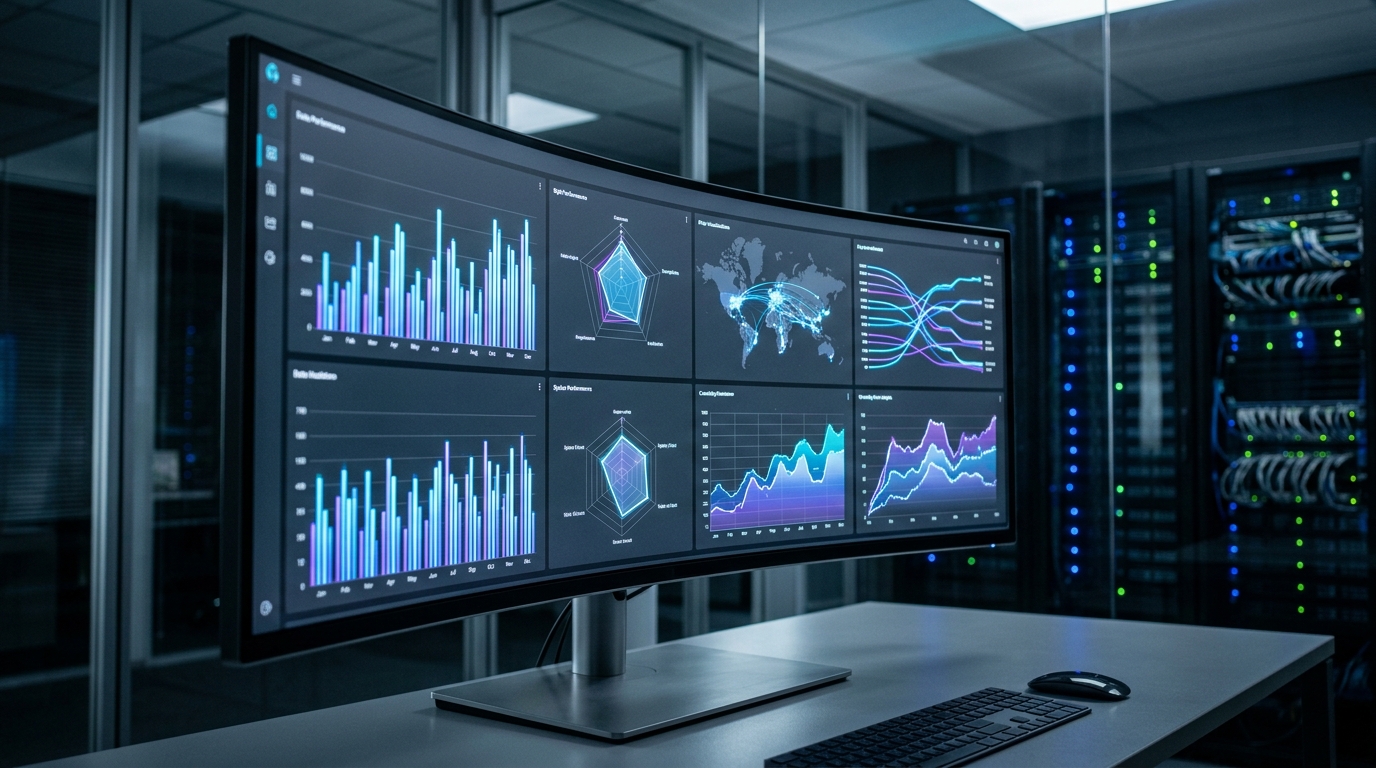
This performance leap is achieved through the ingenious use of Materialized Views. Instead of querying the raw firehose of incoming data every time a user opens the app, ClickHouse materialized views can be used to pre-aggregate data directly upon ingestion. By rolling up the raw checks into per-minute, per-hour, and per-day summaries instantly, the database saves massive amounts of compute time on reads. The user’s browser simply requests these highly condensed minute-buckets rather than parsing millions of individual historical events. It transforms an agonizing wait time into an instantaneous, frictionless workflow.
Moreover, the extreme cost-efficiency of columnar storage directly subsidizes the modern freemium software model. Because it costs fractions of a cent to store billions of highly compressed telemetry events, service providers can afford to offer generous free tiers to consumers and independent developers. If these companies were forced to store this identical volume of data in expensive, high-maintenance transactional databases, the infrastructure costs would inevitably be passed down to the user. For consumers navigating a landscape dominated by Reviews & Comparisons of SaaS pricing, this backend efficiency is the unseen force keeping subscription costs low and performance incredibly high.
Frequently Asked Questions
Q1: When should I choose Postgres vs ClickHouse for my application?
A1: Choose Postgres for data that changes frequently and requires strict transactional integrity (OLTP). Use ClickHouse for massive, append-only analytical data streams like logs or telemetry that you need to query in aggregate (OLAP).
Q2: How does ClickHouse compress data more efficiently than Postgres?
A2: ClickHouse stores identical data types contiguously on disk in a columnar format, allowing it to apply specialized compression algorithms like DoubleDelta for regular intervals and T64 for small integer ranges.
Q3: What is the biggest mistake when migrating to ClickHouse?
A3: Partitioning by high-cardinality values like tenant IDs can create a flood of tiny parts that choke the merging process. Instead, you should partition by time (e.g., day) and sort by the tenant ID.
Q4: How do you handle data updates in ClickHouse?
A4: ClickHouse is built for append-only streams and struggles with traditional UPDATE operations. To handle changing states, engineers typically use the ReplacingMergeTree engine for asynchronous deduplication or rely on Postgres as the operational hot store.
Q5: Can I move data easily between Postgres and ClickHouse?
A5: Yes, enterprise architectures frequently utilize Change Data Capture (CDC) pipelines to seamlessly replicate state changes from Postgres into ClickHouse for historical analytics and aggregation.
TechNode HQ Verdict: Pros, Cons & Usability
- Pro (Engineering): Eliminates Postgres table bloat by offloading append-only firehose streams to a dedicated columnar engine.
- Pro (Consumer): Enables instantaneous load times for complex analytical dashboards spanning months of historical data.
- Con: Introduces the administrative overhead of maintaining two completely separate schemas, deployment pipelines, and backup protocols.
- Con: ClickHouse’s inability to perform traditional
UPDATEoperations requires asynchronous workarounds like the ReplacingMergeTree.
Enterprise Usability: For scale-ups and enterprises handling massive streams of telemetry or log data, deploying a split architecture utilizing both Postgres and ClickHouse is virtually mandatory to prevent catastrophic database bloat and excessive cloud compute costs.
Everyday Usability: Consumers do not interact with these databases directly, but they immediately feel the benefits through zero-latency dashboards and the continued existence of free-tier software models subsidized by cheap columnar storage.