Key takeaways
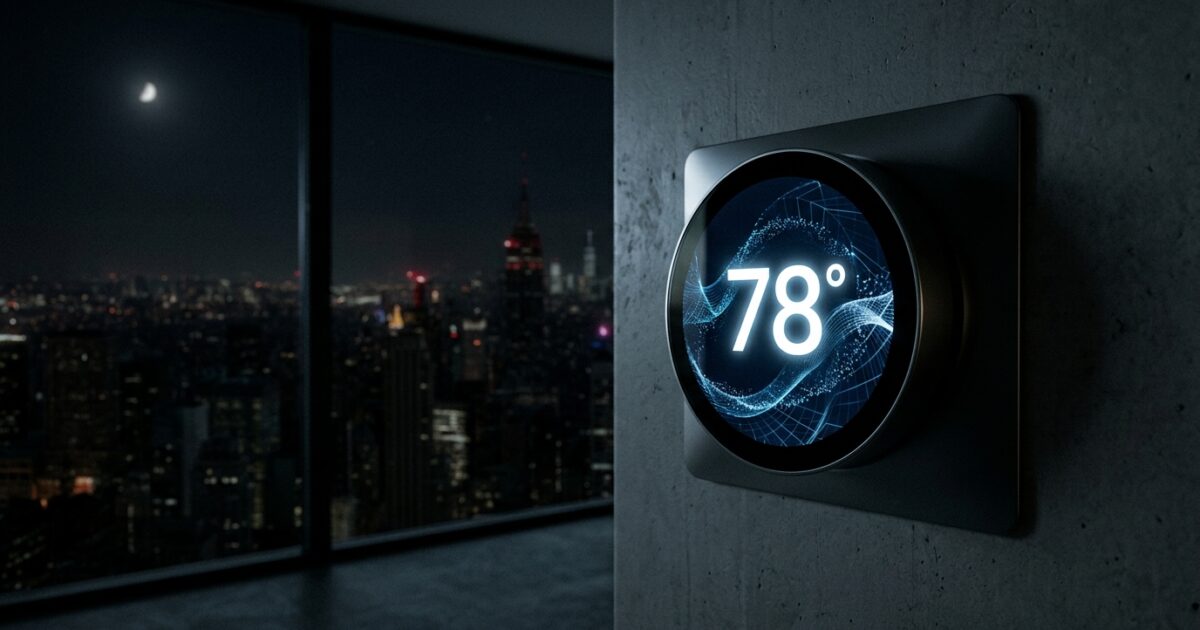
- The 78-Degree Thermostat recommendation is critical for preventing cascading power grid failures during extreme heat waves.
- Political backlash against energy conservation ignores historical bipartisan consensus on protecting civic infrastructure.
- Outdated HVAC standards based on male metabolic rates actively suppress female productivity in modern workplaces.
- Raising office temperatures can simultaneously reduce enterprise energy costs and boost overall workforce performance.
- Thermostatic politics reveals a deep cultural divide over whether air conditioning is a luxury or a basic necessity.
The seemingly mundane act of adjusting your home climate control has ignited a fierce national controversy, transforming the 78-Degree Thermostat into a highly visible symbol of ideological tension. What was once universally accepted as a standard engineering recommendation by utility companies and government agencies to meticulously manage peak electricity demand has now dramatically devolved into a flashpoint in contemporary political discourse. Across the United States, thermostat settings have emerged as a contentious debate, completely evolving from a simple household utility into a deeply entrenched cultural marker. In some regions and political circles, widespread air conditioning is increasingly viewed as an elitist or environmentally harmful luxury that accelerates climate change, while for millions of others, it remains an absolute, non-negotiable basic necessity for health and survival in the face of record-breaking, life-threatening heat waves.
This escalating national debate recently culminated in an extraordinary digital erasure, as the U.S. Department of Energy (DOE) quietly removed thousands of web pages containing practical energy-conservation tips. This massive purge explicitly included the deletion of legacy guidelines that had long advised American citizens to keep their indoor thermostats at a balmy 75 to 78 degrees Fahrenheit during the hottest days of the year. The sudden disappearance of over 6,000 pages of consumer guidance represents a disturbing capitulation to performative public outrage over what has historically been pragmatic infrastructure management. As global temperatures continue to rise exponentially, the complex intersection of energy policy, electrical grid stability, and modern culture wars requires a rigorous, objective examination of the underlying engineering realities that dictate our power consumption.
The Architectural Reality of the 78-Degree Thermostat

Beneath the heated political rhetoric lies a fragile, infinitely complex, and aging network of electricity distribution. The United States power grid operates on a highly delicate, real-time balance of supply and demand; electricity must be consumed the exact millisecond it is generated. During the sweltering peak of summer, localized cooling systems—ranging from consumer smart home technology to massive, industrial-scale commercial chillers in skyscrapers—draw an extraordinary, unprecedented amount of power from the grid. When millions of air conditioning compressor motors activate simultaneously to combat afternoon heat, the resulting inrush currents and sustained peak load can easily and rapidly exceed the maximum baseline generation capacity of local utility companies. This is not merely a hypothetical scenario debated in academia; the severe threat of catastrophic voltage drops, brownouts, and rolling blackouts is a persistent, daily reality for grid operators navigating extreme weather events.
From an engineering perspective, setting a 78-Degree Thermostat is a calculated mathematical necessity specifically designed to dynamically shave the absolute top off these dangerous peak demand spikes. The 78-degree mark is what organizations, including Energy Star, have empirically cited for decades as the optimal thermal setting that perfectly balances necessary human comfort with critical energy savings. This vital recommendation is not a modern invention; it dates back directly to 1979, when President Jimmy Carter federally mandated the exact same temperature for public buildings during a major national energy shortage. By raising the ambient temperature setpoint by just a few degrees, the continuous run-time of power-hungry AC compressors is significantly reduced, directly preventing the mechanical and thermal overload of neighborhood electrical transformers.
To accurately abstract this incredibly technical dynamic for the executive suite: Think of the regional power grid as a sophisticated, global logistics and shipping network during the absolute peak of the holiday shopping season. If every single consumer suddenly demands next-day, instantaneous delivery at the exact same hour, the entire supply chain fundamentally collapses under the sheer, unmanageable volume, leaving absolutely everyone empty-handed. Raising the thermostat is the direct operational equivalent of selecting standard shipping—it gracefully and efficiently distributes the electrical load over a longer period of time, ensuring that the critical, underlying system remains functional and resilient for everyone involved.
Market Impact & Deployment: The Economics of HVAC
For modern enterprise IT teams, corporate facility managers, and commercial real estate developers, the financial implications of building-wide thermostat settings are absolutely massive. Mechanical cooling operations routinely account for a dominant share of total commercial real estate energy expenditures. The Total Cost of Ownership (TCO) for legacy, aging HVAC systems skyrockets astronomically when they are relentlessly forced to run continuously at artificially lower temperatures. This aggressive operational posture significantly accelerates mechanical wear, drastically shortens the lifespan of expensive compressor units, and drives up routine maintenance costs.
Furthermore, commercial utility contracts are vastly different from residential billing; they almost always include severe peak demand charges. In the commercial sector, a single, brief spike in electricity usage during a 15-minute window in a billing cycle can irrevocably dictate the highest pricing tier for the entire month. By strategically deploying automated, AI-driven building management systems to strictly maintain a 78-degree ambient temperature during peak hours, massive corporations can instantly realize millions of dollars in annual energy savings, directly improving their bottom line while actively supporting local grid stability.
However, the highly polarized political climate has made this logical, economically sound deployment surprisingly controversial. Political scientists have identified a phenomenon known as ‘thermostatic politics’, which perfectly encapsulates the current environment. This term refers to the well-documented, cyclical feedback loop where public opinion dramatically and aggressively shifts in the exact opposite direction of any government action or mandate. When government agencies or civic leaders advise conservation, a vocal segment of the population inherently rebels against the guidance, viewing it as an infringement on personal liberty rather than a collective necessity for infrastructure survival.
The Bipartisan History of Grid Resilience
This dynamic was on full display in July 2026, when New York City Mayor Zohran Mamdani explicitly urged residents and corporate businesses to set their air conditioning units to 78 degrees during an extreme, life-threatening heat wave. This recommendation was entirely intended to help conserve critical electricity and protect the localized power grid from a catastrophic cascading failure during peak demand. Yet, conservative lawmakers and internet personalities mercilessly mocked the NYC 78-degree recommendation, hastily and inaccurately labeling the basic engineering guidance as ‘socialist’ or ‘communist’ overreach.
Critics also actively highlighted perceived mixed messaging, pointing out the apparent logical contradiction as the mayor pleaded with people to conserve energy while simultaneously urging vulnerable populations to immediately seek out heavily air-conditioned, publicly funded cooling centers to strictly avoid heat-related illnesses and death. The ensuing intense online debate saw pragmatic users fiercely defending the guidelines as a mathematical necessity to prevent devastating blackouts, while others criticized the mandated temperatures as uncomfortably warm and a gross violation of personal freedom.
What the current wave of political outrage conveniently ignores, however, is the long, extensively documented history of bipartisan support for these exact energy conservation measures. Protecting the physical integrity of the electrical grid is not an inherently partisan issue; it is a fundamental, non-negotiable requirement of civic governance. A thorough red team audit of the ongoing controversy reveals a profound level of historical amnesia. Republican-led states have repeatedly issued similar, urgent guidance to the heavily criticized NYC recommendation during their own high-heat events.
For instance, in Texas—a state that is acutely and painfully aware of grid vulnerabilities following the catastrophic 2021 winter freeze that directly led to 246 tragic deaths—the state’s energy council, ERCOT, has frequently and publicly pleaded with citizens to save power by adjusting their thermostats upward. Years prior to that specific crisis, Texas Governor Greg Abbott asked all residents to take simple, immediate measures to lower electricity use specifically to avoid grid strain. Similarly, as far back as 1999, the office of then-NYC Mayor Rudolph Giuliani made the exact same 78-degree recommendation during a severe summer heat wave. The underlying physics of electrical distribution do not change based on political affiliation, making the current outrage highly performative.
The Consumer Translation: Outdated Standards and Productivity
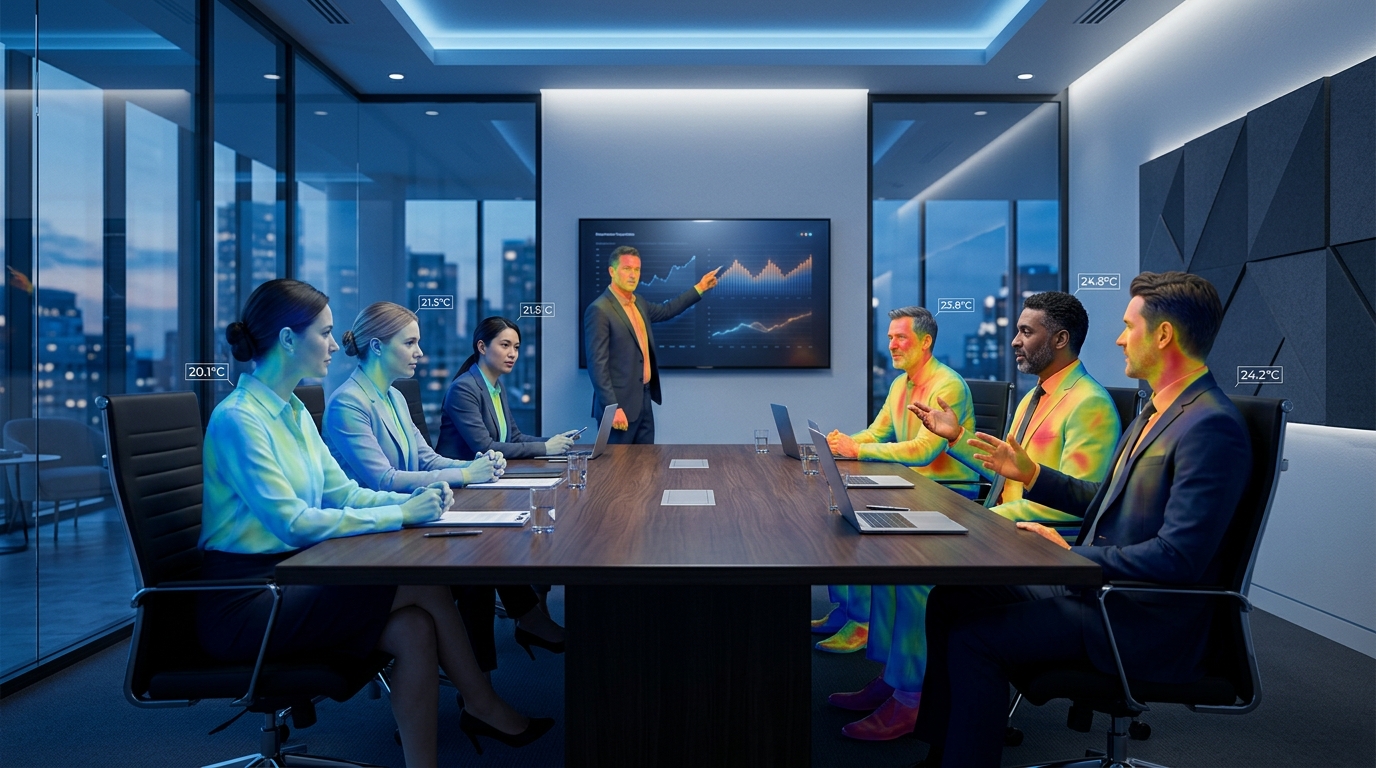
Beyond the macroeconomics of a cloud-connected smart grid, the national temperature debate directly and profoundly impacts human physiology, gender equity, and everyday workplace productivity. The hidden reality is that the vast majority of modern, glass-encased office buildings are strictly adhering to rigid HVAC standards that were definitively established decades ago. These legacy systems are meticulously calibrated based on a deeply flawed ‘metabolic equivalent of task’ (MET) formula that originally used a 40-year-old, 154-pound man dressed in a full, three-piece wool suit as the absolute baseline standard for calculating ideal thermal comfort.
This antiquated, 1960s-era engineering baseline actively works against the modern, highly diverse corporate workforce. Documented physiological differences, such as varying total muscle mass, resting metabolic rates, and basal skin temperatures, significantly contribute to the well-documented, persistent gap in thermal preference between men and women in the office environment. Furthermore, stark differences in contemporary workplace dress codes aggressively exacerbate this daily temperature discomfort. Men often wear multiple insulating layers, including undershirts, thick button-downs, and suit jackets, while women’s professional attire frequently utilizes much lighter, more breathable fabrics designed for warmer outdoor temperatures.
As a direct result of these deeply ingrained, biased formulas, the standard 70 to 72-degree commercial office environment often leaves female employees physically freezing, severely and negatively impacting their comfort, morale, and overall cognitive output. A landmark, peer-reviewed 2019 study published in the prestigious journal PLOS One provided undeniable empirical evidence for this systemic disparity. The comprehensive research definitively found that women performed significantly better on complex math and verbal tasks at warmer office temperatures. The data is unequivocally clear: researchers strongly suggest that proactively raising the thermostat in gender-mixed workplaces is not just about saving energy or protecting the grid—it could materially and dramatically increase overall corporate productivity by directly improving female employee cognitive performance.
The stubborn, ongoing resistance to warmer indoor settings is thus not only a severe infrastructure hazard that continuously threatens the stability of our national power grid, but it is also a systemic, deeply rooted barrier to optimized human capital performance. Rethinking the 78-Degree Thermostat debate requires us to move past partisan bickering and embrace a data-driven approach that values both civic infrastructure resilience and the physiological realities of the modern workforce.
Frequently Asked Questions
Q1: Why are government officials recommending a 78-Degree Thermostat setting?
A1: Setting the thermostat to 78 degrees helps conserve critical electricity during extreme heat waves, reducing peak demand and preventing widespread grid failures or rolling blackouts.
Q2: Is the 78-Degree Thermostat recommendation a new political initiative?
A2: No. The recommendation has been historically supported by both Democratic and Republican leaders, including former NYC Mayor Rudolph Giuliani and Texas Governor Greg Abbott, to protect civic infrastructure.
Q3: How do workplace temperatures affect female employee productivity?
A3: A 2019 study published in PLOS One found that women perform significantly better on math and verbal tasks in warmer environments. Researchers indicate that raising office thermostats could boost overall corporate productivity.
Q4: Why are modern office buildings often kept so cold?
A4: Many office buildings still adhere to HVAC standards established decades ago, which are based on a metabolic equivalent formula that used a 40-year-old, 154-pound man in a full suit as the baseline for thermal comfort.
Q5: Why is air conditioning considered a controversial topic?
A5: The debate centers on balancing air conditioning as a basic necessity for health against its significant strain on power grids and its environmental impact, leading to what experts call thermostatic politics.
TechNode HQ Verdict: Pros, Cons & Usability
- Pro (Engineering): Mass adherence to higher temperature setpoints drastically shaves peak load demand, mitigating the risk of cascading transformer failures and grid collapse.
- Pro (Consumer): Warmer indoor environments better align with female physiological thermal preferences, directly boosting cognitive performance, comfort, and workplace morale.
- Con: Broad government mandates fail to account for vulnerable populations, such as the elderly, who require aggressively cooled spaces to prevent heat-related health crises.
- Con: Retrofitting legacy commercial HVAC systems with smart sensors to dynamically manage temperatures requires significant upfront capital expenditure and IT integration.
Enterprise Usability: CTOs, IT directors, and facility managers should immediately audit their building management systems, actively integrating modern IoT sensors to dynamically adjust temperatures based on real-time grid load and actual human occupancy, officially abandoning outdated, biased MET formulas.
Everyday Usability: Everyday consumers should program their smart home thermostats to automatically raise temperatures during peak afternoon hours, intelligently balancing personal comfort with the urgent civic necessity of grid resilience.