Key takeaways
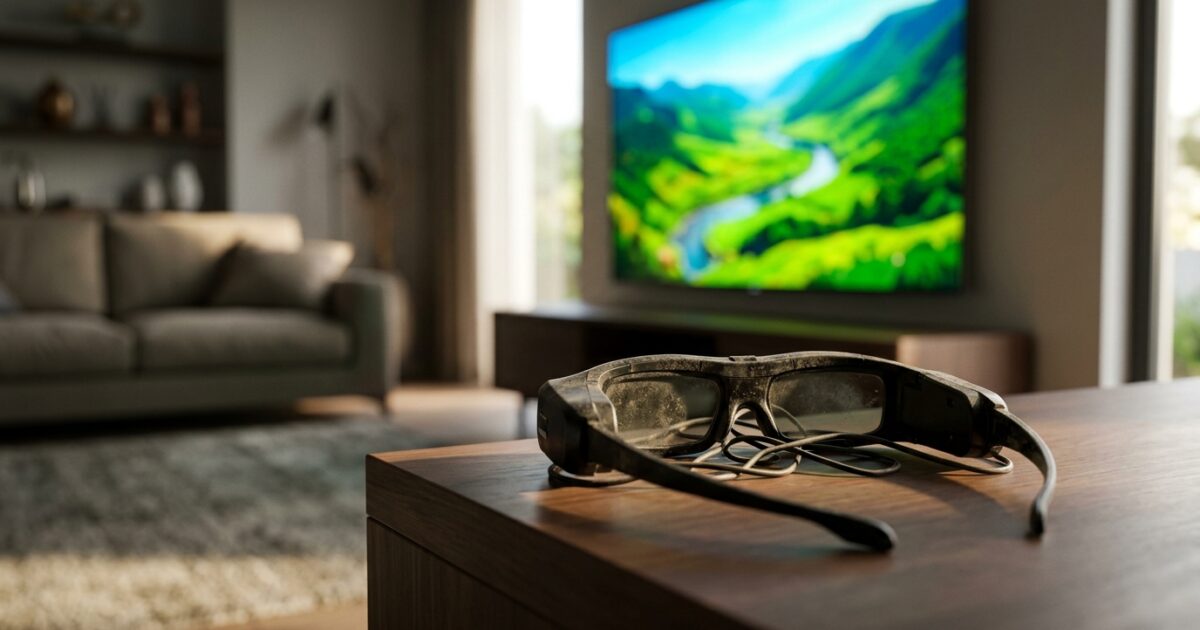
- The necessity of clunky, incompatible glasses created insurmountable friction for casual home viewing.
- Passive 3D halved image resolution, while active 3D caused flicker, dimness, and battery overhead.
- Studios eroded consumer trust by charging premium ticket prices for muddy, post-converted 2D films.
- By 2017, manufacturers ceased 3D production, pivoting entirely to frictionless 4K and HDR upgrades.
- True stereoscopic viewing has now migrated successfully to high-end spatial computing headsets.
For a brief moment in the early 2010s, it seemed the entire consumer electronics industry was irreversibly aligned on a singular, three-dimensional vision for the future of home entertainment. The theatrical release of James Cameron’s Avatar in 2009 ignited a technological gold rush, pushing television manufacturers to heavily market and integrate stereoscopic capabilities into almost every new high-end display on the market. But analyzing exactly why 3D TVs failed requires a highly technical deep dive into the intersection of hardware engineering limitations, rigid consumer behavior, and the cinematic supply chain’s mismanagement of the format. Despite the massive initial corporate push, the technology suffered from fragmented ecosystem standards, absolute ergonomic nightmares, and a fundamental misunderstanding of how audiences actually consume media in their living rooms. By 2017, the stereoscopic dream was entirely dead, replaced by superior technologies that offered frictionless, ubiquitous improvements to picture quality.
Why 3D TVs Failed: The Architectural Reality
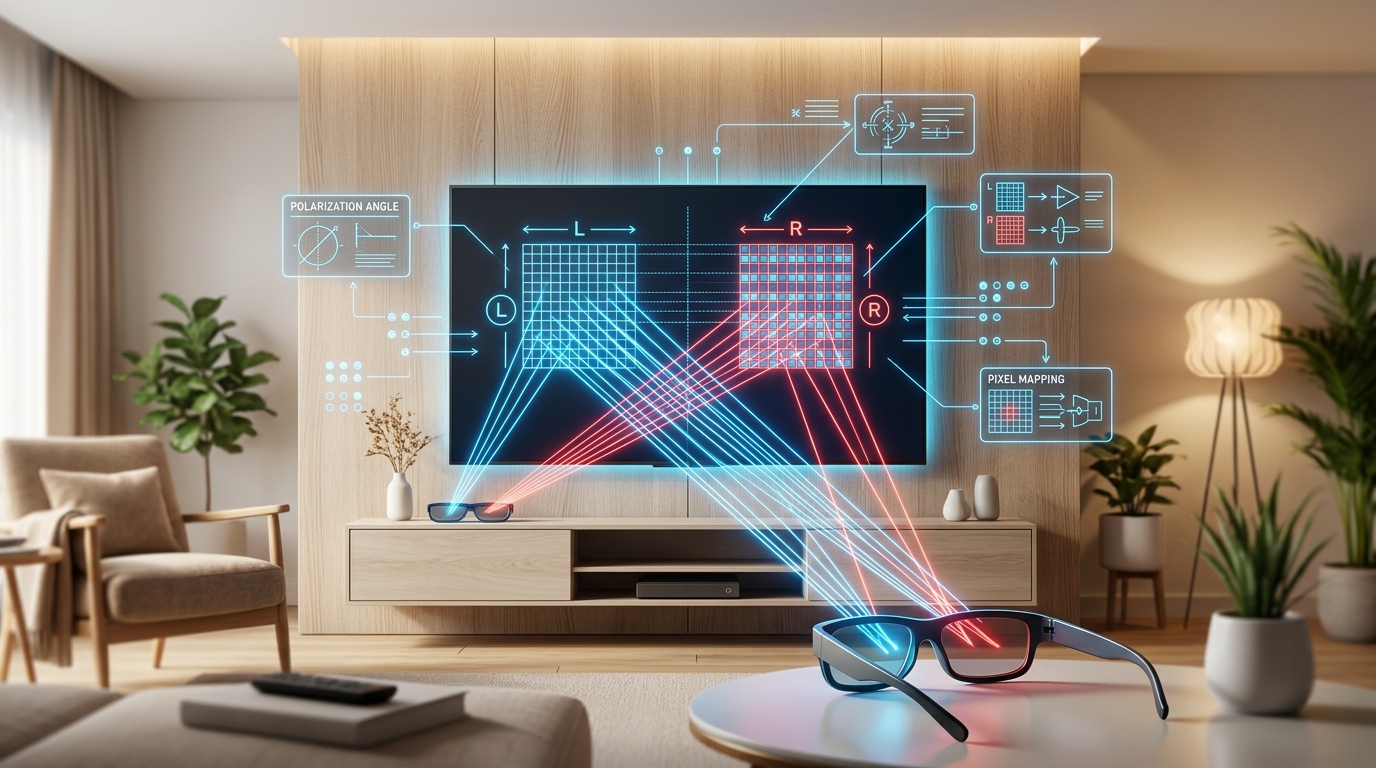
To understand the spectacular collapse of the format, one must first examine the inherent engineering bottlenecks of stereoscopic display panels. The illusion of three-dimensional depth relies on stereopsis—delivering a slightly offset image to each eye so the brain can composite them into a volumetric scene. Television manufacturers attempted to achieve this using two distinctly flawed architectures: Passive Polarization and Active Shutter technology. Both methods demanded severe sacrifices to the foundational image quality.
The Compromises of Passive Polarization
Passive 3D systems utilized Film Patterned Retarder (FPR) technology, which applied alternating lines of circular polarization across the television screen. One set of lines corresponded to the left eye, and the other to the right. While the polarized glasses were cheap, lightweight, and didn’t require batteries, the display architecture fundamentally broke the visual fidelity of the era. Because the screen had to divide its pixels between both eyes simultaneously, passive 3D effectively halved the vertical resolution of a 1080p image. Viewers were forced to watch 540p images per eye, resulting in visible horizontal black lines (scanline artifacts), jagged edges, and a distinctly soft picture that entirely defeated the purpose of owning a high-definition television.
The Burden of Active Shutter Technology
In response to the resolution degradation of passive sets, high-end manufacturers deployed Active Shutter 3D. This system maintained full 1080p resolution by sequentially flashing the left and right frames at high refresh rates (120Hz or higher). The viewer wore battery-powered LCD glasses that actively blackened one eye’s lens in precise synchronization with the television via infrared or Bluetooth signals. However, this introduced a new suite of critical hardware failures. The active shutters blocked out a massive percentage of ambient light and screen luminance, resulting in a disastrously dim, color-muted image. Furthermore, the glasses were prohibitively expensive—often costing upwards of $50 to $100 per pair—required constant battery management, and were aggressively proprietary. A pair of Sony glasses would not sync with a Samsung TV, completely destroying the communal aspect of hosting a watch party.
The Vergence-Accommodation Conflict
Beyond hardware flaws, 3D TVs triggered a biological rejection mechanism known as the Vergence-Accommodation Conflict (VAC). In the natural world, the human eye converges (points toward) and accommodates (focuses the lens on) an object at the exact same physical distance. With a stereoscopic television, the viewer’s eyes must remain permanently focused on the physical glass of the screen sitting ten feet away, while simultaneously converging on virtual objects that appear to float three feet in front of their face. This neurological disconnect places immense stress on the visual system. Consequently, many users reported severe negative physical side effects, including extreme eye strain, debilitating headaches, and motion sickness, effectively limiting viewing sessions to brief, uncomfortable windows.
Hollywood’s Content Crisis and the Upscaling Disaster
The living room hardware was only half of the equation; the cinematic supply chain was arguably more responsible for the format’s rapid demise. While James Cameron meticulously built Avatar around a true, bespoke stereoscopic 3D camera system—producing an unparalleled sense of genuine depth—other studios saw only an opportunity to artificially inflate ticket prices. Realizing that native 3D cinematography required heavy, expensive dual-lens camera rigs and complex lighting setups, executives resorted to cheap 2D-to-3D post-production conversions.
Films like Alice in Wonderland and Clash of the Titans were retro-fitted with digital depth maps in post-production. The results were visually atrocious. Rather than presenting a cohesive volumetric space, characters looked like flat cardboard cutouts layered inside a rigid diorama. Critics and audiences quickly noted that for the vast majority of these films, 3D added absolutely nothing to the narrative or storytelling. The upscaled stereoscopic effects often felt artificial and led audiences to view 3D as a cheap, extortionate gimmick. Furthermore, polarized 3D theater glasses blocked a significant amount of light, and many multiplexes failed to project at the required elevated brightness, resulting in dark, muddy screenings.
By the time consumers actually purchased a 3D TV, they had been trained by the theater industry to associate the format with physical discomfort and subpar quality. There was never a consistent, widespread library of high-quality 3D content available for home viewing, and consumers wholly rejected paying $30 for a 3D Blu-ray of a film they already despised in theaters. Even massive broadcast networks like ESPN and the BBC attempted to launch dedicated 3D channels, but unceremoniously shuttered them by 2013 due to near-zero viewership.
Market Impact and Deployment Tactics
When analyzing the total cost of ownership and the sheer inconvenience of the format, it becomes evident that 3D was a catastrophic misstep in deployment strategy for Original Equipment Manufacturers (OEMs). The timing of the rollout was economically disastrous. 3D TVs were introduced shortly after many consumers had already invested thousands of dollars in upgrading from standard definition CRT monitors to high-definition flat panels. The incentive to immediately upgrade again for a cumbersome, expensive feature with a barren content ecosystem was practically non-existent.
Statistics indicate that while 25 percent of households with 3D TVs actually used the technology during the peak period between 2010 and 2018, less than 10 percent of households kept using it after three years. A staggering 65 percent of users abandoned the feature due to a lack of content, 50 percent cited physical discomfort, and 42 percent gave up due to the high costs of replacing broken or dead active shutter glasses.
The Frictionless Pivot to 4K and HDR
Recognizing the impending collapse of the stereoscopic market, television manufacturers shifted their R&D focus entirely toward escalating resolution and dynamic range. The pivot to 4K resolution and High Dynamic Range (HDR) succeeded exactly where 3D failed because it offered a completely passive, ubiquitous benefit. Consumers did not need to charge glasses, buy proprietary sync modules, or sit entirely motionless in a narrow viewing cone to enjoy 4K. It operated seamlessly in the background, making all content—even older standard definition shows—look sharper, brighter, and significantly more vibrant. As the 3D hype faded rapidly, by roughly 2017, most major manufacturers had quietly ceased production of 3D TVs entirely.
The Consumer Translation and the Future of Stereoscopy
For the average consumer, the definitive lesson of the 3D TV era is that convenience dictates living room dominance. The home theater is fundamentally a space for passive relaxation, multi-tasking, and communal viewing. Requiring users to fetch specific glasses, check battery levels, and isolate themselves behind tinted lenses inherently violated the casual nature of television. It added immense friction to an activity designed to eliminate it.
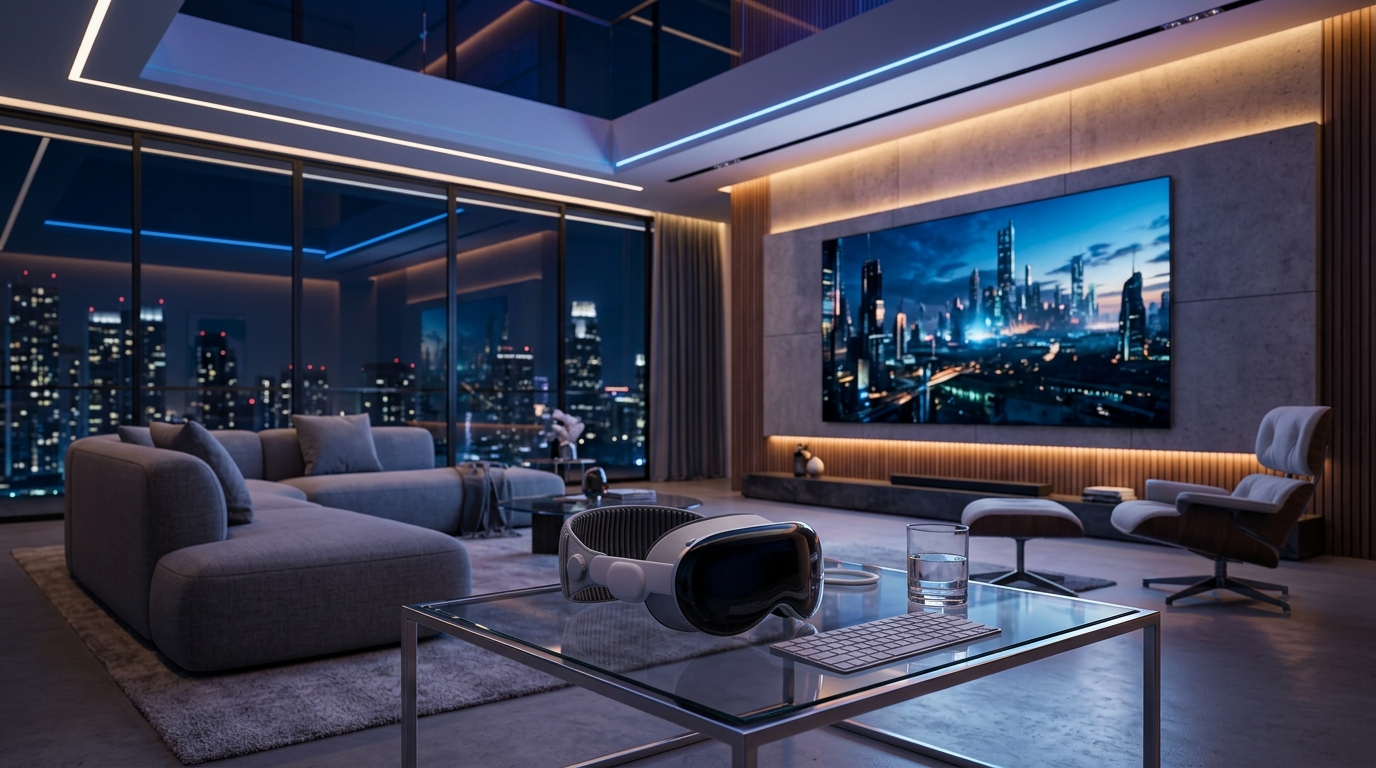
However, the concept of stereoscopic media did not die; it simply migrated to hardware capable of properly executing the illusion. Today, true 3D viewing belongs to the realm of virtual reality and spatial computing. High-end head-mounted displays, such as the Meta Quest and the $3,690 Apple Vision Pro, feature dual micro-OLED screens that pipe discrete, full-resolution images directly into each eye without the need for alternating shutters or polarizing filters. This native architecture definitively solves the brightness loss, cross-talk artifacting, and synchronization issues that plagued televisions, offering a spectacular and flawless 3D movie experience. Yet, it remains an inherently solitary activity.
While some market analysts predict future growth in the 3D TV category driven by glasses-free (autostereoscopic) displays, these technologies currently rely on complex lenticular lenses and sophisticated eye-tracking algorithms. Because the display must dynamically adjust the image based on the viewer’s exact pupil location, they generally fail to support multiple viewers simultaneously, making them useless for family living rooms. Until true, multi-angle holographic projection matures into a consumer-friendly price point, the shared 3D experience will remain dead in the home, relegated to the history books as a fascinating, billion-dollar hardware miscalculation.
Frequently Asked Questions
Q1: Why did companies stop making 3D TVs?
A1: Manufacturers ceased production around 2017 due to dismal consumer adoption. Buyers were frustrated by the need for expensive, brand-incompatible glasses, a severe lack of content, and physical discomfort like eye strain and nausea.
Q2: Did 3D TVs ruin the image quality?
A2: Yes, achieving the 3D effect resulted in a massive loss of brightness and color accuracy. Furthermore, passive 3D sets effectively halved the vertical resolution of a pristine 1080p image, degrading overall clarity.
Q3: Why did 3D movies often look worse than standard 2D?
A3: Many 3D movies were not shot natively in 3D but rather converted in post-production to save money. This artificial upscaling often led to muddy visuals, unnatural cardboard-cutout effects, and improper depth scaling.
Q4: What replaced 3D technology in home theaters?
A4: The consumer electronics industry shifted its focus entirely to 4K resolution and High Dynamic Range (HDR) displays. These technologies provided immediate, noticeable improvements to visual clarity without ever requiring special glasses.
Q5: Can you still watch 3D movies at home today?
A5: While modern 3D TVs are defunct, stereoscopic viewing has found a new home in virtual reality. Devices like the Meta Quest and the Apple Vision Pro support native, high-quality 3D movie playback without the brightness and cross-talk issues of older TVs.
TechNode HQ Verdict: Pros, Cons & Usability
- Pro (Engineering): Active shutter technology proved that high-refresh-rate 120Hz panels could be successfully mass-produced for the living room, paving the way for modern gaming TVs.
- Pro (Consumer): The ultimate failure of 3D forced manufacturers to compete heavily on raw image quality, drastically accelerating the affordability of 4K and OLED panels.
- Con: Passive polarization literally destroyed high-definition resolution, cutting 1080p visual fidelity in half.
- Con: The active shutter ecosystem was a deployment nightmare, requiring users to charge expensive, proprietary glasses that caused severe headaches due to vergence-accommodation conflict.
Enterprise Usability: Commercial real estate and cinema chains correctly abandoned stereoscopic projection in favor of Premium Large Format (PLF) and IMAX laser screens, which offer higher ROI without the maintenance overhead of managing 3D glasses.
Everyday Usability: Consumers should absolutely avoid legacy 3D TVs. For those who still desire a premium stereoscopic movie experience, the only viable upgrade path today is purchasing a high-end VR headset like the Meta Quest 3 or Apple Vision Pro.