Key takeaways
- The Cyberpunk Edgerunners 2 premiere occurred at Anime Expo on July 3, 2026.
- It operates as a standalone 10-episode story, abandoning legacy characters to mitigate narrative debt.
- The project marks the directorial debut for Studio Trigger’s Kai Ikarashi.
- Fall 2026 Netflix deployment features new leads voiced by Clancy Brown and Valeria Rodriguez.
- Executive architecture heavily integrates CDPR’s Bartosz Sztybor and Saya Elder with Studio Trigger.
The Cyberpunk Edgerunners 2 premiere at Anime Expo 2026 wasn’t merely a screening of an animated feature; it was a definitive, high-stakes masterclass in cross-media IP architecture and franchise lifecycle management. As the technology sector increasingly collides with global entertainment and digital media ecosystems, the strategic deployment of highly anticipated narrative assets has become just as critical as the optimization of robust cloud infrastructure. On Friday, July 3, 2026, a select cohort of 6,000 attendees gathered at the Crypto Arena to witness the English dub of the highly anticipated first episode. Hosted by content creator Danny Motta, this highly controlled, closed-door beta test—which was strictly embargoed from any public recording or streaming—offered a pristine, unfiltered look into the strategic roadmap of CD Projekt RED (CDPR) and Studio Trigger. What was ultimately unveiled was not a monolithic, bloated continuation of a legacy product, but rather a completely decoupled, standalone module designed to run within the broader, highly scalable Cyberpunk 2077 ecosystem. This approach perfectly mirrors the underlying principles of modern cross-media production infrastructure, where agility and workload isolation prevent cascading systemic failures and brand fatigue. In this Tier-1 editorial deep-dive, we rigorously deconstruct the underlying mechanics, the operational return on investment (ROI), and the overarching market impact of CD Projekt RED’s latest media deployment.
The Architectural Reality: Cyberpunk Edgerunners 2 Premiere
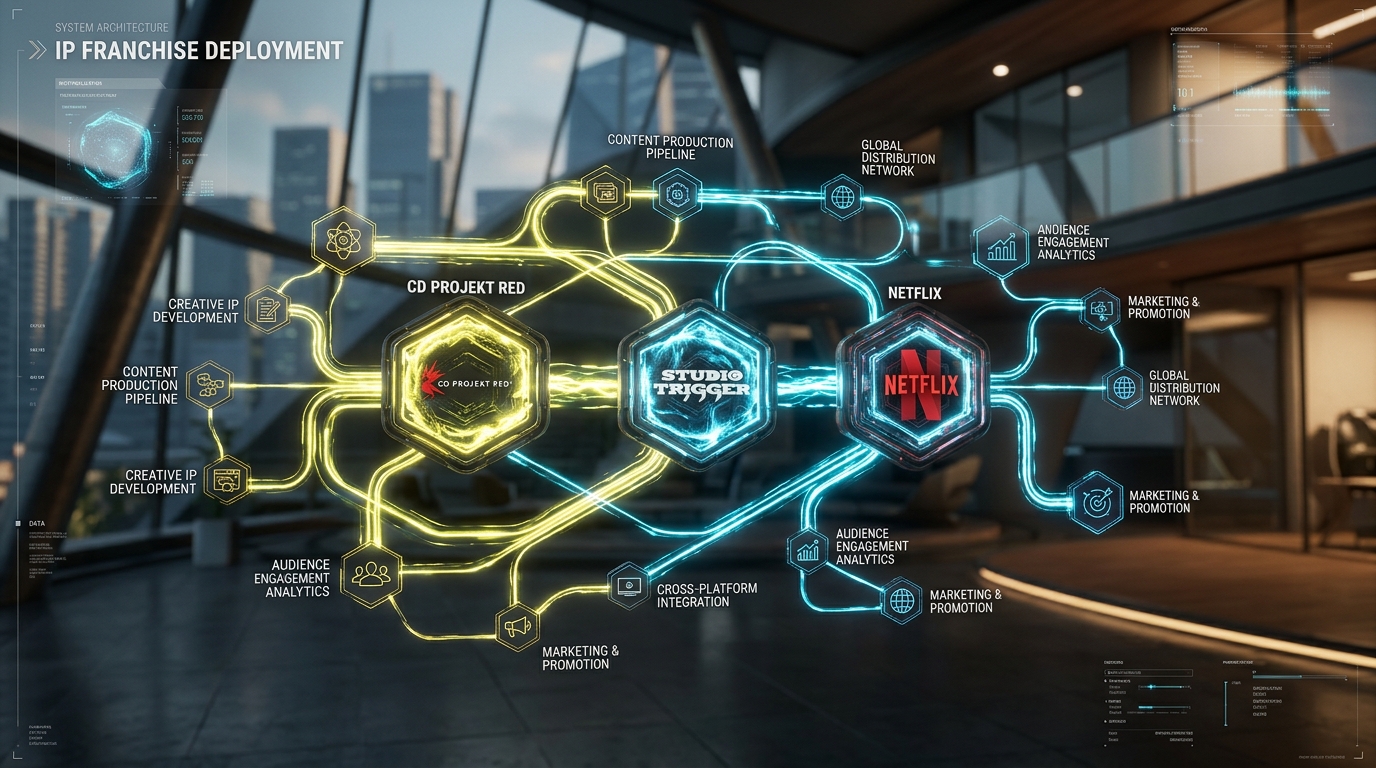
When evaluating the lifecycle and sustainability of successful digital entertainment properties, the typical methodology involves a “scale-up” approach: taking existing assets and expanding their parameters until they eventually buckle under their own accumulated technical and narrative debt. However, the architectural reality of the Cyberpunk: Edgerunners 2 deployment fundamentally rejects this outdated paradigm. Instead of building upon the monolithic narrative framework established by previous protagonist David Martinez, the creative engineers and product managers at Studio Trigger and CD Projekt RED have opted for a highly modular, microservices approach. By strictly defining Edgerunners 2 as a standalone 10-episode story with an entirely new cast of characters, they have effectively sandboxed the new narrative. This ensures that the series operates entirely independently, all while seamlessly querying the rich, shared environmental database of Night City.
This structural pivot is overseen by a robust executive board. The Anime Expo panel prominently featured CD Projekt RED showrunner Bartosz Sztybor and executive producer Saya Elder, alongside Studio Trigger’s Kai Ikarashi, who is making his highly anticipated directorial debut with this massive project. Backing Ikarashi’s ambitious vision is industry veteran Masahiko Otsuka, handling the rigorous scriptwriting protocols, and Ichigo Kanno, acting as the lead character designer. This cross-cultural, cross-corporate collaboration acts as a highly optimized, dual-node infrastructure where CDPR handles the macro-level IP routing and world-building logic, while Studio Trigger seamlessly executes the localized visual rendering and processing.
The strategic and operational advantage of this decoupled architecture simply cannot be overstated. By completely severing direct continuity ties and deliberately avoiding a legacy sequel, the creative and technical teams mitigate the risk of backward-compatibility errors—narrative inconsistencies or character fatigue that frequently plague direct continuations. The new series is fully liberated to explore a “raw chronicle of redemption and revenge,” accurately described by Anime Expo attendees as noticeably “darker” and “kinetic.” It is an intentional, calculated system reboot that effectively leverages the massive brand equity and momentum of the original season without inheriting its structural constraints.
Market Impact & Deployment Strategies
From a C-level executive perspective, the Total Cost of Ownership (TCO) for a cross-media entertainment franchise is heavily determined by its capacity to consistently engage diverse user demographics without cannibalizing its core audience or bloating production budgets. The deployment strategy for Edgerunners 2, which is officially scheduled to hit global digital streaming ecosystems via Netflix in the Fall of 2026, is precision-engineered to maximize return on investment through optimized, multi-faceted user acquisition. Rather than relying on a single central node or hero, the sequel rapidly spins up four distinct “workloads”—an entirely new cast of incredibly diverse characters, each calibrated to process and present different aspects of Night City’s volatile sociopolitical environment.
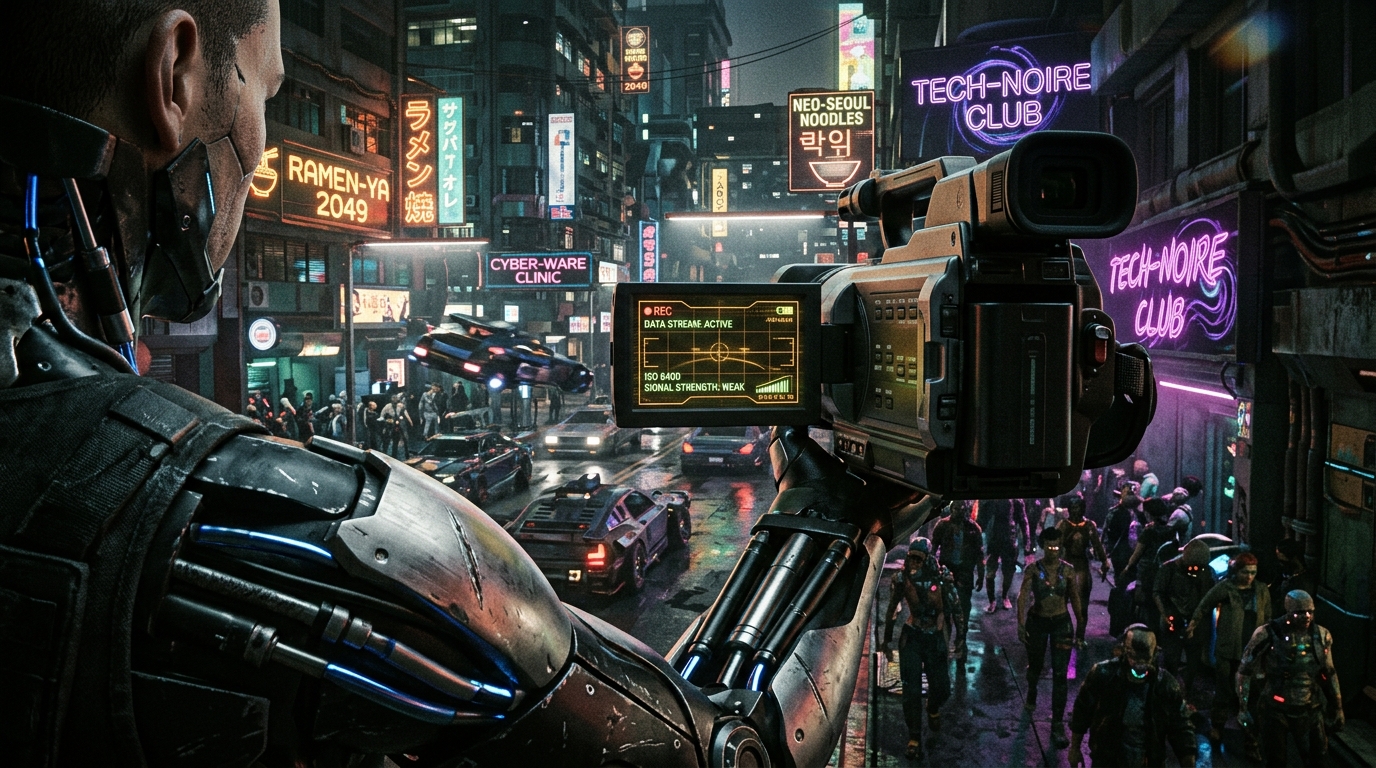
This new ensemble functions analogously to a highly efficient load-balanced server cluster, distributing heavy narrative weight across vastly different user perspectives. We are first introduced to Weak Kingsley, voiced by Kentarō Tone in the Japanese localization and the legendary Clancy Brown in the English dub. Kingsley acts as a legacy workload, an edgerunner existing as a shadow of his former self, providing necessary nostalgia and brand continuity for the target demographic. Operating alongside him is D, a sophisticated Netrunner voiced by Kōki Uchiyama (Japanese) and Nazeeh Tarsha (English), representing the unchecked, volatile digital operations of the Snake Nation nomads. The telemetry and observational data of this new world are meticulously captured through Roman Carax, voiced by Momoka Terasawa and Valeria Rodriguez, a young, idealistic cinephile whose guerilla documentary camcorder serves as the literal user interface for the audience. Finally, Talia Yang, brilliantly portrayed by Akari Kitō and Kimoy Lee, operates as the sleek corporate interface, bridging the massive gap between high-level Corpo security networks and chaotic, street-level Maelstrom gang violence.
This diversified, robust portfolio of protagonists ensures incredible fault tolerance; if one specific narrative arc experiences a temporary drop in user engagement, the parallel processing of the other three character arcs maintains overall system integrity and viewer retention. Furthermore, the intelligent integration of third-party IP via high-profile music licensing demonstrates a sophisticated approach to ambient world-building. Securing the rights to the classic post-punk track “10:15 Saturday Night” by The Cure for the opening theme, and bringing in Watson for the ending theme, injects a pre-validated, high-fidelity cultural resonance into the final product. It is a shrewd acquisition strategy that immediately elevates the perceived value of the content, firmly positioning it not merely as a marketing vehicle for a video game, but as a premium, standalone cultural artifact designed for massive mainstream adoption.
The Consumer Translation and Cultural Telemetry
While the enterprise-level corporate strategy heavily focuses on decoupled architectures and scalable, diverse character portfolios, the ultimate and most critical endpoint is the end-user—the worldwide public eagerly consuming the media on their devices. For the average consumer, this highly technical, calculated structural shift directly translates into a visceral, uncompromised, and breathtaking entertainment product. The bold creative decision to frame the horrific grandeur of Night City through the diegetic lens of Roman Carax’s handheld camcorder is an absolute masterstroke in user experience (UX) design. By filtering the extravagant opulence of the Cyberpunk world through a lo-fi, LiveLeak-style, guerrilla aesthetic, Studio Trigger is artificially inducing a sense of grounded, tangible reality that polished renders simply cannot achieve. It is the visual equivalent of reading raw server logs—unfiltered, chaotic, brutal, and intimately authentic.
This specific “90s-baby-feeling” anime aesthetic aggressively capitalizes on cyclical cultural nostalgia, tapping deeply into the collective memory of an audience that increasingly yearns for tactile, analog media in an otherwise hyper-digital, sterile, post-transhumanist era. It acts as an incredibly potent engagement multiplier. By stripping away the glossy, highly romanticized, Michael Bay-esque presentation layer of the first season, Director Kai Ikarashi is pivoting the franchise toward a gritty, Martin Scorsese-style, street-level realism. This deliberate shift in the presentation layer forces the audience to critically confront what it means to be human in an overly commercialized, post-capitalist ecosystem where chrome and cybernetics have commodified the soul.
The resulting impact on consumer entertainment goes far beyond simple Nielsen viewing metrics. When a brand delivers a product that actively defies standard sequel expectations by refusing to serve up cheap, weaponized nostalgia, it fosters a much deeper, vastly more resilient form of brand loyalty. The kinetic, FUBAR (F***ed Up Beyond All Recognition) depiction of Night City guarantees a remarkably high level of social media virality, as users will inevitably extract, share, analyze, and debate the ultraviolent, beautifully celluloid-textured animation frames across Reddit, X, and TikTok. This organic, user-generated marketing pipeline significantly reduces customer acquisition and advertising costs for Netflix, while simultaneously driving massive, synergistic inbound traffic back to the core Cyberpunk 2077 video game software environment.
Red Team Audit: Vulnerability Assessment in Franchise Scaling
Despite the masterful engineering and seemingly flawless corporate synergy behind the Edgerunners 2 infrastructure, an objective, rigorous Red Team audit reveals several critical vulnerabilities that enterprise stakeholders must monitor continuously. The primary marketing narrative smoothly positions this release as a bold, rebellious expansion of the Cyberpunk universe. However, a deeper, unflinching analysis indicates a highly calculated risk-mitigation strategy masquerading as avant-garde art. By completely discarding the surviving, beloved characters of the first season, CD Projekt RED is actively abandoning a massive, pre-existing pool of established user goodwill. The sudden transition to an entirely new database of characters essentially requires a cold start. The system must completely rebuild user empathy and emotional investment from the ground up within a highly restrictive, limited 10-episode runtime framework.
Furthermore, placing this critical, incredibly valuable IP in the hands of Kai Ikarashi for his directorial debut—no matter his impressive pedigree and track record within Studio Trigger—introduces a massive single point of failure at the executive execution level. If the complex, four-pronged narrative fails to seamlessly compile and interlock, the resulting narrative bottleneck could severely throttle audience retention by the mid-season point, leading to subscription churn. The aggressive, uncompromising shift in visual language—specifically incorporating grainy camcorder telemetry and heavy 90s aesthetic silhouetting—might also trigger a high bounce rate among casual mainstream users who are expecting a direct, colorful visual clone of the first season’s vibrant, neon-drenched hyper-pop style. It is an incredibly precarious balancing act between potentially alienating the legacy user base and successfully onboarding a new demographic seeking prestige, cinema-grade animation.
Cross-Industry Implications and Strategic Synergy
The massive reverberations of this highly calculated release strategy extend far beyond the localized boundaries of anime production and video games, actively disrupting multiple adjacent industries. In the cloud computing and enterprise Software as a Service (SaaS) sectors, we are witnessing a profound philosophical alignment. Technology leaders are increasingly studying how massive media conglomerates handle complex product deployments with high concurrency requirements (i.e., millions of simultaneous global streams). By delivering a self-contained, high-fidelity product that drives immense top-of-funnel awareness without requiring new consumers to parse a massive backlog of previous seasons, CDPR perfectly mimics the frictionless onboarding processes highly sought after in modern B2B SaaS platforms.
Furthermore, the merchandising and physical supply chain logistics will experience a highly quantifiable, global spike. The introduction of four distinct, highly marketable new character designs by Ichigo Kanno creates a diverse array of physical endpoints—premium action figures, licensed apparel, and hardware peripherals—that will heavily stimulate global manufacturing sectors in Asia and North America. Finally, the strategic timing of the Fall 2026 release perfectly aligns with the Q4 earnings projections for both Netflix and CD Projekt RED. This demonstrates a carefully synchronized, cross-industry launch window deliberately designed to maximize quarterly revenue cycles, boost holiday consumer spending, and aggressively drive shareholder value. This is not just artistic content creation; it is highly synchronized, flawlessly executed global commerce on an unprecedented scale.
Frequently Asked Questions
Q1: When and where was the Cyberpunk Edgerunners 2 premiere held?
A1: The Cyberpunk Edgerunners 2 premiere took place on Friday, July 3, 2026, at Anime Expo in front of 6,000 attendees. It featured the English dub of the first episode and was completely exclusive, with no public streaming or recording allowed.
Q2: Will Cyberpunk Edgerunners 2 continue the story of David and Lucy?
A2: No, the series is a standalone 10-episode story featuring an entirely new cast of characters. CD Projekt RED and Studio Trigger have opted for a decoupled narrative approach rather than a direct continuation.
Q3: When will Cyberpunk Edgerunners 2 be released to the public?
A3: The series is officially scheduled for a global deployment on Netflix in the Fall of 2026.
Q4: Who are the key creative directors behind the sequel?
A4: The series marks the directorial debut of Kai Ikarashi from Studio Trigger, with Masahiko Otsuka serving as scriptwriter and Ichigo Kanno as lead character designer.
Q5: What music is featured in the new Edgerunners season?
A5: The opening theme song is the classic track “10:15 Saturday Night” by The Cure, while the ending theme is performed by Watson.
TechNode HQ Verdict: Pros, Cons & Usability
- Pro (Engineering): Decoupled, standalone narrative architecture entirely prevents backward-compatibility errors and effectively eliminates legacy character bloat.
- Pro (Consumer): Grounded, tactical UX via a 90s camcorder perspective offers a visceral, highly engaging aesthetic refresh that combats franchise fatigue.
- Con: Abandoning the original, beloved cast introduces a severe ‘cold start’ problem, requiring the rapid generation of user empathy within a highly limited runtime.
- Con: High execution risk is directly associated with load-balancing four distinct, complex protagonist arcs under the guidance of a first-time director.
Enterprise Usability: For IP managers and CTOs of massive entertainment conglomerates, CDPR’s bold strategy serves as a flawless blueprint for sustainable, long-term franchise scaling. By treating IP extensions as independent microservices rather than monolithic, dependent sequels, you effectively insulate the core brand from individual deployment failures.
Everyday Usability: For the average consumer and streaming subscriber, this translates to an absolute mandatory watchlist addition for Fall 2026. Viewers should expect a premium, kinetic, and deeply cinematic experience that aggressively prioritizes raw storytelling over cheap nostalgia.