
Key takeaways
- Shifting from “vibe-coding” to a structured workflow is required for predictable enterprise AI scale.
- Snowflake achieved a 40x improvement on their query compiler by deploying autonomous AI coding agents.
- Context engineering and progressive disclosure prevent AI systems from drifting and hallucinating.
- Agentic maturity culminates in autonomous AI systems taking primary on-call duty for incident response.
- Automated code verification systems are necessary as AI-generated code volume scales past manual review limits.
The Architectural Reality of AI Coding Agents
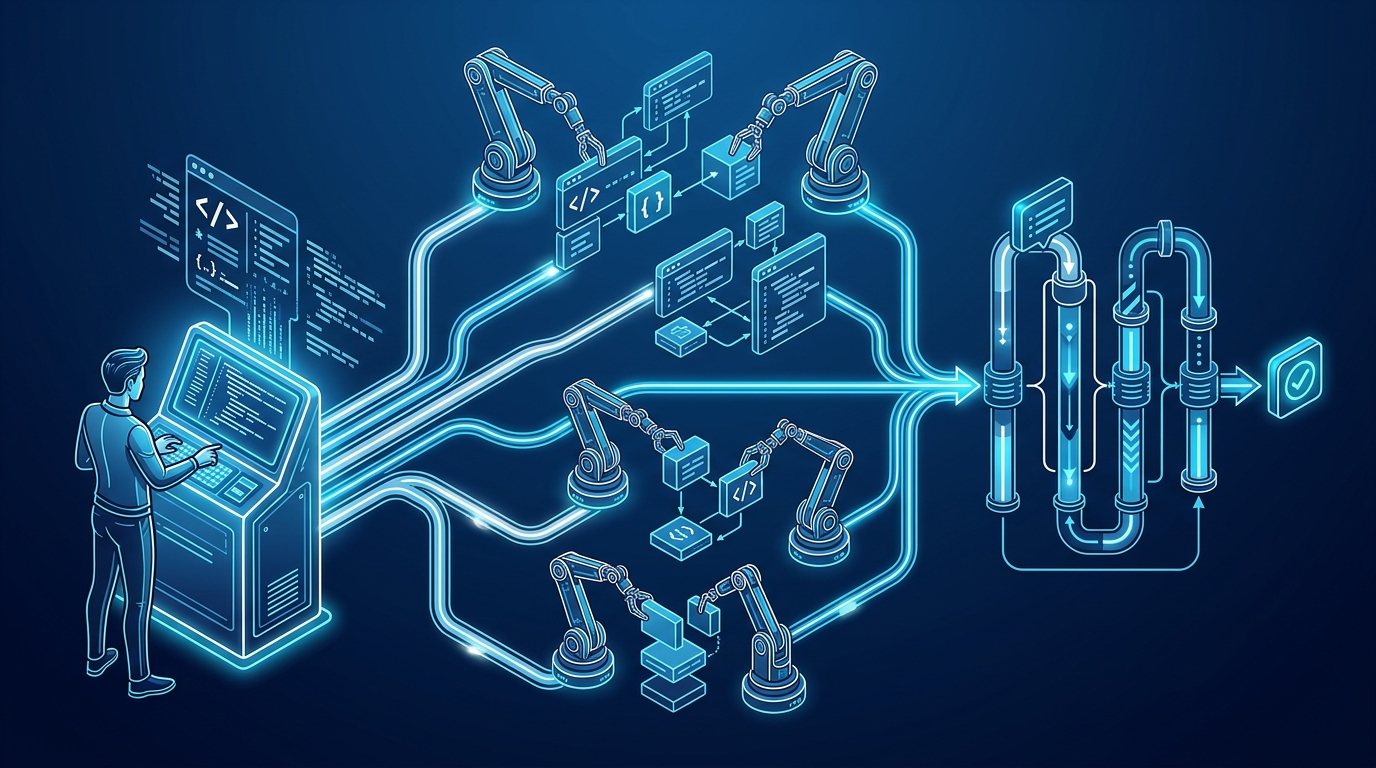
The era of treating generative artificial intelligence as a neat trick for auto-completing functions is definitively over. In the modern Enterprise IT landscape, the focus has shifted toward fully autonomous AI Coding Agents. The transition from chaotic “vibe-coding”—which relies on vague natural language prompts and hope—to a structured, engineering-led workflow is the only way to transform AI coding chaos into a repeatable playbook. Organizations like Snowflake are demonstrating that when these systems are architected correctly, they operate not just as autocomplete widgets, but as highly orchestrated robotic workforce multipliers.
According to Vivek Raghunathan, Senior Vice President of Engineering at Snowflake, the deployment of AI coding agents must be approached systematically. Snowflake’s internal deployment of their CoCo (formerly Cortex Code) agents began with unrestricted experimentation to allow “chaos to reign.” However, this chaos was eventually codified into 14 explicit “AI design patterns.” By treating AI as a junior partner that requires clear instructions, guardrails, and systematic oversight, engineering teams can build complex specifications before a single line of code is written. Utilizing frameworks like SpecKit or custom markdown specifications forces the AI to define the ‘what’ and ‘how’ prior to implementation, addressing vague requirements head-on.
To prevent these agents from hallucinating or drifting away from corporate standards, companies must rely on “Context Engineering.” By maintaining project-level context files—such as an ai-context.md file in the repository—organizations can explicitly enforce preferred libraries, coding patterns, and security constraints. This progressive disclosure prevents overwhelming the LLM, providing only the relevant context for the current task instead of indexing the entire codebase. This is a massive leap forward for Machine Learning integration in production environments.
Market Impact and Deployment Strategies
The business return on investment (ROI) for deploying structured AI coding agents is staggering when managed correctly. In a remarkable internal case study, a three-person engineering team at Snowflake utilized an agentic workflow to rewrite the company’s query compiler. Because the engineers were deep domain experts who knew exactly where the optimization bottlenecks were, they used the coding agents to execute the ambitious rewrite, delivering a 40x improvement in compiler performance. What was once considered a multi-year roadmap item was accomplished in a fraction of the time.
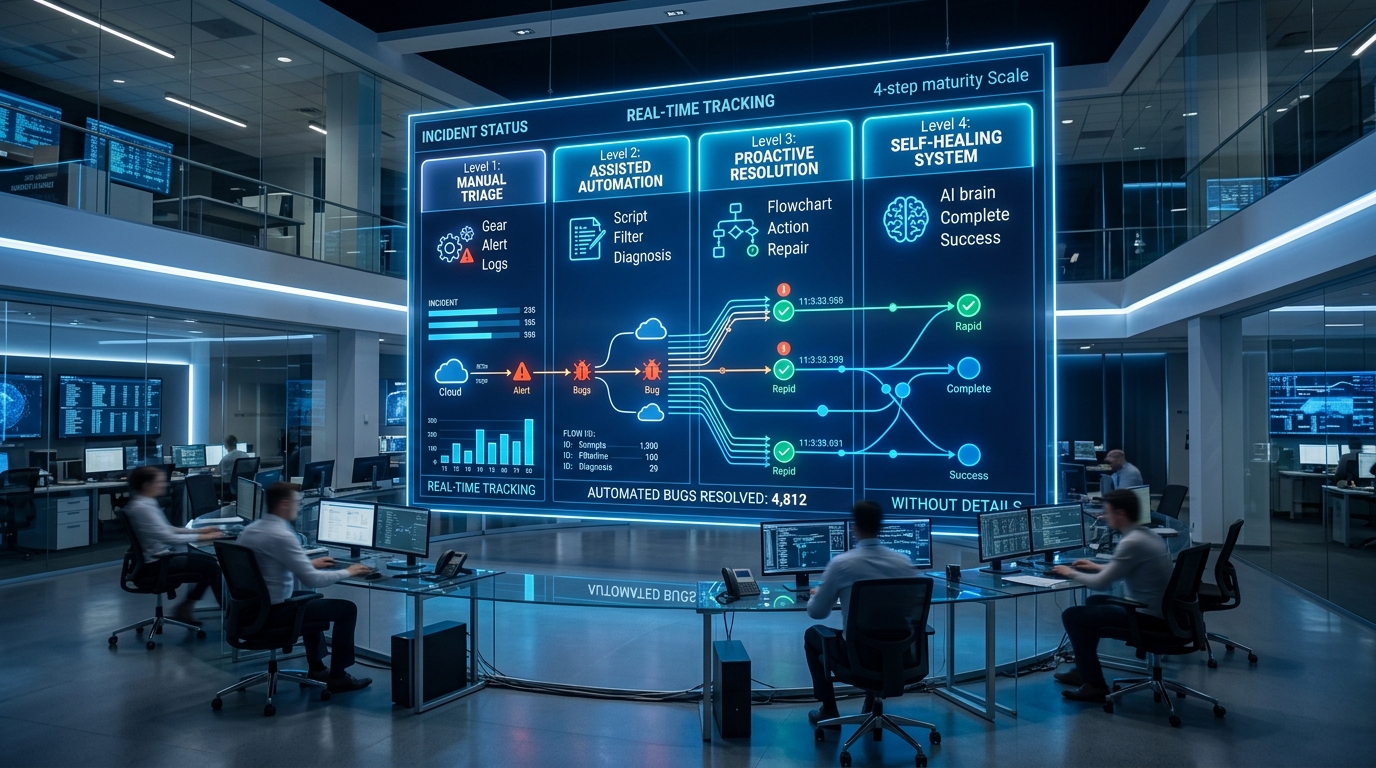
Beyond feature development, the total cost of ownership (TCO) associated with enterprise maintenance is being aggressively targeted. Raghunathan envisions a four-level agentic maturity model that redefines operations and incident response. The goal is to move from manual runbooks to automated, versionable CI/CD workflows (or “skills”) that AI agents can execute autonomously. Eventually, the vision is for AI agents to act as the primary on-call responders, triaging and remediating production bugs before a human is ever paged. This capability slashed Snowflake’s release validation time from 15 days down to a single day.
However, as the volume of AI-generated code exponentially increases, the human review process quickly becomes a critical bottleneck. It is no longer viable for senior developers to manually scrutinize every line of syntax. Instead, enterprises must rely on automated verification systems like SonarQube to enforce code quality, allowing human reviewers to focus strictly on whether the code meets the high-level design intent and security posture. Organizations tracking success in this new paradigm are abandoning legacy metrics like “lines of code written” in favor of core DORA metrics, such as deployment frequency.
The Consumer Translation of Agentic Coding
While the mechanics of compiler optimization and Cloud Infrastructure telemetry are highly abstracted, the downstream impact on everyday consumers is profound. Think of a software development pipeline like a global shipping logistics network. Previously, every single package (or line of code) had to be hand-inspected, manually routed, and personally delivered by a human worker. AI coding agents act as the automated sorting facilities and autonomous delivery drones of the software world. They handle the repetitive, deterministic tasks with extreme speed, allowing human engineers to focus purely on the overall architecture of the supply chain.
For the average consumer, this means that the applications they rely on—from mobile banking platforms to streaming services—will evolve at breakneck speeds. Bug fixes that used to take weeks to deploy will be pushed to devices overnight. New features will no longer be delayed by massive QA backlogs, as AI agents will autonomously generate the necessary test coverage alongside the production code. The democratization of ambitious software creation means smaller startup teams can now build enterprise-grade platforms that rival tech giants, driving competition, lowering subscription costs, and vastly accelerating consumer software innovation.
Frequently Asked Questions
Q1: What is the Yegge scale in the context of AI coding?
A1: Snowflake uses an internal metric nicknamed the “Yegge scale” to measure an engineer’s proficiency with AI coding tools, aiming to upscale their workforce by transitioning developers from basic tool users to advanced agent orchestrators.
Q2: How do AI coding agents reduce enterprise on-call toil?
A2: By converting runbooks into versionable CI/CD workflows of skills, AI agents can autonomously execute deterministic debugging and remediation steps, drastically reducing the time human engineers spend maintaining systems.
Q3: Why is “vibe-coding” dangerous for enterprise infrastructure?
A3: Vibe-coding relies on vague, natural language prompts that lack explicit constraints, leading to hallucinated best practices and unstable deployments in strict enterprise environments.
Q4: What is the ‘Known Domain’ rule?
A4: The Known Domain rule states that teams should only use AI agents for tasks they already deeply understand, preventing the AI from introducing hallucinated architectural patterns that humans cannot adequately audit.
Q5: How did Snowflake accelerate their release validation process?
A5: Snowflake cut release validation time from 15 days to a single day by utilizing AI coding agents to autonomously diagnose bugs and generate pull requests for human review.
TechNode HQ Verdict: Pros, Cons & Usability
- Pro (Engineering): Automated generation of testing frameworks enables 40x acceleration in complex, legacy system rewrites without sacrificing test coverage.
- Pro (Consumer): Radically faster deployment of critical bug fixes and feature updates in consumer-facing applications.
- Con: A massive spike in code volume can overwhelm human reviewers, creating dangerous security bottlenecks if automated static analysis (e.g., SonarQube) is not deployed concurrently.
- Con: Heavy cultural resistance; adopting agentic workflows requires reskilling efforts and often triggers apprehension among senior engineering staff.
Enterprise Usability: CTOs should immediately establish focus weeks and dedicated AI experimentation zones. The immediate goal is to codify your organization’s tribal knowledge into AI-readable context files and mandate that all new code generation starts with a strictly defined markdown specification.
Everyday Usability: While consumers will not interact with these enterprise agents directly, the resulting software ecosystem will yield significantly more stable, feature-rich platforms updated at an unprecedented cadence.