Key takeaways
- The Ribbon Hero reimagines Osamu Tezuka’s Princess Knight into a dark, post-apocalyptic survival narrative.
- Studio OUTLINE utilizes 3D CG to animate the antagonistic otherworldly force known as the Nergal.
- Character designs by Kei Mochizuki radically depart from Tezuka’s iconic, rounded vintage aesthetic.
- The film’s complex structure shifts abruptly into a “Looney Tunes” style during its final act.
- Premiering August 8, 2026, the film aims to introduce Tezuka’s legacy to modern audiences.
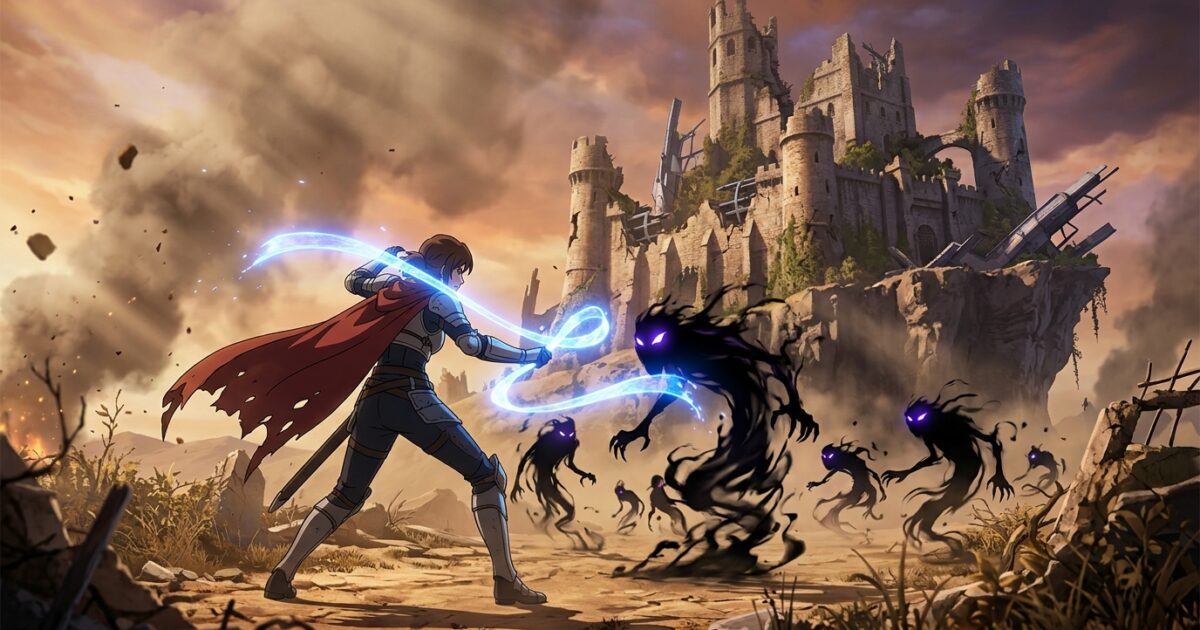
When evaluating the modern streaming ecosystem and the strategic deployment of legacy intellectual property, few projects represent as massive a technological and narrative paradigm shift as The Ribbon Hero Netflix anime adaptation. Set to premiere on August 8, 2026, this highly anticipated feature film serves as a complete, ground-up reimagining of Osamu Tezuka’s seminal 1953 manga, Princess Knight. However, rather than offering a simple graphical up-res of a classic whimsical fairytale, director Yuuki Igarashi and the engineering and creative teams at Studio OUTLINE have completely shattered the foundational mold. By pivoting away from a traditional high-fantasy kingdom and thrusting the narrative into a bleak, post-apocalyptic wasteland plagued by an otherworldly calamity known as the “Nergal,” the production has sparked intense industry debate. We are looking at a project that not only redefines aesthetic boundaries through controversial 3D CG integration but also signals a broader shift in how enterprise-level streaming platforms handle cultural artifacts as they approach Tezuka’s centennial. In a media landscape dominated by safe reboots and nostalgic cash-grabs, The Ribbon Hero positions itself as a radically disruptive reimagining, forcing both veteran animators and casual audiences to confront a startling synthesis of mid-century manga fundamentals and hyper-modern, grimdark cinematic execution.
The Architectural Reality: Studio OUTLINE’s Bold Reimagining
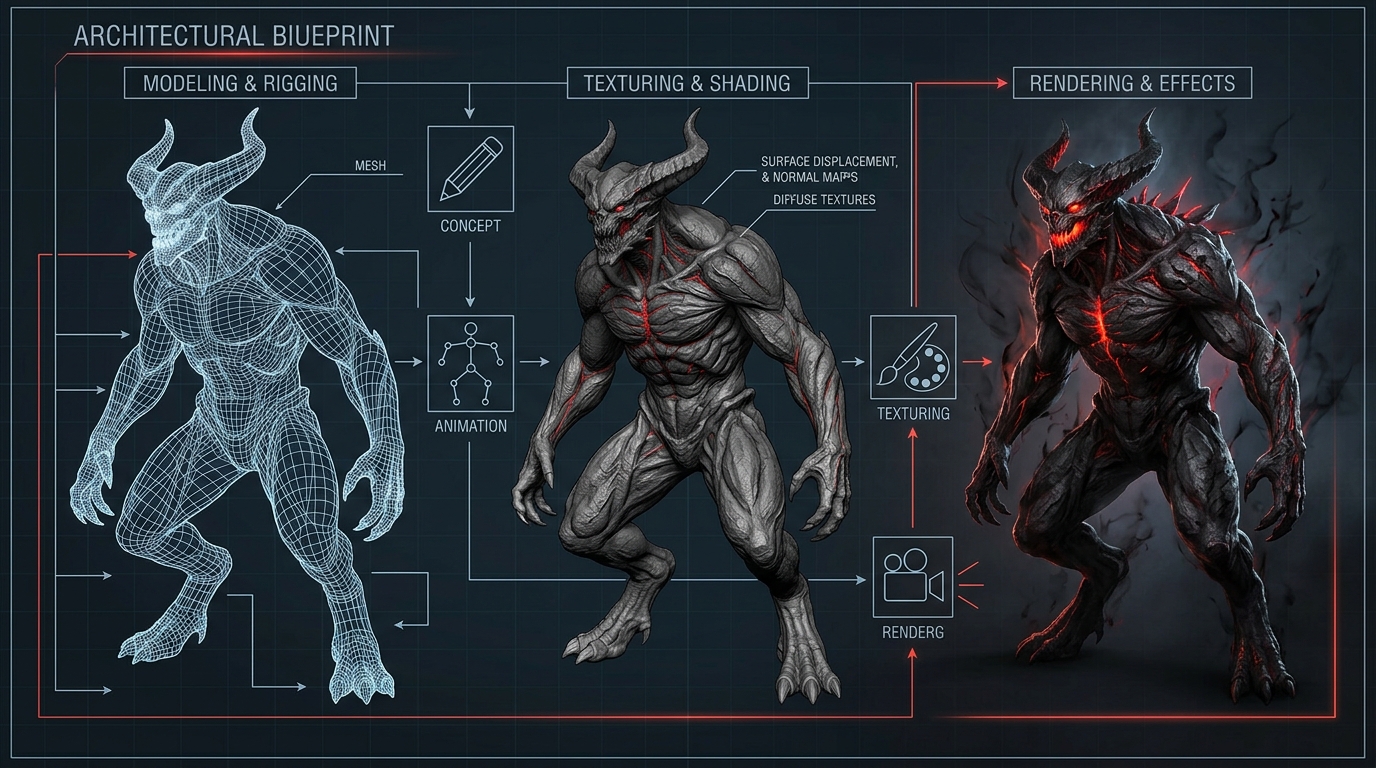
When scrutinizing the technical foundations of Studio OUTLINE’s production, it becomes immediately apparent that the animation pipelines utilized for this film diverge radically from standard industry practices. The implementation of 3D CG in the film has been a subject of intense discussion among critics, animators, and fans alike. Specifically, the production utilizes advanced 3D CG rendering to depict the antagonist force known as the ‘Nergal.’ By relying on cutting-edge compute clusters and next-generation hardware and silicon rendering pipelines, the animators achieved a jarring, otherworldly visual signature for the Nergal that sharply contrasts with the traditional 2D character designs. This visual dissonance is entirely intentional, functioning as a structural metaphor for the alien, invasive nature of the threat consuming the narrative’s world. Managing the z-depth, shading algorithms, and lighting models required to seamlessly composite fluid 2D cel animation against complex 3D volumetric shadows is a monumental task that requires extreme precision in the rendering engine.
The characters themselves present a massive departure from historical precedent. Designed by Kei Mochizuki—known for sharp, modern aesthetics in works like Fate/Grand Order—with contributions from Mai Yoneyama (Cyberpunk: Edgerunners), the cast looks wildly different from Tezuka’s iconic, rounded style. Where Tezuka’s 1953 Princess Knight utilized soft, Disney-inspired curves to convey a whimsical, fairytale-inspired story, The Ribbon Hero employs razor-sharp linework, highly detailed texturing, and aggressive color grading. This modern character design framework was engineered specifically to resonate with contemporary audiences whose visual expectations have been calibrated by high-octane shonen and mature sci-fi action series. Director Yuuki Igarashi, whose portfolio includes high-stakes combat orchestration in Attack on Titan and Jujutsu Kaisen, clearly brings an architectural mandate of dynamic camera movement and kinetic energy. The blend of Mochizuki’s sleek designs with Igarashi’s hyper-mobile directorial style ensures that Sapphire’s journey is stripped of its nostalgic innocence and injected with adrenaline and visceral weight.
To execute this hybrid 2D/3D visual language, Studio OUTLINE undoubtedly had to construct a bespoke rendering pipeline. The technical hurdles of matching the frame rate and interpolation between hand-drawn character acting and computationally generated monster physics require custom shaders and rigorous quality assurance. The result is a film that, on a pure engineering level, pushes the boundaries of how anime is composited. It is a massive risk; early reviews indicate the film possesses a complex, sometimes convoluted structure, as it attempts to balance the heavy emotional lifting of a post-apocalyptic refugee narrative with the explosive visual demands of a modern blockbuster. Yet, by boldly discarding the safety of Tezuka’s established visual grammar, Studio OUTLINE has created a fiercely unique cinematic entity.
Market Impact & Deployment: Netflix’s Anime Strategy

From a high-level business perspective, the deployment of this modernized adaptation illustrates a profound shift in enterprise IT strategies regarding intellectual property acquisition and monetization. Netflix’s continued investment in reshaping classic IPs demonstrates a calculated approach to maximizing Total Cost of Ownership (TCO) across its massive global content delivery network. Securing the rights to an Osamu Tezuka property—widely acknowledged as the “Godfather of Manga”—carries immense prestige. However, a 1-to-1 adaptation of a 1950s gender-bending fairytale might struggle to achieve the algorithmic velocity required to justify a massive global deployment. By aggressively rebranding and functionally rewriting the core premise into The Ribbon Hero, Netflix is executing a highly optimized user-acquisition strategy. They are leveraging the historical credibility of Tezuka Productions while simultaneously appealing to the lucrative demographic that consumes high-action, dark-fantasy content.
This strategy mirrors Netflix’s previous success with Studio M2’s Pluto, an acclaimed 2023 sci-fi thriller adapted from Naoki Urasawa’s dark reimagining of Tezuka’s Astro Boy. Pluto proved that mature, geopolitically complex treatments of Tezuka’s lore could dominate global streaming charts. The Ribbon Hero is framed as a tribute to Osamu Tezuka’s legacy, yet it is calibrated for modern binge-watching algorithms. The film aims to introduce Tezuka’s enduring influence to a new generation of viewers as the industry approaches his centennial. For C-level executives analyzing this deployment, the genius lies in risk mitigation. The built-in awareness of Princess Knight guarantees immediate press coverage and core fandom engagement (even if controversial), while the modernized, high-budget 3D CG action sequences ensure high completion rates among casual subscribers scrolling for weekend entertainment.
Furthermore, managing the global rollout of a highly anticipated anime film requires a staggering infrastructural backbone. The networking and cloud distribution demands for streaming a 4K, high-bitrate animated feature simultaneously to millions of geographically dispersed viewers on August 8, 2026, cannot be understated. Netflix’s proprietary Open Connect architecture will cache the heavy video files locally with ISPs around the world, ensuring that the visually dense 3D CG combat sequences do not suffer from buffering or artifacting. The financial viability of producing such an expensive, labor-intensive film is fundamentally reliant on this underlying cloud infrastructure; without the ability to seamlessly deliver a premium viewing experience to a global audience instantly, the massive upfront capital expenditure required by Studio OUTLINE would be unjustifiable.
The Consumer Translation: Narrative Complexity and Trauma
For the end-user operating within the everyday media consumption landscape, the experience of streaming The Ribbon Hero will be a jarring departure from traditional whimsical fairytales. The new film features a post-apocalyptic narrative, completely moving away from the traditional high-fantasy kingdom setting seen in the original Princess Knight. Instead of a slapstick comedy revolving around a princess raised as a prince to secure succession rights, the consumer is thrust into a desperate survival scenario. The film’s world is plagued by an otherworldly calamity called “Nergal,” which has ruthlessly destroyed the home of the protagonist, Silverland. Consequently, Sapphire, the protagonist, is portrayed as a refugee in the kingdom of Goldland. This represents a massive tonal shift. The narrative highlights the raw, visceral struggles of displaced people and the profound trauma of loss, themes that resonate deeply with contemporary global anxieties.
The film incorporates significantly darker themes, including the machinations of evil religious organizations, moving the intellectual property out of the realm of children’s fables and into mature, young adult fiction. For a consumer logging into Netflix on a Friday night, this means expecting a harrowing emotional journey rather than a lighthearted romp. The original Princess Knight was ahead of its time in the 1950s for exploring gender identity and societal expectations; while it appears The Ribbon Hero may de-emphasize the gender politics of the original in favor of exploring queer themes between Sapphire and her female companions, its primary focus is on survival against insurmountable, existential dread. This modernization translates the story into a format that modern teenagers and young adults recognize and engage with heavily.
However, the execution of this grim reality is not without its bizarre anomalies. Early reviews indicate the film possesses a complex, sometimes convoluted structure that struggles to balance its various ambitions. Most shockingly, the film’s final act shifts significantly in tone, taking on characteristics described by critics as “Looney Tunes.” This abrupt transition from post-apocalyptic trauma and menacing 3D CG monsters into frantic, hyper-kinetic slapstick comedy represents a massive whiplash for the viewer. Whether this is an avant-garde directorial choice by Igarashi to honor Tezuka’s signature visual humor, or a structural collapse under the weight of the film’s own grimdark premise, remains to be seen. For the consumer, it means The Ribbon Hero will be a highly unpredictable viewing experience, demanding cognitive flexibility and a willingness to embrace absolute tonal chaos.
Frequently Asked Questions
Q1: When does The Ribbon Hero premiere on Netflix?
A1: The Ribbon Hero is officially scheduled to premiere globally on Netflix on August 8, 2026.
Q2: Is The Ribbon Hero connected to Princess Knight?
A2: Yes, the film is a modern, post-apocalyptic reimagining of Osamu Tezuka’s seminal 1953 manga, Princess Knight.
Q3: Who directed the new Ribbon Hero anime?
A3: The film is directed by Yuuki Igarashi and animated by Studio OUTLINE, featuring character designs by Kei Mochizuki.
Q4: What is the main threat in The Ribbon Hero?
A4: The protagonist, Sapphire, faces off against an otherworldly calamity known as the “Nergal,” which is heavily animated using 3D CG.
Q5: Why are the character designs so different?
A5: Studio OUTLINE intentionally modernized the aesthetic to appeal to a new generation, diverging significantly from Tezuka’s classic rounded style.
TechNode HQ Verdict: Pros, Cons & Usability
- Pro (Engineering): The hybrid integration of 2D character acting against computationally heavy 3D CG volumetric enemies pushes modern animation rendering pipelines to their absolute limits, delivering stunning visual contrast.
- Pro (Consumer): The reimagining of a 1950s fairytale into a dark, post-apocalyptic survival narrative provides a highly engaging, mature storyline that resonates with contemporary anxieties and modern viewer expectations.
- Con: The jarring tonal shift in the final act toward frantic, “Looney Tunes” style slapstick comedy severely undercuts the established grimdark tension, resulting in a convoluted and chaotic viewer experience.
- Con: The intense reliance on 3D CG for the primary antagonistic force risks alienating core anime purists who fundamentally reject the aesthetic dissonance between hand-drawn cels and polygonal models.
Enterprise Usability: For content strategists and IP managers, Netflix’s deployment of The Ribbon Hero serves as a masterclass in risk-mitigated portfolio expansion. By leveraging the historical weight of Osamu Tezuka’s legacy while aggressively overhauling the visual and narrative presentation for modern algorithms, streaming platforms can effectively recycle legacy assets into high-yield, global blockbusters.
Everyday Usability: For the everyday consumer, The Ribbon Hero is a mandatory watch, provided you calibrate your expectations. It is not a nostalgic trip down memory lane; it is a violent, visually stunning, and ultimately bizarre rollercoaster that demands your attention. Prepare for incredible action sequences, heartbreaking refugee narratives, and an ending so structurally chaotic it must be seen to be believed.