Key takeaways
- Civic Infrastructure in Finland operates as Hardware-as-a-Service, yielding a 500% ROI.
- Libraries deploy high-CAPEX tools like sewing machines and 3D printers for shared public utilization.
- A “Library of Things” checkout system integrates physical hardware into standard digital library catalogs.
- While hardware is free to use, patrons must supply their own consumables like fabric and thread.
- Public libraries build critical digital inclusion, countering trust decay in global institutions.
The Architectural Reality of Civic Infrastructure

The traditional understanding of a public library is undergoing a radical, structural transformation. What was once viewed merely as a static repository for printed data is now rapidly evolving into a dynamic hub of Civic Infrastructure. In much the same way that the software industry transitioned from purchasing standalone software licenses to embracing multi-tenant, cloud-based architectures, forward-thinking nations are shifting their public assets toward a localized “Hardware-as-a-Service” operational model. Leading this paradigm shift is Finland, where physical public spaces have been meticulously re-engineered to act as centralized hardware deployment nodes for the surrounding population.
Consider the metrics driving this transformation. In Helsinki, the Oodi central library serves as a prime example of this new operational reality. At 08:00 on a freezing January morning, citizens queue eagerly to access the building’s resources. This high-availability physical environment proves that when civic infrastructure functions properly, its utilization metrics soar. Recent government data indicates that an impressive 55% of the Finnish population visits a library at least once a month. To put this in a global context, Finns utilize their libraries an average of 9.1 times per year. In stark contrast, average library visits hover around 2.5 times annually in the UK, 2.4 times in the US, and roughly 3.5 times across the broader European Union. The architectural reality here is undeniable: Finland has built an ecosystem where citizens constantly interact with shared public goods.
This success is fundamentally linked to treating the public library as a highly elastic physical platform. Much like the shift we have witnessed in Enterprise IT—where organizations moved away from underutilized on-premise servers toward highly optimized, shared data centers—the Nordic model repositions expensive, highly specialized physical tools. Instead of millions of households individually purchasing a sewing machine that sits idle in a closet for 364 days a year, the state centralizes the hardware. These spaces act as the ultimate Networking & Cloud style edge nodes for physical creation, allowing patrons to pre-book rooms, utilize high-end machinery, and engage in collaborative workflows at virtually no direct cost to the individual user.
The Finnish Library Act explicitly mandates that these public institutions must promote democracy, freedom of expression, and active citizenship. In practice, this means providing unrestricted public access to advanced Hardware & Silicon. Inside a refurbished library like Saari in Oulu, visitors might find a retiring teacher printing sheet music alongside a young student utilizing a 3D printer and a laser cutter. These spaces are fully equipped with Makerspaces that allow citizens to walk in or book a reservation to use complex machinery. The core logic dictating this expansion is rooted in resource efficiency: by pooling tax dollars to fund highly accessible central hubs, the state eliminates the barrier to entry for creative, technical, and educational pursuits.
Market Impact and Deployment of Shared Hardware
When analyzing this operational model from a strictly financial perspective, the Return on Investment (ROI) is staggering. According to comprehensive analysis spanning 38 distinct international studies, public libraries consistently return between three to five dollars in civic and economic value for every single dollar invested in their operation. In enterprise terms, this equates to an astonishing 300% to 500% ROI. This value is derived directly from the cost savings passed down to the consumer, the surge in local employability driven by digital literacy programs, and the overall reduction in wasteful individual consumer spending.
To sustain this high-yield civic investment, Finland commits aggressively to continuous funding. In 2025 alone, the Finnish government spent nearly €371 million ($430 million) on its public library infrastructure. This breaks down to an expenditure of approximately €65.78 ($76) per citizen. When juxtaposed against global counterparts, the discrepancy is glaring. The UK averages a mere £10 per person on library services, and the US spends about $15.2 billion in total (roughly $45 per person). This chronic underfunding in Western markets has led to massive systemic depreciation; between 2008 and 2019, 766 public libraries shuttered across the United States. Similarly, in the UK, over 180 council-run libraries were either completely closed or offloaded to volunteer organizations between 2016 and 2023.
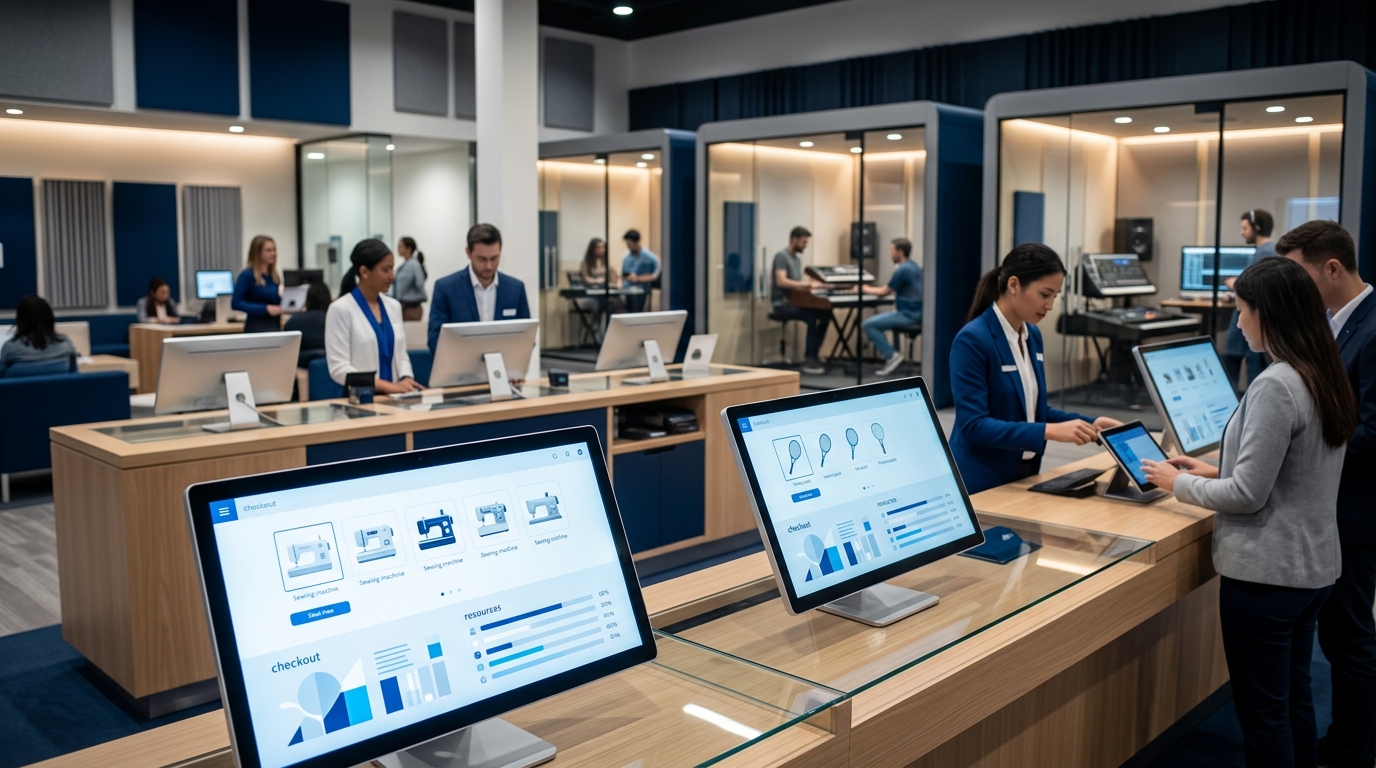
In contrast, the deployment mechanics of the “Library of Things” concept prove that when funded correctly, public libraries can handle complex asset management seamlessly. Libraries that lend sewing machines treat them exactly like other physical items, meaning they show up directly in standard catalog searches. A user can intuitively log into the library’s portal, query the term “sewing machine,” and instantly view the availability of the hardware across the library network. Borrowing a high-grade mechanical tool to take home is processed through the identical backend workflow used for checking out a paperback book or a DVD. If a specific branch lacks the necessary hardware, the library’s internal logistics network can seamlessly direct the patron to a nearby branch or suggest a local community tool cooperative.
However, this shared hardware model does implement necessary access controls to protect its high-value assets. Typically, a patron must possess a library card in good standing to check out a specialized tool like a sewing machine. If an account has accrued excessive fines or violates terms of service, access to these premium Makerspace items may be temporarily restricted. This basic accountability framework ensures that the shared hardware pool remains operational and well-maintained for the broader public, mirroring the strict access-control policies seen in premium enterprise environments.
The Consumer Translation: Hardware-as-a-Service
For the everyday consumer, this transition represents a fundamental change in how lifestyle requirements are fulfilled. The worldwide public is rapidly awakening to the reality that they do not need to own a tool to reap its benefits. A “Library of Things” checkout offers a frictionless bridge to equipment that might otherwise be prohibitively expensive. When checking out a sewing machine, the consumer typically receives a carrying case bundled with essential basic supplies, including standard needles, cutting scissors, and bobbins. However, keeping operational overhead manageable means that the patron is generally expected to bring their own consumable materials, such as the actual fabric and thread required for their specific project.
Furthermore, this Hardware-as-a-Service model is beautifully augmented by a comprehensive digital software suite. In addition to physical machines, many public libraries now offer free, unrestricted access to premium digital learning platforms like CreativeBug and Craftsy. Utilizing these resources, an absolute beginner can take professional-grade, multi-week sewing classes directly from their tablet before ever stepping foot into a Makerspace. This powerful synergy between hardware provision and digital education ensures that the tools are not simply gathering dust—patrons are actively upskilling, testing new hobbies, and driving personal productivity without needing to commit significant personal capital upfront.
Beyond creative hobbies, this civic infrastructure acts as a critical lifeline for fundamental digital inclusion. Operating as partners in Finland’s National Digital Support Model, library staff routinely guide citizens through the labyrinth of modern online bureaucracy. Librarians serve as frontline support technicians, helping patrons navigate complex state tax portals, secure digital banking environments, access pension dashboards, and retrieve highly sensitive digital health records. In an era where global surveys—such as the Edelman Trust Barometer—show a continuous, precipitous drop in public trust regarding government institutions, the library stands out as a uniquely resilient sanctuary of trust and equality.
Cross-Industry Impact and Future Scalability
The success of the “Library of Things” and public Makerspaces signals an impending disruption that extends far beyond the quiet aisles of local book stacks. As this model proves its viability and immense economic ROI, multiple adjacent industries are bracing for impact. The traditional retail hardware sector, which historically relied on selling identical, underutilized tools to every household on a suburban block, must pivot to accommodate a consumer base that increasingly prefers fractional access over permanent ownership. Retailers may soon find themselves transitioning from B2C sales models toward lucrative B2B maintenance and supply contracts directly with municipal library districts.
Simultaneously, the educational technology sector is witnessing a paradigm shift. With public libraries freely subsidizing premium platforms like Craftsy, the barrier to vocational and hobbyist education has effectively been demolished. Paid online masterclasses now compete directly with highly curated, state-sponsored digital access. As more citizens rely on the library as their primary vector for both hardware and the software tutorials required to operate that hardware, urban planners and civic architects are being forced to redesign community centers. Future municipalities will increasingly view libraries not merely as cultural amenities, but as strictly necessary economic engines designed to upskill the workforce, foster grassroots technological innovation, and ultimately bolster the local GDP.
Frequently Asked Questions
Q1: Can I really check out a sewing machine from a public library?
A1: Yes, many public libraries now feature a “Library of Things” checkout, allowing patrons to borrow sewing machines to take home or use on-site in a Makerspace.
Q2: Do I need to bring my own supplies to use a library sewing machine?
A2: While the library provides the machine—often in a carrying case with basic tools like needles and bobbins—you are generally expected to bring your own consumables like fabric and thread.
Q3: How do I find out if my local library offers specialized hardware?
A3: You can search your library’s online catalog for terms like “sewing machine” or “Library of Things,” or contact the reference desk directly to check availability.
Q4: Are there restrictions on borrowing high-value items from the library?
A4: Typically, you need a library card in good standing; accounts with fines or blocks may be restricted from borrowing specialized equipment like sewing machines.
Q5: Can I learn how to sew through the library before borrowing a machine?
A5: Absolutely. Many libraries offer free access to premium digital learning platforms like CreativeBug or Craftsy, providing professional sewing classes to library cardholders.
TechNode HQ Verdict: Pros, Cons & Usability
- Pro (Engineering): Radically efficient deployment of high-CAPEX hardware through a shared, multi-tenant utilization framework.
- Pro (Consumer): Zero-cost access to professional tools and premium digital tutorials, eliminating the financial barrier to creative entry.
- Con: High utilization rates often lead to operational bottlenecks, requiring strict reservation systems for on-site hardware.
- Con: Access control measures mandate that user accounts remain in good standing, potentially gatekeeping tools from marginalized patrons with existing fines.
Enterprise Usability: For municipal CTOs and civic planners, the “Library of Things” represents a proven, high-ROI template. Deploying shared Makerspaces transforms idle public buildings into dynamic engines for localized economic growth and digital upskilling.
Everyday Usability: The public should absolutely leverage these resources immediately. Before purchasing specialized, occasionally-used hardware, citizens must seamlessly query their local library catalog to test, learn, and prototype entirely risk-free.